


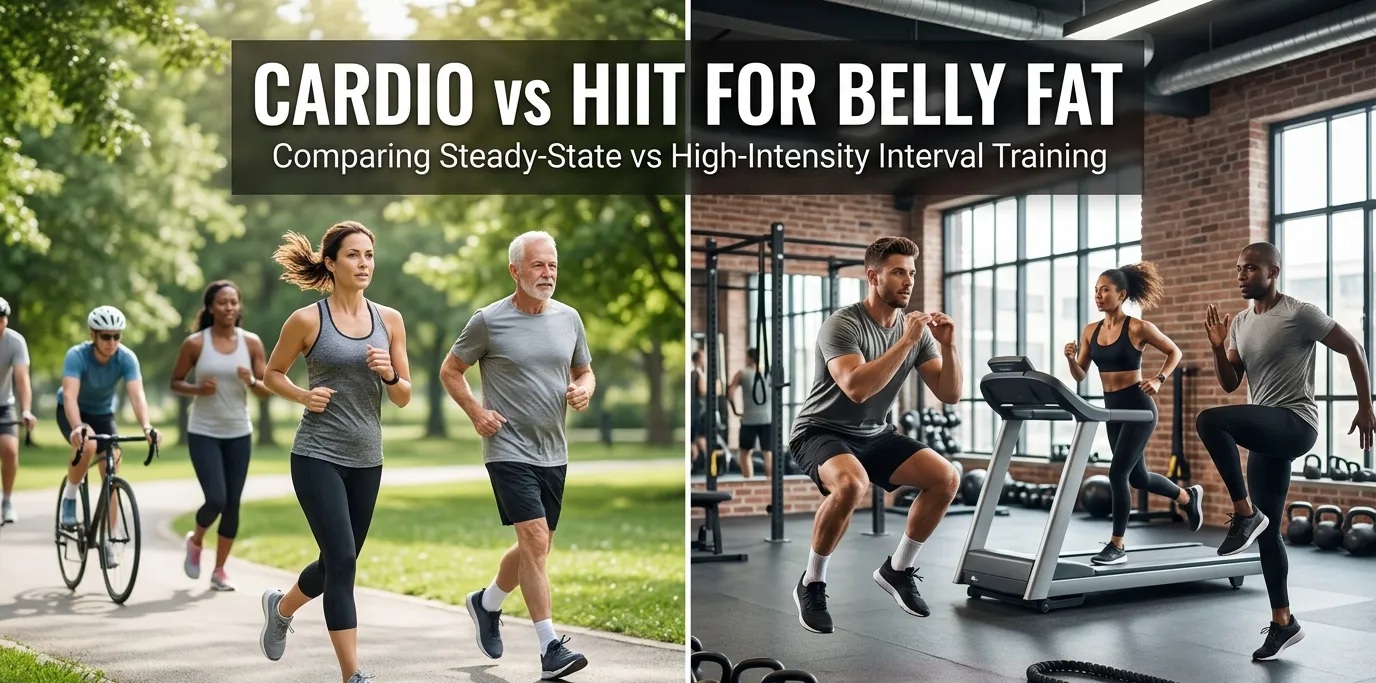
If you are struggling with belly fat, you are not alone. Many people spend months walking every day, trying intense HIIT workouts, or following fitness advice from social media, only to see little change around their waist. That frustration often leads to one big question: should you focus on cardio or HIIT for belly fat loss? The problem is that the internet is full of conflicting opinions. One expert says long cardio sessions are best, while another claims HIIT is the fastest way to burn fat. As a result, many people waste time jumping from one workout style to another without understanding which approach actually fits their goals and lifestyle.
Over the years, one pattern has become clear when looking at successful fat-loss journeys. People who achieve lasting results rarely succeed because they found a “magic workout.” They succeed because they choose an exercise method they can perform consistently while supporting it with healthy habits. In this article, you’ll learn the real differences between cardio and HIIT, how each affects belly fat loss, and most importantly, how to determine which option is the right fit for your body, schedule, and long-term goals.
What’s the Difference Between Cardio and HIIT?
Steady-state cardio involves maintaining a moderate pace for an extended period. Activities such as walking, jogging, cycling, and swimming are common examples. The intensity remains relatively consistent throughout the workout.
HIIT, or High-Intensity Interval Training, alternates between short bursts of hard effort and brief recovery periods. Instead of maintaining one pace, you repeatedly switch between intense work and rest.
The biggest difference is intensity. Cardio focuses on steady effort, while HIIT focuses on short periods of maximum effort.
Cardio vs HIIT: Quick Comparison
| Factor | Cardio | HIIT |
|---|---|---|
| Best For | Beginners and long-term consistency | Busy people with limited time |
| Intensity | Low to moderate | High |
| Recovery Need | Lower | Higher |
| Belly Fat Targeting | No direct targeting | No direct targeting |
| Best Use | Sustainable fat loss support | Time-efficient fat loss support |
Why People Get Different Results From the Same Workout
Many people assume that if a workout works for someone else, it should work for them as well. In reality, several factors influence results.
Fitness Level
A beginner may burn more calories during a simple walk than an experienced athlete. The body adapts differently based on current fitness levels.
Recovery Capacity
Some people recover quickly from intense exercise. Others need more time between workouts. Recovery affects how often you can train and how consistently you can maintain your routine.
Nutrition Habits
Exercise is only one piece of the fat-loss equation. A person who exercises regularly but consumes too many calories may struggle to lose belly fat.
Sleep and Stress
Poor sleep and high stress levels can influence hunger, recovery, and exercise performance. These factors often explain why two people following similar programs achieve different outcomes.
Visceral vs Subcutaneous Fat: Why It Matters
When people talk about belly fat, they are usually referring to two different types of fat.
Subcutaneous Fat
This is the fat located directly beneath the skin. It is the fat you can pinch around your waist.
Visceral Fat
Visceral fat is stored deeper inside the abdomen and surrounds internal organs. This type of fat is more closely associated with health risks such as heart disease, type 2 diabetes, and metabolic disorders.
Both cardio and HIIT can help reduce overall body fat, including visceral fat. However, neither method specifically targets one area of the body.
Does HIIT Burn More Belly Fat Than Cardio?
This is the most common question related to this topic.
The short answer is no.
HIIT does not directly burn more belly fat than cardio. What HIIT often does is help people burn calories more efficiently within a shorter amount of time.
Belly fat loss occurs when your body consistently uses more energy than it consumes. This process is known as a calorie deficit.
Whether that deficit comes from cardio, HIIT, or a combination of both, the body draws energy from stored fat over time.
The key point is that neither workout has a special ability to target stomach fat.
Why Calorie Burn Can Be Misleading
Many articles compare cardio and HIIT based solely on calories burned during a workout.
This comparison can be misleading.
Imagine two people.
Person A walks for 45 minutes five times per week.
Person B performs two HIIT workouts per week.
Although HIIT burns more calories per minute, the person performing more total activity may burn more calories across an entire month.
Long-term consistency often matters more than what happens during a single workout session.
This is why calorie burn should never be the only factor when choosing between cardio and HIIT.

Cardio vs HIIT: Pros and Cons Comparison
Benefits of Cardio
- Easier for beginners
- Lower injury risk
- Easier recovery
- Sustainable long term
- Suitable for most age groups
Limitations of Cardio
- Requires more time
- Can feel repetitive
- Progress may feel slower
Benefits of HIIT
- Time efficient
- Higher workout intensity
- Improves cardiovascular fitness
- Keeps workouts engaging
Limitations of HIIT
- Greater recovery demands
- Higher perceived difficulty
- Increased injury risk if performed incorrectly
- Not ideal for everyone
The Hidden Cost of HIIT Most People Ignore
HIIT is often marketed as the ultimate fat-loss solution.
What many people do not realize is that intense workouts create additional recovery demands.
When recovery is inadequate, problems can develop:
- Chronic fatigue
- Reduced motivation
- Lower workout quality
- Increased soreness
- Higher injury risk
For some individuals, excessive HIIT can become difficult to maintain.
This does not mean HIIT is ineffective. It simply means that intensity should match your recovery capacity.
The Sustainability Factor Most Articles Miss
The best fat-loss strategy is not always the fastest strategy.
It is the strategy you can follow consistently.
Many people start highly aggressive programs and quit after a few weeks.
Others choose moderate activities they genuinely enjoy and continue for years.
From a long-term perspective, consistency often beats intensity.
A workout that you can maintain for six months is usually more valuable than a workout you abandon after three weeks.
Cardio vs HIIT for Real-Life Situations
Busy Professionals
People with limited time often benefit from HIIT because shorter sessions fit more easily into a busy schedule.
Overweight Beginners
Beginners frequently benefit from cardio because it is easier on the joints and less intimidating.
Adults Over 40
Many adults over 40 prioritize recovery, mobility, and joint health. Moderate cardio often becomes a practical option, although HIIT can still be useful when applied appropriately.
People Facing a Fat-Loss Plateau
When progress stalls, the answer is not always more exercise. Sometimes improvements in sleep, nutrition, stress management, or activity levels provide greater benefits than changing workout styles.
Why Belly Fat Loss Depends on More Than Exercise
Many people overestimate the role of exercise and underestimate the role of lifestyle habits.
Successful belly fat reduction typically involves:
- Consistent movement
- Quality nutrition
- Adequate protein intake
- Proper sleep
- Stress management
- Long-term adherence
Exercise supports the process, but it is rarely the only factor responsible for results.
Which One Should You Choose?
Choose Cardio If
- You are a beginner.
- You prefer lower-impact activity.
- You enjoy longer workouts.
- You want easier recovery.
- You value sustainability.
Choose HIIT If
- You have limited time.
- You enjoy intense exercise.
- You recover well.
- You want maximum efficiency.
Choose Both If
- Your goal is long-term fat loss.
- You enjoy variety.
- You want the benefits of both approaches.
- You can recover properly between sessions

Conclusion
After reviewing the evidence and comparing real-world results, it becomes clear that there is no universal winner in the cardio vs HIIT debate. Both methods can support belly fat loss when they help create a sustainable calorie deficit and are performed consistently over time. HIIT offers a time-efficient option for people with busy schedules, while traditional cardio provides a lower-impact approach that many individuals find easier to maintain. The better choice is often the one that fits naturally into your lifestyle rather than the one that promises the fastest results.
One thing repeatedly seen in successful fat-loss transformations is that consistency always beats perfection. People who lose belly fat and keep it off are rarely the ones searching for the most intense workout. Instead, they are the ones who find an approach they can follow month after month. Based on both research and practical experience from the fitness industry, the most effective strategy is usually the one that combines regular movement, proper nutrition, quality sleep, and a workout style that you genuinely enjoy. Whether that workout is cardio, HIIT, or a combination of both, the goal should be building habits that support long-term health and sustainable fat loss rather than chasing quick fixes.
