


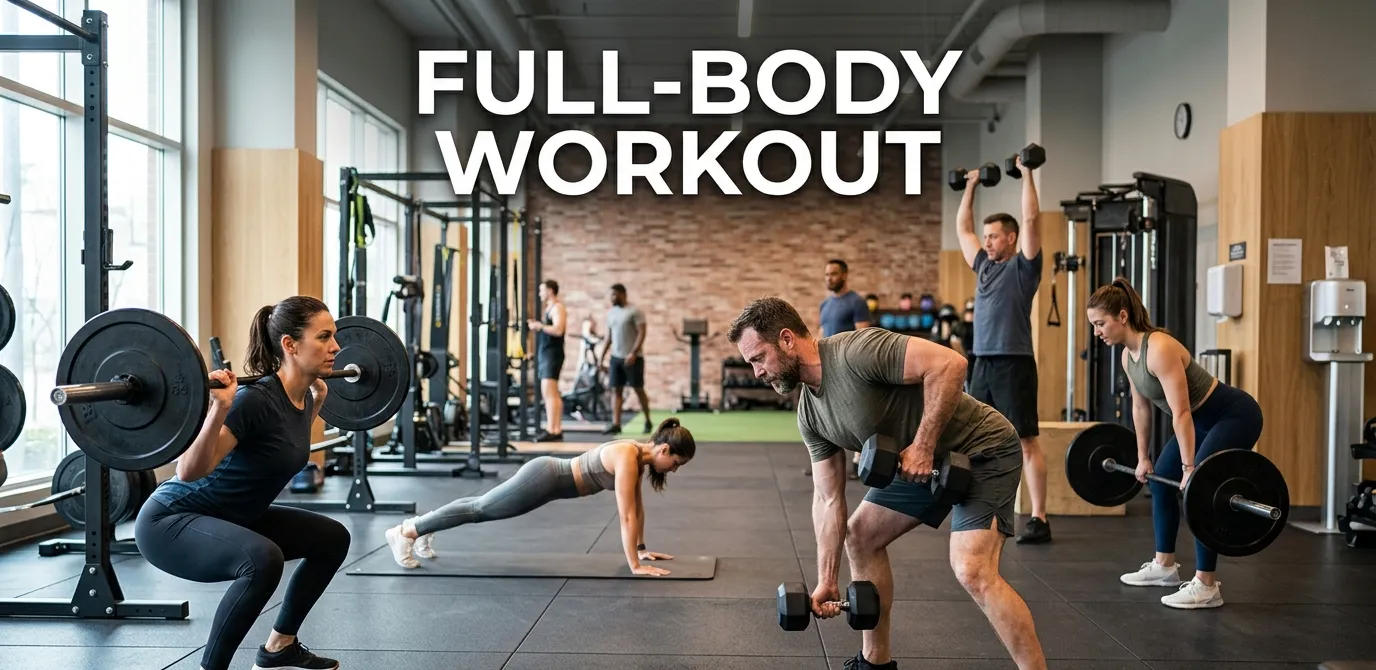
Many people start exercising with good intentions but quickly become frustrated. They follow complicated workout plans, spend hours in the gym, or jump between different fitness programs without seeing consistent progress. Busy work schedules, family responsibilities, and information overload make it even harder to stay on track. If this sounds familiar, you are not alone. One of the most common mistakes I see is people believing they need a different workout for every muscle group when they really need a simple plan they can follow consistently.
Over the years, I have noticed that the people who achieve the best long-term results are not always the ones using the most advanced training methods. Instead, they are often the people who stick to a well-structured routine that fits their lifestyle. A full-body workout is one of the most practical approaches for beginners, busy professionals, parents, and anyone looking for an efficient way to improve fitness. It trains the major muscle groups in a single session, helps build strength, supports muscle growth, and makes it easier to stay consistent week after week.
What Is a Full-Body Workout?
A full-body workout is a training session that works all major muscle groups during one workout. Instead of focusing on only the chest, legs, or back, a full-body workout includes exercises that target the entire body.
A typical full-body workout may train:
- Legs
- Glutes
- Chest
- Back
- Shoulders
- Arms
- Core
For example, a workout that includes squats, rows, push-ups, overhead presses, and core exercises would qualify as a full-body workout because it trains multiple muscle groups in the same session.
This training style is popular because it is simple, effective, and time-efficient.
What Makes a Workout Truly Full Body?
Many people assume any workout with several exercises is a full-body workout. However, a balanced program should include movement patterns that train the body from different angles.
A complete full-body workout usually includes:
A Squat Movement
Examples:
- Squats
- Goblet Squats
- Split Squats
These exercises strengthen the legs and lower body.
A Hip Hinge Movement
Examples:
- Deadlifts
- Romanian Deadlifts
- Kettlebell Swings
These movements target the glutes, hamstrings, and lower back.
A Push Movement
Examples:
- Push-Ups
- Bench Press
- Dumbbell Press
Push exercises develop the chest, shoulders, and triceps.
A Pull Movement
Examples:
- Rows
- Pull-Ups
- Lat Pulldowns
Pull exercises strengthen the back and biceps.
A Core Movement
Examples:
- Planks
- Dead Bugs
- Bird Dogs
Core training improves stability and posture.
When these movement patterns are combined, the workout becomes more balanced and effective.
Full-Body Workout Checklist
A good full-body workout should include all major movement patterns, not just random exercises.
- Squat: Trains legs and glutes
- Hinge: Trains hamstrings, glutes, and lower back
- Push: Trains chest, shoulders, and triceps
- Pull: Trains back and biceps
- Core: Improves stability and posture
- Carry: Builds grip, core, and real-world strength
Takeaway: If your workout includes these patterns, it is more balanced and effective.
Benefits of Full-Body Training
Full-body workouts offer several advantages that make them suitable for a wide range of people.
Time Efficiency
One of the biggest benefits is saving time.
Instead of training six days per week, many people can make excellent progress with only two to four workouts each week.
This is especially helpful for:
- Busy professionals
- Parents
- Students
- Shift workers
A shorter training schedule is often easier to maintain over the long term.
Increased Training Frequency
When you train your entire body during each workout, every major muscle group receives attention multiple times per week.
This can be beneficial for:
- Strength development
- Muscle growth
- Skill improvement
More frequent practice often leads to better exercise technique.
Better Overall Fitness
A full-body workout develops several fitness qualities at once.
These include:
- Strength
- Endurance
- Mobility
- Coordination
- Balance
Rather than focusing on a single area, the body works as a complete system.
Higher Calorie Expenditure
Many full-body exercises use several muscles at the same time.
Examples include:
- Squats
- Deadlifts
- Lunges
- Rows
Because these exercises involve large muscle groups, they generally require more energy than isolation exercises.
This makes full-body workouts useful for people working toward body composition goals.
Easier Recovery Management
Training every muscle group in one session often allows more recovery days during the week.
For many beginners, recovery is where progress actually happens.
Muscles adapt and grow between workouts, not during them.
A schedule with adequate recovery can help improve consistency and reduce burnout.
Full-Body Workout vs Split Workout
One of the most common questions beginners ask is whether they should choose a full-body workout or a split workout.
The answer depends on experience level, schedule, and goals.
What Is a Split Workout?
A split workout divides training across different days.
Examples include:
- Chest Day
- Back Day
- Leg Day
- Shoulder Day
This approach is often used by advanced lifters and bodybuilders.
Full-Body Workout Advantages
A full-body workout may be better if you:
- Are new to exercise
- Have limited training days
- Want a simple routine
- Prefer efficient workouts
- Need flexibility in your schedule
Many people see excellent results with three full-body workouts per week.
Split Workout Advantages
A split workout may be useful if you:
- Train five or six days weekly
- Have advanced experience
- Need additional training volume
- Want to prioritize specific muscle groups
However, many beginners start with split routines before they have developed consistent exercise habits.
Which Is Better?
Neither approach is automatically better.
For most beginners and busy adults, a full-body workout provides a simpler path to progress.
It allows you to train consistently without spending excessive time in the gym.
The best workout program is ultimately the one you can follow week after week.
Who Benefits Most From Full-Body Workouts?
A full-body workout is not only for beginners.
Several groups can benefit from this training style.
Busy Professionals
Many working adults struggle to fit exercise into a packed schedule.
Three well-designed full-body workouts each week can provide meaningful results without requiring daily gym visits.
Parents
Parents often have unpredictable schedules.
A flexible training plan makes it easier to stay active even during busy weeks.
Beginners
Beginners need practice with basic movement patterns.
Full-body workouts allow more opportunities to learn exercises and improve technique.
Adults Over 40
As people age, maintaining muscle mass becomes increasingly important.
A balanced full-body program can support strength, mobility, and overall function while avoiding excessive training volume.
Home Exercisers
People training at home often have limited equipment.
Full-body workouts make it possible to achieve more with fewer exercises and less equipment.
The Six Essential Movement Patterns Every Full-Body Workout Should Include
One mistake many workout programs make is focusing only on muscles instead of movements.
A better approach is to organize training around fundamental movement patterns.
1. Squat
The squat pattern develops lower-body strength and stability.
Examples:
- Bodyweight Squat
- Goblet Squat
- Front Squat
2. Hinge
The hinge pattern strengthens the posterior chain.
Examples:
- Deadlift
- Romanian Deadlift
- Hip Hinge Drill
3. Horizontal Push
This movement trains the chest and triceps.
Examples:
- Push-Up
- Bench Press
- Dumbbell Press
4. Horizontal Pull
This movement strengthens the upper back.
Examples:
- Seated Row
- Dumbbell Row
- Inverted Row
5. Vertical Push
Vertical pressing develops shoulder strength.
Examples:
- Overhead Press
- Dumbbell Shoulder Press
6. Core and Carry
Core training improves stability and posture.
Examples:
- Plank
- Farmer’s Carry
- Dead Bug
Including all six movement patterns creates a balanced workout that supports long-term progress.

Best Exercises for a Full-Body Workout
The best full-body exercises train multiple muscle groups at the same time. These movements help you build strength, improve coordination, and get more results from each workout.
Instead of filling your routine with many small exercises, focus on movements that provide the greatest return on your effort.
Squat Variations
Squats are one of the most effective lower-body exercises.
They train:
- Quadriceps
- Glutes
- Hamstrings
- Core
Beginner Options
- Bodyweight Squat
- Box Squat
- Goblet Squat
Intermediate Options
- Front Squat
- Back Squat
Squats also improve balance, mobility, and everyday movement patterns.
Deadlift Variations
Deadlifts develop total-body strength.
They primarily target:
- Glutes
- Hamstrings
- Lower Back
- Core
Beginner Options
- Romanian Deadlift
- Dumbbell Deadlift
Intermediate Options
- Conventional Deadlift
- Trap Bar Deadlift
Deadlifts teach proper lifting mechanics and help strengthen the posterior chain.
Push-Up Variations
Push-ups are one of the most versatile upper-body exercises.
They strengthen:
- Chest
- Shoulders
- Triceps
- Core
Beginner Options
- Wall Push-Up
- Incline Push-Up
Intermediate Options
- Standard Push-Up
- Decline Push-Up
Push-ups require little equipment and work well in both home and gym workouts.
Row Variations
Rows help balance pushing exercises and improve posture.
They train:
- Upper Back
- Lats
- Rear Delts
- Biceps
Beginner Options
- Resistance Band Row
- Supported Dumbbell Row
Intermediate Options
- Barbell Row
- Seated Cable Row
Strong back muscles support better movement and reduce the risk of muscle imbalances.
Overhead Press Variations
The overhead press develops shoulder strength and stability.
It targets:
- Shoulders
- Triceps
- Upper Chest
- Core
Beginner Options
- Seated Dumbbell Press
Intermediate Options
- Standing Dumbbell Press
- Barbell Overhead Press
This movement also improves upper-body coordination.
Pull-Up and Lat Pulldown Variations
Vertical pulling movements are essential for upper-body development.
Beginner Options
- Assisted Pull-Up
- Lat Pulldown
Intermediate Options
- Pull-Up
- Chin-Up
These exercises strengthen the lats, upper back, and arms.
Farmer’s Carry
The farmer’s carry is often overlooked.
However, it trains:
- Grip Strength
- Core Stability
- Shoulders
- Upper Back
Simply carry a pair of dumbbells while walking with good posture.
This movement improves real-world strength and stability.
How to Build a Full-Body Workout
Many people think they need dozens of exercises to create an effective workout.
The truth is much simpler.
A good full-body workout focuses on movement quality rather than exercise quantity.
Step 1: Choose One Lower-Body Exercise
Examples:
- Squat
- Goblet Squat
- Split Squat
This forms the foundation of your workout.
Step 2: Choose One Hinge Exercise
Examples:
- Romanian Deadlift
- Deadlift
- Hip Thrust
This strengthens the posterior chain.
Step 3: Choose One Push Exercise
Examples:
- Push-Up
- Dumbbell Press
- Bench Press
This develops the chest, shoulders, and triceps.
Step 4: Choose One Pull Exercise
Examples:
- Row
- Pull-Up
- Lat Pulldown
This balances upper-body development.
Step 5: Add Core Training
Examples:
- Plank
- Dead Bug
- Farmer’s Carry
Core exercises improve stability and movement efficiency.
How Many Exercises Per Workout?
Most people do well with:
Beginners
4 to 6 exercises
Intermediate Lifters
5 to 8 exercises
Adding too many exercises often reduces workout quality.
Focus on consistency rather than quantity.
How Many Exercises Should You Do?
| Fitness Level | Exercises Per Workout | Best For |
|---|---|---|
| Beginner | 4–6 exercises | Learning form and building consistency |
| Intermediate | 5–8 exercises | Strength and muscle growth |
| Busy Adults | 4–5 exercises | Short, effective workouts |
Recommended Sets and Reps
Your goal determines the ideal training range.
General Fitness
- 2 to 4 sets
- 8 to 12 reps
Muscle Growth
- 3 to 5 sets
- 6 to 12 reps
Strength Development
- 3 to 5 sets
- 3 to 6 reps
Beginners should prioritize learning proper technique before increasing weight.
Rest Between Sets
Many people rush through workouts.
Rest periods matter.
Strength Training
2 to 3 minutes
Muscle Building
60 to 90 seconds
General Fitness
30 to 60 seconds
Proper recovery allows better performance on each set.
Full-Body Workout for Beginners
One of the biggest mistakes beginners make is starting with advanced programs.
A beginner routine should be simple and manageable.
The goal is to build confidence and consistency.
Beginner Full-Body Workout
Goblet Squat
- 3 sets
- 10 repetitions
Incline Push-Up
- 3 sets
- 8 to 10 repetitions
Dumbbell Row
- 3 sets
- 10 repetitions per side
Romanian Deadlift
- 3 sets
- 10 repetitions
Plank
- 3 rounds
- 20 to 30 seconds
This workout trains all major muscle groups without unnecessary complexity.
Beginner Weekly Schedule
Monday
Full-Body Workout
Tuesday
Walking or light activity
Wednesday
Full-Body Workout
Thursday
Mobility work or recovery
Friday
Full-Body Workout
Saturday
Light activity
Sunday
Rest
This schedule provides a balance between training and recovery.
Common Beginner Challenges and Solutions
Many beginners encounter obstacles during the first few weeks.
Understanding these challenges can help you stay consistent.
“I Don’t Have Enough Time”
A full-body workout does not need to last 90 minutes.
Many effective sessions take 30 to 45 minutes.
Consistency matters more than workout length.
“I Feel Sore After Every Workout”
Mild soreness is normal.
However, extreme soreness may indicate:
- Too much volume
- Poor recovery
- Excessive intensity
Start gradually and increase workload over time.
“I Don’t Know If I’m Making Progress”
Track simple metrics:
- Weight lifted
- Repetitions completed
- Workout consistency
- Energy levels
Small improvements add up over months.
“I Miss Workouts Sometimes”
Missing one workout is not a problem.
The key is returning to your routine as soon as possible.
Long-term consistency matters more than short-term perfection.
Full-Body Workout for Weight Loss
Many people search for a full-body workout because they want to lose weight.
While no workout can target fat loss from a specific body area, full-body training can support overall fat loss by increasing activity levels and helping preserve muscle mass.
The combination of strength training and proper nutrition is often more effective than relying on cardio alone.
In the next section, we will cover full-body workouts for weight loss, muscle gain, weekly schedules, progression strategies, recovery, and common mistakes that prevent long-term success.
Why Full-Body Workouts Support Weight Loss
Full-body workouts can help because they:
- Train multiple muscle groups at once
- Burn more calories than many isolation exercises
- Improve strength while dieting
- Support lean muscle retention
- Increase workout efficiency
The goal should not be to burn as many calories as possible in one workout. The goal should be to create a sustainable routine you can follow consistently
Should You Add Cardio?
Yes, but it should complement your strength training.
Good options include:
- Walking
- Cycling
- Swimming
- Rowing
- Hiking
For most people, combining full-body workouts with regular walking creates an effective and sustainable approach.
Full-Body Workout for Muscle Gain
One of the biggest myths in fitness is that you must follow a bodybuilding split to build muscle.
The reality is that many beginners and intermediate lifters can gain muscle effectively with full-body training.
The key is progressive overload and proper recovery.
Why Full-Body Training Can Build Muscle
Muscles grow when they receive:
- Adequate training stimulus
- Sufficient protein
- Proper recovery
A full-body workout allows each muscle group to be trained multiple times per week.
This frequent exposure can support muscle growth when combined with progressive overload.
Full-Body Workout at Home
Many people do not have access to a gym.
Fortunately, effective full-body workouts can be performed at home with little or no equipment.
No-Equipment Full-Body Workout
Bodyweight Squat
- 3 sets
- 15 repetitions
Push-Up
- 3 sets
- 10 repetitions
Reverse Lunge
- 3 sets
- 10 repetitions per leg
Glute Bridge
- 3 sets
- 15 repetitions
Bird Dog
- 3 sets
- 10 repetitions per side
Plank
- 3 rounds
- 30 seconds
This routine trains all major muscle groups using body weight alone.
Dumbbell Full-Body Workout
If you have access to dumbbells, you can increase exercise variety.
Examples include:
- Goblet Squat
- Dumbbell Press
- Dumbbell Row
- Romanian Deadlift
- Farmer’s Carry
A pair of adjustable dumbbells can support months of training progress.
Weekly Full-Body Workout Schedule
One of the most common questions is how often you should perform a full-body workout.
The answer depends on your experience level, recovery ability, and schedule.

2-Day Full-Body Schedule
Ideal for:
- Beginners
- Busy professionals
- Adults returning to exercise
Monday
Full-Body Workout
Thursday
Full-Body Workout
This schedule allows plenty of recovery between sessions.
3-Day Full-Body Schedule
Ideal for:
- Most beginners
- General fitness goals
- Strength development
Monday
Full-Body Workout
Wednesday
Full-Body Workout
Friday
Full-Body Workout
This is often the most practical option for long-term success.
4-Day Full-Body Schedule
Ideal for:
- Intermediate lifters
- Muscle-building goals
- People with good recovery habits
Monday
Full-Body Workout
Tuesday
Full-Body Workout
Thursday
Full-Body Workout
Friday
Full-Body Workout
Volume and recovery should be monitored carefully with this schedule.
Choose Your Full-Body Workout Frequency
| Goal | Best Weekly Frequency | Simple Advice |
|---|---|---|
| General fitness | 2–3 days | Keep workouts simple and consistent. |
| Muscle gain | 3–4 days | Use progressive overload and recover well. |
| Fat loss support | 3 days | Combine with walking and balanced nutrition. |
How to Progress a Full-Body Workout
Many people repeat the same workout for months and wonder why results stop.
Progressive overload is the process of gradually increasing training demands over time.
Without progression, the body has little reason to adapt.
Method 1: Add Repetitions
Example:
Week 1:
8 reps
Week 2:
10 reps
Week 3:
12 reps
Once you reach the upper end of your rep range, consider increasing weight.
Method 2: Add Weight
Increase resistance gradually while maintaining proper technique.
Small increases performed consistently can produce significant results over time.
Method 3: Add Sets
Example:
Week 1:
3 sets
Week 4:
4 sets
Week 8:
5 sets
Additional volume can stimulate further progress.
Method 4: Improve Exercise Quality
Progress is not always about heavier weights.
You can also improve:
- Range of motion
- Exercise control
- Movement efficiency
- Technique
Better movement quality often leads to better long-term results.
Simple Full-Body Progression Plan
Use this roadmap when your workout starts to feel easier.
- Week 1–2: Learn proper form and control.
- Week 3–4: Add 1–2 reps to each exercise.
- Week 5–6: Increase weight slightly if form is strong.
- Week 7–8: Add one extra set to key exercises.
Rule: Never increase weight if your form breaks down.
Common Full-Body Workout Mistakes
Avoiding mistakes can help you make faster progress.
Doing Too Much Too Soon
Many beginners try to train like advanced athletes.
This often leads to:
- Excessive soreness
- Fatigue
- Poor consistency
Start with a manageable workload.
Ignoring Recovery
Recovery is part of the training process.
Without adequate recovery, performance often declines.
Prioritize:
- Sleep
- Nutrition
- Hydration
- Rest days
Using Poor Exercise Form
Good technique should always come before heavier weights.
Poor movement patterns can reduce exercise effectiveness and increase injury risk.
Skipping Warm-Ups
A brief warm-up can help prepare the body for training.
Examples include:
- Walking
- Dynamic stretching
- Mobility exercises
Even five minutes can make a difference.
Not Tracking Progress
Without tracking, it is difficult to know whether you are improving.
Consider recording:
- Exercises performed
- Weight used
- Sets completed
- Repetitions achieved
Tracking creates accountability and helps identify progress.
Recovery Between Full-Body Workouts
Recovery is often overlooked, yet it plays a major role in fitness results.
Training creates the stimulus.
Recovery allows adaptation to occur.
Prioritize Sleep
Sleep supports:
- Muscle recovery
- Hormone regulation
- Physical performance
Most adults should aim for seven to nine hours of quality sleep per night.
Eat Enough Protein
Protein provides the building blocks needed for muscle repair and growth.
Good sources include:
- Lean meats
- Fish
- Eggs
- Dairy products
- Beans
- Lentils
Stay Hydrated
Proper hydration supports:
- Exercise performance
- Recovery
- Energy levels
Drink water consistently throughout the day.
Schedule Rest Days
Rest days do not mean doing nothing.
Light activities such as walking, stretching, or mobility work can support recovery while keeping you active.
Conclusion
In my experience, the best workout plan is not the most complicated one.It is the one you can follow consistently. A full-body workout is a practical and effective option for beginners, busy professionals, parents, home exercisers, and adults over 40 because it trains all major muscle groups in less time while supporting strength, muscle growth, fitness, and long-term health. By focusing on proper exercise selection, progressive overload, recovery, and consistency, you can achieve meaningful results without spending hours in the gym. Rather than searching for the perfect program, commit to a well-structured full-body workout routine and allow steady progress to compound over time.
