

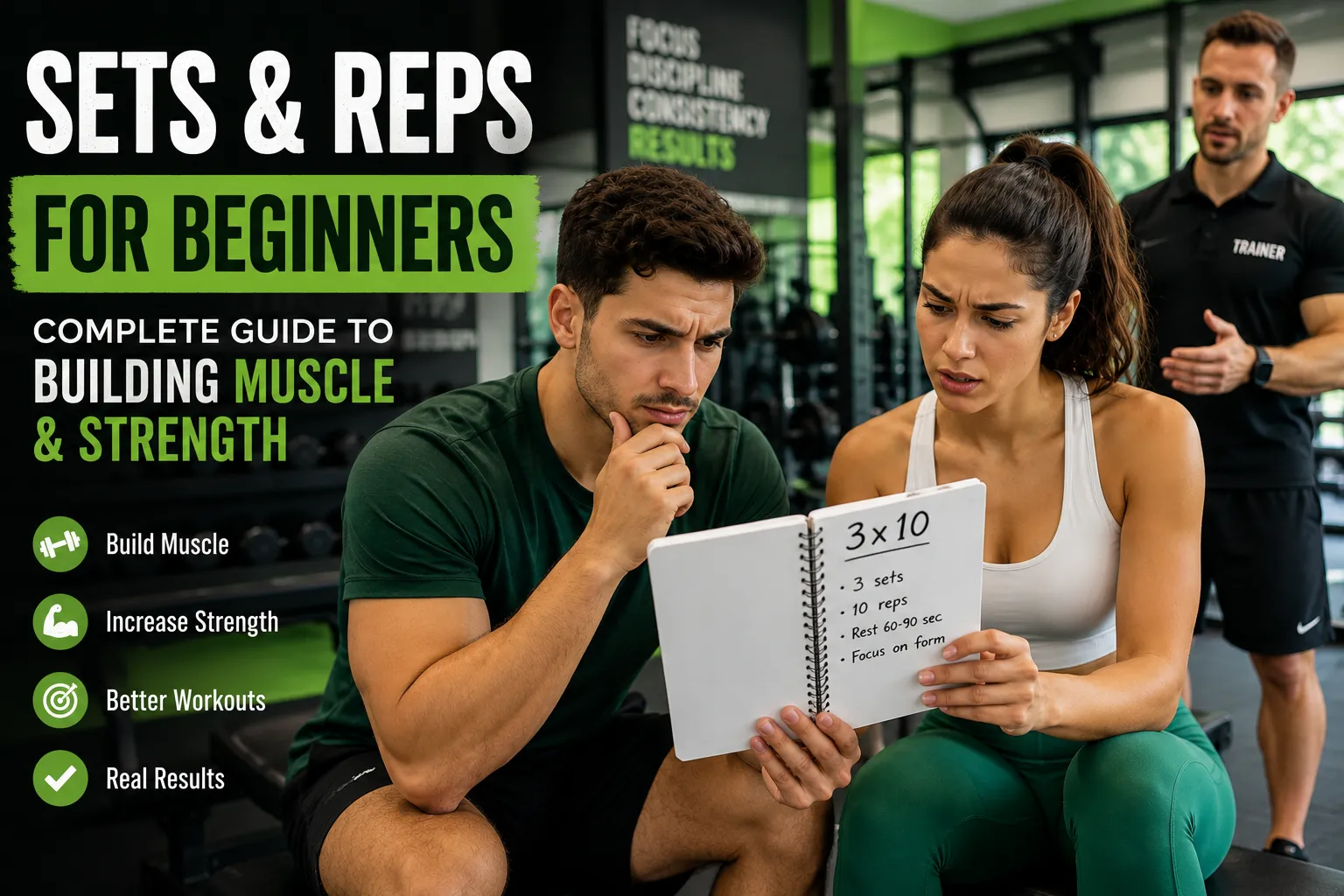
Starting a workout routine for the first time can feel confusing and intimidating. Many beginners walk into the gym and immediately see workout plans filled with numbers like “3×10” or “4 sets of 12 reps” without understanding what they actually mean. Social media makes fitness look complicated, and seeing advanced lifters using heavy weights often makes beginners feel like they are already behind. Because of this confusion, many people either copy workouts that are too advanced, use too much weight too soon, or constantly switch routines without making real progress.
I remember feeling the same way when I first started learning about sets and reps. At the beginning, I believed harder workouts always produced faster results, so I tried advanced routines that did not match my experience level. Instead of improving, I became frustrated, sore, and inconsistent. Over time, I realized that beginners usually make the best progress with simple workouts, proper form, and a clear understanding of how sets and reps work. Once I understood the basics, workouts became much easier to follow and far less overwhelming. In this guide, you will learn exactly what sets and reps mean, how many you should do, how much weight to lift, and how beginners can build strength and muscle safely without overcomplicating fitness.
Strength Training for Beginners: Guide to Weights, Reps, and Sets
Strength training is one of the best ways to improve overall fitness and health. It helps beginners:
- build muscle,
- increase strength,
- improve posture,
- support fat loss,
- and boost confidence.
However, beginners do not need advanced workout routines to make progress. A simple workout plan with the right sets and reps is often more effective.
Understanding workout structure is the first step to training correctly.
What Is a Set and How Many Reps Are in It?
A rep, short for repetition, means doing one complete movement of an exercise.
For example:
- One squat = 1 rep
- One push-up = 1 rep
- One dumbbell curl = 1 rep
A set is a group of reps performed without stopping.
For example:
- 10 push-ups in a row = 1 set of 10 reps
If your workout says:
- 3 × 10 squats
It means:
- perform 10 squats,
- rest,
- and repeat this 3 times.
This is one of the most common workout structures for beginners.
Simple Fitness Definitions
| Fitness Term | Simple Meaning |
|---|---|
| Rep | One complete exercise movement |
| Set | A group of reps performed together |
| Rest | Recovery time between sets |
| Workout Volume | The total amount of workout work completed |
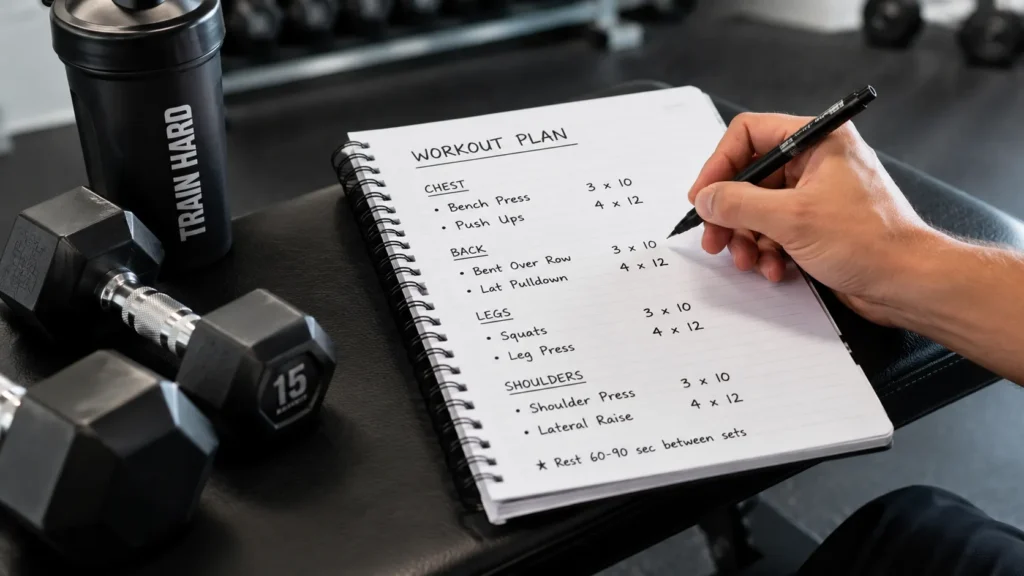
What Does 3×10 Mean?
Many beginners see workout plans written like:
- 3×10
- 4×12
- 2×15
These numbers are simple.
The first number represents sets.
The second number represents reps.
| Workout Format | Meaning |
|---|---|
| 3×10 | 3 sets of 10 reps |
| 4×12 | 4 sets of 12 reps |
| 2×15 | 2 sets of 15 reps |
Once beginners understand this format, workout plans become much easier to follow.
Reps, Sets, Rest, and Speed
Good workouts are not only about reps and sets. Rest and exercise speed also matter.
Reps
Reps control how hard your muscles work.
Different rep ranges support different goals:
- low reps help build strength,
- moderate reps help build muscle,
- high reps improve endurance.
Sets
Sets increase workout volume.
More sets usually create a bigger muscle challenge. However, beginners should avoid very high workout volume at first.
Rest
Rest helps muscles recover between sets.
Too little rest can reduce performance. Too much rest can lower workout intensity.
Speed
Exercise speed matters too.
Beginners should:
- move slowly,
- control the weight,
- focus on proper form,
- and avoid rushing exercises.
Controlled movement helps muscles work properly and lowers injury risk.
What Is Workout Volume?
Workout volume is the total amount of work you do during exercise. It is usually based on:
- sets,
- reps,
- and the amount of weight lifted.
For example:
- 3 sets × 10 reps creates more workout volume than 2 sets × 8 reps.
Workout volume affects:
- muscle growth,
- recovery,
- and training progress.
Beginners do not need extremely high workout volume to see results. Moderate volume is usually enough to:
- build strength,
- improve recovery,
- and reduce soreness.
Most beginners make great progress with:
- 2–4 sets per exercise,
- and 4–6 exercises per workout.
How Many Reps Should a Beginner Do?
Most beginners should start with:
- 8–12 reps per set.
This rep range works well because it:
- improves form,
- builds muscle,
- increases strength,
- and lowers injury risk.
Very low reps with heavy weights are usually not ideal for beginners. Your body first needs to learn proper movement patterns.
| Goal | Recommended Reps |
| Strength | 4–6 reps |
| Muscle growth | 8–12 reps |
| Endurance | 15–20 reps |
For most beginners, the 8–12 rep range is the safest and most effective choice.
How Many Sets and Reps Should Beginners Do?
Beginners do not need extremely long workouts to see results. Simple and consistent training is usually more effective than trying advanced routines too early.
Most beginners can make good progress with:
- 2–4 sets per exercise.
Here is a simple beginner structure:
| Exercise | Sets | Reps |
| Squats | 3 | 10 |
| Push-ups | 3 | 8–10 |
| Dumbbell Rows | 3 | 12 |
| Shoulder Press | 2 | 10 |
This amount is enough to:
- build muscle,
- improve strength,
- and support recovery.
Too many sets can increase soreness and fatigue.
Best Exercises for Beginner Sets and Reps
Choosing the right exercises is just as important as choosing the right sets and reps.
Compound Exercises
Compound exercises train multiple muscle groups at the same time.
Examples include:
- squats,
- push-ups,
- rows,
- deadlifts,
- bench press,
- and shoulder press.
These exercises are excellent for beginners because they:
- build overall strength,
- improve coordination,
- burn more calories,
- and save time.
Most beginners should focus mainly on compound movements.
Isolation Exercises
Isolation exercises target one muscle group at a time.
Examples include:
- bicep curls,
- tricep extensions,
- leg curls,
- and calf raises.
These exercises can help improve weak muscles, but beginners usually do not need many isolation exercises early on.
How Much Weight Should Beginners Lift?
Choosing the right weight is important.
A beginner should use a weight that:
- feels challenging,
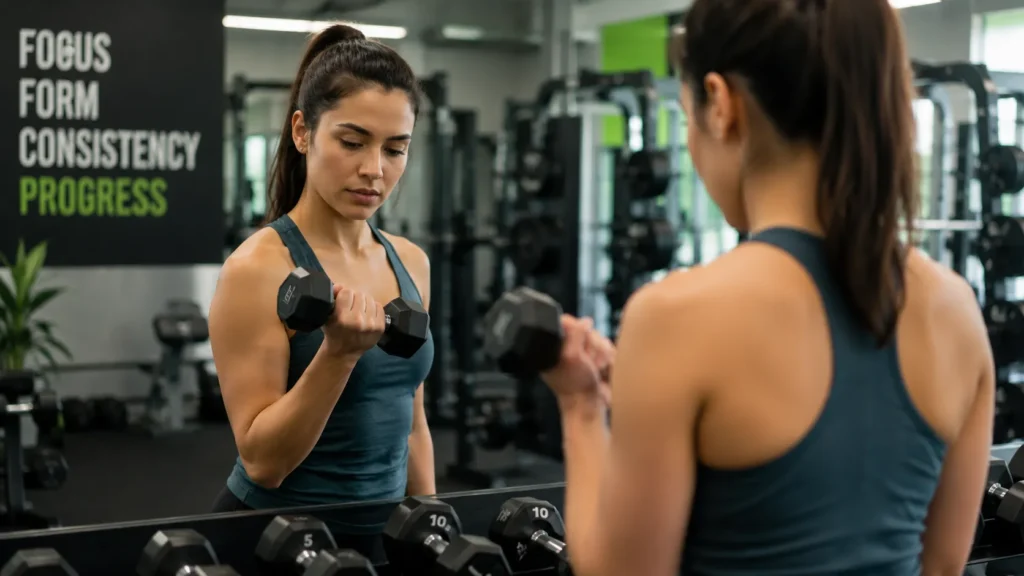
- allows proper form,
- and still feels controlled.
A simple rule is:
the last 2 reps should feel difficult but manageable.
It is completely normal for beginners to start with lighter weights while learning proper form.
If the weight feels too easy, increase it slightly.
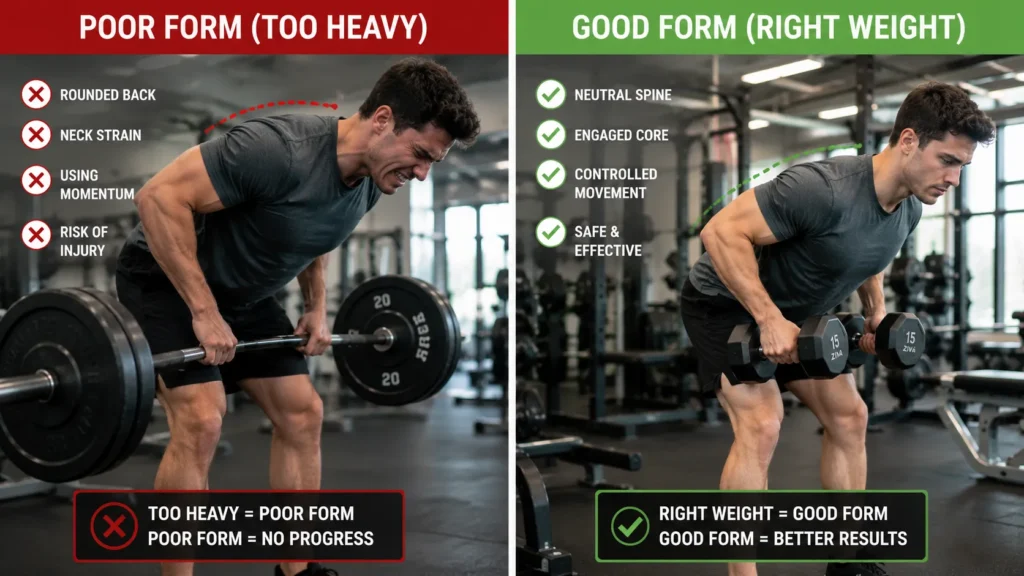
If your form breaks down, the weight is too heavy.
Beginners should focus more on:
- movement quality,
- consistency,
- and control,
instead of lifting extremely heavy weights.
💡 Expert Tip:
Beginners usually make faster progress when they focus on proper form before increasing weight. Learning correct movement patterns early can improve long-term strength and reduce injury risk.
What Is Reps in Reserve?
Reps in reserve, often called RIR, means stopping a set before complete muscle failure.
For example:
- if you could perform 12 reps but stop at 10 reps,
- you have 2 reps in reserve.
Beginners should usually stop with:
- 1–2 reps left in the tank.
This helps:
- maintain proper form,
- reduce injury risk,
- improve recovery,
- and prevent excessive fatigue.
Training to complete failure on every set is usually unnecessary for beginners.
How Long Should Beginners Rest Between Sets?
Rest time depends on your training goal.
| Goal | Rest Time |
| Muscle growth | 60–90 seconds |
| Strength | 2–3 minutes |
| Endurance | 30–60 seconds |
Most beginners should rest:
- around 60–90 seconds between sets.
This gives muscles enough recovery without making workouts too long.
How Many Days a Week Should Beginners Train?
Most beginners should train:
- 2–3 days per week.
Beginners often think more workouts always mean faster results. However, recovery is an important part of building strength and muscle.
Full-body workouts work well for beginners because they:
- train all major muscle groups,
- improve recovery,
- and help build consistent habits.
A simple beginner schedule looks like this:
| Day | Workout |
| Monday | Full Body Workout |
| Tuesday | Rest |
| Wednesday | Full Body Workout |
| Thursday | Rest |
| Friday | Full Body Workout |
| Weekend | Recovery or Light Activity |
This schedule gives beginners enough recovery while still supporting steady progress.
Beginner Recovery Tips
- Sleep 7–9 hours every night.
- Drink enough water throughout the day.
- Eat enough protein to support muscle recovery.
- Avoid training too hard every day.
- Take rest days seriously.
- Stretch and warm up regularly.
Your muscles recover and grow outside the gym. Recovery is an important part of long-term progress.
Should Beginners Warm Up Before Lifting?
Yes. A proper warm-up helps prepare your body for exercise.
A beginner warm-up can include:
- 5–10 minutes of light cardio,
- mobility exercises,
- and lighter warm-up sets.
Good warm-ups help:
- improve blood flow,
- increase mobility,
- reduce stiffness,
- and lower injury risk.
For example:
- before squats, beginners can first perform bodyweight squats or lighter sets.
Beginner Workout Example Using Sets and Reps
Here is a simple full-body beginner workout:
| Exercise | Sets | Reps |
| Bodyweight Squats | 3 | 10 |
| Push-ups | 3 | 8 |
| Dumbbell Rows | 3 | 12 |
| Glute Bridges | 2 | 15 |
| Shoulder Press | 2 | 10 |
| Plank | 2 | 30 sec |
This type of workout is simple, beginner-friendly, and easy to recover from.
Beginners can perform this workout:
- 2–3 times per week.
How to Adjust Based on Experience
As you get stronger, your workouts should slowly change.
This is called progressive overload.
You can progress by:
- increasing weight,
- adding reps,
- adding sets,
- or improving exercise form.
Beginners should progress slowly.
Small improvements each week often create the best long-term results.
When Should Beginners Increase Weight or Reps?
Beginners should increase difficulty gradually.
You can increase weight when:
- all sets feel easy,
- you can complete extra reps comfortably,
- and your form stays solid.
Small increases are safer and easier to recover from.
Signs Your Workout Is Working
- Weights start feeling easier.
- Your exercise form improves.
- You recover faster between workouts.
- Your strength slowly increases.
- Your confidence in the gym improves.
- You feel more energetic during daily activities.
Beginners often expect dramatic changes quickly. However, small improvements usually create the best long-term results.
Signs You Are Lifting Too Heavy
Many beginners try to lift too much weight too soon.
This often leads to:
- poor form,
- joint pain,
- and unnecessary injuries.
Here are common signs the weight is too heavy:
- swinging the weight,
- losing control during reps,
- incomplete range of motion,
- holding your breath too much,
- sharp joint pain,
- or using momentum instead of muscles.
If these signs appear, reduce the weight and focus on proper form.
Benefits of Strength Training
Strength training offers many benefits for beginners.
It can help:
- build muscle,
- improve bone health,
- support fat loss,
- increase confidence,
- improve posture,
- and boost energy levels.
Many beginners also notice:
- better movement,
- improved mental health,
- and better sleep quality.
Consistency matters more than perfection.
Guide to Weights, Reps, and Sets
| Goal | Sets | Reps | Weight |
| General fitness | 2–3 | 10–12 | Moderate |
| Muscle growth | 3–4 | 8–12 | Moderate |
| Strength | 3–5 | 4–6 | Heavy |
| Endurance | 2–3 | 15–20 | Light |
This table gives beginners a simple starting point.
Why Beginners Should Avoid Copying Advanced Lifters
Many beginners think they are not doing enough because social media often shows advanced workouts and heavy lifting. However, beginners usually make the best progress with simple routines, controlled reps, and steady progression.
Advanced athletes:
- have years of training experience,
- recover faster,
- use higher workout volume,
- and often train with different goals.
Trying advanced programs too early can lead to:
- excessive soreness,
- poor recovery,
- burnout,
- and frustration.
Simple and consistent training usually works best for beginners.
Common Sets and Reps Mistakes Beginners Make
Many beginners make the same mistakes.
Using Too Much Weight
Heavy weights can hurt form and increase injury risk.
Doing Too Many Sets
More is not always better.
Your muscles need time to recover.
Skipping Rest
Rest helps muscles recover and perform better.
Training With Poor Form
Good technique should always come before heavier weights.
Changing Workouts Too Often
Stick to a simple routine long enough to see progress.
Beginner Mistakes vs Better Approaches
| Beginner Mistake | Better Approach |
|---|---|
| Lifting too heavy | Start with manageable weight |
| Copying advanced workouts | Follow beginner-friendly routines |
| Skipping rest days | Allow proper recovery |
| Changing workouts weekly | Stay consistent with one plan |
| Ignoring proper form | Learn technique before adding weight |
Focus on Progress, Not Perfection
Many beginners worry about having the perfect workout plan. However, consistency matters more than perfect workouts.
Learning proper form, staying active, and improving slowly will produce better long-term results than constantly changing routines.
You do not need perfect workouts to make progress.
You simply need consistency and patience.
Beginner Sets and Reps Checklist
✅ Focus on proper form
✅ Use manageable weight
✅ Perform 2–4 sets per exercise
✅ Stay in the 8–12 rep range
✅ Rest 60–90 seconds between sets
✅ Train 2–3 days per week
✅ Warm up before lifting
✅ Increase weight gradually
✅ Track your workouts
✅ Prioritize recovery and sleep
Seek Professional Guidance
If possible, work with:
- a certified trainer,
- coach,
- or experienced gym partner.
Good guidance can help beginners:
- learn proper form,
- avoid injuries,
- and build confidence faster.
Even a few coaching sessions can make a big difference.
Strength Training Tips & Workouts
Here are some simple beginner tips:
- focus on compound exercises,
- warm up before training,
- track your workouts,
- sleep enough,
- and stay consistent.
You do not need perfect workouts.
You only need consistent effort.
Conclusion: What Actually Matters
Understanding sets and reps does not need to feel complicated. Most beginners make better progress when they focus on simple and consistent training instead of chasing perfect workouts or copying advanced fitness routines online. Learning proper form, using manageable weights, and gradually improving over time usually leads to better long-term results than trying to do too much too soon.
From personal experience, one of the biggest mistakes beginners make is believing they need extreme workouts to see progress. In reality, the people who improve the most are often the ones who stay patient, follow a balanced workout routine, and remain consistent for months instead of only a few weeks. Building strength and muscle takes time, but small improvements each week can create major long-term results.
If you are just starting your fitness journey, focus on learning the basics first. Use proper sets and reps, recover well, and avoid comparing yourself to advanced lifters online. Fitness becomes much easier once you stop overcomplicating it. Stay consistent, trust the process, and remember that steady progress is what truly matters.
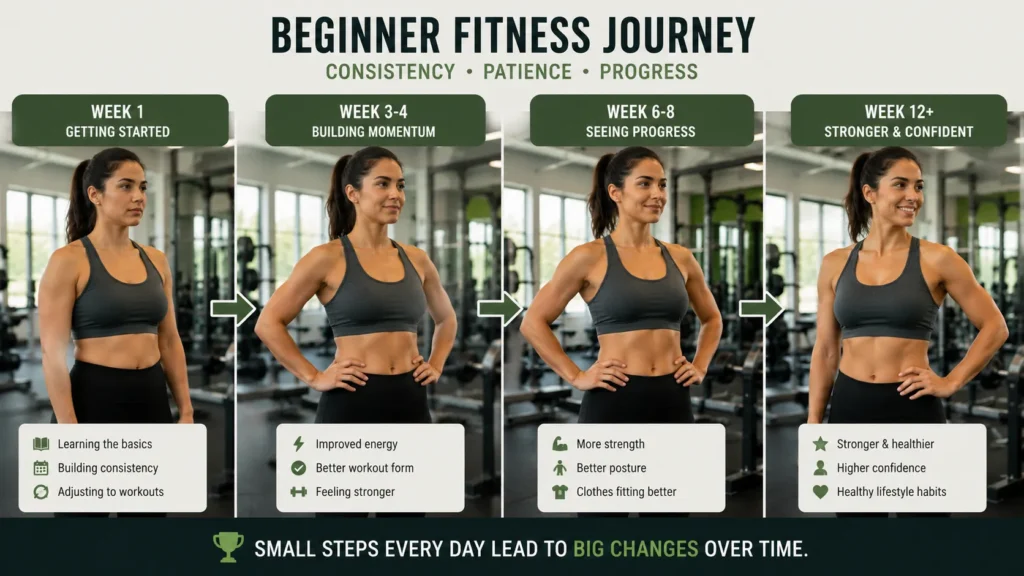
Beginner Progress Timeline
| Time Period | What Beginners May Notice |
|---|---|
| 1–2 Weeks | Better workout understanding and improved consistency |
| 3–4 Weeks | Improved energy and workout confidence |
| 6–8 Weeks | Increased strength and better exercise form |
| 2–3 Months | Visible fitness and muscle improvements |
FAQs
How many sets should a beginner do?
Most beginners should perform 2–4 sets per exercise.
Is 3 sets enough for beginners?
Yes. Three sets are enough for most beginner workouts.
What is the best rep range for beginners?
Most beginners benefit from 8–12 reps per set.
Should beginners lift heavy or light?
Beginners should use moderate weights that allow proper form.
How many exercises should beginners do per workout?
Most beginners only need 4–6 exercises per workout.
Can beginners train to failure?
Most beginners should stop 1–2 reps before failure to maintain proper form and recovery.
