


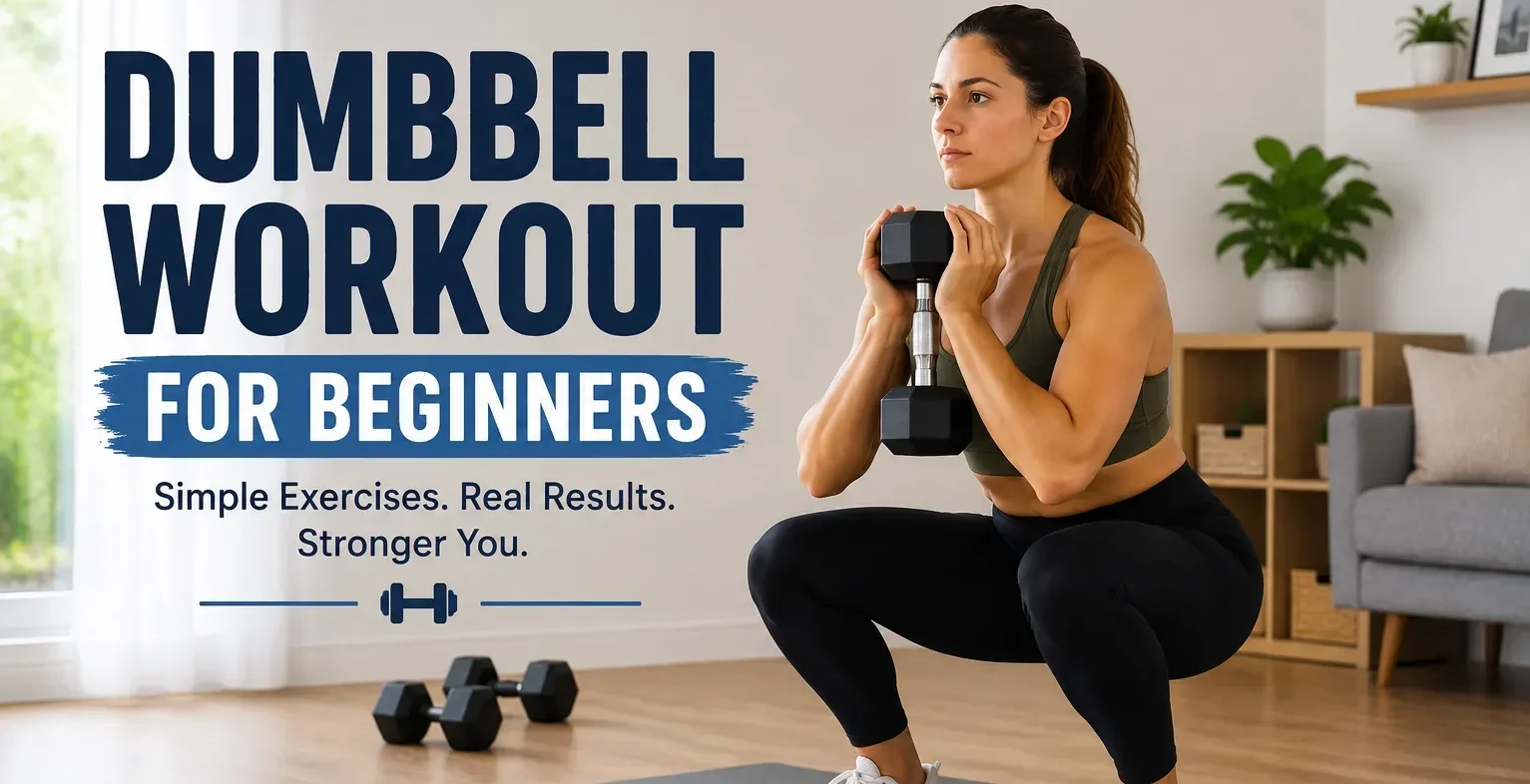
Starting your first dumbbell workout can feel overwhelming. You may wonder which exercises to do, how heavy your dumbbells should be, or if you are using the correct form. Many beginners also worry about getting injured or wasting time on workouts that do not deliver results. If you have ever watched fitness videos and felt confused by complicated routines, you are not alone. The good news is that strength training does not have to be difficult. With a simple plan and the right guidance, anyone can build strength safely at home.
After reviewing beginner training programs and common mistakes made by new lifters, one thing becomes clear: the people who see the best results are not the ones lifting the heaviest weights—they are the ones who focus on proper form, stay consistent, and progress gradually. That same approach is the foundation of this guide. You will learn how to choose the right dumbbell weight, perform beginner-friendly exercises correctly, and follow a practical workout plan that helps you build strength, improve confidence, and create healthy habits that last.
Why Dumbbells Are Ideal for Beginners
Many people think they need expensive machines to build strength. That is not true. Dumbbells are one of the most effective tools for beginners because they are easy to learn and work well for almost every fitness goal.
Here are the biggest benefits of starting with dumbbells.
Easy to Learn
Most dumbbell exercises use natural body movements. This makes them easier to understand than many machine exercises. As you practice, your confidence grows with every workout.
Perfect for Home Workouts
A small pair of dumbbells takes very little space. You can complete a full-body workout in your living room, bedroom, or garage without needing a gym membership.
Build Full-Body Strength
Dumbbells train every major muscle group, including your:
- Chest
- Back
- Shoulders
- Arms
- Legs
- Glutes
- Core
With only a few exercises, you can create an effective full-body routine.
Improve Balance and Coordination
Unlike machines that guide every movement, dumbbells require your stabilizing muscles to work harder. This improves balance, coordination, and overall movement quality.
Help Correct Muscle Imbalances
Many people have one side of the body that is stronger than the other. Since each arm or leg lifts its own weight, dumbbells help both sides develop more evenly.
Support Different Fitness Goals
A beginner dumbbell workout can help you:
- Build muscle
- Increase strength
- Burn calories
- Improve posture
- Support healthy weight loss
- Increase bone strength
- Improve daily movement
This flexibility makes dumbbells one of the best investments for anyone starting strength training.
Dumbbell Workout for Beginners: Key Takeaways
- Train your full body two or three days per week.
- Start with a weight you can control for 8 to 12 repetitions.
- Learn proper form before increasing the dumbbell weight.
- Rest for at least one day between full-body workouts.
- Increase repetitions first. Then increase the weight gradually.
- A focused 20-minute dumbbell workout can build strength when done consistently.
Is This Dumbbell Workout Right for You?
This guide is designed for people who are completely new to strength training. You do not need previous gym experience to follow these workouts.
This article is a good fit if you:
- Have never lifted weights before
- Want to exercise at home
- Own one or two pairs of dumbbells
- Want a simple workout plan
- Need help choosing the right weight
- Want to learn proper exercise form
- Prefer short and effective workouts
You can also follow this guide if you are returning to exercise after a long break. Start with lighter weights and focus on learning the movement before increasing resistance.
If you have a serious injury, recent surgery, or a medical condition that affects exercise, speak with a qualified healthcare professional before beginning a new workout program.
A Quick Beginner Readiness Check
Before lifting your first dumbbell, check whether your body is ready for basic strength training.
Answer these simple questions:
- Can you sit down and stand up without pain?
- Can you lift both arms above your head comfortably?
- Can you hold a plank for 20 seconds?
- Can you balance on one leg for 15 seconds?
- Can you perform a bodyweight squat without knee pain?
If you answered yes to most of these questions, you are ready to begin a beginner dumbbell workout.
If one movement feels difficult, do not worry. Move slowly, practice regularly, and improve one step at a time.
How to Choose the Right Dumbbell Weight
One of the biggest questions beginners ask is:
“How heavy should my dumbbells be?”
Choosing the right weight is important. If the weight is too light, your muscles will not be challenged enough. If it is too heavy, your form may break down, increasing the risk of injury.
The best starting weight allows you to complete every repetition with good form while still feeling challenged during the last two or three repetitions.
Beginner Dumbbell Weight Guide
These ranges are general starting points. Choose a weight that makes the final two repetitions challenging without changing your form.
| Exercise | Suggested starting range | How the final reps should feel | When to increase weight |
|---|---|---|---|
| Bicep curl | 5–15 lbs per hand | Challenging without swinging | After completing 12 controlled reps |
| Shoulder press | 5–15 lbs per hand | Hard but steady overhead | When you can avoid back arching |
| Chest press | 5–20 lbs per hand | Chest and arms feel challenged | After all sets feel controlled |
| Goblet squat | 10–35 lbs total | Legs work without knees collapsing | When 12 reps feel comfortable |
| Romanian deadlift | 10–40 lbs total | Hamstrings work without back rounding | When you control the full range |
| Bent-over row | 5–20 lbs per hand | Back works without torso twisting | After 12 clean reps per side |
Simple test: The weight is suitable when you can finish the set with good form but would struggle to complete more than two extra repetitions.
Fixed vs Adjustable Dumbbells
Many beginners wonder which type of dumbbell is better.
Fixed Dumbbells
Fixed dumbbells have one permanent weight.
Pros
- Easy to use
- No adjustments needed
- Durable
- Great for beginners
Cons
- Require more storage space
- Buying multiple pairs can become expensive
Adjustable Dumbbells
Adjustable dumbbells allow you to change the weight using one handle.
Pros
- Save space
- Cost less than buying many individual pairs
- Easy to increase resistance as you become stronger
Cons
- Weight changes take extra time
- Usually more expensive at first
If you plan to continue strength training for months or years, adjustable dumbbells are often the better long-term investment.
Essential Safety Tips Before You Start
Good form is more important than heavy weights.
Keep these simple rules in mind every time you train.
Warm Up First
Never begin lifting with cold muscles.
Spend five minutes preparing your body before every workout.
A simple warm-up includes:
- Arm circles
- Shoulder rolls
- Hip circles
- Bodyweight squats
- Walking in place
- High knees
- Leg swings
A proper warm-up increases blood flow, improves mobility, and prepares your muscles for exercise.
Focus on Slow Movements
Do not rush through each repetition.
Lift the dumbbell with control.
Lower it slowly.
This helps your muscles work harder while reducing unnecessary strain on your joints.
Maintain Good Posture
Keep your chest up.
Pull your shoulders back gently.
Brace your core throughout every exercise.
Avoid rounding your back while lifting.
Breathe Properly
Many beginners accidentally hold their breath.
Instead:
- Breathe in as you lower the weight.
- Breathe out as you lift or push the weight.
Proper breathing improves stability and helps you complete each repetition safely.
Stop If You Feel Sharp Pain
Muscle fatigue is normal.
Sharp pain is not.
If an exercise causes sudden pain, stop immediately and check your technique before continuing.
Common Beginner Mistakes to Avoid
Almost every beginner makes small mistakes during the first few weeks.
Knowing them early helps you improve faster.
Choosing Heavy Dumbbells Too Soon
Many people believe heavier weights produce faster results.
In reality, poor form increases injury risk and slows progress.
Start light.
Master the movement.
Increase weight gradually.
Skipping the Warm-Up
Cold muscles are less prepared for exercise.
Even five minutes of movement can improve your workout quality.
Copying Advanced Lifters
Social media often shows advanced exercises that require years of practice.
You do not need complicated movements to build strength.
Simple exercises performed correctly produce excellent results.
Ignoring Recovery
Muscles grow while recovering.
Sleep well.
Drink enough water.
Eat enough protein.
Take rest days seriously.
Comparing Yourself to Others
Everyone begins somewhere.
Focus on improving your own strength each week instead of comparing yourself with experienced lifters.
Equipment You Need
One of the best things about beginner dumbbell workouts is their simplicity.
You only need a few items.
- One or two pairs of dumbbells
- Comfortable workout clothes
- Athletic shoes with good grip
- Water bottle
- Exercise mat for floor movements
- Small towel
That is enough to complete an effective full-body workout at home.

15 Easy Dumbbell Exercises for Beginners
Now that you know how to choose the right weight and prepare for your workout, it is time to learn the exercises.
These movements target every major muscle group. They also teach the basic movement patterns used in strength training.
Take your time with each exercise. Focus on good form before increasing the weight.
1. Goblet Squat
Difficulty: ★★☆☆☆
Muscles Worked
- Quadriceps
- Glutes
- Hamstrings
- Core
How to Do It
- Hold one dumbbell close to your chest.
- Stand with your feet shoulder-width apart.
- Keep your chest up.
- Push your hips back.
- Bend your knees until your thighs are almost parallel to the floor.
- Push through your heels to stand.
Beginner Recommendation
- Sets: 2–3
- Reps: 10–12
Common Mistake
Do not let your knees collapse inward.
Pro Tip
Keep your elbows close to your body throughout the movement.
2. Romanian Deadlift
Difficulty: ★★☆☆☆
Muscles Worked
- Hamstrings
- Glutes
- Lower back
- Core
How to Do It
- Hold a dumbbell in each hand.
- Stand tall with your knees slightly bent.
- Push your hips backward.
- Lower the dumbbells along your legs.
- Stop when you feel a stretch in your hamstrings.
- Squeeze your glutes to return to standing.
Beginner Recommendation
- Sets: 2–3
- Reps: 10–12
Common Mistake
Do not round your back.
Pro Tip
Imagine closing a car door with your hips.
3. Dumbbell Chest Press
Difficulty: ★★☆☆☆
Muscles Worked
- Chest
- Shoulders
- Triceps
How to Do It
- Lie on a bench or the floor.
- Hold one dumbbell in each hand.
- Press the weights above your chest.
- Lower them slowly until your elbows touch the floor or reach about a 90-degree angle.
- Press back up.
Beginner Recommendation
- Sets: 2–3
- Reps: 10–12
Common Mistake
Do not bounce your elbows off the floor.
4. Single-Arm Bent-Over Row
Difficulty: ★★☆☆☆
Muscles Worked
- Upper back
- Lats
- Rear shoulders
- Biceps
How to Do It
- Place one hand on a bench or sturdy chair.
- Hold one dumbbell with your other hand.
- Pull the dumbbell toward your hip.
- Lower it slowly.
- Complete all repetitions before switching sides.
Beginner Recommendation
- Sets: 2–3
- Reps: 10–12 each side
Common Mistake
Avoid twisting your body.
5. Shoulder Press
Difficulty: ★★★☆☆
Muscles Worked
- Shoulders
- Triceps
- Upper chest
How to Do It
- Hold dumbbells at shoulder height.
- Keep your elbows below your wrists.
- Press the weights overhead.
- Lower slowly.
Beginner Recommendation
- Sets: 2
- Reps: 10
Common Mistake
Do not arch your lower back.
6. Bicep Curl
Difficulty: ★☆☆☆☆
Muscles Worked
- Biceps
- Forearms
How to Do It
- Stand tall.
- Hold one dumbbell in each hand.
- Keep your elbows close to your body.
- Curl the weights upward.
- Lower slowly.
Beginner Recommendation
- Sets: 2
- Reps: 12
Common Mistake
Do not swing the weights.
7. Overhead Triceps Extension
Difficulty: ★★☆☆☆
Muscles Worked
- Triceps
How to Do It
- Hold one dumbbell with both hands.
- Raise it above your head.
- Bend your elbows.
- Lower the weight behind your head.
- Extend your arms again.
Beginner Recommendation
- Sets: 2
- Reps: 12
Common Mistake
Keep your elbows close together.
8. Reverse Lunge
Difficulty: ★★☆☆☆
Muscles Worked
- Glutes
- Quadriceps
- Hamstrings
How to Do It
- Hold dumbbells by your sides.
- Step backward.
- Lower both knees.
- Push through the front heel.
- Return to standing.
Beginner Recommendation
- Sets: 2
- Reps: 10 each leg
Common Mistake
Do not lean your upper body forward.
9. Dumbbell Glute Bridge
Difficulty: ★☆☆☆☆
Muscles Worked
- Glutes
- Hamstrings
- Core
How to Do It
- Lie on your back.
- Place one dumbbell across your hips.
- Bend your knees.
- Lift your hips.
- Pause for one second.
- Lower slowly.
Beginner Recommendation
- Sets: 2–3
- Reps: 12
10. Calf Raise
Difficulty: ★☆☆☆☆
Muscles Worked
- Calves
How to Do It
- Hold dumbbells by your sides.
- Rise onto your toes.
- Pause briefly.
- Lower slowly.
Beginner Recommendation
- Sets: 2
- Reps: 15
11. Dumbbell Farmer’s Carry
Difficulty: ★★☆☆☆
Muscles Worked
- Grip
- Core
- Shoulders
- Legs
How to Do It
- Hold heavy dumbbells.
- Stand tall.
- Walk slowly.
- Keep your shoulders back.
- Brace your core.
Beginner Recommendation
- Walk for 20–30 seconds.
- Repeat 2–3 times.
12. Russian Twist
Difficulty: ★★☆☆☆
Muscles Worked
- Core
- Obliques
How to Do It
- Sit on the floor.
- Hold one dumbbell.
- Lean back slightly.
- Rotate your torso from side to side.
Beginner Recommendation
- Sets: 2
- Reps: 12 each side
13. Standing Lateral Raise
Difficulty: ★★☆☆☆
Muscles Worked
- Side shoulders
How to Do It
- Hold light dumbbells.
- Raise your arms to shoulder height.
- Lower slowly.
Beginner Recommendation
- Sets: 2
- Reps: 12
14. Standing Hammer Curl
Difficulty: ★☆☆☆☆
Muscles Worked
- Biceps
- Forearms
How to Do It
- Hold dumbbells with your palms facing each other.
- Curl upward.
- Lower with control.
Beginner Recommendation
- Sets: 2
- Reps: 12
15. Dumbbell Dead Bug
Difficulty: ★★☆☆☆
Muscles Worked
- Core
- Deep abdominal muscles
How to Do It
- Lie on your back.
- Hold one light dumbbell above your chest.
- Extend one leg while lowering the opposite arm.
- Return to the starting position.
- Repeat on the other side.
Beginner Recommendation
- Sets: 2
- Reps: 10 each side
20-Minute Beginner Full-Body Dumbbell Workout
20-Minute Full-Body Dumbbell Workout for Beginners
Complete the exercises in order. Rest when needed and keep every repetition slow and controlled.
| Exercise | Sets | Repetitions | Rest | Main muscles |
|---|---|---|---|---|
| Goblet squat | 2 | 10 | 45–60 seconds | Legs, glutes and core |
| Romanian deadlift | 2 | 10 | 45–60 seconds | Hamstrings and glutes |
| Dumbbell chest press | 2 | 10 | 45–60 seconds | Chest, shoulders and triceps |
| Single-arm bent-over row | 2 | 10 per side | 45–60 seconds | Back and biceps |
| Dumbbell shoulder press | 2 | 8–10 | 45–60 seconds | Shoulders and triceps |
| Dumbbell glute bridge | 2 | 12 | 45 seconds | Glutes, hamstrings and core |
| Farmer’s carry | 2 | 20–30 seconds | 60 seconds | Grip, shoulders and core |
Sample Beginner Weekly Workout Plan
A full-body routine works best for most beginners because it allows each muscle group to recover between sessions.
Sample Beginner Weekly Workout Plan
A full-body routine works best for most beginners because it allows each muscle group to recover between sessions while helping you build strength consistently.
| Day | Workout Plan |
|---|---|
| Monday | 🏋️ Full-Body Dumbbell Workout |
| Tuesday | 🚶 Light Walking and Stretching |
| Wednesday | 🏋️ Full-Body Dumbbell Workout |
| Thursday | 🧘 Mobility Exercises or an Easy Walk |
| Friday | 🏋️ Full-Body Dumbbell Workout |
| Saturday | 🤸 Gentle Stretching or a Recreational Activity |
| Sunday | 😴 Complete Rest |
How Long Should Each Workout Last?
One of the biggest mistakes beginners make is thinking longer workouts are always better.
That is not true.
A focused workout is often more effective than spending hours exercising.
As a beginner, aim for:
- Warm-up: 5 minutes
- Strength workout: 20–30 minutes
- Cool-down: 5 minutes
A complete session takes about 30–40 minutes.
As your fitness improves, you can gradually increase the number of sets or add new exercises instead of making every workout much longer.
How Many Days a Week Should Beginners Lift Weights?
Most beginners get the best results by strength training three days per week.
This schedule gives your muscles enough time to recover and grow stronger.
If you are very new to exercise, start with two sessions each week. After two or three weeks, move to three sessions if you feel comfortable.
Avoid lifting heavy weights every day. Your body needs recovery time to repair muscle tissue and prepare for the next workout.
Should You Do Full-Body or Split Workouts?
For beginners, full-body workouts are the better choice.
A full-body routine helps you:
- Practice each movement more often.
- Build strength evenly.
- Burn more calories in each session.
- Learn proper form faster.
Split routines, such as “chest day” or “leg day,” are usually more suitable for people with several months of consistent strength-training experience.
A simple full-body plan provides everything most beginners need during the first few months of training.
Tips for Progressing Safely with Dumbbells
Starting your fitness journey is exciting. However, the real results come from steady progress. You do not need to double your weights every week. Small improvements lead to lasting success.
Follow these tips to become stronger without increasing your risk of injury.
Master Your Form First
Good technique always comes before heavier weights.
If you cannot complete every repetition with proper form, the weight is too heavy.
Before increasing the weight, ask yourself:
- Can I keep my back straight?
- Can I control the movement?
- Can I finish every repetition without swinging the weight?
- Can I maintain steady breathing?
If the answer is yes, you are ready to progress.
Increase Weight Gradually
Do not jump from light weights to very heavy ones.
Instead, increase your dumbbell weight by the smallest amount available.
For example:
- Move from 10 lbs to 12.5 lbs.
- Then to 15 lbs.
This allows your muscles and joints to adapt safely.
Add Repetitions Before Adding Weight
Another simple way to improve is by increasing repetitions.
For example:
- Week 1: 2 sets × 10 reps
- Week 2: 2 sets × 12 reps
- Week 3: 3 sets × 10 reps
- Week 4: Increase the dumbbell weight and return to 10 reps
This method helps build strength while maintaining good technique.
Slow Down the Movement
Many beginners rush each repetition.
Instead:
- Lift in one to two seconds.
- Lower the weight in two to three seconds.
Slower movements increase muscle control and improve exercise quality.
Stay Consistent
You do not need perfect workouts.
You need consistent workouts.
Training three days each week for several months is far more effective than training every day for one week and then quitting.
A Simple 4-Week Beginner Dumbbell Plan
This plan helps you build confidence before moving to heavier weights.
Week 1
Goal: Learn proper technique.
- 2 workouts
- 2 sets per exercise
- 10 repetitions
- Light dumbbells
Focus on learning the movement.
Week 2
Goal: Improve confidence.
- 3 workouts
- 2 sets
- 10–12 repetitions
Move with control.
Week 3
Goal: Build strength.
- 3 workouts
- 3 sets
- 10–12 repetitions
Increase repetitions if your form remains strong.
Week 4
Goal: Progressive overload.
- 3 workouts
- 3 sets
- Slightly heavier dumbbells
- 8–10 repetitions
Increase the weight only if every exercise feels comfortable.
4-Week Beginner Dumbbell Progression
Progress slowly during your first month. The bars show a gradual increase in total training difficulty, not an exact increase in dumbbell weight.
Complete 2 sets of 10 repetitions with light dumbbells. Focus on form.
Complete 2 sets of 10 to 12 repetitions. Keep each movement controlled.
Complete 3 sets of 10 to 12 repetitions if your form stays strong.
Use slightly heavier dumbbells and complete 3 sets of 8 to 10 repetitions.
At the end of four weeks, repeat the cycle with slightly heavier dumbbells or one additional set for your main exercises.
Signs You Are Getting Stronger
Many beginners only look at the scale.
Strength progress shows up in many other ways.
Look for these improvements:
- Your workouts feel easier.
- You recover faster.
- You can lift heavier dumbbells.
- You complete more repetitions.
- Your balance improves.
- Your posture becomes better.
- Everyday activities feel easier.
- Your energy levels increase.
These are excellent signs that your training is working.
Common Beginner Questions About Progress
When Should I Increase My Dumbbell Weight?
Increase the weight when you can complete every set with proper form and still feel like you could perform one or two more repetitions.
Is Muscle Soreness Required?
No.
Some soreness is normal, especially during the first few weeks.
However, you do not need to feel sore after every workout to make progress.
What If I Miss a Workout?
Do not try to “make up” missed sessions.
Simply continue with your normal schedule.
Consistency over months matters more than one missed workout.
Nutrition Tips for Beginner Strength Training
Exercise is only one part of the process.
Your muscles also need proper nutrition to recover and grow.
Eat Enough Protein
Protein helps repair muscle tissue after training.
Good protein sources include:
- Chicken
- Fish
- Eggs
- Greek yogurt
- Cottage cheese
- Beans
- Lentils
- Tofu
- Lean beef
Try to include protein with each meal.
Stay Hydrated
Water supports muscle function and recovery.
Drink water before, during, and after your workout.
If your workout lasts less than one hour, plain water is usually enough.
Eat Balanced Meals
Your meals should include:
- Lean protein
- Whole grains
- Fruits
- Vegetables
- Healthy fats
Balanced meals provide the energy needed for regular training.
Do Not Skip Meals
Many beginners trying to lose weight eat too little.
Your body still needs nutrients to recover after exercise.
A balanced calorie deficit works better than extreme dieting if weight loss is your goal.
Recovery Tips
Recovery is just as important as your workouts.
Your muscles grow while resting, not while lifting.
Sleep Well
Aim for 7–9 hours of sleep each night.
Quality sleep supports muscle recovery, hormone balance, and energy.
Take Rest Days
Rest days allow your muscles to rebuild.
Light walking or gentle stretching is fine, but avoid heavy lifting every day.
Stretch After Every Workout
A simple cool-down can reduce muscle tightness.
Hold each stretch for about 20–30 seconds.
Include:
- Hamstring stretch
- Quadriceps stretch
- Chest stretch
- Shoulder stretch
- Hip flexor stretch
- Calf stretch
Stretch gently without bouncing.

Beginner Dumbbell Workout Mistakes That Slow Progress
Avoid these habits if you want better results.
Using Momentum
Swinging the dumbbells reduces muscle engagement.
Move slowly and stay in control.
Skipping Leg Exercises
Many beginners focus only on their arms.
Strong legs improve balance, posture, and overall strength.
Train your entire body.
Training Too Hard Too Soon
Your muscles, tendons, and joints need time to adapt.
Increase your workload gradually.
Ignoring Core Strength
A strong core improves nearly every exercise.
Include movements like:
- Planks
- Dead Bugs
- Farmer’s Carries
- Glute Bridges
Comparing Your Progress to Others
Everyone improves at a different pace.
Measure your success by your own progress.
How Long Does It Take to See Results?
Results depend on your consistency, nutrition, sleep, and starting fitness level.
Many beginners notice changes like these:
After 2 Weeks
- Better coordination
- Improved confidence
- Less muscle soreness
- Better exercise technique
After 4 Weeks
- Increased strength
- Better posture
- Improved endurance
- Easier daily activities
After 8 to 12 Weeks
- Noticeable muscle definition
- Improved body composition
- Better balance
- Greater overall fitness
Remember that progress is not always visible in the mirror at first.
Feeling stronger is often the first sign that your program is working.
How to Stay Motivated
Starting is easy.
Staying consistent is the real challenge.
These simple habits can help.
- Schedule your workouts like appointments.
- Keep your dumbbells where you can see them.
- Track every workout in a notebook or app.
- Celebrate small improvements.
- Focus on building the habit instead of chasing perfection.
Even short workouts count.
A 20-minute workout is always better than skipping exercise altogether.
By making strength training part of your weekly routine, you will build confidence, improve your health, and create habits that support long-term fitness.
Conclusion
Every experienced lifter was once a beginner, and the biggest lesson from years of strength training is that lasting results come from consistency, not perfection. You do not need expensive equipment or advanced workouts to become stronger. By mastering proper form, choosing the right weight, and following a simple routine, you can make steady progress while reducing the risk of injury. If you stay patient and keep showing up for your workouts, even small improvements will add up over time. Treat this guide as your starting point, focus on building good habits, and enjoy the process of becoming stronger with every workout.
