


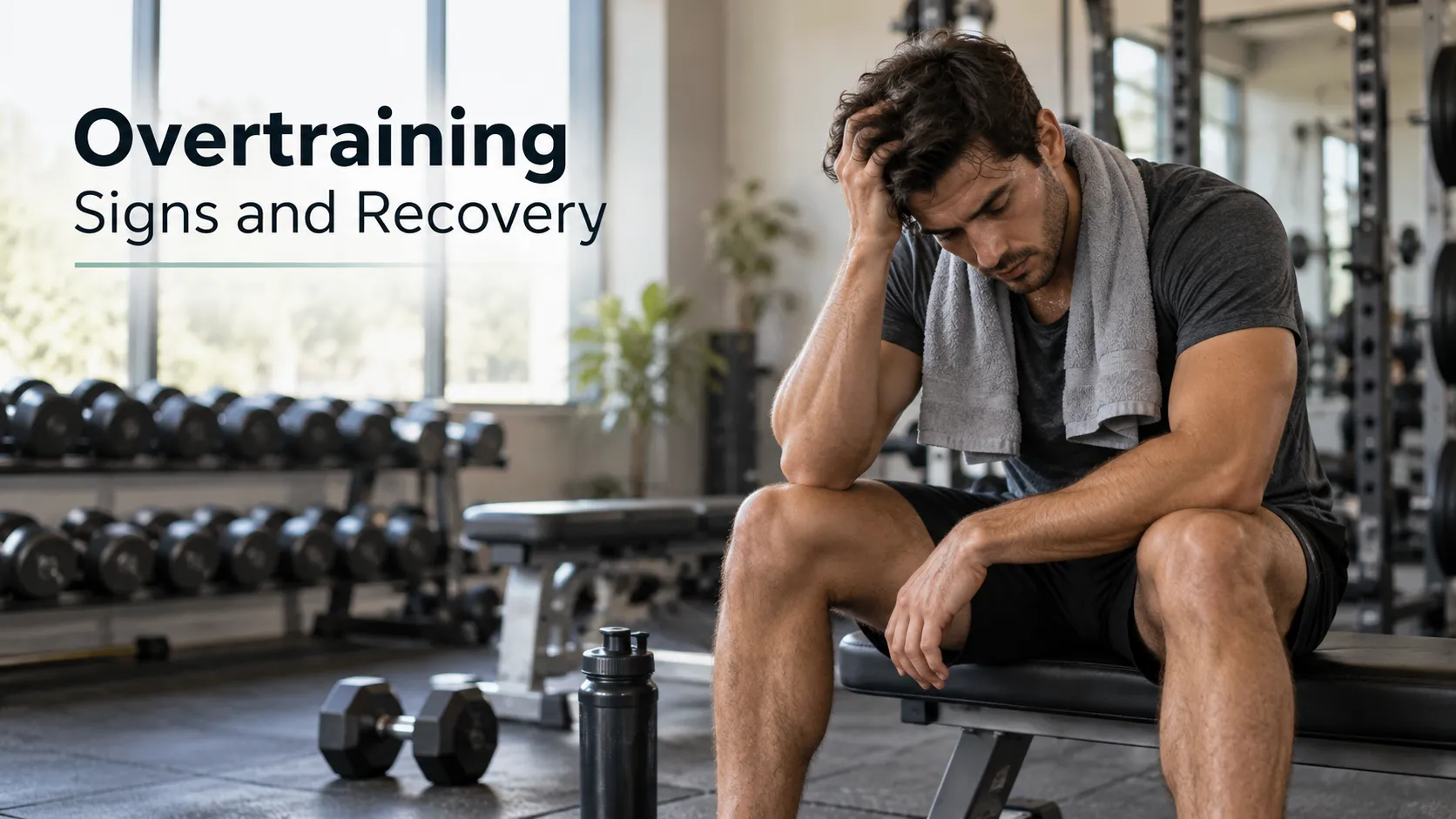
You may start noticing that your usual workouts feel harder than before. The weights that once felt manageable now feel heavy, your muscles stay sore longer, and you feel tired even before training. You may also worry that taking time off will make you lose the progress you worked so hard to achieve. These concerns are common among people who train regularly, especially when fatigue and poor performance begin to replace steady progress.
From a fitness and training perspective, the important thing is to look at patterns rather than panic after one bad workout. Most active people experience normal fatigue and muscle soreness, but persistent exhaustion, declining performance, poor sleep, and slow recovery may be signs that your training stress is greater than your body’s ability to recover. This guide explains the warning signs, recovery strategies, and when it may be time to seek professional help, using evidence-based fitness principles and practical training experience.
What Are the Signs of Overtraining and How Do You Recover?
Overtraining may happen when training stress and other life stressors repeatedly exceed your ability to recover.
Common overtraining signs include:
- Declining workout performance
- Persistent fatigue
- Prolonged muscle soreness
- Poor sleep
- Low motivation
- Mood changes
- Frequent illness
- Difficulty recovering between workouts
Recovery usually involves reducing training stress, improving sleep, eating enough food, managing life stress, and returning to exercise gradually.
Normal training fatigue may improve within days. More serious recovery problems can take weeks or months.
The goal is not to stop exercising forever.
The goal is to give your body enough recovery so you can return to training in a healthier and more sustainable way.
Key Takeaway
Overtraining is usually about a pattern of persistent symptoms, not one difficult workout. If your performance continues to decline and you also experience ongoing fatigue, poor sleep, low motivation, or slow recovery, your body may need less training stress and more recovery. If symptoms are severe, persistent, or getting worse, speak with a healthcare professional.
What Is Overtraining?
Exercise creates stress.
Normally, your body follows a simple cycle:
Training stress → Recovery → Adaptation
You challenge your body through exercise. Then your body recovers and adapts.
Over time, this can help you become stronger and fitter.
However, problems can develop when stress continues to build and recovery is not enough.
Overtraining can happen when training stress and other life stressors consistently become greater than your ability to recover.
This may include:
- High training volume
- High exercise intensity
- Too many hard workouts
- Poor sleep
- Inadequate nutrition
- High work or family stress
- Emotional stress
- Returning to training too quickly
Overtraining is not simply about spending too many hours in the gym.
Your total stress load matters.
Your body does not separate gym stress from life stress.
For example, a workout routine that normally feels manageable may become too demanding when you are also sleeping poorly, dealing with work stress, traveling, or recovering from illness.
How Is Overtraining Diagnosed?
Overtraining syndrome can be difficult to diagnose.
There is no single blood test, scan, smartwatch reading, or symptom that can confirm it.
Healthcare professionals usually look at several factors.
These may include:
- Your training history
- Changes in performance
- Recovery patterns
- Physical symptoms
- Sleep
- Mood
- Nutrition
- Other possible causes of fatigue
Persistent fatigue and poor performance can also be linked to other health concerns.
For example, symptoms may be related to:
- Illness
- Nutritional problems
- Sleep problems
- Hormonal changes
- Mental health concerns
- Other medical conditions
For this reason, you should not assume that every case of fatigue is caused by overtraining.
If symptoms continue despite reducing training and improving recovery, professional evaluation may be helpful.
Are You Overtraining or Just Tired?
This is one of the most common questions among active people.
Not every tired workout means you are overtraining.
Normal fatigue can happen after a difficult workout.
Muscle soreness can also occur after trying new exercises or increasing training intensity.
These symptoms often improve with adequate recovery.
The bigger concern is when symptoms continue.
You may need to look more closely at your training if you notice:
- Repeated performance decline
- Fatigue that does not improve
- Longer recovery times
- Poor sleep
- Low motivation
- Frequent illness
- Mood changes
The pattern matters more than one bad workout.
| What You Notice | What It May Mean | What You Can Consider Doing |
|---|---|---|
| Mild soreness after a new or difficult workout | Normal training fatigue or DOMS may be possible | Use normal recovery strategies and monitor how you feel |
| A few days of unusual fatigue or reduced performance | Your recent training stress may be higher than your current recovery capacity | Consider reducing training intensity or volume and prioritize recovery |
| Persistent fatigue, poor sleep, low motivation, and repeated performance decline | A more serious recovery problem may need attention | Reduce training stress and consider speaking with a qualified healthcare or sports professional |
| Severe symptoms, chest pain, fainting, severe shortness of breath, or unexplained weakness | These symptoms should not be treated as normal training fatigue | Seek medical care promptly |
Note: This table is for general education and cannot diagnose overtraining syndrome or another medical condition.
DOMS vs. Overtraining
Delayed-onset muscle soreness, often called DOMS, is common after challenging exercise.
It may happen when:
- You try a new exercise
- You increase your workout intensity
- You increase training volume
- You return to exercise after a break
DOMS usually improves as your body recovers.
Overtraining is different.
Overtraining involves a broader pattern of problems.
These may include:
- Continued performance decline
- Persistent fatigue
- Poor recovery
- Sleep problems
- Mood changes
- Loss of motivation
Sore muscles alone do not mean you are overtraining.
However, persistent physical and mental symptoms may be a reason to reduce training and evaluate your recovery.
Normal Fatigue vs. Overreaching vs. Overtraining
Training stress exists on a spectrum.
Understanding the difference can help you recognize when your body needs more recovery.
| Condition | What It Usually Means | General Recovery Pattern |
|---|---|---|
| Normal training fatigue | Temporary tiredness after exercise | Often improves within days |
| Functional overreaching | A short-term increase in training stress | Often improves after recovery or a deload |
| Non-functional overreaching | Too much stress with insufficient recovery | Recovery may take weeks |
| Overtraining syndrome | A prolonged decline in performance and wellbeing | Recovery may take weeks or months |
These recovery patterns are general.
They cannot diagnose overtraining syndrome.
Recovery time is different for every person.
Overreaching vs. Overtraining: What Is the Difference?
Overreaching and overtraining are not the same.
Understanding the difference can prevent unnecessary worry.
Planned Overreaching
Planned overreaching is a short period of increased training stress.
It may be part of a structured training plan.
For example, an athlete may temporarily increase training volume before taking time to recover.
Performance may drop for a short period.
However, after adequate recovery, performance may improve.
The important point is that the body recovers and adapts.
Non-Functional Overreaching
Non-functional overreaching happens when training stress becomes too high and recovery is not enough.
Performance may decline and fail to improve quickly.
You may experience:
- Persistent fatigue
- Poor sleep
- Low motivation
- Increased soreness
- Reduced performance
Recovery may take longer.
Poor sleep, life stress, sudden increases in training, and inadequate nutrition may all contribute.
Overtraining Syndrome
Overtraining syndrome is more serious.
It is more than one bad workout or one difficult training week.
It may involve:
- A prolonged decline in performance
- Persistent fatigue
- Poor recovery
- Sleep problems
- Mood changes
- Frequent illness
- Loss of motivation
Recovery can take weeks or months in some cases.
Because overtraining syndrome is difficult to diagnose, persistent symptoms should not be ignored.
Three Questions to Ask Yourself About Overtraining
These questions cannot diagnose overtraining syndrome.
However, they can help you recognize when your training and recovery need attention.
1. Have I Had a Clear Drop in Performance?
Ask yourself whether your performance has changed repeatedly.
For example:
- Your usual weights feel much heavier
- Your running pace has become slower
- Your endurance has decreased
- Normal workouts feel unusually difficult
One bad workout is normal.
The bigger concern is a repeated decline over time.
2. Has the Problem Continued Despite Real Rest or a Deload?
Ask yourself whether you have actually reduced your training.
A random rest day may not always be enough.
Consider whether you have:
- Reduced training stress
- Improved sleep
- Eaten enough food
- Managed life stress
If your symptoms continue despite better recovery, you may need professional advice.
3. How Long Has This Been Happening?
The duration of symptoms matters.
General patterns may include:
- Days: Normal fatigue or functional overreaching may be possible.
- Weeks: Non-functional overreaching or another problem may need attention.
- Months: Overtraining syndrome or another medical issue should be considered.
These timelines are not diagnostic rules.
However, they show why persistent symptoms deserve attention.
Overtraining Signs and Symptoms to Watch
Overtraining signs can affect more than your muscles.
You may notice changes in:
- Workout performance
- Energy
- Sleep
- Mood
- Motivation
- General health
Symptoms may develop slowly.
Look for patterns instead of focusing on one symptom.

Training-Related Signs
A repeated decline in performance can be an important warning sign.
You may notice:
- Your usual weights feel heavier
- Your running pace becomes slower
- Your endurance decreases
- Workouts feel harder than usual
- You need longer recovery between sessions
- You struggle to complete normal workouts
- Your performance stops improving
- Your strength decreases
One difficult workout is normal.
However, if you are training hard but repeatedly getting weaker, your body may need more recovery rather than more training.
Persistent Fatigue
Persistent fatigue is one of the most common concerns.
You may feel:
- Tired before exercise
- Tired during normal daily activities
- Mentally exhausted
- Unable to regain your usual energy
Feeling tired after a hard workout is normal.
The concern increases when fatigue continues despite rest.
Prolonged Muscle Soreness
Muscle soreness is normal after challenging exercise.
However, recovery may need attention if soreness:
- Lasts longer than expected
- Returns before you feel recovered
- Continues with fatigue and poor performance
Persistent soreness alone does not confirm overtraining.
Look at your overall recovery pattern.
Poor Sleep
You may expect hard exercise to help you sleep.
However, excessive stress may sometimes affect sleep quality.
You may notice:
- Difficulty falling asleep
- Waking up often
- Poor-quality sleep
- Feeling tired after sleeping
Poor sleep can also make recovery more difficult.
Low Motivation
A sudden loss of motivation can be a warning sign.
You may notice:
- No desire to exercise
- Difficulty starting workouts
- Feeling mentally exhausted
- Loss of enjoyment
A temporary lack of motivation is normal.
However, persistent changes may suggest that your total stress load is too high.
Mood Changes
Training stress can affect mood.
Possible changes include:
- Irritability
- Anxiety
- Low mood
- Emotional exhaustion
- Difficulty concentrating
Mental symptoms should not be ignored.
Frequent Illness or Injuries
Poor recovery may leave some people feeling more run down.
You may notice:
- Frequent illness
- Repeated minor injuries
- Persistent muscle or joint pain
Frequent illness or repeated injuries should be taken seriously.
Other causes may also need to be considered.
Changes in Appetite and Digestion
Some people may experience:
- Reduced appetite
- Changes in eating habits
- Constipation
- Diarrhea
These symptoms can have many causes.
Persistent digestive problems should be discussed with a healthcare professional.
Menstrual Changes
Some athletes and active people may notice:
- Irregular periods
- Missed periods
- Other menstrual changes
These changes should not be ignored.
They can have several possible causes and may require medical evaluation.
Behavioral Warning Signs
Your relationship with exercise also matters.
Warning signs may include:
- Feeling guilty about taking a rest day
- Feeling unable to skip a workout
- Exercising despite injury or significant pain
- Becoming obsessed with training
- Feeling anxious when you cannot exercise
Exercise should support your wellbeing.
If exercise is causing significant emotional distress, professional support may help.
Why Am I Training Hard but Getting Weaker?
Many intermediate gym-goers ask this question.
They believe that training harder should always produce better results.
However, progress does not happen during the workout alone.
Your body needs recovery to adapt.
If training stress continues to increase while recovery stays low, performance may decline.
You may experience:
- Lower strength
- Reduced endurance
- Poor workout quality
- Longer recovery times
- Low motivation
Training harder is not always the solution.
Sometimes, the better choice is to reduce your training stress and allow your body to recover.
More training is not always better training.
Better training includes recovery.
Simple At-Home Metrics to Monitor
Tracking your recovery can help you identify patterns.
However, no home metric can diagnose overtraining syndrome.
Use numbers and wearable data as supporting information.
Do not depend on one measurement.
Training Performance
Keep a simple training log.
Record:
- Workout type
- Training volume
- Intensity
- Performance
- Energy
- Sleep
- Soreness
- Mood
Over time, you may notice patterns.
For example, you may find that poor sleep is followed by difficult workouts.
Resting Heart Rate
Some people track resting heart rate.
A higher-than-normal resting heart rate may sometimes be linked to stress or poor recovery.
However, many things can affect heart rate.
These include:
- Illness
- Stress
- Dehydration
- Poor sleep
- Medication
Do not rely on heart rate alone.
Sleep Quality
Ask yourself:
- Am I sleeping well?
- Do I wake up feeling rested?
- Has my sleep changed recently?
- Am I tired despite spending enough time in bed?
Sleep changes can provide useful information about your recovery.
Mood and Motivation
Pay attention to changes in:
- Mood
- Motivation
- Stress
- Enjoyment of exercise
Your mental state can provide important recovery information.
Rate of Perceived Exertion
Rate of perceived exertion, or RPE, describes how difficult exercise feels.
A workout that normally feels moderate may suddenly feel very difficult.
This may suggest that you need more recovery.
RPE cannot diagnose overtraining.
However, it can help you adjust training when you feel unusually tired.
Why Does Overtraining Happen?
Overtraining usually does not happen because of one workout.
Stress often builds over time.
Important factors may include:
- Training
- Sleep
- Nutrition
- Life stress
- Mental health
Training Stress
Your risk may increase when you:
- Train too often
- Train too intensely
- Increase volume too quickly
- Skip recovery days
- Perform hard workouts every day
- Combine several demanding activities
- Return to exercise too quickly
A common mistake is increasing too many things at once.
For example, you may increase:
- Training frequency
- Workout volume
- Exercise intensity
- Weight used
Doing everything at once can make recovery difficult.
Low Energy Availability
Your body needs energy for exercise and normal body functions.
Consistently not eating enough to support your activity level may result in low energy availability.
This may affect:
- Recovery
- Performance
- Overall health
Your body needs energy for:
- Exercise
- Muscle repair
- Brain function
- Daily activities
- Basic body processes
Training hard while eating too little can make recovery more difficult.
Poor Sleep
Sleep is an important part of recovery.
Poor sleep can affect:
- Energy
- Mood
- Concentration
- Performance
Training hard while consistently sleeping poorly can increase your total stress load.
Life Stress
Your body does not only recover from workouts.
Life stress also matters.
Stress may come from:
- Work
- School
- Family responsibilities
- Financial concerns
- Travel
- Emotional stress
- Poor sleep
A workout that normally feels manageable may become too demanding during a stressful period.
This is why your training plan may need to change when your life stress changes.
What Happens Inside Your Body During Poor Recovery?
Training affects many systems in your body.
When stress continues without enough recovery, several systems may struggle to return to their normal state.
Overtraining syndrome is complex.
It does not have one single cause or one single body response.
Stress Response Changes
Your body has systems that respond to stress.
Normally, these systems rise during stress and settle during recovery.
However, chronic overload may disrupt this pattern.
You may feel:
- Run down
- Tired
- Moody
- Unable to perform well
Changes in the Nervous System
Long periods of high stress may affect how your body responds to exercise and recovery.
This may contribute to:
- Fatigue
- Poor recovery
- Sleep problems
- Changes in heart rate
These changes are not specific to overtraining.
Other health conditions may cause similar symptoms.
Immune and Inflammation Effects
Hard training can temporarily affect your body.
Long periods of poor recovery may also leave some people feeling more run down.
You may notice:
- Frequent illness
- Persistent soreness
- Slow recovery
Frequent illness should always be taken seriously.
Mood and Emotional Changes
Mood changes can be important recovery signals.
Possible changes include:
- Irritability
- Anxiety
- Low mood
- Emotional exhaustion
- Loss of motivation
If mood changes are severe or persistent, seek professional support.
Mistakes People Make When They Suspect Overtraining
Many people make recovery harder by responding in the wrong way.
Mistake 1: Training Through the Fatigue
Some people believe poor performance means they need to work harder.
They think:
“I just need to push harder.”
However, if your body is already struggling to recover, more hard training may make the problem worse.
Instead, reduce your training stress and monitor how you feel.
Mistake 2: Being Afraid of Rest
Many people worry that taking time off will destroy their progress.
However, recovery is part of training.
A short period of reduced training is different from permanently stopping exercise.
Rushing back too soon may delay recovery.
The goal is to return when your body is ready.
Mistake 3: Dieting Hard While Training Hard
Trying to lose weight while increasing training stress can make recovery more difficult.
Your body needs energy for:
- Exercise
- Recovery
- Daily activities
- Basic body functions
If you are eating too little and training too much, fatigue may continue to increase.
Mistake 4: Taking Random Rest Days Without Reviewing the Training Plan
Rest is important.
However, recovery works best when it is part of your overall training plan.
Ask yourself:
- Am I doing too many hard workouts?
- Do I have enough recovery between difficult sessions?
- Am I increasing my workload too quickly?
A structured plan can help manage training stress.
Mistake 5: Trusting Gadgets More Than Your Body
Fitness watches can provide useful information.
However, they cannot diagnose overtraining syndrome.
Do not ignore:
- Poor performance
- Low energy
- Poor sleep
- Mood changes
- Persistent soreness
Wearable data should support your decisions.
It should not replace how you feel or professional advice.
How to Recover From Overtraining Without Losing Fitness
Recovery does not mean you will lose all your progress.
Your goal is not to stop exercising forever.
The goal is to reduce stress enough for your body to recover.
If you suspect true overtraining syndrome or have persistent symptoms, speak with a healthcare professional.
A doctor, sports medicine professional, athletic trainer, or qualified coach may help create a personalized recovery plan.
The best approach depends on your symptoms and overall health.

Phase 1: Reduce Training Stress
The first goal is to stop adding more stress.
This may mean temporarily reducing:
- Training volume
- Exercise intensity
- Workout frequency
Some people may need complete rest.
Others may tolerate light activity.
The right approach depends on your symptoms.
Avoid pushing through worsening fatigue.
You may need to temporarily reduce:
- Heavy lifting
- High-intensity training
- Long endurance sessions
- Maximum-effort workouts
Do not assume more training will fix poor performance.
Prioritize Recovery Basics
Focus on:
- Sleep
- Regular meals
- Adequate hydration
- Stress management
- Rest
These basics are important for recovery.
Use Active Recovery Carefully
Active recovery should feel easy.
Some people may benefit from:
- Walking
- Easy cycling
- Gentle mobility exercises
However, active recovery should not become another difficult workout.
If movement makes symptoms worse, reduce activity and seek professional advice.
Monitor Your Recovery
Track:
- Energy
- Sleep
- Mood
- Muscle soreness
- Motivation
- Workout performance
Look for gradual improvement.
If symptoms continue to worsen, seek medical advice.
Phase 2: Rebuild Training Quality Before Quantity
When you begin feeling better, do not immediately return to your old routine.
Start slowly.
Focus on training quality.
You may begin with:
- Shorter workouts
- Lower training volume
- Easier cardio
- Fewer training days
- Lighter resistance
Pay attention to how your body responds.
Increase training gradually.
Avoid increasing volume, intensity, and frequency at the same time.
A gradual return can help protect your long-term progress.
Phase 3: Return to Training Gradually
Once recovery improves, you can slowly return to more demanding training.
Monitor:
- Sleep
- Energy
- Motivation
- Workout performance
- Muscle soreness
- Mood
If symptoms return, reduce your training again.
Do not rush because you are afraid of losing progress.
Your long-term fitness is more important than making up missed workouts.
A Simple Recovery Action Plan
Step 1: Stop adding more training stress.
Avoid trying to push through persistent fatigue or declining performance by adding more hard workouts.
Step 2: Review your recent training.
Look at your workout frequency, volume, intensity, and whether you recently increased several things at once.
Step 3: Check your recovery basics.
Pay attention to sleep, food intake, hydration, stress, and how recovered you feel between workouts.
Step 4: Reduce training when needed.
Depending on your symptoms, this may mean fewer workouts, shorter sessions, lower intensity, or professional guidance about complete rest.
Step 5: Return gradually.
When you feel better, rebuild your routine slowly instead of immediately returning to your previous training load.
Remember: Recovery is not lost progress. It is part of the process that helps make long-term progress possible.

How to Return to Exercise Without Unnecessary Fear of Losing Progress
Many people make recovery harder because they panic about losing fitness.
They try to return to their old training level too quickly.
Instead, think about recovery as part of your training process.
A short period of reduced training may allow you to:
- Recover better
- Improve workout quality
- Reduce injury risk
- Return with more energy
- Train more consistently
The goal is not to make up every missed workout.
You do not need to punish yourself with extra training.
Instead, rebuild gradually.
Long-term consistency matters more than one week of hard training.
Nutrition and Recovery Fundamentals
Nutrition plays an important role in recovery.
You cannot replace sleep, recovery, and enough food with supplements.
Your body needs energy and nutrients to support training.
Energy Availability
Your body needs energy for more than exercise.
It also needs energy for:
- Brain function
- Daily movement
- Recovery
- Basic body processes
Training hard while consistently eating too little can make recovery more difficult.
Carbohydrates
Carbohydrates provide energy for many forms of exercise.
They may be especially important for:
- Running
- Cycling
- Long workouts
- High-intensity training
Your needs depend on your activity level and training demands.
Protein
Protein supports muscle repair and recovery.
Protein-rich foods may include:
- Eggs
- Fish
- Chicken
- Dairy products
- Beans
- Lentils
- Tofu
Your needs depend on your body and activity level.
Hydration and Micronutrients
Hydration supports normal body function and exercise performance.
Your fluid needs may increase during:
- Hot weather
- Long exercise sessions
- Heavy sweating
A balanced diet can also help provide important vitamins and minerals.
Supplements
Supplements cannot fix chronic under-recovery.
They cannot replace:
- Sleep
- Enough food
- Rest
- A balanced training plan
Be careful with products that promise quick recovery.
Avoid using stimulants to hide severe fatigue.
Mental Health and Recovery
Recovery is not only physical.
Your mental health also matters.
You may feel physically tired and mentally exhausted at the same time.
Pay attention to:
- Constant stress
- Loss of motivation
- Low mood
- Anxiety
- Exercise obsession
- Guilt about resting
Rest is not failure.
Recovery is part of progress.
If exercise is causing significant emotional distress, consider speaking with a mental health professional.
How to Prevent Overtraining
Prevention is usually easier than recovery.
You do not need to train less forever.
You need to balance training stress with your ability to recover.
Increase Training Gradually
Avoid sudden increases.
Do not suddenly:
- Double your workout time
- Add several new training days
- Increase all your weights
- Start daily high-intensity workouts
Gradual progression gives your body time to adapt.
Plan Recovery Days
Rest days are part of a good training program.
Your recovery needs depend on:
- Training intensity
- Training volume
- Fitness level
- Sleep
- Life stress
There is no single number of rest days that works for everyone.
Balance Hard and Easy Training
Avoid making every workout difficult.
Your routine may include:
- Hard days
- Moderate days
- Easy days
- Recovery days
This can help you train consistently.
Consider Planned Deloads
A deload is a planned period of reduced training stress.
It may involve reducing:
- Training volume
- Exercise intensity
- Workout frequency
Deloads may help manage accumulated fatigue.
The best timing depends on your training plan and recovery needs.
Use Rate of Perceived Exertion
RPE can help you understand how difficult exercise feels.
If a normal workout suddenly feels much harder, consider whether you need more recovery.
Use RPE alongside:
- Sleep
- Mood
- Performance
- Soreness
- Training data
Keep a Training Log
A training log can help you identify warning signs early.
Track:
- Workout type
- Training duration
- Intensity
- Performance
- Sleep
- Energy
- Mood
- Muscle soreness
Patterns are often more useful than one bad workout.
Prioritize Sleep
Sleep is an important part of recovery.
Try to maintain a regular sleep routine.
If your sleep is consistently poor, consider whether your training needs to be reduced.
Adjust Training When Life Stress Is High
Your training plan does not exist separately from your life.
During stressful periods, you may need to reduce training.
For example, you may need more recovery during:
- Poor sleep
- Work stress
- Family stress
- Travel
- Illness
Adjusting your training is not weakness.
It can be a smart way to protect your long-term progress.
Pay Attention to Your Body
Listen to changes in:
- Performance
- Energy
- Sleep
- Mood
- Soreness
- Motivation
One difficult workout is normal.
Persistent warning signs deserve attention.
When Should You See a Doctor?
Persistent fatigue is not always caused by overtraining.
Many conditions can cause symptoms such as:
- Fatigue
- Poor performance
- Sleep problems
- Weakness
- Mood changes
Speak with a healthcare professional if your symptoms are:
- Persistent
- Severe
- Getting worse
- Affecting daily life
- Not improving after reducing training
Seek medical help for concerning symptoms such as:
- Chest pain
- Fainting
- Severe shortness of breath
- Severe or unexplained weakness
- Persistent pain
- Repeated injuries
- Frequent illness
- Ongoing fatigue
- Significant mood changes
- Unexplained weight loss
- Missed periods or significant menstrual changes
Do not assume every health problem is caused by exercise.
Getting the correct diagnosis is important.
Conclusion
From a practical training perspective, the biggest mistake is assuming that working harder will always solve poor performance. Long-term progress comes from balancing training with proper recovery, sleep, nutrition, and stress management. If persistent fatigue and declining performance continue, step back, reduce your training load, and seek professional guidance when needed. The strongest fitness routine is not the one that leaves you exhausted every day, but the one your body can recover from and sustain over time.
