


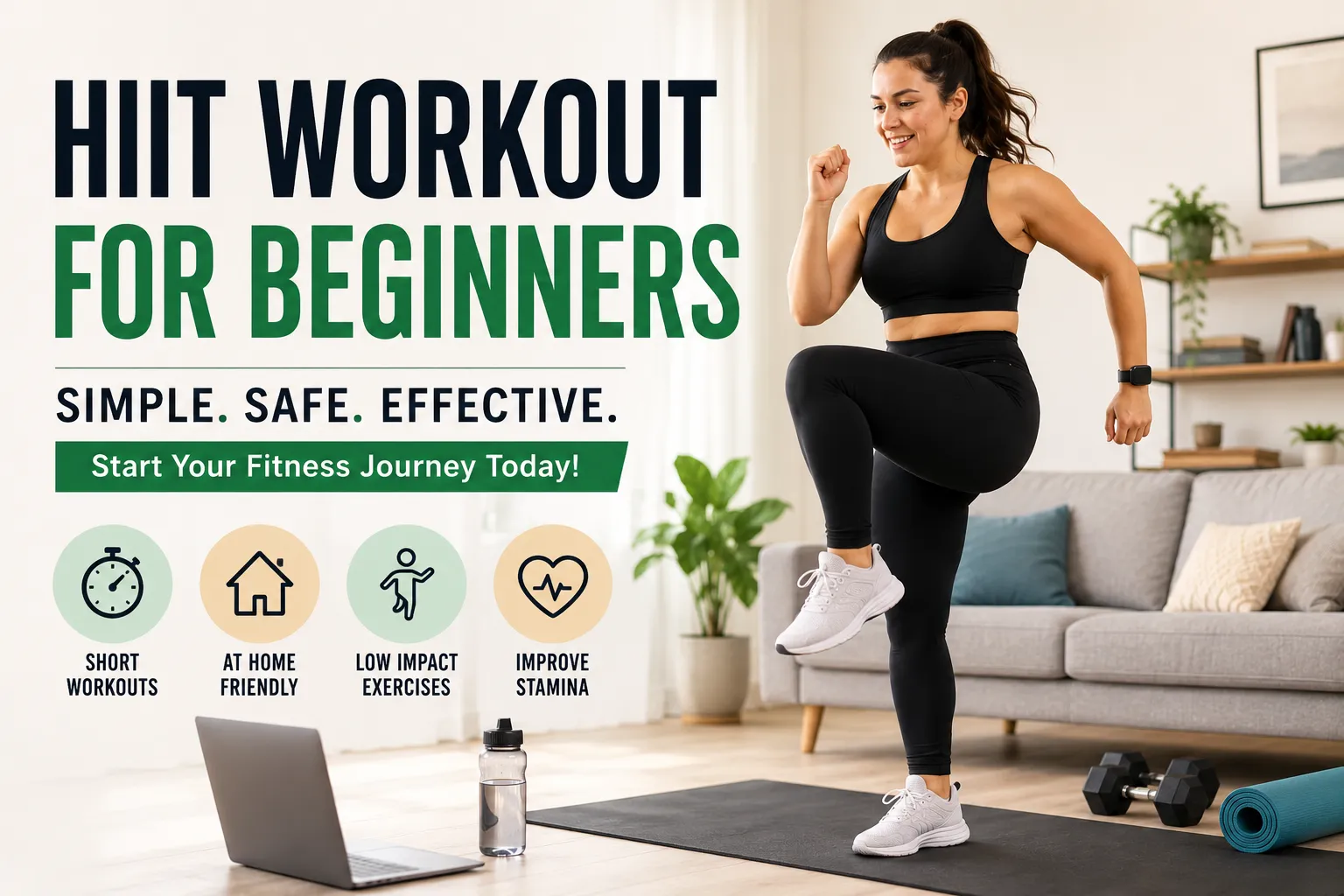
Starting a HIIT workout for beginners can feel intimidating at first. Many people worry they are too overweight, too out of shape, or too inexperienced to try HIIT training. Social media often makes HIIT workouts look extreme with nonstop jumping, intense sweating, and advanced exercises. This can make beginners feel nervous before they even start. Some people also struggle with low stamina, lack of confidence, busy schedules, or fear of exercising in public. Because of this, many beginners quit before building a consistent fitness routine.
I remember feeling the same way when I first tried HIIT workouts. I thought every workout needed to leave me exhausted to be effective. After a few difficult sessions, I realized beginner HIIT workouts work best when they are simple, manageable, and sustainable. Short workouts, low-impact exercises, and proper recovery helped me improve my stamina without feeling overwhelmed. Over time, I learned that consistency matters far more than intensity. That is why this guide focuses on safe, beginner-friendly HIIT workouts that real people can actually maintain long term.
Key Takeaway
A HIIT workout for beginners does not need to be extreme. Start with short workouts, simple exercises, low-impact movements, and enough rest. Your goal is to build consistency, stamina, and confidence over time.
What Is HIIT?
HIIT stands for High-Intensity Interval Training. It is a workout style that alternates between short bursts of exercise and short rest periods.
For example:
- 30 seconds of exercise
- 30 seconds of rest
This pattern repeats for several rounds.
The goal of HIIT is to increase your heart rate for a short time and then allow your body to recover. These workouts are usually shorter than traditional cardio workouts.
Many beginner HIIT workouts last:
- 10 minutes
- 15 minutes
- 20 minutes
This makes HIIT a good option for busy beginners.
What Is a HIIT Workout?
A HIIT workout combines:
- cardio
- bodyweight exercises
- short recovery periods
Common beginner HIIT exercises include:
- marching in place
- squats
- step-ups
- knee raises
- modified push-ups
- jumping jacks
You can adjust the intensity based on your fitness level.
A beginner HIIT workout does not need to feel extreme. You should feel challenged but still able to recover after each round.
What Is HIIT Training?
HIIT training focuses on effort and recovery. Instead of exercising at one steady speed, you alternate between:
- high effort
- recovery time
This helps improve:
- heart health
- endurance
- calorie burn
- fitness levels
HIIT training is popular because it saves time while still providing strong health benefits.
Benefits of HIIT
HIIT workouts offer many benefits for beginners.
Improves Cardiovascular Health
HIIT helps strengthen your heart and lungs. Over time, daily activities may start to feel easier.
Helps Increase Calorie Burn
HIIT can help increase calorie burn during short workouts. This makes it useful for people with busy schedules.
Saves Time
Most beginner HIIT workouts take less than 30 minutes.
Increases Stamina
As your body adapts, your endurance improves. You may notice better energy levels during workouts and daily life.
Requires Little Equipment
Most beginner HIIT workouts use bodyweight exercises. You can train at home without machines.
Many busy adults choose HIIT workouts because they fit into small schedules. Even a short 10 to 20 minute beginner HIIT workout can provide meaningful health benefits when done consistently.
Benefits of HIIT Workouts
HIIT workouts are also flexible.
You can:
- train at home
- train in the gym
- use bodyweight only
- add dumbbells later
- choose low-impact options
This flexibility makes HIIT beginner-friendly.
What Are the Benefits of HIIT?
For beginners, one of the biggest benefits is motivation. Short workouts often feel easier to complete than long cardio sessions.
Many beginners also enjoy the variety of HIIT workouts. The exercises change often, which helps reduce boredom.
Is HIIT Good for Beginners?
Yes, HIIT can be good for beginners when done correctly.
The key is to:
- start slowly
- choose beginner-friendly exercises
- focus on proper form
- allow enough recovery
Beginners should not try advanced HIIT workouts immediately. Intensity should increase gradually over time.
You do not need previous gym experience to start a HIIT workout for beginners. Many people begin HIIT with simple bodyweight movements and short sessions at home. The goal is to improve gradually, not perform perfectly on day one.
Is HIIT Safe for Beginners?
HIIT is generally safe for healthy beginners. However, beginners should avoid pushing too hard too quickly.
You should:
- warm up properly
- stay hydrated
- rest when needed
- stop if you feel pain or dizziness
If you have medical conditions or injuries, speak with a healthcare professional before starting HIIT training.
Risks of HIIT Training
Doing too much HIIT can lead to:
- soreness
- fatigue
- poor recovery
- joint discomfort
- burnout
This usually happens when beginners:
- skip rest days
- train too hard
- ignore recovery
- use poor exercise form
Moderation is important for long-term progress.
How To Start HIIT Safely
Beginners should focus on consistency instead of intensity.
Here are simple beginner tips:
- start with 2 workouts per week
- keep workouts short
- choose low-impact exercises
- rest between intervals
- focus on good form
You do not need to move fast to benefit from HIIT.
Many beginners feel out of breath quickly during their first HIIT workouts. This is normal. Your stamina improves slowly over time as your body adapts to exercise. Starting with shorter workouts and longer rest periods can make HIIT feel more manageable.
You do not need to move perfectly or train intensely during your first HIIT workouts. Many beginners feel tired quickly in the beginning, and that is completely normal. Building fitness takes time. Consistency matters more than doing extreme workouts.
How Hard Should HIIT Feel for Beginners?
Beginners should aim for moderate to challenging effort during HIIT workouts. You should breathe harder during work intervals but still recover after resting.
A simple way to measure intensity is the talk test.
- If you can talk normally, the workout may feel too easy.
- If you cannot speak at all, the workout may be too intense.
- Beginners should aim for an effort level where speaking becomes difficult but still possible.
You do not need to train at maximum intensity to benefit from HIIT.
Beginner HIIT Intensity Guide
| Effort Level | How It Feels | Beginner Advice |
|---|---|---|
| Easy | You can talk normally. | Good for warm-ups and recovery. |
| Moderate | You breathe harder but can still speak. | Best starting point for beginners. |
| Very Hard | You cannot speak comfortably. | Use carefully. Rest longer if needed. |

HIIT vs Cardio
Traditional cardio usually involves steady movement for a longer time.
Examples include:
- walking
- jogging
- cycling
HIIT uses short bursts of effort with recovery periods.
Main Difference
| HIIT | Traditional Cardio |
|---|---|
| Short workouts | Longer workouts |
| Higher intensity | Steady pace |
| Interval-based | Continuous movement |
| Time efficient | Easier for long sessions |
Both forms of exercise are useful. Beginners can even combine them.
Beginner-Friendly HIIT Moves
Good beginner HIIT exercises include:
- marching in place
- bodyweight squats
- step touches
- wall push-ups
- knee raises
- glute bridges
- mountain climbers
- modified jumping jacks
These exercises are simple and easy to modify.
Beginner HIIT Exercises
Here are beginner-friendly exercises with low injury risk:
| Exercise | Beginner Friendly |
|---|---|
| Marching in place | Yes |
| Bodyweight squats | Yes |
| Incline push-ups | Yes |
| Step-ups | Yes |
| Glute bridges | Yes |
| Knee taps | Yes |
Focus on controlled movement instead of speed.
Low-Impact HIIT Exercises
Low-impact HIIT workouts reduce stress on the joints. They are great for:
- overweight beginners
- older adults
- people with knee pain
- beginners with low stamina
Examples include:
- step touches
- marching
- seated punches
- slow mountain climbers
- modified squats
Low-impact HIIT can still raise your heart rate effectively.
Low-Impact HIIT Exercise Swaps
| Harder Exercise | Beginner-Friendly Swap |
|---|---|
| Jumping jacks | Step touches |
| Burpees | Squat to reach |
| High knees | Marching in place |
| Push-ups | Wall push-ups |

HIIT for Overweight Beginners
Overweight beginners should start with low-impact HIIT exercises that reduce stress on the joints.
Good beginner-friendly options include:
- marching in place
- step touches
- seated punches
- glute bridges
- incline push-ups
Focus on consistency instead of speed. Even short beginner HIIT workouts can improve stamina and confidence over time.
Beginners carrying extra weight should avoid comparing themselves to advanced fitness influencers online. Safe and consistent movement is more important than workout intensity. Small improvements in stamina and mobility can create meaningful long-term progress.
Full-Body HIIT Workout
A full-body beginner HIIT workout trains:
- legs
- core
- upper body
- cardiovascular system
Example:
- Squats
- Wall push-ups
- Marching in place
- Glute bridges
- Knee raises
Perform each exercise for 30 seconds.
Rest for 30 seconds between rounds.
HIIT Workout for Beginners
10-Minute Beginner HIIT Workout
| Exercise | Time |
|---|---|
| March in place | 30 sec |
| Bodyweight squats | 30 sec |
| Rest | 30 sec |
| Knee raises | 30 sec |
| Wall push-ups | 30 sec |
| Rest | 30 sec |
Repeat for 2 rounds.
This HIIT workout for beginners is simple and manageable.
20-Minute Beginner HIIT Workout
| Exercise | Time |
|---|---|
| Step touches | 40 sec |
| Squats | 40 sec |
| Rest | 20 sec |
| Incline push-ups | 40 sec |
| Marching in place | 40 sec |
| Rest | 20 sec |
Repeat for 3 rounds.
Beginners can adjust work and rest times based on fitness level.
HIIT Workout Routine for Beginners
A beginner HIIT routine should include:
- workout days
- recovery days
- walking or light activity
Example weekly routine:
| Day | Activity |
|---|---|
| Monday | HIIT workout |
| Tuesday | Walking |
| Wednesday | Rest |
| Thursday | HIIT workout |
| Friday | Stretching |
| Saturday | Light cardio |
| Sunday | Rest |
This schedule supports recovery and consistency.
4-Week Beginner HIIT Progression Plan
| Week | Workout Length | Sessions Per Week |
|---|---|---|
| Week 1 | 10 minutes | 2 sessions |
| Week 2 | 12–15 minutes | 2 sessions |
| Week 3 | 15–18 minutes | 3 sessions |
| Week 4 | 20 minutes | 3 sessions |
Beginners should increase workout intensity gradually. Small improvements are safer and easier to maintain long term.

Beginner HIIT Workout Examples
Example 1: Low-Impact HIIT
- step touches
- squats
- knee raises
- incline push-ups
Example 2: Beginner Cardio HIIT
- jumping jacks
- mountain climbers
- marching
- high knees
Choose exercises based on your comfort level.
HIIT Workout at Home
One major benefit of HIIT is convenience.
You can do beginner HIIT workouts:
- in your living room
- in a garage
- outdoors
- in small spaces
No gym equipment is required for most beginner routines.
Home HIIT workouts can also help beginners feel more comfortable while building confidence. Many people prefer learning exercises privately before joining a gym environment. This can reduce workout anxiety and make consistency easier.
Warm-Up Exercises
Warm-ups prepare your body for movement and reduce injury risk.
Good warm-up exercises include:
- arm circles
- shoulder rolls
- leg swings
- light marching
- bodyweight squats
Spend 5 minutes warming up before HIIT.
Cool-Down Exercises
Cooling down helps your heart rate return to normal.
Simple cool-down exercises:
- walking slowly
- deep breathing
- hamstring stretches
- quad stretches
- chest stretches
A proper cool-down can also reduce stiffness.
How Long Should HIIT Workouts Be?
Beginners should keep HIIT workouts short at first.
Recommended duration:
- 10 to 20 minutes
Longer workouts are not always better. Quality and recovery matter more.
How Often Should You Do HIIT?
Most beginners should start with:
- 2 to 3 HIIT sessions per week
This gives the body enough time to recover.
Doing HIIT every day may increase fatigue and soreness.
How Often Should Beginners Do HIIT?
Recovery is very important for beginners.
On rest days, you can:
- walk
- stretch
- do yoga
- stay lightly active
Recovery supports muscle repair and long-term consistency.
Beginner HIIT Tips
Focus on Form
Good technique is more important than speed.
Do Not Rush Progress
Increase intensity slowly over time.
Stay Hydrated
Drink water before and after workouts.
Listen to Your Body
Rest when needed. Some soreness is normal, but sharp pain is not.
Beginners often believe they need exhausting workouts to see results. In reality, consistency matters far more than intensity in the beginning. Short workouts done regularly are usually more effective than extreme workouts that lead to burnout.
Common HIIT Mistakes
Many beginners make these mistakes:
- skipping warm-ups
- training too hard
- doing HIIT daily
- using poor form
- ignoring recovery
- choosing advanced exercises too soon
Avoiding these mistakes can help reduce injury risk.
Beginner HIIT Safety Checklist
- Warm up for at least 5 minutes.
- Choose low-impact moves if jumping hurts your joints.
- Rest longer if you feel too breathless.
- Stop if you feel sharp pain, dizziness, or chest discomfort.
- Do not do HIIT every day as a beginner.
- Focus on form before speed.
Recovery After HIIT
Recovery is essential for beginners.
Good recovery habits include:
- sleeping well
- drinking water
- eating enough protein
- stretching
- taking rest days
Recovery helps your body adapt and improve.
Tips for Recovery
Simple recovery tips:
- walk on rest days
- foam roll tight muscles
- stretch after workouts
- avoid overtraining
- sleep at least 7 hours
Consistency matters more than intensity.
Signs You Are Overdoing HIIT
You may be overtraining if you experience:
- constant soreness
- extreme fatigue
- poor sleep
- lack of motivation
- declining workout performance
If this happens, reduce workout intensity and rest more.
When To Avoid HIIT
You should avoid HIIT temporarily if you:
- are injured
- feel sick
- have severe joint pain
- experience dizziness during workouts
Always prioritize safety over intensity.
Conclusion
After helping beginners understand fitness routines and beginner workout structure, one thing becomes very clear: most people do not fail because they are lazy or unmotivated. They fail because they start with workouts that feel too extreme to maintain. Beginner HIIT workouts work best when they are realistic, manageable, and built around consistency. Safe progress over time is far more effective than trying to train like advanced athletes on social media.
From personal experience, the biggest improvement came when I stopped focusing on perfect workouts and started focusing on sustainable habits. Short home workouts, low-impact exercises, and proper recovery helped build confidence without feeling overwhelmed. Many beginners underestimate how powerful small consistent actions can become over several weeks and months.
Every beginner starts somewhere. You do not need advanced fitness levels, expensive gym equipment, or intense daily workouts to improve your health. A simple HIIT workout for beginners done consistently can improve stamina, confidence, and overall fitness over time. Focus on gradual progress, listen to your body, and build habits you can realistically maintain long term.
