


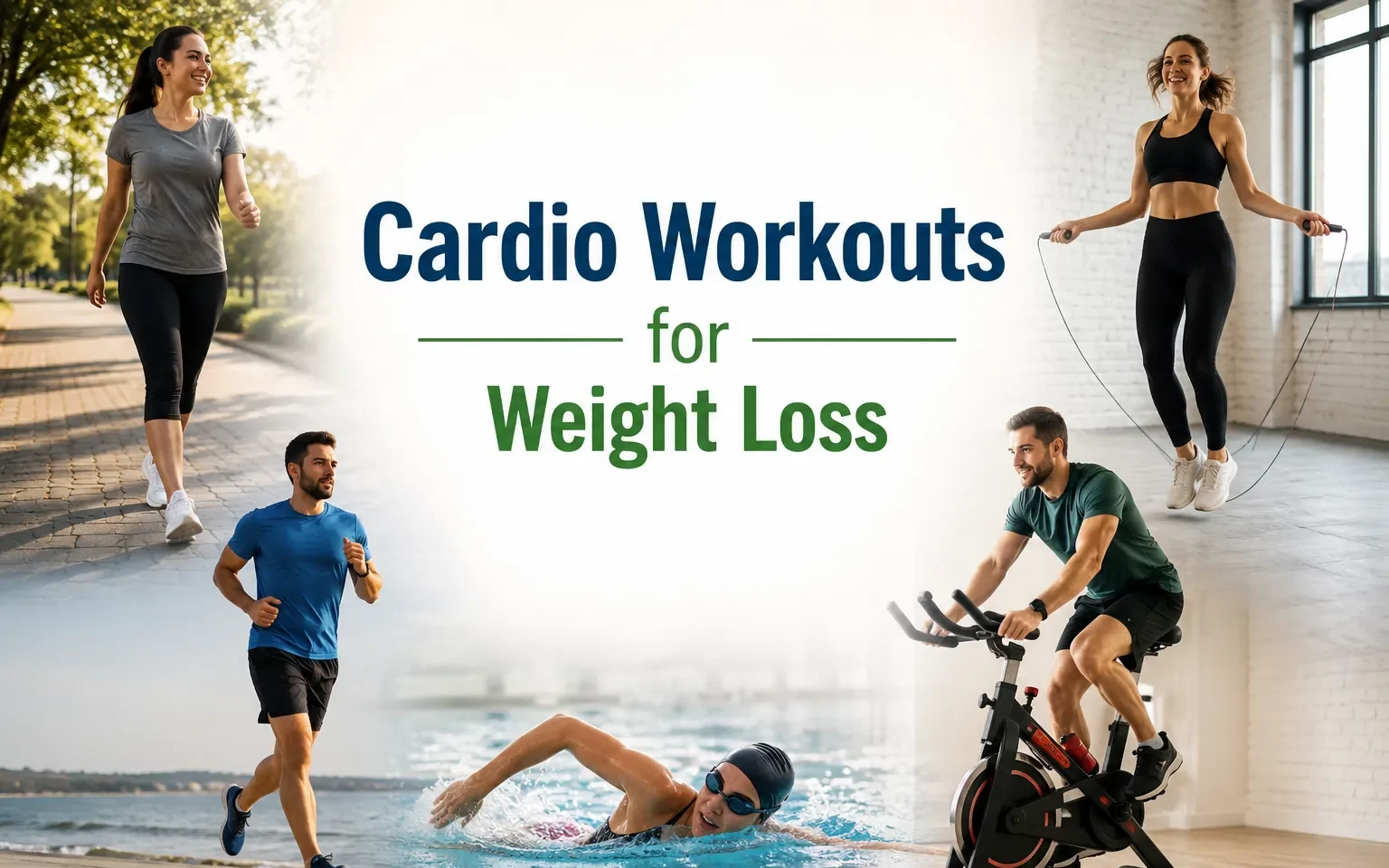
Many people start cardio workouts for weight loss feeling motivated, but they quickly become frustrated when they do not see fast results. Some spend hours on the treadmill, while others try intense workout plans that feel impossible to maintain. Busy schedules, lack of motivation, gym anxiety, and confusion about the “best” cardio workout often make weight loss feel overwhelming. This is why many beginners quit before they build a consistent routine.
From personal experience and fitness research, the people who succeed with weight loss are usually not the ones doing extreme workouts every day. They are the ones who build simple and sustainable habits that fit their lifestyle. Walking regularly, doing beginner-friendly cardio workouts, improving sleep, and staying active consistently often work better than chasing quick results. Cardio workouts for weight loss can improve your fitness, energy, and overall health when the plan feels realistic and easy to follow long term.
Key Takeaway
Cardio workouts for weight loss work best when they are simple, consistent, and easy to maintain. Walking, cycling, swimming, HIIT, and dancing can all help burn calories. However, the best cardio workout is the one you can follow regularly with healthy eating, good sleep, and proper recovery.
Understanding Weight Loss
Weight loss happens when your body burns more calories than it takes in. This is called a calorie deficit.
Cardio workouts increase calorie burn. They also improve cardiovascular health and endurance. However, exercise alone is not enough. Healthy eating habits, sleep, hydration, and recovery also matter.
Many people think they need long workouts every day. This is not true. Short and regular cardio sessions often work well for beginners.
Sustainable weight loss is usually slow and steady. Losing 1 to 2 pounds per week is considered healthy for most people.
Weight Loss and Exercise
Exercise supports weight management in many ways.
Cardio workouts:
- Burn calories
- Improve metabolism
- Increase energy levels
- Support heart health
- Improve mood
- Reduce stress
Strength training is also important. Building muscle mass helps your body burn more calories even at rest.
The best results often come from combining cardio and strength training.
How Much Cardio You Need
The amount of cardio you need depends on your fitness level and goals.
Most experts recommend:
- 150 minutes of moderate-intensity exercise each week
- Or 75 minutes of vigorous cardio exercise each week
Beginners can start with:
- 20 to 30 minutes
- 3 to 4 days per week
You can slowly increase workout time as your fitness improves.
Moderate-Intensity Exercise
Moderate-intensity cardio raises your heart rate while still allowing you to talk.
Examples include:
- Brisk walking
- Light cycling
- Swimming
- Dancing
- Hiking
This type of aerobic exercise is beginner friendly and easier on the joints.
Vigorous Cardio Exercise
Vigorous cardio exercise is more intense. It increases your breathing and heart rate quickly.
Examples include:
- Running
- Sprint intervals
- Jump rope
- Stair climbing
- High-intensity interval training
These workouts can burn more calories in less time. However, beginners should start slowly to avoid injury.
Best Cardio Workouts for Weight Loss
There are many cardio workouts that support fat loss. The best option is the one you can do consistently.
Best Cardio Workouts by Fitness Level
| Fitness Level | Best Cardio Options | Why It Works |
|---|---|---|
| Beginner | Walking, cycling, swimming, dancing | Easy to start and lower risk of burnout. |
| Intermediate | Jogging, HIIT, stair climbing, rowing | Increases calorie burn and improves endurance. |
| Advanced | Sprint intervals, long runs, intense cycling, circuits | Builds higher fitness capacity and performance. |
Walking
Walking is one of the best cardio workouts for beginners.
Benefits of walking:
- Low impact
- Easy to start
- Supports fat burning
- Improves cardiovascular health
- Reduces stress
A brisk 30-minute walk each day can support weight loss when paired with healthy nutrition.
Running
Running usually burns more calories per minute than walking because it uses more energy. It also improves endurance and aerobic fitness.
Beginners should start with short jogging sessions. You can slowly increase speed and distance over time.
Running may not be ideal for people with knee pain or joint issues.
Cycling
Cycling is a great low-impact cardio workout.
It helps:
- Burn calories
- Improve leg strength
- Support heart health
- Reduce joint stress
You can ride outdoors or use a stationary bike at home.
Swimming
Swimming is a full-body cardio workout.
It works the arms, legs, and core while protecting the joints. This makes it a good option for overweight beginners and older adults.
Jump Rope
Jump rope is a powerful calorie-burning workout.
It improves:
- Coordination
- Endurance
- Agility
- Cardiovascular fitness
Short jump rope sessions can be very effective for fat loss.
Stair Climbing
Stair climbing challenges the lower body and raises the heart rate quickly.
It strengthens:
- Glutes
- Legs
- Core muscles
This workout can burn many calories in a short time.
Rowing
Rowing is another full-body cardio exercise.
It combines strength and aerobic training. It also improves posture and endurance.
Dancing
Dancing is a fun and sustainable way to stay active.
Many people stick to dance workouts because they feel enjoyable instead of stressful.
Consistency matters more than perfection.
HIIT vs Steady-State Cardio
HIIT stands for high-intensity interval training.
This workout style alternates short periods of hard effort with recovery periods.
Example:
- 30 seconds sprint
- 60 seconds walking
- Repeat for 15 to 20 minutes
Benefits of HIIT:
- Burns calories quickly
- Saves time
- Improves cardiovascular fitness
- May slightly increase calorie burn after exercise through excess post-exercise oxygen consumption (EPOC)
Steady-state cardio uses a steady pace for longer periods.
Examples include:
- Walking
- Jogging
- Cycling
- Swimming
Benefits of steady-state cardio:
- Easier for beginners
- Lower injury risk
- Easier recovery
- Better for long sessions
Both methods can support fat loss.
HIIT vs Steady-State Cardio for Weight Loss
| Factor | HIIT | Steady-State Cardio |
|---|---|---|
| Best For | Busy people and intermediate exercisers | Beginners and long-term consistency |
| Intensity | High | Low to moderate |
| Recovery Need | Higher | Lower |
| Main Benefit | Saves time and burns calories quickly | Easier to maintain and joint-friendly |

Best Cardio Workouts for Beginners
Beginners should focus on simple workouts that feel manageable.
Starting too hard often leads to burnout and inconsistency. Short and realistic workouts usually work better long term.
Good beginner-friendly cardio workouts include:
- Walking
- Cycling
- Swimming
- Dancing
- Light treadmill workouts
- Low-impact home cardio
The goal is to build consistency before increasing intensity.
Beginner Cardio Workout
Beginners should focus on simple and sustainable workouts.
Beginner Weekly Cardio Plan
| Day | Workout |
|---|---|
| Monday | 30-minute brisk walk |
| Tuesday | Light cycling |
| Wednesday | Rest or stretching |
| Thursday | Beginner interval workout |
| Friday | Swimming or walking |
| Saturday | Dance workout |
| Sunday | Recovery walk |
Start slowly and listen to your body.

Intermediate Cardio Workout
Intermediate exercisers can increase intensity and workout time.
Intermediate Weekly Plan
| Day | Workout |
|---|---|
| Monday | Jogging |
| Tuesday | HIIT workout |
| Wednesday | Cycling |
| Thursday | Strength training |
| Friday | Swimming |
| Saturday | Long walk or hike |
| Sunday | Recovery |
Advanced Cardio Workout
Advanced exercisers may include:
- Sprint intervals
- Long-distance running
- Intense cycling
- Stair workouts
- Circuit training
Recovery is very important at this level.
Low-Impact Cardio Workouts
Low-impact cardio is ideal for people who:
- Have knee pain
- Are overweight beginners
- Are over 40
- Want joint-friendly exercise
- Need easier recovery
These workouts reduce stress on the joints while still supporting calorie burn and cardiovascular fitness.
Many people lose weight successfully with low-impact cardio because it feels more sustainable.
Best low-impact workouts include:
- Walking
- Cycling
- Swimming
- Elliptical training
- Water aerobics
- Rowing

Home Cardio Workouts
Many people prefer home workouts because they save time and reduce gym anxiety.
Home cardio workouts are ideal for:
- Busy professionals
- Parents
- Beginners
- People with limited equipment
- Anyone who prefers privacy
Simple and consistent home workouts can still support long-term fat loss.
Simple home cardio exercises include:
- Jumping jacks
- Marching in place
- High knees
- Burpees
- Mountain climbers
- Dance workouts
- Jump rope
Heart Rate Monitoring
Heart rate monitoring can help improve cardio training.
Many people use heart rate zones to measure exercise intensity.
Moderate-intensity cardio is usually around:
- 50% to 70% of maximum heart rate
Vigorous exercise is often:
- 70% to 85% of maximum heart rate
Tracking your heart rate can help you stay consistent and avoid overtraining.
Calories Burned During Cardio
Calories burned depend on:
- Body weight
- Workout intensity
- Exercise duration
- Fitness level
Higher-intensity workouts usually burn more calories.
However, the best workout is still the one you can maintain consistently.
Exercise and Metabolism
Cardio workouts can improve metabolism and energy expenditure.
HIIT workouts may slightly increase calorie burn after exercise through excess post-exercise oxygen consumption (EPOC).
Strength training also supports metabolism because muscle tissue requires more energy than fat tissue, which may slightly support metabolism.
Combining Cardio and Strength Training
Many people focus only on cardio for fat loss. However, combining cardio and strength training often gives better results.
Benefits include:
- Better fat loss
- Improved muscle preservation
- Higher energy expenditure
- Improved body composition
Strength training exercises include:
- Squats
- Push-ups
- Lunges
- Resistance band exercises
- Dumbbell workouts
Healthy Eating Habits
Nutrition is very important for weight loss.
Healthy eating habits include:
- Eating enough protein
- Choosing whole foods
- Drinking enough water
- Limiting sugary drinks
- Managing portion sizes
Cardio workouts work best when paired with a balanced diet.
Lifestyle Changes for Sustainable Weight Loss
Long-term weight management depends on healthy habits.
Important lifestyle changes include:
- Regular exercise
- Better sleep
- Stress management
- Healthy nutrition
- Staying active daily
Small habits often create lasting results.
Choosing Activities You Enjoy
Many people quit workouts because they feel boring.
The best cardio workout is the one you enjoy.
Some people enjoy:
- Hiking
- Dancing
- Swimming
- Group fitness classes
- Cycling
- Walking outdoors
Enjoyable workouts are easier to maintain long term.
Sleep and Stress Management
Poor sleep and stress can affect fat loss.
Lack of sleep may:
- Increase hunger
- Reduce energy
- Affect recovery
- Increase cravings
Stress can also increase cortisol levels. High stress may make weight management harder.
Aim for:
- 7 to 9 hours of sleep each night
- Daily stress management habits
Best Cardio Workouts for Belly Fat
Many people search for cardio workouts to reduce belly fat. However, no exercise can target belly fat only.
Fat loss happens across the whole body through:
- A calorie deficit
- Regular exercise
- Healthy eating habits
- Consistent sleep
- Stress management
Some of the best cardio workouts for belly fat include:
- Brisk walking
- HIIT workouts
- Cycling
- Swimming
- Running
- Jump rope
HIIT workouts may help increase calorie burn in a shorter time. Meanwhile, walking and cycling are easier to maintain long term.
The best results usually come from combining cardio workouts with strength training and healthy nutrition.
Why Weight Loss May Slow Down With Cardio
Many people lose weight at first and then hit a plateau.
This can happen for several reasons.
Common causes include:
- Doing the same workout repeatedly
- Eating back burned calories
- Lack of recovery
- Poor sleep
- High stress levels
- Losing muscle mass
- Metabolic adaptation
The body becomes more efficient over time. This means the same workout may burn fewer calories later.
To avoid plateaus:
- Increase workout variety
- Add strength training
- Improve sleep quality
- Manage stress
- Slowly increase workout intensity
Consistency still matters more than perfection.
Morning vs Evening Cardio
Both morning and evening cardio workouts can support weight loss.
Morning workouts may help:
- Build routine consistency
- Improve daily energy
- Reduce missed workouts
Evening workouts may help:
- Improve performance
- Increase workout intensity
- Reduce stress after work
The best workout time is the one that fits your schedule and lifestyle.
Why Recovery Matters for Fat Loss
Recovery is an important part of fitness and weight management.
The body needs time to repair muscles and restore energy.
Poor recovery may lead to:
- Fatigue
- Poor performance
- Increased injury risk
- Higher stress levels
- Reduced motivation
Healthy recovery habits include:
- Sleeping 7 to 9 hours
- Drinking enough water
- Taking recovery days
- Stretching regularly
- Managing stress
Recovery supports both long-term fitness and sustainable fat loss.
Cardio Workouts for Busy Schedules
Many people struggle to find time for exercise.
The good news is that short workouts can still help with fat loss and cardiovascular health.
Busy people can try:
- 20-minute walks
- Short HIIT workouts
- Stair climbing
- Quick cycling sessions
- Home cardio circuits
Small workouts done consistently often work better than long workouts done occasionally.
The Best Cardio Workout Is the One You Can Stick To
Many people think the hardest workout is always the best. However, consistency matters more than intensity.
A workout that feels enjoyable is easier to follow long term.
Some people enjoy:
- Walking outdoors
- Swimming
- Dance workouts
- Cycling
- Hiking
- Group classes
Others may prefer short HIIT workouts or treadmill sessions.
The best cardio workout for weight loss is the one you can do regularly without feeling exhausted or discouraged.
Many people quit because they expect fast results. However, healthy weight loss takes time.
Focus on:
- Small progress
- Consistency
- Enjoyable movement
- Healthy habits
- Long-term fitness
This mindset usually creates better and more sustainable results.
Long-Term Weight Management
Weight loss is not only about short-term results.
Long-term weight management focuses on:
- Sustainable exercise
- Healthy eating habits
- Better sleep
- Stress control
- Daily movement
Quick fixes rarely last.
Healthy routines create long-term success.
Physical Activity Recommendations
Experts recommend regular physical activity for overall health.
A balanced weekly plan may include:
- Moderate cardio workouts
- Strength training
- Flexibility exercises
- Recovery days
This approach supports both fitness and fat loss.
Research Findings
Research shows that regular aerobic exercise supports fat loss and improves cardiovascular health.
Studies also suggest that combining cardio workouts with strength training may improve body composition better than cardio alone.
Consistency and sustainable habits remain the most important factors.
Conclusion
Cardio workouts for weight loss work best when they are simple, realistic, and sustainable. Many people fail because they try extreme routines that feel difficult to maintain, but real-world experience and fitness research show that consistency matters more than intensity. Walking, cycling, swimming, HIIT, and other aerobic exercises can all support fat loss when combined with healthy eating habits, recovery, and long-term lifestyle changes. The most effective cardio workout is the one you enjoy and can follow regularly without feeling exhausted or discouraged. Start with small steps, stay patient with your progress, and focus on building healthy habits that fit your daily life, because sustainable routines usually create the best long-term weight loss results.
