


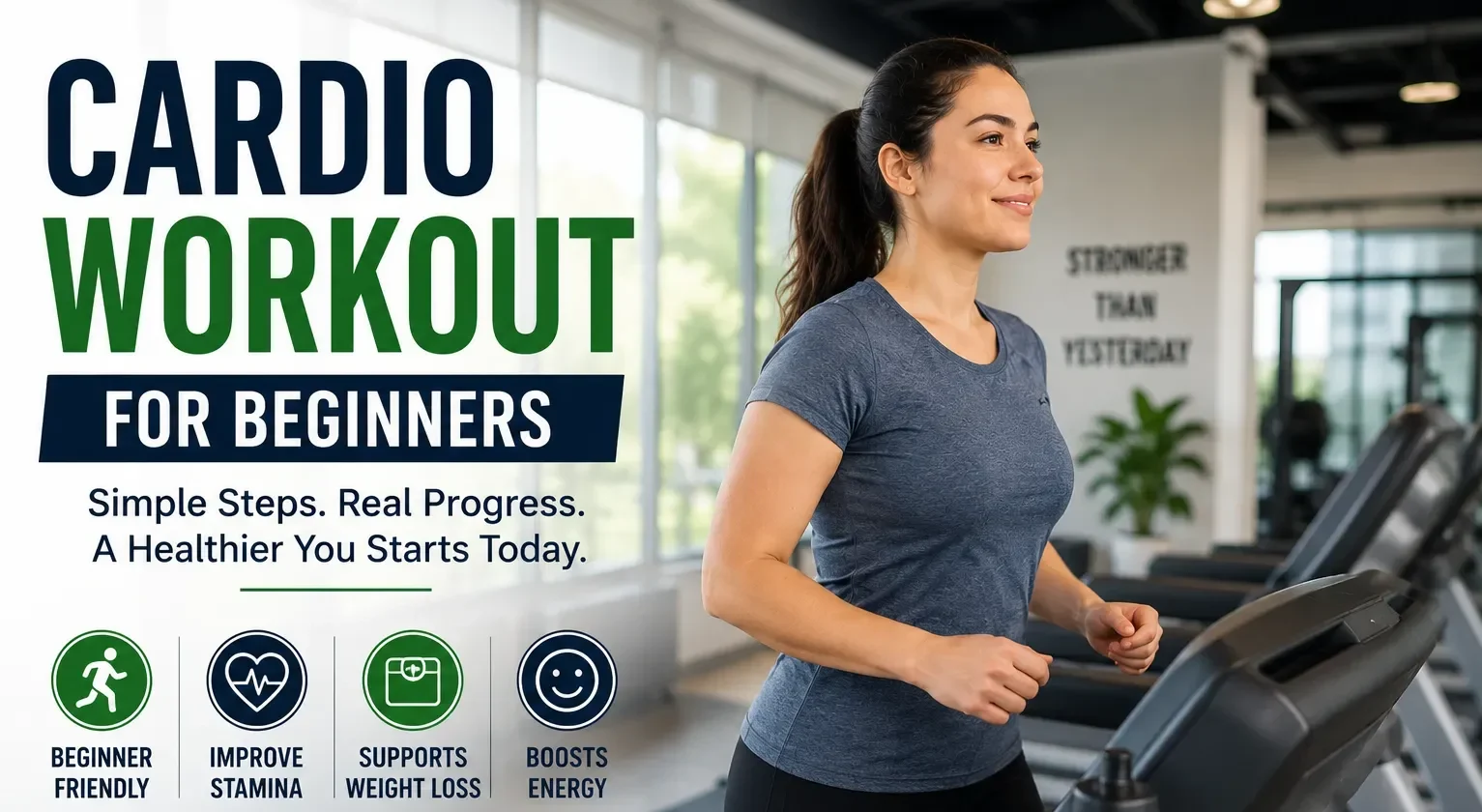
Starting a cardio workout for beginners can feel frustrating and intimidating. Many people want to improve their fitness but do not know where to begin. Some feel embarrassed because they get tired quickly. Others feel overwhelmed after watching intense workout videos online. Many beginners also worry about being judged at the gym or failing after only a few days. These fears are very common, especially for people starting from zero after months or even years without exercise. The truth is that most beginners do not need extreme workouts. They need a simple and realistic starting point they can actually maintain.
From experience, one of the biggest mistakes beginners make is trying to do too much too quickly. Many people believe longer workouts always produce faster results, but that often leads to soreness, burnout, and quitting. In reality, small cardio sessions done consistently are far more effective for building stamina and long-term fitness. Even simple workouts like walking, cycling, or light treadmill sessions can improve energy, endurance, and confidence over time. The goal is not perfection. The goal is to create a beginner-friendly routine that feels manageable and sustainable.
Key Takeaways
- A cardio workout for beginners should feel simple, safe, and manageable.
- Start with 15–20 minutes of walking, cycling, or treadmill cardio.
- Use the talk test: you should still be able to speak short sentences.
- Low-impact cardio is best for overweight beginners or people with joint discomfort.
- Consistency matters more than intensity in the beginning.
Benefits Of Gym Cardio Workouts
Cardio exercise offers many health benefits for beginners. It supports both physical and mental health.
Major benefits of cardio workouts include:
- improves heart health
- burns calories
- supports weight management
- increases stamina and endurance
- improves sleep quality
- helps reduce stress
- boosts mood and energy levels
- strengthens lungs
- helps beginners stay active
Regular moderate cardio may help lower the risk of heart disease when combined with healthy lifestyle habits.
Cardio workouts also burn calories. However, fat loss still depends on overall nutrition and calorie balance.
What Is Low-Impact Cardio?
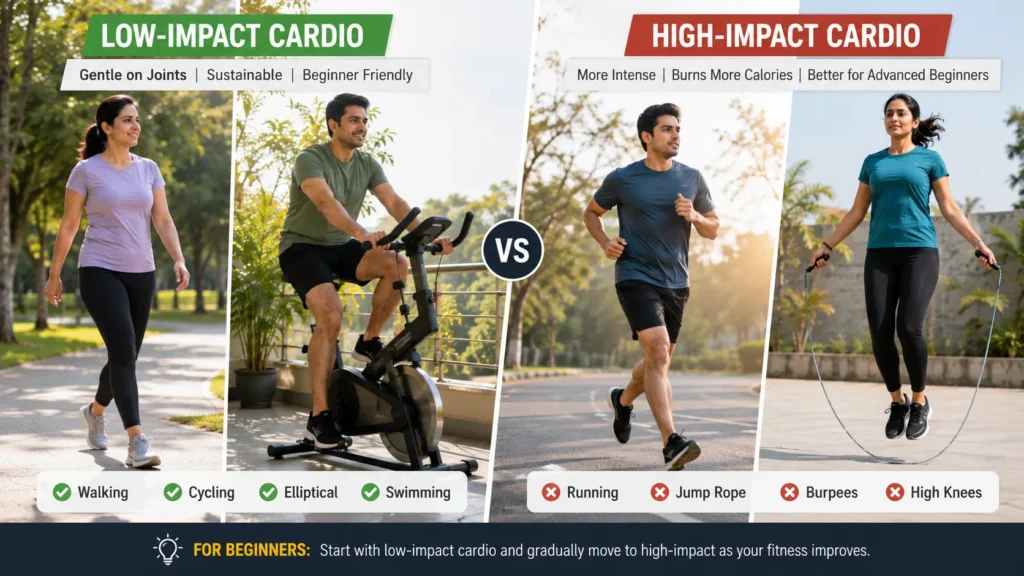
Low-impact cardio is exercise that puts less stress on your joints. It is ideal for beginners, overweight individuals, and people with knee discomfort.
Examples include:
- walking
- cycling
- swimming
- elliptical workouts
- marching in place
- low-impact aerobics
Low-impact cardio workouts are easier on the body while still improving fitness and endurance.
Low-Impact vs High-Impact Cardio
| Type | Examples | Best For |
|---|---|---|
| Low-Impact Cardio | Walking, cycling, swimming, elliptical | Beginners, overweight users, joint-sensitive users |
| High-Impact Cardio | Running, jump rope, burpees, jumping jacks | Users with better stamina and healthy joints |
The Benefits Of Low-Impact Cardio Workouts
Improves Heart Health
Low-impact cardio strengthens the heart and improves blood circulation.
Aids In Weight Management
Cardio workouts increase calorie burn and support long-term fitness goals.
Enhances Endurance And Stamina
Regular cardio helps beginners feel less tired during workouts and daily activities.
How Hard Should Beginner Cardio Feel?
One of the biggest beginner mistakes is exercising too intensely.
A beginner cardio workout should feel challenging but controlled.
Use the talk test:
- you should still be able to speak short sentences
- breathing should increase but remain manageable
- you should not feel dizzy or exhausted
Moderate intensity is usually best for beginners.
If you cannot speak comfortably during exercise, slow down and recover.
Beginner Cardio Intensity Chart
| Intensity Level | How It Feels | Best For Beginners? |
|---|---|---|
| Low | Easy breathing, can talk normally | Yes, good for warm-ups and recovery |
| Moderate | Breathing faster, can speak short sentences | Best main workout level |
| High | Hard breathing, difficult to talk | Use carefully after building fitness |
Simple Warm-Up Before Cardio
A warm-up prepares your muscles and joints for movement.
Simple beginner warm-up exercises:
- arm circles
- shoulder rolls
- marching in place
- slow walking
- leg swings
Warm up for 5 minutes before cardio workouts.
This may help improve movement quality and reduce stiffness.
Start With Short Jogs
Many beginners make the mistake of doing long workouts immediately.
Start with short sessions instead.
Simple beginner cardio example:
- 10-minute brisk walk
- 1-minute light jog
- 2-minute recovery walk
- repeat 3 to 5 times
This approach helps your body adapt gradually.
Take It Easy At The Start
You do not need intense workouts during your first weeks.
Many beginners quit because they try to copy advanced fitness routines from social media. Your goal should be building consistency, not exhausting yourself.
Focus on:
- proper form
- consistency
- gradual progress
- realistic expectations
Simple workouts still work when done consistently.
Take The Time To Recover
Recovery is an important part of beginner fitness.
Your body needs time to repair muscles and regain energy.
Good recovery habits include:
- sleeping 7 to 9 hours
- drinking enough water
- stretching lightly
- taking rest days
- eating balanced meals
Recovery helps prevent burnout and injury.
Stay Loose And Take Short Steps
Proper movement form improves comfort during cardio workouts.
When walking or jogging:
- keep shoulders relaxed
- avoid stiff movements
- take shorter steps
- land softly on your feet
This reduces unnecessary stress on joints.
Choose The Right Surface
The surface you exercise on affects comfort and joint health.
Beginner-friendly surfaces include:
- treadmill
- rubber gym flooring
- grass
- running tracks
Hard concrete may feel uncomfortable for some beginners.
Treadmill Benefits
Treadmills are beginner-friendly because they are easy to control.
Benefits include:
- adjustable speed
- indoor convenience
- easier progress tracking
- safer environment
- softer surface than roads
Many beginners feel more comfortable starting with treadmill workouts because they can control the pace.
How To Use A Treadmill
Beginners should start slowly on the treadmill.
Simple beginner treadmill workout:
- warm up for 5 minutes
- walk comfortably
- increase speed gradually
- cool down slowly
Avoid running too fast during the first sessions.
What To Wear
Choose:
- breathable clothing
- supportive running shoes
- comfortable workout clothes
Good shoes help protect your knees and ankles.
Basic Treadmill Settings
Simple beginner treadmill settings:
- speed: 2–3.5 mph walking
- incline: 0–2%
- duration: 15–25 minutes
Increase settings gradually over time.
Beginner Cardio At Home Without Equipment
You do not need gym equipment to start cardio workouts.
Simple home cardio exercises:
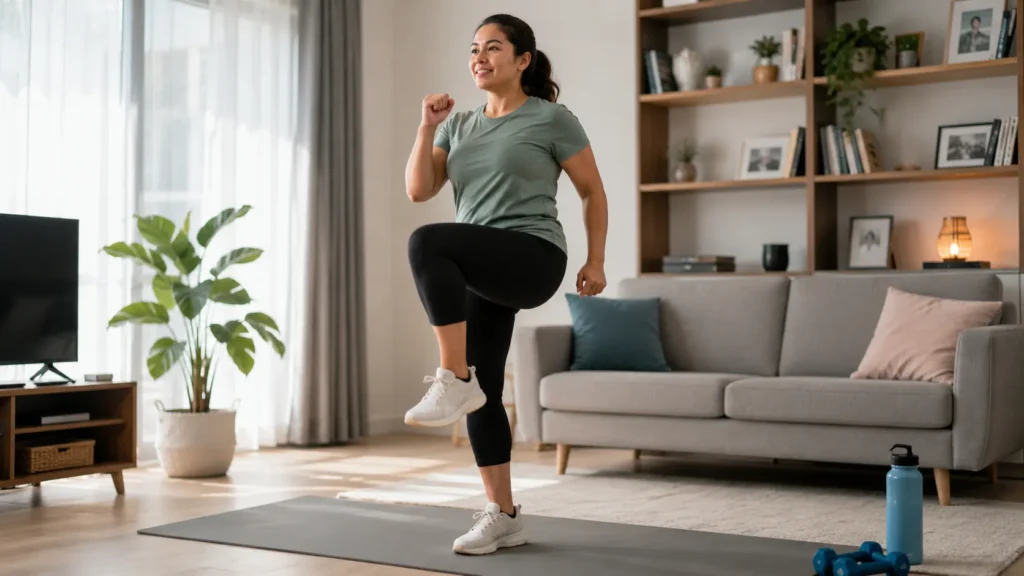
- marching in place
- step touches
- shadow boxing
- standing knee raises
- low-impact jumping jacks
- stair walking
Home cardio workouts can help beginners build confidence before joining a gym.
Beginner Cardio Circuit Training
Circuit training combines exercises with short rest periods.
Simple beginner cardio circuit:
- jumping jacks — 20 seconds
- marching in place — 30 seconds
- bodyweight squats — 10 reps
- step touches — 30 seconds
- rest — 60 seconds
Repeat 2 to 3 rounds.
Circuit workouts keep cardio sessions more engaging.
Beginner Strength Circuit Training
Strength exercises also support cardio fitness.
Simple beginner strength circuit:
- wall push-ups
- bodyweight squats
- glute bridges
- standing knee raises
- light dumbbell press
Combining strength and cardio creates a balanced beginner workout routine.
Step It Up: A Simple Interval Run For First Timers
Interval workouts alternate between easier and harder effort levels.
Simple beginner interval workout:
- walk for 2 minutes
- jog for 30 seconds
- repeat for 15 minutes
Intervals help beginners improve stamina gradually.
Ramp It Up: Classic 30-Minute Interval Run
Once fitness improves, beginners can slowly increase workout duration.
Example:
- 5-minute warm-up walk
- 1-minute jog
- 2-minute walk
- repeat for 20 minutes
- 5-minute cool-down
This beginner cardio routine builds endurance safely.
Add Some Intensity: High Intensity Interval Run
HIIT workouts can improve cardiovascular fitness efficiently.
However, beginners should start with modified low-impact HIIT workouts.
Simple beginner-friendly HIIT:
- 20 seconds movement
- 40 seconds recovery
- repeat for 10 minutes
Low-impact HIIT options:
- fast marching
- cycling
- step-ups
- shadow boxing
Avoid doing HIIT every day.
HIIT Treadmill Routine For Beginners
| Time | Activity |
|---|---|
| 5 min | Warm-up walk |
| 30 sec | Fast walk |
| 90 sec | Slow walk |
| Repeat | 8 rounds |
| 5 min | Cool-down |
This keeps treadmill HIIT manageable for beginners.
Intermediate HIIT Treadmill Routine
After several weeks of consistency, beginners may:
- increase jogging time
- reduce recovery periods
- slightly increase incline
Progress should feel gradual and controlled.
Advanced HIIT Treadmill Routine
Advanced HIIT workouts are not necessary for complete beginners.
Focus on consistency before increasing intensity.
The Best Cross Trainer Workouts For Beginners
Cross trainers are excellent low-impact cardio machines.
Benefits include:
- full-body movement
- lower joint stress
- adjustable resistance
- beginner-friendly intensity control
Simple beginner cross trainer workout:
- 15–20 minutes
- steady pace
- moderate resistance
How Often Should You Use The Cross Trainer?
Beginners can use the cross trainer:
- 2 to 4 times weekly
- 15 to 30 minutes per session
Rest and recovery days are still important.
Beginner Spin Class Tips
Spin classes may feel intense at first.
It is completely normal to feel nervous during your first class. Most people in fitness classes are focused on their own workout, not judging beginners.
Tips for beginners:
- adjust the bike correctly
- keep resistance moderate
- stay hydrated
- sit when necessary
- avoid comparing yourself to others
Everyone starts somewhere.
Which Class Is Best For Beginners?
Choose:
- beginner cycling classes
- shorter sessions
- low-intensity classes
Avoid advanced classes during your first weeks.
Best Cardio Workouts For Different Beginners
Best Cardio For Overweight Beginners
Low-impact workouts are often more comfortable and sustainable for beginners carrying extra weight.
Good options include:
- walking
- cycling
- swimming
- elliptical workouts
Walking regularly can still produce meaningful fitness improvements.
Best Cardio For Beginners With Knee Pain
Choose exercises that reduce joint stress:
- swimming
- stationary biking
- elliptical workouts
Best Cardio For Home Workout Beginners
Good home cardio exercises include:
- marching in place
- step touches
- stair climbing
- shadow boxing
Best Cardio For Gym Beginners
Simple cardio machines like treadmills and bikes are beginner-friendly and easy to learn.
What Cardio Exercises Should I Try?
The best beginner cardio exercises are simple and sustainable.
Good beginner cardio workouts include:
- walking
- treadmill walking
- cycling
- swimming
- dance workouts
- elliptical workouts
- beginner HIIT
- stair climbing
Choose activities you genuinely enjoy. Enjoyable workouts are easier to maintain long term.
Doing Cardio Before Or After Weights: Which Is Best?
This depends on your fitness goal.
Do cardio before weights if:
- improving endurance is your main goal
- cardio performance matters most
Do cardio after weights if:
- muscle building is your priority
- you want maximum energy for strength training
Many beginners benefit from balanced sessions.
How Long Does Cardio Take To Show Results?
Many beginners expect instant changes and become discouraged too early.
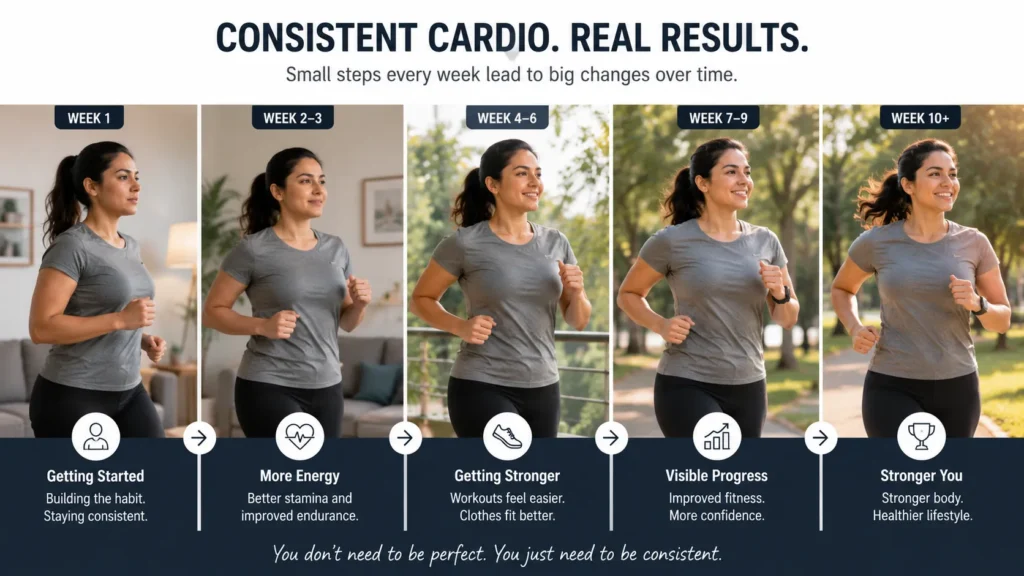
Fitness improvements usually happen gradually. Consistency over several weeks matters more than extreme workouts for only a few days.
Many beginners notice:
- better energy within 1–2 weeks
- improved stamina within 2–4 weeks
- visible fitness changes within 6–12 weeks
Small improvements still matter.
Signs You Are Overdoing Cardio
Too much cardio can lead to fatigue and burnout.
Warning signs include:
- constant soreness
- extreme tiredness
- poor sleep
- joint discomfort
- lack of motivation
- declining workout performance
Rest and recovery are important parts of fitness progress.
Common Beginner Cardio Myths
More Sweating Means More Fat Loss
Sweating mostly reflects body temperature regulation, not fat loss.
Daily Cardio Is Necessary
Beginners usually recover better with rest days included.
Longer Workouts Are Always Better
Consistency and workout quality matter more than extremely long sessions.
Cardio Alone Guarantees Weight Loss
Nutrition still plays a major role in fat loss.
Common Beginner Cardio Mistakes
Many beginners quit because they start too aggressively.
Avoid these mistakes:
- doing cardio every day
- skipping warm-ups
- wearing poor shoes
- copying advanced workouts
- ignoring soreness
- focusing only on calories burned
Comparing your progress to others can also make fitness feel discouraging. Focus on improving your own consistency instead.
Signs Your Cardio Fitness Is Improving
You may notice:
- easier breathing
- improved energy
- better mood
- improved sleep
- less fatigue during workouts
- faster recovery
Small improvements are signs of progress.
Cool-Down Tips After Cardio
Cooling down helps your body recover gradually.
Simple cool-down ideas:
- slow walking
- deep breathing
- gentle stretching
- hydration
Spend about 5 minutes cooling down after workouts.
7-Day Beginner Cardio Plan
This beginner cardio workout plan helps improve consistency safely.
7-Day Beginner Cardio Plan
| Day | Workout | Duration |
|---|---|---|
| Monday | Brisk walking | 20 min |
| Tuesday | Beginner cardio circuit | 20 min |
| Wednesday | Recovery walk | 15 min |
| Thursday | Treadmill walking | 20 min |
| Friday | Cycling or elliptical | 20 min |
| Saturday | Light interval workout | 15 min |
| Sunday | Rest and stretching | Recovery |
Conclusion
Starting a cardio workout for beginners is not about becoming perfect overnight. It is about building healthier habits one step at a time. Many beginners believe they need intense workouts to make progress, but in reality, the people who succeed long term are usually the ones who stay patient and consistent. Simple cardio routines done regularly can improve stamina, confidence, energy, and overall health far more effectively than extreme workouts that lead to burnout.
From experience, beginners often gain the best results when they stop comparing themselves to advanced fitness influencers and focus on realistic progress instead. Walking more consistently, recovering properly, and gradually increasing workout intensity creates sustainable improvement over time. Every experienced exerciser was once a beginner too. You do not need perfect workouts to become healthier. You simply need a manageable routine you can continue week after week with confidence.
