

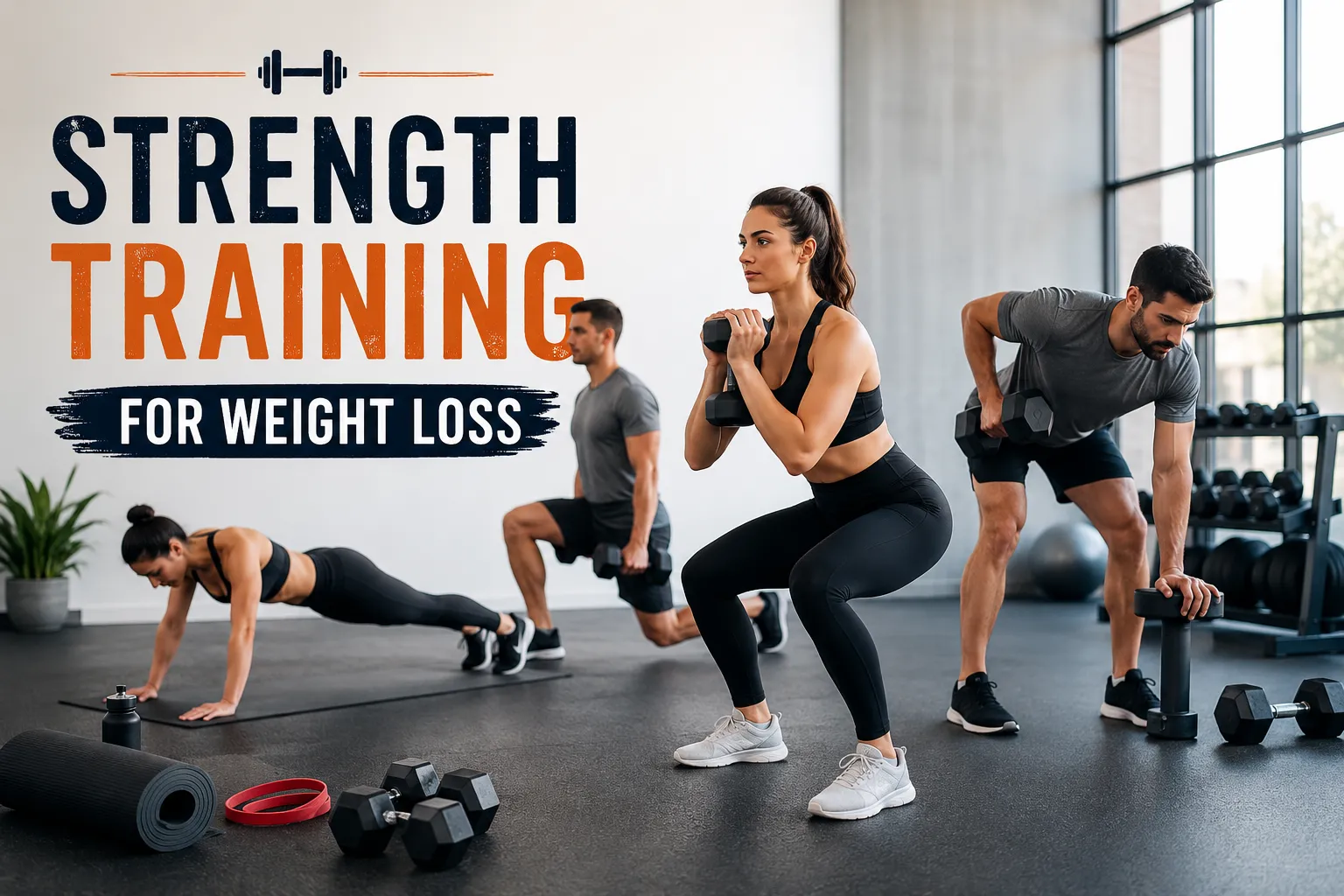
Many people start their weight loss journey by doing endless cardio workouts and strict diets. At first, the scale may move quickly. However, after a few weeks, progress often slows down. This can feel frustrating and discouraging. Some people also notice low energy, muscle loss, and difficulty maintaining results. In many cases, the real problem is not a lack of effort. The problem is relying only on calorie-burning workouts without building strength and supporting lean muscle.
Strength training for weight loss offers a more sustainable approach. Instead of focusing only on burning calories, it helps improve body composition, preserve muscle, and support long-term fat loss. Many beginners also worry about lifting weights because they think it is too difficult or only meant for athletes. In reality, simple strength workouts can work for beginners, busy professionals, women, and anyone looking for healthy weight loss. You do not need extreme workouts or hours in the gym to start seeing progress.
Key Takeaways
- Strength training for weight loss helps burn fat while preserving lean muscle.
- It supports better body composition, not just lower scale weight.
- Beginners can start with simple body-weight exercises at home.
- Combining strength training, cardio, protein, and recovery gives better results.
- Consistency matters more than extreme workouts or crash diets.
What Strength Training Does for Weight Loss
Strength training uses resistance to challenge your muscles. This can include:
- body-weight exercises
- dumbbells
- barbells
- resistance bands
- gym machines
Strength training for weight loss helps your body burn calories while improving muscle tone and body composition.
Lean Muscle Mass and Metabolism
Lean muscle tissue uses more energy than fat tissue. Because of this, building muscle may slightly improve daily calorie burn over time.
Strength training may also improve:
- posture
- balance
- mobility
- bone health
- insulin sensitivity
These benefits support healthy long-term weight management.
How Does Strength Training Contribute to Weight Loss?
Strength training helps weight loss in several ways.
Burns Calories During Exercise
Resistance training burns calories during workouts. Compound exercises usually burn more calories because they use multiple muscle groups at once.
Supports Fat Loss
Strength workouts help reduce body fat while preserving lean muscle. This is important because many people lose muscle during extreme dieting.
Improves Body Composition
Body composition refers to the ratio of fat to muscle in your body. Strength training can help you look leaner and stronger, even if the scale changes slowly.
Helps Long-Term Weight Maintenance
Many people regain weight after crash diets. However, strength training supports sustainable lifestyle habits that are easier to maintain.
EPOC (Afterburn Effect)
After a workout, your body continues using energy while recovering. This is called excess post-exercise oxygen consumption, also known as EPOC or the afterburn effect.
Higher-intensity strength workouts may increase calorie use after exercise. Compound movements like squats, deadlifts, and lunges can create a stronger afterburn effect.
Because of this, strength training may continue supporting calorie burn even after your workout ends.
Fat Loss vs. Weight Loss
Fat loss and weight loss are not always the same thing.
Weight loss may include:
- water loss
- muscle loss
- fat loss
Fat loss focuses on reducing body fat while maintaining lean muscle.
Strength training for weight loss supports healthier body composition changes compared to crash dieting alone.
What Is Body Recomposition?
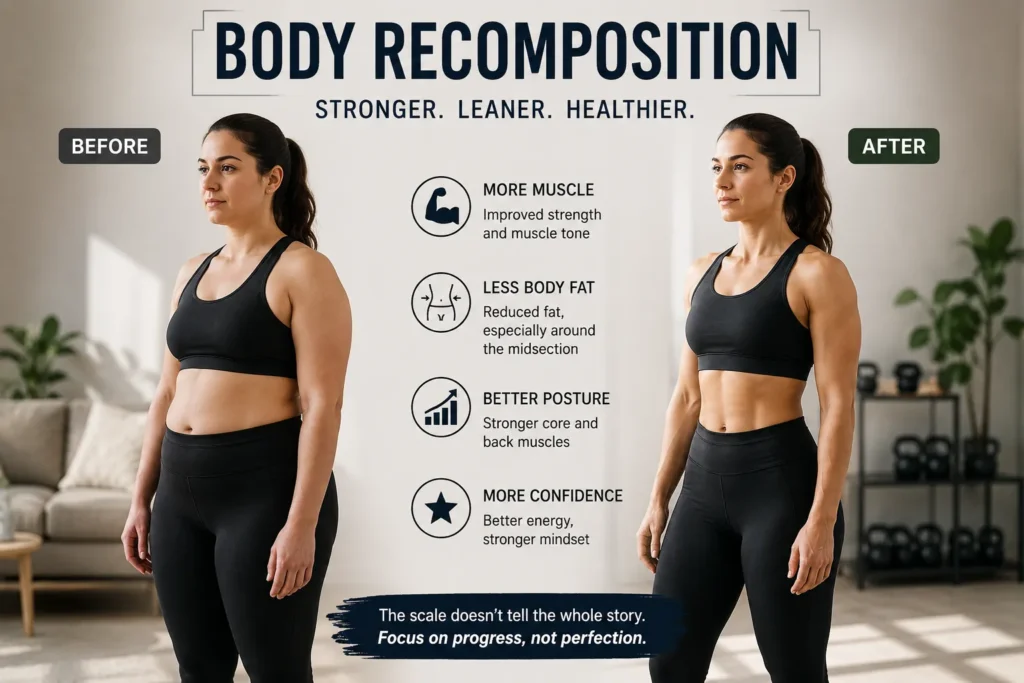
Body recomposition means losing fat while maintaining or building muscle at the same time.
This is one reason why the scale may not change quickly after starting strength training. You may gain lean muscle while losing body fat.
Because of this, many people notice:
- clothes fitting better
- improved muscle tone
- smaller waist measurements
- increased strength
The scale may not always reflect progress because muscle weighs more than fat by volume. Progress photos, body measurements, and energy levels can also show improvement.
Body recomposition is one of the biggest benefits of strength training for fat loss.
Benefits of Strength Training for Weight Loss
Strength training offers many benefits besides calorie burn.
Body Composition Changes
You may notice:
- more muscle definition
- less body fat
- stronger core muscles
- improved posture
Building Strength and Endurance
Daily activities become easier when your body gets stronger. In addition, endurance may improve over time.
Moderate Weight Maintenance
Strength training can help reduce the risk of weight regain after dieting.
Sustainable Weight Loss
Quick fixes often fail long term. However, strength training supports habits that are easier to maintain consistently.
The goal is to build healthy habits you can maintain long term instead of depending on extreme diets or exhausting workout routines.
Lower-Impact Training
Some forms of resistance training are gentle on the joints. Therefore, they can work well for beginners and older adults.
More Than Just Weight Loss
Strength training may also:
- improve confidence
- support bone density
- reduce stress
- improve sleep quality
Many beginners first notice better energy, strength, and confidence before major weight changes.
Strength Training Exercises for Weight Loss
Some exercises burn more calories because they train several muscles at once.
Body-Weight Exercises
Body-weight workouts are beginner friendly because they require little or no equipment.
Squats
Squats train the legs, glutes, and core.
Push-Ups
Push-ups strengthen the chest, shoulders, arms, and core muscles.
Lunges
Lunges improve lower-body strength and balance.
Planks
Planks help strengthen the core and improve posture.
Full-Body Workout
Full-body workouts train several muscle groups in one session.
A beginner full-body workout may include:
- squats
- push-ups
- rows
- lunges
- planks
Even short 20–30 minute strength workouts can support fat loss when done consistently.
Gym Strength Training
Gym workouts provide access to more resistance options.
Resistance Machines
Machines help beginners learn proper form safely.
Free Weights
Dumbbells and barbells improve coordination, strength, and muscle growth.
Pilates or Weight Lifting
Pilates improves flexibility and core control. Weight lifting focuses more on muscle growth and strength development.
Both forms of exercise can support healthy weight loss.
Home Strength Training for Burning Fat and Losing Weight
Home workouts are convenient and affordable. You do not need a gym membership to start strength training for weight loss.
Many beginners feel more comfortable starting strength training at home before joining a gym.
Beginner-Friendly Exercises
Good beginner exercises include:
- body-weight squats
- wall push-ups
- glute bridges
- step-ups
- planks
Lower-Impact Exercises
Resistance bands and slow body-weight exercises are often easier on the joints.
Beginner Routines
Beginners should start with two or three weekly sessions. Focus on proper form before increasing resistance.
Strength Training for Women Trying to Lose Weight
Many women avoid lifting weights because they worry about becoming bulky. However, most women do not naturally gain large muscle size from regular strength training.
Strength training for women may help:
- improve muscle tone
- support fat loss
- strengthen bones
- improve confidence
- increase daily energy use
Many women use strength training to feel stronger, improve confidence, and create a leaner appearance rather than simply losing weight.
In addition, resistance training can help women maintain lean muscle during weight loss.
Cardio and Strength Training
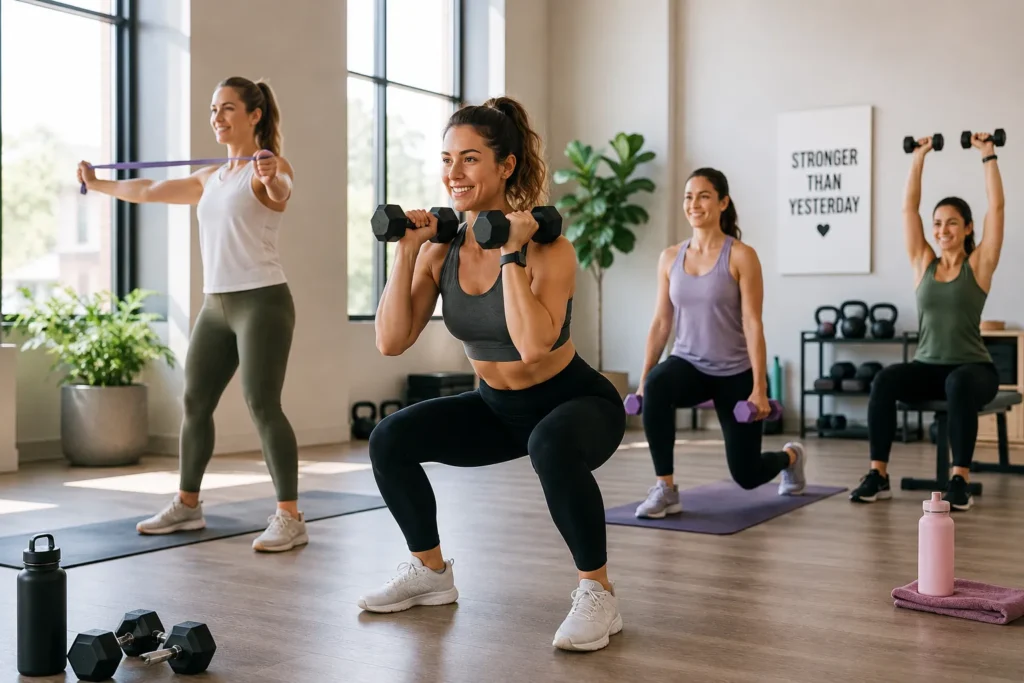
Many people ask whether cardio or strength training is better for fat loss. Both forms of exercise offer benefits.
| Cardio | Strength Training |
|---|---|
| Burns more calories during exercise | Builds lean muscle |
| Improves heart health | Supports body composition |
| Helps endurance | Helps preserve muscle |
| Supports calorie burn | May improve metabolism |
Combining both methods often gives the best long-term results.
Aerobic Exercise and Resistance Training
Walking, cycling, swimming, and jogging are common forms of aerobic exercise. Resistance training helps build strength and muscle.
A balanced workout plan may improve both fitness and fat loss.
Weekly Exercise Recommendations
Beginners can start with:
- 2–3 strength workouts weekly
- 2–3 cardio sessions weekly
- at least 1 recovery day
According to general fitness guidelines, adults should include both aerobic activity and muscle-strengthening exercise each week.
3-Day Beginner Strength Training Plan for Weight Loss
This beginner workout plan focuses on full-body strength and fat loss.
| Day | Workout |
|---|---|
| Monday | Full Body Strength Training |
| Wednesday | Lower Body + Core |
| Friday | Upper Body + Cardio |
Monday Workout
- Squats — 3 sets of 10 reps
- Push-Ups — 3 sets of 8 reps
- Dumbbell Rows — 3 sets of 10 reps
- Planks — 3 sets of 30 seconds
Wednesday Workout
- Lunges — 3 sets of 10 reps
- Glute Bridges — 3 sets of 12 reps
- Step-Ups — 3 sets of 10 reps
- Bicycle Crunches — 3 sets of 15 reps
Friday Workout
- Shoulder Press — 3 sets of 10 reps
- Dumbbell Deadlifts — 3 sets of 10 reps
- Resistance Band Rows — 3 sets of 12 reps
- 15–20 Minutes of Cardio
Rest for 60–90 seconds between sets.
Nutrition Tips for Strength Training and Fat Loss
Exercise alone is not enough for weight loss. Nutrition also plays an important role.
Maintain a Calorie Deficit
A calorie deficit means using more calories than you consume. This is necessary for fat loss.
Eat Enough Protein
Protein supports muscle recovery and growth. Good protein sources include:
- eggs
- chicken
- fish
- yogurt
- beans
- tofu
Stay Hydrated
Water supports recovery and workout performance.
Focus on Whole Foods
Whole foods often provide more nutrients and help control hunger better than highly processed foods.
How Often to Strength Train
Most beginners do well with two to four strength workouts each week.
Your muscles need time to recover between sessions. Therefore, recovery is just as important as exercise.
Consistency matters more than extreme workouts.
Progressive Overload
Progressive overload means slowly increasing workout difficulty over time.
You can increase:
- resistance
- repetitions
- workout intensity
- training volume
This helps your body continue building strength and muscle.
Strategies for Weight Loss Goals
To improve results:
- sleep at least 7–9 hours
- stay physically active
- follow a balanced diet
- drink enough water
- remain consistent
High stress and poor sleep may affect workout recovery and fat loss progress.
Common Strength Training Mistakes for Weight Loss
Many beginners make mistakes that slow progress.
Lifting Too Light
Very light resistance may not challenge the muscles enough.
Skipping Protein
Low protein intake can affect recovery and muscle maintenance.
Doing Too Much Cardio
Excessive cardio may increase fatigue and reduce recovery quality.
Poor Sleep
Sleep is important for recovery, hormone balance, and workout performance.
Inconsistent Training
Results take time. Skipping workouts often slows progress.
Crash Dieting
Extreme calorie restriction may lead to muscle loss and low energy levels.
Before You Start: Avoid These Beginner Mistakes
Many beginners do not fail because strength training does not work. They struggle because they train without a simple plan, skip recovery, or expect fast scale changes.
- Do not lift too heavy before learning proper form.
- Do not rely only on the scale to measure progress.
- Do not skip protein, sleep, and recovery.
- Do not change workouts every few days.
- Do not expect fat loss without a calorie deficit.
Safety and Proper Form
Good form reduces injury risk and improves workout quality.
Always:
- warm up before exercise
- use controlled movements
- avoid lifting too heavy too soon
- recover between sessions
Beginners may benefit from learning form from a trainer or trusted fitness resource.
Safety Tips
Stop exercising if you experience:
- chest pain
- dizziness
- sharp pain
Listen to your body and recover properly.
Expected Results
Most beginners notice strength improvements within several weeks. Fat loss results depend on:
- consistency
- nutrition
- sleep
- workout intensity
Healthy progress takes time. Therefore, focus on long-term habits instead of quick fixes.
Conclusion
Many people start strength training for weight loss expecting fast results on the scale. However, real progress often happens slowly and steadily. From practical experience, beginners who focus on consistency instead of perfection usually see better long-term results. Small habits such as regular workouts, proper recovery, better food choices, and gradual progression often lead to noticeable improvements in strength, energy, confidence, and body composition over time.
One of the biggest mistakes people make is treating strength training like a short-term challenge instead of a long-term lifestyle habit. Sustainable fat loss does not require extreme workouts or punishing diets. It requires patience, consistency, and realistic expectations. Strength training works best when combined with balanced nutrition, recovery, and manageable routines that fit your daily life.
Many beginners also become discouraged when the scale does not move quickly. However, body recomposition can improve muscle tone, strength, posture, and overall fitness even before major weight changes appear. In real-world fitness coaching and beginner training environments, people who stay consistent with simple full-body workouts often achieve more sustainable results than those constantly switching between extreme diets and intense cardio programs.
Strength training for weight loss is not only about burning calories. It is about building a healthier, stronger, and more sustainable lifestyle that supports long-term results.
