

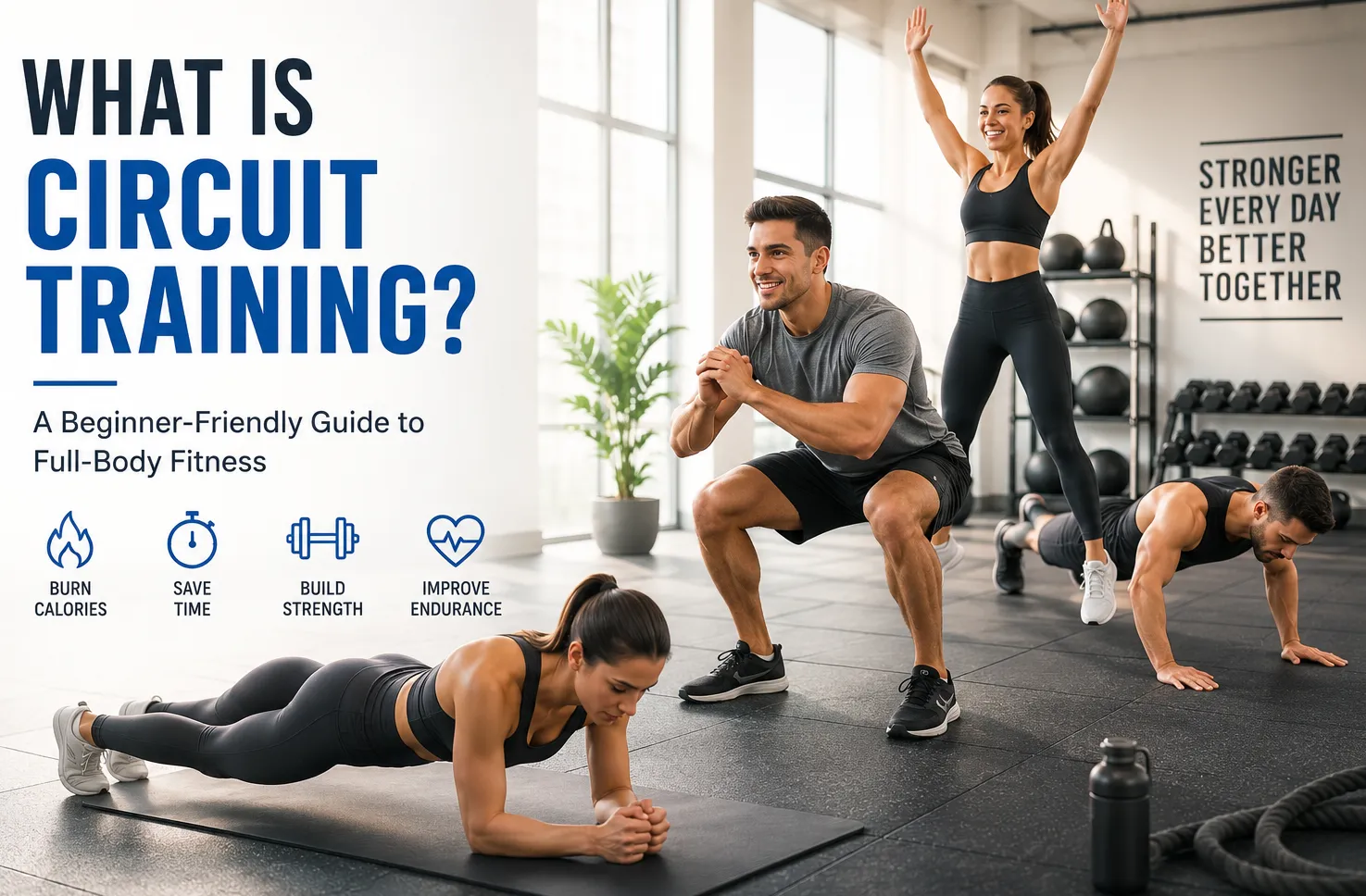
Many people struggle to stay consistent with exercise. Some workouts take too much time, while others feel too confusing for beginners. I have seen many people quit fitness routines because they felt overwhelmed by long gym sessions and complicated workout plans. If you want a simple workout that improves fitness without spending hours in the gym, circuit training can be a smart option
When I first started using circuit training workouts, I noticed they were easier to follow and more engaging than traditional routines. The mix of cardio and strength exercises helped improve endurance while keeping workouts short and effective. Many beginners and busy professionals prefer circuit training because it saves time and keeps the body active. In this guide, you will learn what circuit training is, how it works, its benefits, and beginner-friendly workouts you can start today.
Key Takeaway
Circuit training is a workout method where you perform several exercises in a row with little rest. It combines strength and cardio training to improve fitness, burn calories, and save time.
What Is Circuit Training?
Circuit training is a workout method where you perform several exercises in a sequence with little or no rest between them.
Each exercise is called a station. After you finish one exercise, you move to the next exercise quickly. When you complete all exercises, you finish one circuit.
Most circuit workouts include:
- Strength exercises
- Cardio exercises
- Bodyweight movements
- Core training
A circuit workout usually lasts between 15 and 45 minutes.
Circuit training can help improve:
- Cardiovascular fitness
- Muscular endurance
- Strength
- Fat loss
- Calorie burn
What Does Circuit Training Mean?
The word “circuit” means moving through a full round of exercises.
For example, you may do:
- Push-ups
- Squats
- Jumping jacks
- Plank
- Lunges
After finishing all five exercises, you repeat the circuit again.
This workout style keeps your body active. It also helps save time because you do not rest for long periods.
The History of Circuit Training
Circuit training started in the 1950s in England. Fitness experts created it to improve strength and endurance at the same time.
Over the years, athletes, military programs, and gyms started using circuit workouts. Today, circuit training is one of the most common fitness methods in the world.
People like it because:
- It is simple
- It saves time
- It works for all fitness levels
- It can be done at home or in the gym
How Does Circuit Training Work?
Circuit training uses a sequence of exercises. Each exercise targets a different muscle group or fitness skill.
Most circuits include 5 to 10 exercises.
You perform each exercise for:
- A set number of reps
- Or a set amount of time
For example:
- 30 seconds of squats
- 30 seconds of push-ups
- 30 seconds of mountain climbers
After one exercise, you move to the next with little rest.
Circuit Structure
A circuit usually combines:
- Upper body exercises
- Lower body exercises
- Cardio movements
- Core exercises
This structure helps your body stay active while different muscles recover.
Rest Periods
Circuit training uses short rest periods.
Most people rest for:
- 15 to 30 seconds between exercises
- 1 to 2 minutes between full circuits
Short rest periods help keep your heart rate high.
Exercise Rotation
Exercise rotation is important in circuit training.
For example:
- Push-ups train the chest
- Squats train the legs
- Planks train the core
This helps reduce muscle fatigue.
Types of Circuit Training
There are many types of circuit training.
Each type supports a different fitness goal.
Strength Circuit Training
Strength circuits focus on building muscle and improving strength.
These workouts often include:
- Dumbbells
- Kettlebells
- Resistance bands
- Bodyweight exercises
Common exercises include:
- Squats
- Deadlifts
- Push-ups
- Shoulder presses
Cardio Circuit Training
Cardio circuits focus on endurance and calorie burn.
These workouts include fast movements like:
- Jump rope
- Burpees
- High knees
- Jump squats
Cardio circuits can improve heart health and aerobic fitness.
Full-Body Circuit Training
Full-body circuits train the entire body in one workout.
This is a great option for beginners.
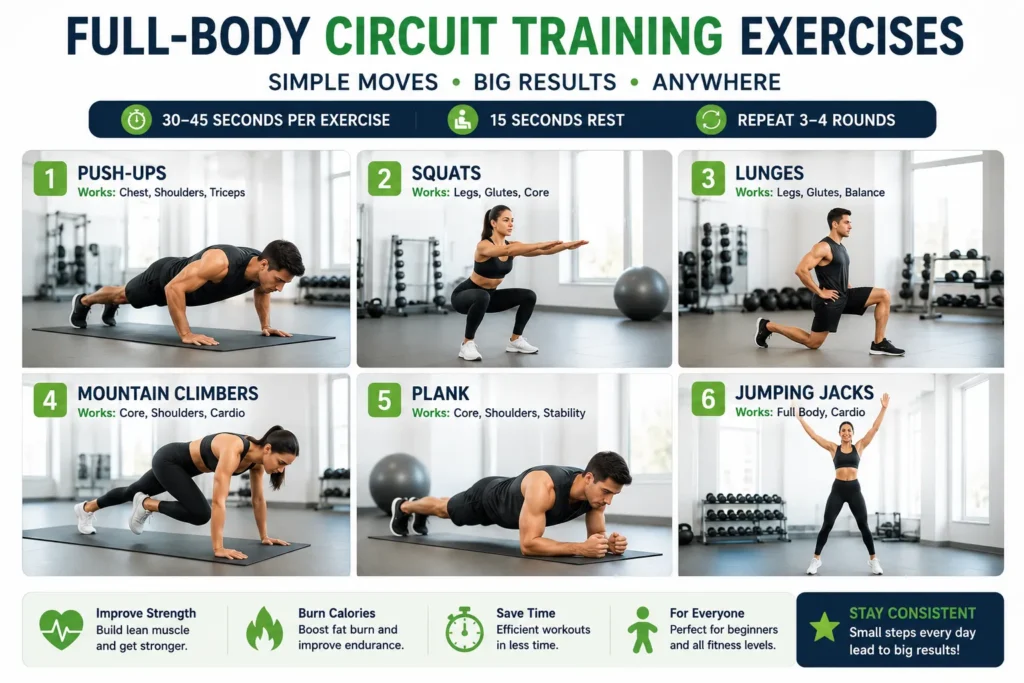
Full-body circuits are also useful for people who want simple home workouts without complicated gym equipment.
A full-body workout may include:
- Push-ups
- Squats
- Lunges
- Planks
- Jumping jacks
Sport-Specific Circuits
Athletes often use sport-specific circuit training.
These workouts improve:
- Speed
- Agility
- Balance
- Power
Sports circuits are common in football, basketball, and boxing training.
What Happens to Your Body During Circuit Training
During circuit training, your body uses many muscle groups at the same time.
Your heart rate increases quickly because you move from one exercise to another with little rest.
This helps improve:
- Cardiovascular endurance
- Oxygen use
- Muscular endurance
- Calorie burn
- Aerobic fitness
Some circuit workouts also create an afterburn effect. This is called excess post-exercise oxygen consumption EPOC. It means your body may continue burning extra calories after exercise.
Circuit training can also improve blood flow and movement efficiency over time.
Benefits of Circuit Training
Health organizations like the Centers for Disease Control and Prevention CDC recommend regular physical activity to support heart health, weight management, and overall wellness.
The American College of Sports Medicine ACSM also supports combining strength and cardio exercises for better fitness results.
Circuit training follows these principles because it combines resistance training with continuous movement.
Circuit training offers many fitness benefits.
It combines cardio and resistance training into one workout.
Improves Cardiovascular Fitness
Circuit training keeps your heart rate high.
This helps improve cardiovascular endurance and heart health.
Over time, your body becomes better at using oxygen.
Helps Burn Calories
Circuit workouts burn a large number of calories in a short time.
Because you move quickly between exercises, your body works harder.
This can support fat loss and weight management.
Builds Muscular Endurance
Muscular endurance means your muscles can work longer without getting tired.
Circuit training improves this by using repeated movements with short rest.
Saves Time
Many people choose circuit training because it is efficient.
You can complete a full-body workout in 20 to 30 minutes.
This is useful for busy schedules.
Many professionals and parents prefer circuit workouts because they can train the whole body in a short amount of time.
Supports Weight Loss
Circuit training combines strength and cardio exercises.
This can increase calorie burn and improve metabolism.
It may also help preserve muscle while losing body fat.
Improves Functional Fitness
Many circuit exercises copy everyday movements.
This helps improve:
- Balance
- Coordination
- Mobility
- Stability
Functional fitness can make daily tasks easier.
What Does Circuit Training Improve?
Circuit training improves many areas of fitness.
These include:
- Cardiovascular endurance
- Muscle endurance
- Strength
- Mobility
- Coordination
- Balance
- Calorie burn
- Aerobic fitness
It can also improve mental focus and workout consistency.
What Is Circuit Training Good For?
Circuit training is good for people who want:
- Weight loss
- Better fitness
- Faster workouts
- Improved endurance
- Muscle tone
- Home workouts
It is also a great option for beginners because exercises can be adjusted easily.
Does Circuit Training Burn Fat?
Yes, circuit training can help burn fat.
Circuit workouts increase heart rate and calorie burn.
The combination of strength and cardio exercises helps your body use more energy.
High-intensity circuits may also increase the afterburn effect. This means your body continues burning calories after the workout ends.
However, fat loss also depends on:
- Nutrition
- Sleep
- Consistency
- Overall activity level
Is Circuit Training Good for Weight Loss?
Yes, circuit training is very effective for weight loss.
It combines:
- Resistance training
- Cardiovascular exercise
- High calorie burn
This combination helps support fat loss while keeping muscle.
Many people choose circuit workouts because they want a practical workout that fits into a busy lifestyle.
Many people use circuit training because it burns calories in less time.
Is Circuit Training Good for Building Muscle?
Circuit training can help build muscle, especially for beginners.
Strength-based circuits challenge the muscles through repeated resistance exercises.
However, traditional strength training may be better for advanced muscle growth because it uses:
- Heavier weights
- Longer rest periods
- Lower reps
Still, circuit training can improve muscle tone and muscular endurance.
Circuit Training vs HIIT
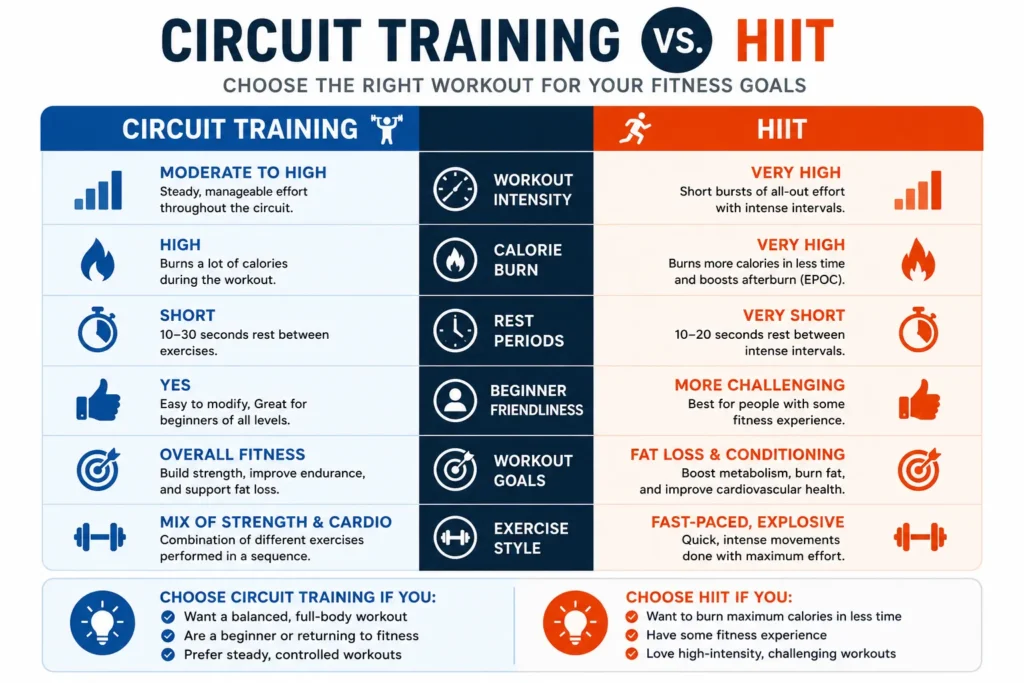
Many people confuse circuit training with HIIT.
They are similar, but they are not the same.
| Feature | Circuit Training | HIIT |
|---|---|---|
| Intensity | Moderate to high | Very high |
| Rest periods | Short | Structured |
| Workout style | Strength + cardio mix | Maximum effort intervals |
| Beginner friendly | Yes | Sometimes difficult |
| Main goal | Fitness and endurance | Fast calorie burn |
Circuit training focuses on completing a sequence of exercises.
HIIT focuses on short bursts of very intense exercise followed by recovery periods.
Some advanced circuit workouts may also use HIIT principles. However, traditional circuit training usually focuses more on continuous movement and overall fitness.
| Feature | Circuit Training | HIIT |
|---|---|---|
| Main Goal | Overall fitness, endurance, and strength | High calorie burn and intense conditioning |
| Intensity | Moderate to high | Very high |
| Best For | Beginners, busy adults, and full-body training | People with higher fitness levels |
Circuit Training Exercises
Circuit training uses many different exercises.
The best exercises train multiple muscle groups.
Bodyweight Exercises
Bodyweight exercises are great for beginners.
Popular options include:
- Push-ups
- Squats
- Lunges
- Planks
- Mountain climbers
- Burpees
Dumbbell Exercises
Dumbbells increase resistance and build strength.
Good dumbbell exercises include:
- Goblet squats
- Shoulder presses
- Dumbbell rows
- Chest presses
- Dumbbell lunges
Cardio Exercises
Cardio movements help raise heart rate.
Popular cardio exercises include:
- Jump rope
- Jumping jacks
- High knees
- Sprint intervals
- Box jumps
Beginner Circuit Training Workout
This beginner workout is simple and effective.
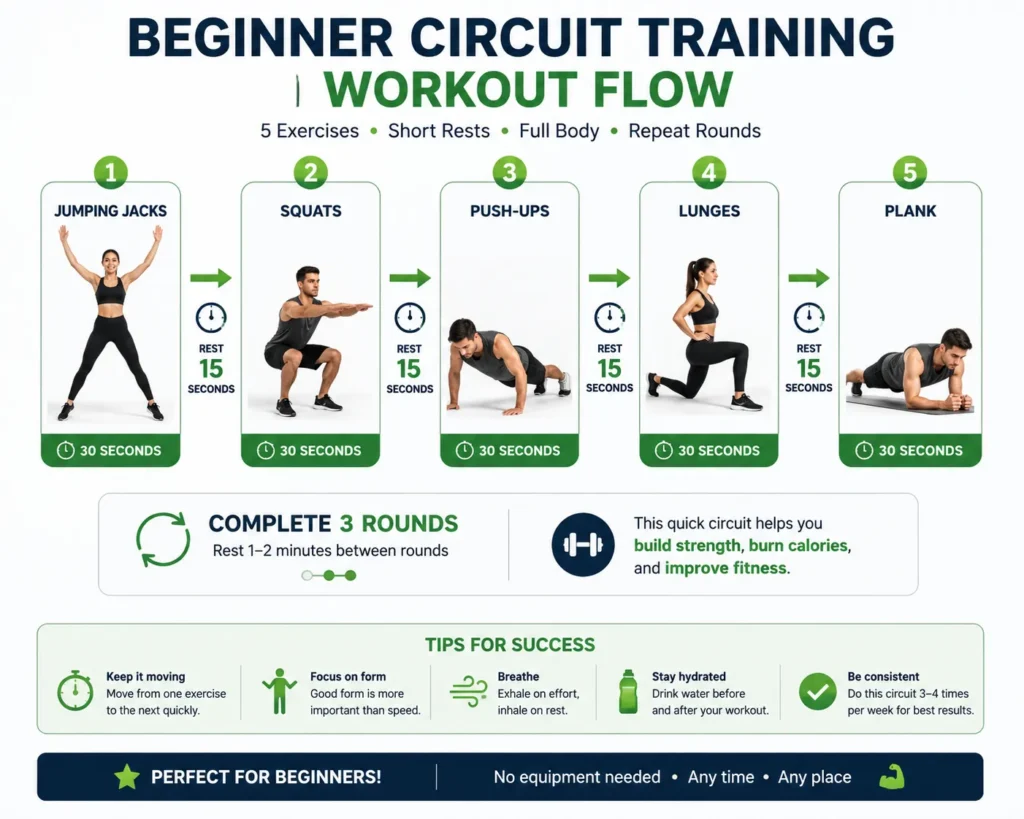
Perform each exercise for 30 seconds.
Rest for 15 seconds between exercises.
Repeat the full circuit 3 times.
Beginner Circuit Workout Plan
Perform each exercise for 30 seconds. Rest for 15 seconds between exercises. Complete 3 rounds.
- Jumping Jacks
- Bodyweight Squats
- Push-Ups
- Plank
- Lunges
15-Minute Beginner Circuit
- Jumping jacks
- Bodyweight squats
- Push-ups
- Plank
- Lunges
20-Minute Fat Loss Circuit
- Burpees
- Mountain climbers
- Jump squats
- Push-ups
- High knees
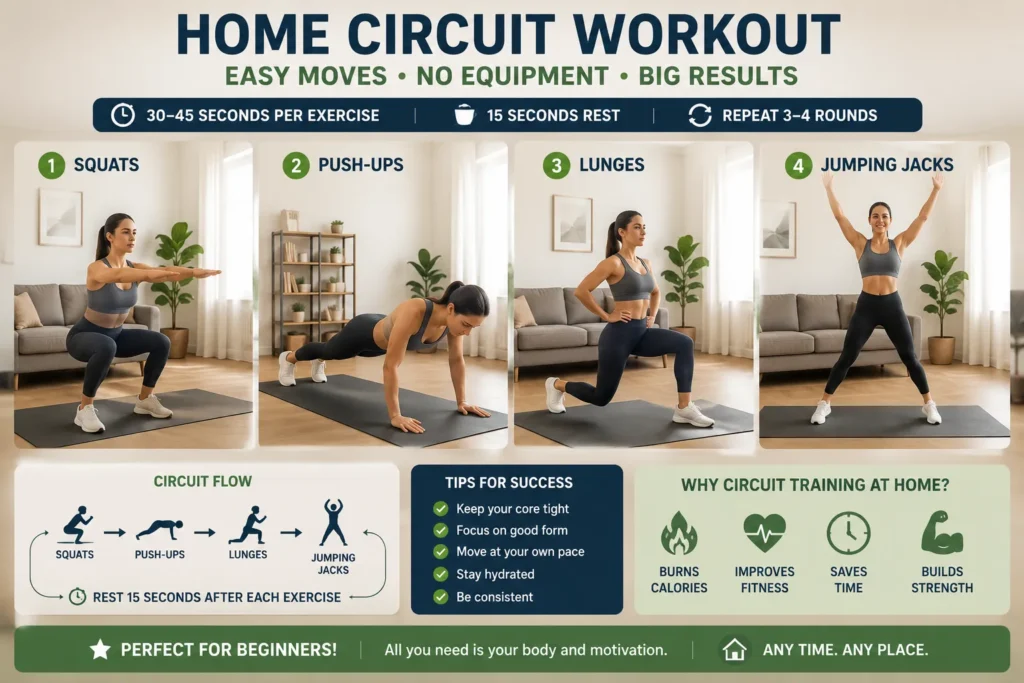
Home Circuit Workout
This workout requires no equipment.
Home circuit workouts are a good choice for people who want affordable fitness routines without a gym membership.
- Air squats
- Plank shoulder taps
- Glute bridges
- Step-ups
- Bicycle crunches
Sample Circuit Workout
Here is a full-body gym circuit workout.
Perform each exercise for 12 reps.
Complete 3 rounds.
- Dumbbell squats
- Push-ups
- Bent-over rows
- Walking lunges
- Shoulder presses
- Plank hold
Rest for 1 minute after each full round.
How Long Should a Circuit Workout Last?
Most circuit workouts last between 20 and 45 minutes.
The ideal workout length depends on:
- Fitness level
- Workout intensity
- Exercise type
- Personal goals
Beginners can start with 15 to 20 minutes.
More advanced athletes may train for 45 minutes or longer.
How Many Calories Do You Burn Doing Circuit Training?
Calorie burn depends on:
- Body weight
- Workout intensity
- Fitness level
- Exercise selection
Many people burn around 200 to 500 calories during a circuit workout, depending on workout intensity and body size.
Higher-intensity workouts usually burn more calories.
How to Get Started With Circuit Training
Starting circuit training is simple.
Follow these steps:
- Choose 5 to 8 exercises
- Mix strength and cardio movements
- Train for 20 to 30 minutes
- Keep rest periods short
- Focus on proper form
Beginners should start slowly.
Do not worry about speed in the beginning. Focus on learning proper movement and building confidence first.
Good form is more important than speed.
Common Circuit Training Mistakes
Many beginners make mistakes during circuit workouts.
Avoiding these mistakes can improve results and reduce injury risk.
Doing Exercises Too Fast
Speed should never hurt your form.
Focus on controlled movement.
Skipping Warm-Ups
Warm-ups prepare the muscles and joints.
Always warm up before training.
Choosing Random Exercises
A good circuit should have balance.
Train different muscle groups evenly.
Using Poor Form
Poor form increases injury risk.
Learn each movement correctly.
Resting Too Much
Long rest periods reduce workout intensity.
Keep rest short unless needed.
Safety Considerations
Circuit training is safe for most people.
However, some people should speak with a doctor before starting.
This includes people with:
- Heart conditions
- Joint problems
- Injuries
- High blood pressure
Always listen to your body.
Stop if you feel:
- Dizziness
- Chest pain
- Severe shortness of breath
Drink enough water and wear proper workout shoes.
Expert Tips for Better Circuit Training Results
These simple tips can help improve your workouts:
- Focus on proper form first
- Increase intensity slowly
- Track your progress weekly
- Stay hydrated during workouts
- Use a mix of strength and cardio exercises
- Allow enough recovery time
Consistency is more important than perfection.
Conclusion
Circuit training is one of the most practical workout methods for beginners and busy adults. It combines cardio and strength training into one routine, which makes workouts more efficient and easier to follow. Over the years, I have seen many people stay more consistent with fitness when they switch to circuit-style workouts because the sessions are shorter and less repetitive.
Another reason circuit training works well is that it can fit almost any lifestyle. You can train at home, in a gym, or even outdoors with little equipment. Beginners can start with simple bodyweight exercises, while more advanced users can increase intensity over time.
From both personal experience and fitness research, circuit training is effective for improving endurance, burning calories, and building overall fitness. The key is to focus on proper form, stay consistent, and choose workouts that match your fitness level. Small progress over time often leads to the best long-term results.
