

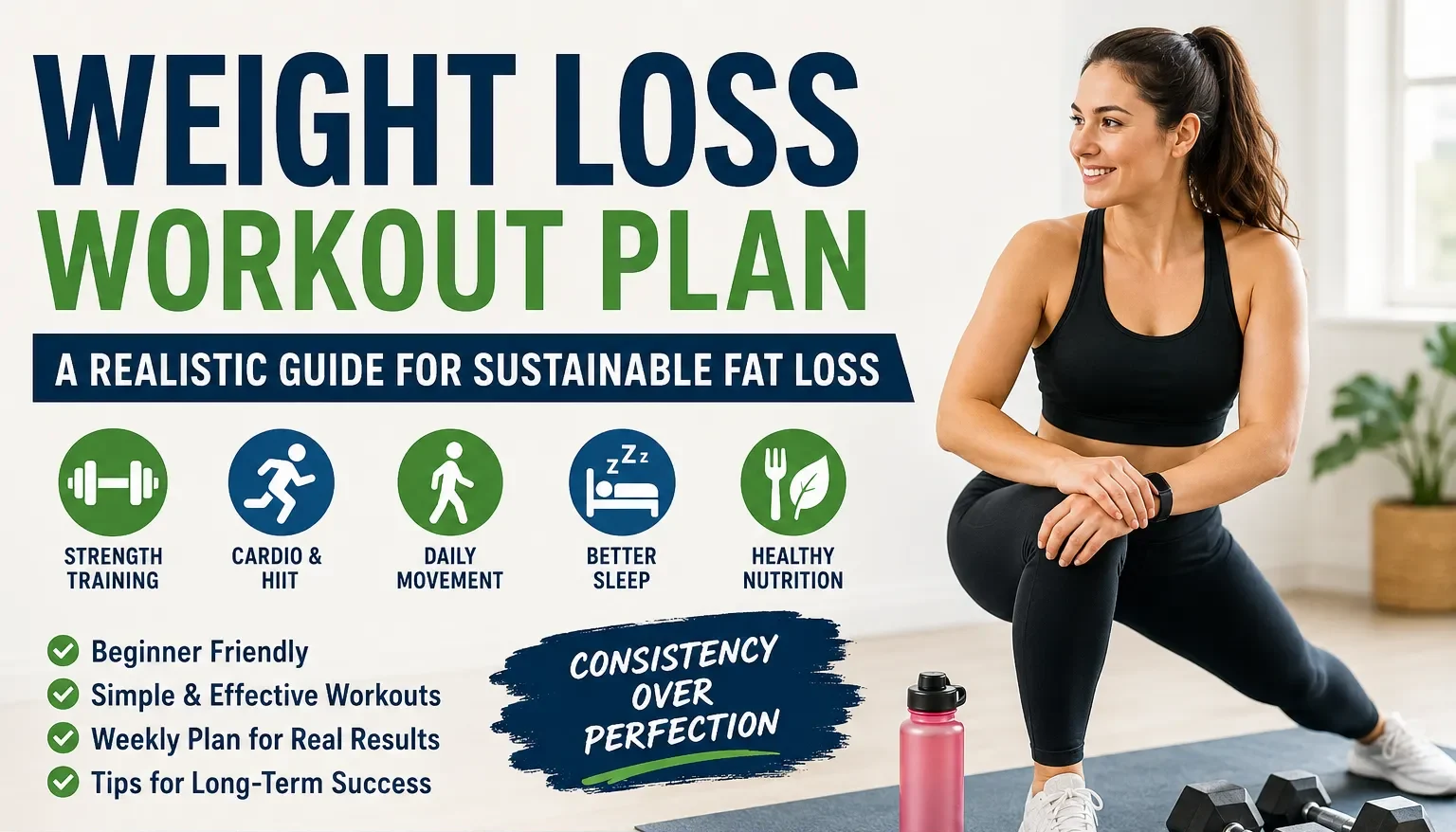
Many people start a weight loss workout plan feeling motivated. However, after a few weeks, they often feel tired, frustrated, and confused. Some people spend hours doing cardio but still struggle to lose weight. Others try strict diets and intense workouts that feel impossible to maintain.
I have noticed that the biggest problem is not motivation. It is unrealistic expectations. Many beginners think they need extreme workouts to see results. In reality, sustainable fat loss usually comes from simple habits repeated consistently. A realistic workout plan should fit your lifestyle, energy level, and fitness experience. This guide is designed to help beginners, busy professionals, overweight individuals, and anyone looking for a practical weight loss workout plan that actually works long term.
Quick Takeaway
A good weight loss workout plan should be simple, realistic, and sustainable. The best approach combines strength training, cardio, daily movement, recovery, sleep, and healthy eating habits.
- Best for beginners: walking, strength training, and low-impact cardio
- Best weekly goal: 3 to 5 workout days
- Best result approach: consistency over perfection
- Healthy weight loss pace: about 1 to 2 pounds per week
Exercise and Weight Loss
Exercise plays a big role in healthy weight loss. It helps your body burn calories and improve overall fitness. Regular movement also helps support your heart, muscles, and mental health.
A good workout plan can help you:
- Burn more calories
- Build lean muscle
- Improve metabolism
- Increase energy levels
- Reduce stress
- Improve sleep quality
Exercise works best when combined with healthy eating habits. You do not need a perfect diet. However, you do need a calorie deficit. This means your body burns more calories than it takes in.
Walking, strength training, and cardio workouts all help support fat loss.
What Makes a Good Weight Loss Workout Plan?
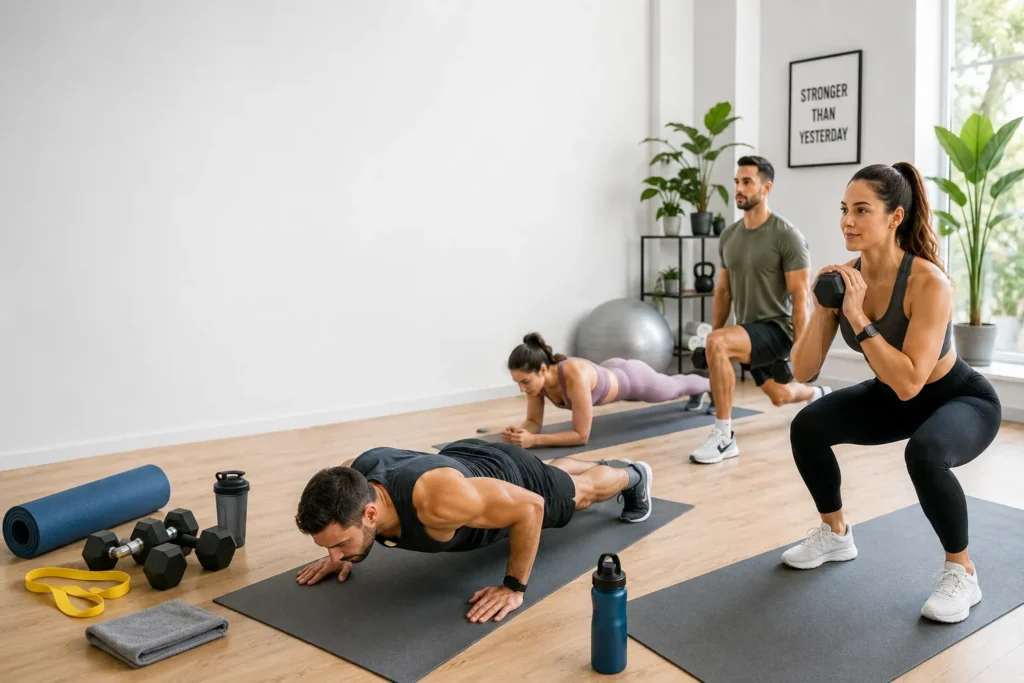
The best workout plans are realistic and flexible.
Some people prefer gym workouts. Others feel more comfortable exercising at home.
Both options can work.
A good plan should help you stay active without feeling overwhelmed.
Many people fail because they try to do too much too fast.
This is especially common for beginners who expect instant results.
The best workout plans focus on consistency.
A good plan should include:
- Strength training
- Cardio exercise
- Recovery days
- Daily movement
- Healthy sleep habits
- Progressive overload
Progressive overload means slowly increasing workout intensity over time. This helps your body grow stronger and continue burning fat.
Is Cardio or Strength Training Better for Fat Loss?
Many people think cardio is the only way to lose weight. That is not true.
Cardio helps burn calories during exercise. Strength training helps build muscle. Muscle helps your body burn more calories even while resting.
The best weight loss workout plan includes both.
| Workout Type | Main Benefit | Best Use |
|---|---|---|
| Cardio | Burns calories and improves heart health | Walking, cycling, swimming, or HIIT |
| Strength Training | Builds muscle and supports metabolism | Squats, push-ups, lunges, rows, and planks |
| Daily Movement | Increases calorie burn outside workouts | Steps, stairs, standing, and active breaks |
Benefits of Cardio
Cardio workouts help improve heart health and endurance.
Popular cardio exercises include:
- Walking
- Running
- Cycling
- Swimming
- Jump rope
- HIIT workouts
Benefits of Strength Training
Strength training helps preserve muscle during weight loss.
Benefits include:
- Increased metabolism
- Better body composition
- Improved strength
- Better posture
- Higher calorie burn over time
For beginners, a mix of cardio and strength training works best.
Best Workout Schedule for Weight Loss: A Weekly Plan That Actually Works
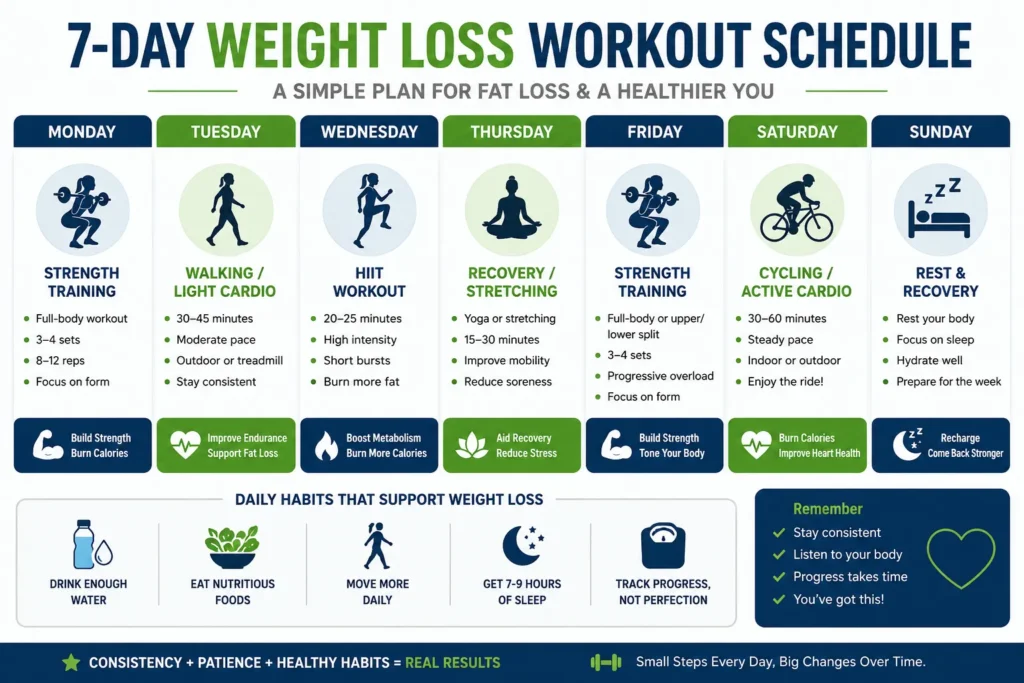
This beginner-friendly weekly workout plan is simple and realistic.
Busy individuals can also shorten workouts into smaller sessions during the day if needed.
| Day | Workout |
|---|---|
| Monday | Full-body strength training |
| Tuesday | Walking or light cardio |
| Wednesday | HIIT workout |
| Thursday | Rest or stretching |
| Friday | Full-body strength training |
| Saturday | Cycling or swimming |
| Sunday | Rest and recovery |
This schedule gives your body enough time to recover while still staying active.
Monday
Focus on full-body strength training.
Exercises:
- Squats
- Push-ups
- Lunges
- Dumbbell rows
- Planks
Complete 3 sets of each exercise.
Tuesday
Choose light cardio.
You can:
- Walk for 30 to 45 minutes
- Ride a bike
- Use a treadmill
Light movement helps improve recovery.
Wednesday
Try a short HIIT workout.
HIIT stands for High-Intensity Interval Training.
Example:
- 30 seconds jumping jacks
- 30 seconds rest
- 30 seconds mountain climbers
- 30 seconds rest
- Repeat for 15 to 20 minutes
HIIT workouts help burn calories in a short amount of time.
Beginners should start slowly and choose low-impact options if needed.
Thursday
Take a recovery day.
You can:
- Stretch
- Do yoga
- Take a short walk
Recovery is important for muscle repair and energy levels.
Friday
Repeat your strength workout.
Try adding:
- Slightly heavier weights
- More repetitions
- Better exercise form
This supports progressive overload.
Saturday
Choose a fun cardio activity.
Good options include:
- Cycling
- Swimming
- Hiking
- Dancing
Choose activities you enjoy. This makes consistency easier.
Enjoyable workouts are often easier to maintain long term.
Sunday
Rest completely.
Your body needs time to recover and recharge.
Strength Training: Beginner Gym Workout Plan
Strength training is one of the best ways to lose fat and build lean muscle.
It also helps support body recomposition, which means losing fat while preserving muscle.
You do not need complicated workouts.
Focus on simple movements first.
Warm-up
Always warm up before exercise.
A good warm-up can include:
- Arm circles
- Jumping jacks
- Bodyweight squats
- Light walking
Warm-ups help prepare your muscles and reduce injury risk.
Squats
Squats work your legs and glutes.
Keep your chest up and lower your hips slowly.
Push-ups
Push-ups train your chest, shoulders, and arms.
Beginners can start with knee push-ups.
Bent-over Dumbbell Rows
This exercise strengthens your back and arms.
Use light weights at first.
Planks
Planks help build core strength.
Keep your body straight while holding the position.
Dumbbell Shoulder Presses
This exercise works your shoulders and upper body.
Move slowly and control the weight.
Lunges
Lunges improve balance and leg strength.
Keep your front knee stable during movement.
Glute Bridges
Glute bridges help strengthen your hips and lower body.
Squeeze your glutes at the top.
Cool-down
Cool down after every workout.
Good cool-down exercises include:
- Stretching
- Slow walking
- Deep breathing
Cooling down helps reduce soreness.
Cardio Days
Cardio workouts help increase calorie burn and improve fitness.
You do not need to do intense cardio every day.
Moderate activity is often enough.
Cycling
Cycling is a low-impact cardio workout.
It helps burn calories without putting too much stress on the joints.
Swimming
Swimming works the whole body.
It is a great option for beginners and overweight individuals.
High-Intensity Interval Training (HIIT)
HIIT workouts alternate between short bursts of hard work and rest.
Benefits include:
- High calorie burn
- Short workout time
- Improved endurance
- Better fat loss support
Beginners should start slowly and choose low-impact options if needed.
The 30-Minute Fitness Blitz
A 30-minute workout can still be effective.
Example:
- 5-minute warm-up
- 20-minute workout
- 5-minute cool-down
Consistency matters more than workout length.
Work Out Before Breakfast
Some people prefer morning workouts before breakfast.
Morning exercise may help improve consistency for some individuals.
However, overall calorie balance matters more than workout timing.
The best workout time is the one you can follow consistently.
Best Exercises for Weight Loss
Some exercises burn more calories and train multiple muscles at once.
The best weight loss exercises include:
- Squats
- Push-ups
- Burpees
- Jump rope
- Walking
- Running
- Cycling
- Lunges
- Mountain climbers
- Kettlebell swings
Full-body workouts are especially effective for fat loss.
Exercise for Belly Fat
You cannot target fat loss in one body area.
This is called spot reduction, and it is a myth.
The best way to reduce belly fat is to:
- Follow a calorie deficit
- Exercise consistently
- Sleep well
- Reduce stress
- Build muscle
Walking and strength training are both helpful.
Daily Movement Beyond Exercise
Exercise is important, but daily movement also matters.
This is often called NEAT, which stands for Non-Exercise Activity Thermogenesis.
Examples include:
- Walking more
- Taking stairs
- Cleaning the house
- Standing more often
- Stretching during breaks
Daily movement can help increase calorie burn throughout the day.
Many people sit too much during work hours.
Busy professionals especially benefit from small movement habits throughout the day.
Small movement habits can make a big difference.
Aim for at least 7,000 to 10,000 steps daily.
Supporting Weight Loss with Food, Hydration and Sleep
Your workout plan works better when supported by healthy habits.
Sleep, hydration, and nutrition all affect weight loss.
Increasing Your Protein Intake
Protein helps support muscle growth and recovery.
High-protein foods include:
- Eggs
- Chicken
- Fish
- Greek yogurt
- Beans
- Tofu
Protein also helps you stay full longer.
Eating More Plants
Vegetables and fruits contain fiber and nutrients.
Fiber helps improve fullness and digestion.
Good options include:
- Broccoli
- Spinach
- Apples
- Berries
- Carrots
- Sweet potatoes
Getting Enough Sleep
Sleep affects hormones linked to hunger and recovery.
Poor sleep may increase cravings and fatigue.
Aim for 7 to 9 hours of sleep each night.
Staying Hydrated
Water supports energy levels and workout performance.
Many people confuse thirst with hunger.
Drink water regularly throughout the day.
Understanding Calorie Intake Versus Expenditure
Weight loss happens when your body burns more calories than it consumes.
You do not need to starve yourself.
Extreme dieting often leads to muscle loss and low energy.
A moderate calorie deficit is safer and easier to maintain.
Sustainable Weight Loss
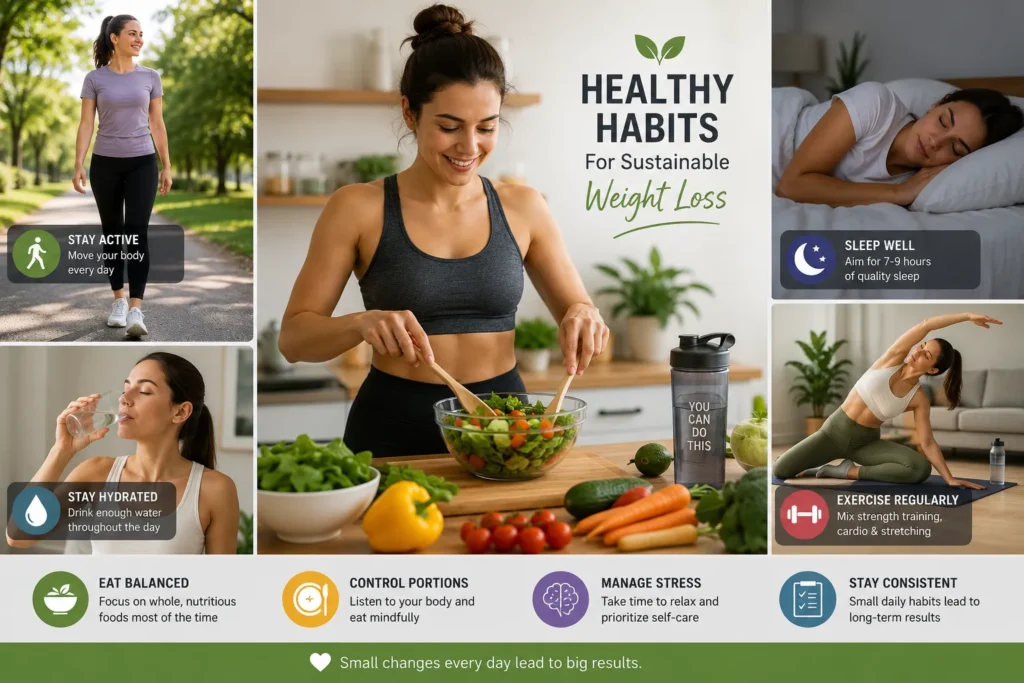
Sustainable weight loss focuses on long-term habits.
Quick fixes often fail because they are hard to maintain.
Healthy fat loss takes time.
Many people become discouraged when progress feels slow. However, sustainable habits usually create better long-term results.
Losing 1 to 2 pounds per week is considered realistic and healthy.
Nutrition, Movement, Sleep, Hydration, and Mindset
These five areas work together.
Improving just one area may help, but improving all five creates better long-term results.
Focus on progress instead of perfection.
Small changes can create big results over time.
How to Lose Weight Fast: Keys to Success
Many people want fast results. However, sustainable progress is more important.
The best results usually come from simple habits repeated consistently.
Consistency matters more than perfection.
Reward Yourself for Making Better Choices
Celebrate small wins.
Examples include:
- Completing workouts
- Drinking more water
- Walking daily
- Sleeping earlier
Rewards help improve motivation.
Eat More Often
Some people feel better eating smaller meals throughout the day.
Smaller balanced meals may help control hunger and improve energy levels.
However, total calorie intake and protein intake matter most for weight loss.
Get Plenty of Exercise
The CDC recommends at least 150 minutes of moderate physical activity weekly.
This can help support heart health, calorie burn, and long-term weight management.
This can include:
- Walking
- Strength training
- Cycling
- Swimming
- HIIT workouts
Exercising Effectively
Focus on workout quality.
Good form matters more than speed.
Do not rush through exercises.
Why Most Weight Loss Workout Plans Fail
Many people start a new workout plan with high motivation. However, motivation alone is not enough for long-term success.
Most weight loss workout plans fail because they are too extreme.
Common reasons include:
- Doing too much cardio
- Following unrealistic diets
- Skipping recovery days
- Expecting fast results
- Not sleeping enough
- Trying advanced workouts too early
Many beginners also feel discouraged when the scale does not change quickly. This is normal.
Your body needs time to adapt.
Healthy fat loss is not about being perfect every day. It is about staying consistent over time.
Small habits repeated daily often create better long-term results than extreme workouts.
How Long Does It Take to See Weight Loss Results?
Most people start noticing small changes within a few weeks.
However, weight loss timelines are different for everyone.
During the first 1 to 2 weeks, some people lose water weight quickly. After that, progress may slow down.
Healthy weight loss is usually around 1 to 2 pounds per week.
Some people also experience body recomposition. This means they lose fat while building muscle.
Because muscle weighs more than fat, the scale may not change quickly even when your body is improving.
Focus on:
- Better energy levels
- Improved strength
- Clothes fitting differently
- Better endurance
- Consistent habits
Progress takes time. Therefore, patience is important.
Low-Impact Exercises for Beginners
Low-impact workouts are helpful for beginners, older adults, and people with joint pain.
These exercises reduce stress on the knees and hips while still helping burn calories.
Good low-impact exercises include:
- Walking
- Swimming
- Cycling
- Chair exercises
- Resistance band workouts
- Elliptical training
Low-impact workouts can still support effective fat loss.
In fact, walking daily is one of the best habits for sustainable weight loss.
How Stress Affects Weight Loss
Stress can affect your workout performance, sleep, and eating habits.
High stress levels may increase cortisol, which is a stress hormone.
Poor sleep and stress may also increase cravings and emotional eating.
To support healthy fat loss:
- Sleep 7 to 9 hours nightly
- Take recovery days
- Practice stress management
- Avoid overtraining
- Stay hydrated
Recovery is just as important as exercise.
How to Adjust the Plan for Your Fitness Level
Not everyone starts at the same fitness level.
Beginners should focus on simple exercises and shorter workouts.
Overweight individuals may prefer low-impact workouts like walking or swimming.
Intermediate users can slowly increase workout intensity and resistance training volume.
Busy individuals can split workouts into shorter sessions throughout the day.
The best weight loss workout plan is the one you can follow consistently.
Common Weight Loss Workout Mistakes
Many beginners make simple mistakes that slow progress.
Common mistakes include:
- Doing too much cardio
- Avoiding strength training
- Skipping recovery days
- Not eating enough protein
- Sleeping too little
- Expecting instant results
Avoiding these mistakes can improve consistency and fat loss results.
Workout Plan Options for Different Goals
Weight Loss Workout Plan for Busy Professionals
Busy schedules can make exercise feel difficult.
Short workouts can still be effective.
Good options include:
- 30-minute strength workouts
- Walking during breaks
- Short HIIT sessions
- Home workouts
Consistency matters more than workout length.
Weight Loss Workout Plan for Overweight Beginners
Overweight beginners should focus on low-impact exercises first.
Good starting exercises include:
- Walking
- Swimming
- Cycling
- Chair exercises
- Resistance band workouts
Starting slowly can help improve confidence and reduce injury risk.
Weight Loss Workout Plan for Women
Many women focus on belly fat reduction and toning.
A balanced workout plan should include:
- Strength training
- Cardio exercise
- Core workouts
- Recovery days
Strong and healthy is more sustainable than extreme dieting.
Weight Loss Workout Plan for Men
Many men focus on fat loss while maintaining muscle.
Strength training and progressive overload can help support this goal.
Compound exercises like squats, lunges, and push-ups are especially effective.
Beginner Progress Checklist
Use this simple checklist to track progress beyond the scale.
- I completed at least 3 workouts this week.
- I walked more than usual this week.
- I included strength training at least twice.
- I took at least 1 recovery day.
- I slept better or improved my bedtime routine.
- I stayed consistent even when motivation was low.
Conclusion
A successful weight loss workout plan should feel realistic, flexible, and sustainable. Many people fail because they try to change everything at once. From experience, the people who usually see the best long-term results are the ones who focus on consistency instead of perfection.
Simple habits like walking daily, strength training a few times each week, sleeping better, and staying active throughout the day can create meaningful progress over time. You do not need extreme diets or exhausting workouts to lose weight successfully.
One important thing I have learned from fitness research and beginner workout strategies is that sustainable fat loss is rarely fast. Some weeks will feel easier than others. However, building healthy habits slowly is often more effective than chasing quick results.
Focus on improving your routine step by step. Stay patient with the process. Long-term success usually comes from realistic habits you can maintain for years, not just a few weeks.
