

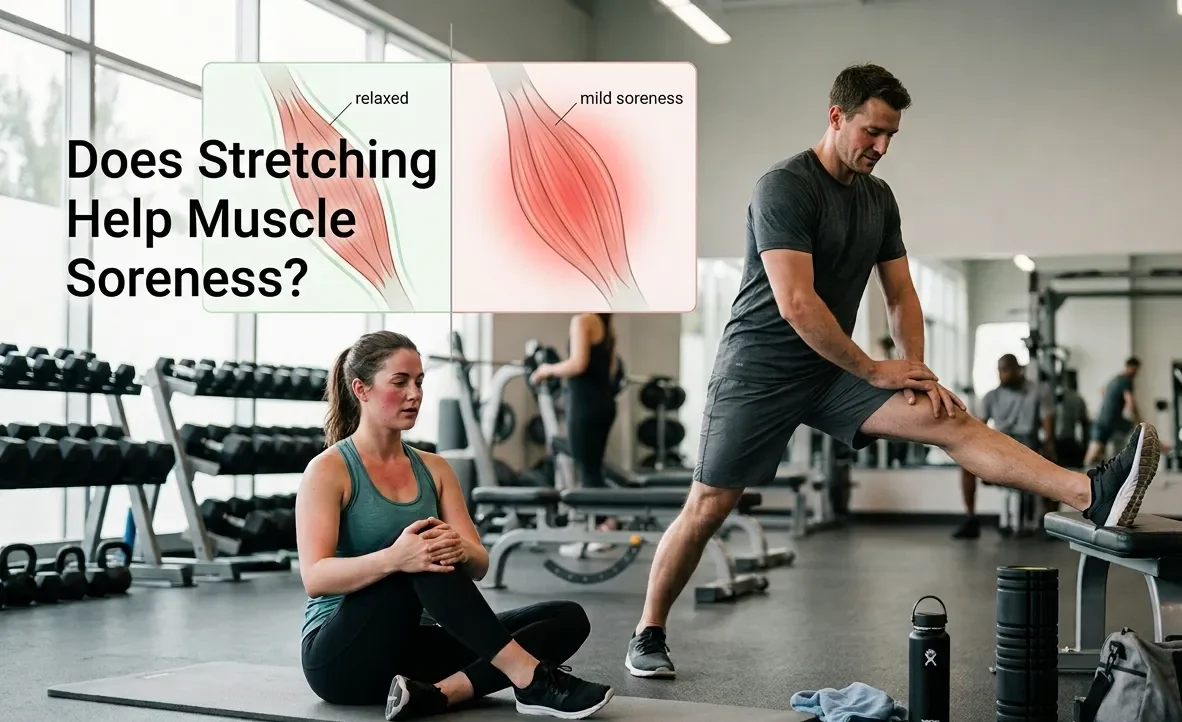
Have you ever finished a workout feeling proud, only to wake up the next day with sore muscles? Even simple tasks like walking down stairs or lifting a bag can feel harder. Many people stretch after exercise because they believe it will stop soreness. But does it really work?
The answer is more interesting than most people think. Stretching can help your body feel less stiff and improve flexibility. However, research shows that stretching alone does not greatly reduce delayed onset muscle soreness (DOMS). A complete recovery plan that includes good nutrition, hydration, sleep, and light movement works much better. In this guide, you will learn what science says, when stretching is useful, and how to recover smarter after every workout.
Does Stretching Help Muscle Soreness?
The short answer is yes and no.
Stretching can make your muscles feel more relaxed after exercise. It can improve flexibility and increase your range of motion. Many people also enjoy stretching because it helps them feel less tight.
However, stretching alone does not significantly reduce muscle soreness caused by intense exercise. If your muscles are sore because of DOMS, stretching is unlikely to make the soreness disappear faster.
That does not mean stretching has no value. It is still an important part of a healthy fitness routine because it can:
- Improve flexibility over time.
- Reduce feelings of muscle tightness.
- Support better posture.
- Help you move more comfortably.
- Prepare your body for future workouts.
Instead of expecting stretching to cure sore muscles, think of it as one piece of a complete recovery plan.
Quick Answer
Stretching can help sore muscles feel less tight, but it does not greatly reduce delayed onset muscle soreness (DOMS).
Gentle stretching may improve comfort, flexibility, and movement. For better recovery, combine it with sleep, hydration, protein, and light activity.
What Is Muscle Soreness?
Muscle soreness is the discomfort you feel after your muscles work harder than usual. It often happens after:
- Starting a new workout program.
- Lifting heavier weights.
- Running longer distances.
- Doing more repetitions.
- Returning to exercise after a break.
The soreness usually begins several hours after exercise and becomes stronger the next day.
This type of soreness is called Delayed Onset Muscle Soreness (DOMS).
DOMS is a normal response to exercise. It shows that your muscles are adapting to new challenges. While it can feel uncomfortable, it usually improves without treatment.
What Causes Delayed Onset Muscle Soreness (DOMS)?
Many people think sore muscles happen because of lactic acid. This is one of the biggest fitness myths.
Lactic acid leaves your muscles within a short time after exercise. It is not responsible for soreness that lasts one or more days.
DOMS happens because intense or unfamiliar exercise creates tiny stress inside muscle fibers. Your body starts a natural repair process. During this process, inflammation and fluid changes can make the muscles feel sore, stiff, and tender.
This repair process is also how muscles become stronger over time.
The soreness usually follows this pattern:
| Time After Exercise | What You May Feel |
|---|---|
| 6–12 hours | Mild tightness |
| 12–24 hours | Soreness begins |
| 24–48 hours | Peak soreness |
| 48–72 hours | Gradual improvement |
| 3–7 days | Most soreness disappears |
The timeline can vary depending on your fitness level and workout intensity.
Why Does Stretching Feel Like It Helps?
If stretching does not remove DOMS, why do so many people say they feel better afterward?
The answer is simple.
Stretching changes how your muscles and nervous system feel, even if it does not repair muscle tissue faster.
Gentle stretching may:
- Reduce the feeling of stiffness.
- Improve joint movement.
- Increase blood circulation to working muscles.
- Help your body relax after exercise.
- Make everyday movements feel easier.
These benefits can make you feel more comfortable. That is different from speeding up the healing process inside the muscle.
Think of stretching as improving how your body moves rather than fixing muscle soreness itself.
What the Science Says About Stretching and Muscle Soreness
Many researchers have studied whether stretching prevents or reduces muscle soreness.
The results are surprisingly consistent.
Stretching before or after exercise has little effect on reducing DOMS for most people. Any improvement is usually very small and may not be noticeable in daily life.
This does not mean stretching is useless.
Research continues to support stretching for other important reasons, including:
- Better flexibility.
- Improved range of motion.
- Healthier movement patterns.
- Reduced muscle tightness.
- Long-term mobility.
This is why many fitness professionals still include stretching in exercise programs. The goal is better movement quality, not simply reducing soreness.
Does Stretching Work the Same for Everyone?
No.
Several factors affect how your body responds to stretching.
These include:
- Your age.
- Your fitness level.
- The type of exercise you performed.
- How sore your muscles are.
- Your overall recovery habits.
- Previous injuries.
For example, someone who is new to strength training may feel much more sore than an experienced athlete. Likewise, a person who sleeps well and eats enough protein may recover faster than someone who does not.
Stretching should always match your comfort level. Gentle stretches are usually enough during recovery. Stretching into pain is never the goal.
Stretching Is Only One Part of Recovery
Many people focus only on stretching after exercise. Recovery works best when several healthy habits come together.
Your muscles recover more effectively when you combine stretching with:
- Quality sleep every night.
- Enough protein to support muscle repair.
- Good hydration throughout the day.
- Light movement such as walking.
- Balanced meals rich in vitamins and minerals.
- Rest days when your body needs them.
These habits support the natural healing process much more than stretching alone.
Instead of asking, “Should I stretch?” a better question is:
“Am I giving my body everything it needs to recover?”
That simple change in thinking can improve both your recovery and your long-term fitness progress.
Static vs. Dynamic Stretching: Which Is Better for Muscle Soreness?
Not all stretching works the same way. The two most common types are static stretching and dynamic stretching. Knowing when to use each one can improve your recovery and help you move better.
Static Stretching
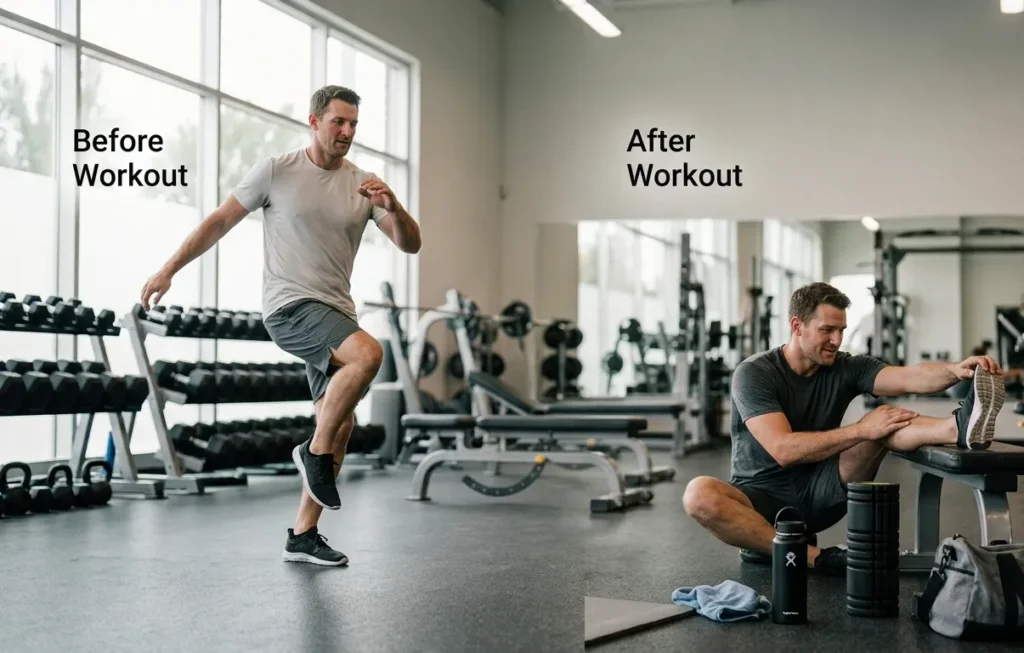
Static stretching means holding a muscle in one position for about 15 to 30 seconds. This type of stretching is best after exercise when your muscles are already warm.
Examples include:
- Standing hamstring stretch
- Seated calf stretch
- Chest stretch against a wall
- Quadriceps stretch
- Hip flexor stretch
Static stretching can:
- Improve flexibility over time.
- Reduce the feeling of muscle tightness.
- Help your body relax after a workout.
- Increase joint range of motion.
It is a good choice during your cool-down, but remember that it is not a quick fix for DOMS.
Dynamic Stretching
Dynamic stretching uses slow, controlled movements instead of holding one position.
Examples include:
- Arm circles
- Leg swings
- Walking lunges
- Hip circles
- Bodyweight squats
Dynamic stretching is usually better before a workout because it prepares your muscles and joints for movement.
It can help:
- Increase body temperature.
- Improve mobility.
- Activate important muscle groups.
- Prepare your nervous system for exercise.
- Reduce movement stiffness.
Using dynamic stretching before exercise and static stretching afterward is often the most balanced approach.
When Stretching Helps Muscle Soreness
Stretching may not remove soreness, but it still has many practical benefits.
It can help when you experience:
Mild Muscle Tightness
After sitting for long hours or finishing a workout, muscles often feel tight. Gentle stretching can improve comfort and make movement easier.
Reduced Mobility
Some workouts temporarily reduce your range of motion. Stretching helps restore normal movement without placing extra stress on the muscles.
Recovery Days
Light stretching during active recovery days keeps your body moving without adding much fatigue.
Posture-Related Discomfort
Tight muscles from poor posture can create stiffness in the neck, shoulders, hips, or lower back. Stretching these areas may improve daily comfort.
Returning to Exercise
If you have taken time off from training, stretching can help your body adjust as you rebuild your routine.
When Stretching May Not Be the Best Choice
There are situations where stretching should be limited or avoided.
Sharp Pain Instead of Soreness
Muscle soreness feels dull and achy. Sharp pain may indicate an injury that needs medical attention.
Swelling or Bruising
If a muscle is swollen or bruised after exercise, aggressive stretching may increase discomfort.
Muscle Strains
A strained muscle needs time to heal. Stretching too early can delay recovery.
Severe DOMS
If soreness is so strong that walking or moving becomes difficult, focus on light movement instead of deep stretching.
Always listen to your body. Recovery should never feel painful.
Can Stretching Make Muscle Soreness Worse?
Yes, it can if you stretch too hard.
Many people believe they should stretch until they feel intense tension. This often creates more irritation instead of relief.
Stretching should never cause sharp pain.
Signs you are stretching too aggressively include:
- Holding your breath.
- Bouncing during stretches.
- Feeling burning or sharp pain.
- Pushing beyond your normal range of motion.
- Feeling more sore afterward.
Instead, use slow and controlled movements.
Think of stretching as helping your muscles relax, not forcing them to become more flexible in one session.
Common Myths About Stretching and Muscle Soreness
Many recovery myths continue to spread online. Understanding the facts helps you make better decisions.
Myth 1: Stretching Removes Muscle Soreness
Reality: Stretching may reduce the feeling of tightness, but it does not significantly reduce DOMS.
Myth 2: The Longer You Stretch, the Better
Reality: Very long stretching sessions do not provide extra recovery benefits for sore muscles.
Quality matters more than duration.
Myth 3: Pain Means the Stretch Is Working
Reality: Pain is a warning sign.
Gentle tension is enough to improve flexibility safely.
Myth 4: You Must Stretch Every Muscle After Every Workout
Reality: Focus on the muscles you trained or those that feel tight.
A shorter, targeted routine is often more practical.
Myth 5: Stretching Is the Most Important Recovery Tool
Reality: Recovery depends on many factors.
Sleep, nutrition, hydration, and active recovery have a greater impact on muscle repair than stretching alone.
Myth vs Reality
- Myth: Stretching removes muscle soreness.
Reality: It may reduce tightness, but it does not quickly remove DOMS. - Myth: Pain means the stretch is working.
Reality: Pain means you are pushing too hard. - Myth: Stretching alone is enough for recovery.
Reality: Sleep, food, water, and light movement matter more.
The Best Time to Stretch
Timing matters more than many people realize.
Before Exercise
Choose dynamic stretching before your workout.
This helps prepare your body for movement and may improve exercise performance.
After Exercise
Use static stretching after your workout.
Your muscles are warm, making this a better time to improve flexibility and relax tight muscles.
On Recovery Days
Gentle stretching works well on rest days.
It helps maintain mobility without adding extra fatigue.
After Sitting for Long Periods
Stretching after several hours of sitting can reduce stiffness in the hips, lower back, chest, and shoulders.
This is especially helpful for people who work at a desk.
Stretching Mistakes That Can Slow Recovery
Small mistakes can reduce the benefits of stretching.
Avoid these common errors.
Stretching Cold Muscles
Cold muscles are less flexible.
Walk for a few minutes or perform light movements before stretching.
Holding Your Breath
Steady breathing helps your muscles relax.
Slow, controlled breaths are more effective than rushing through each stretch.
Ignoring Muscle Balance
Many people stretch only the muscles that feel tight.
A balanced routine should include both the front and back of the body to support healthy movement.
Copying Advanced Stretching Routines
Social media often shows difficult flexibility exercises.
Choose stretches that match your current ability instead of forcing advanced positions.
Skipping Consistency
Stretching once a week is unlikely to improve flexibility.
Short sessions performed regularly are much more effective over time.
How to Know If Your Stretching Routine Is Working
Success is not measured by how much soreness disappears.
Instead, look for gradual improvements such as:
- Moving more easily during daily activities.
- Better flexibility during workouts.
- Less muscle tightness after exercise.
- Improved exercise technique.
- Feeling more comfortable during recovery days.
- Better posture and overall mobility.
These changes often appear over several weeks of consistent practice.
Building a Smarter Recovery Mindset
Many people judge recovery by one question:
“Are my muscles still sore?”
A better question is:
“Is my body recovering well enough to move comfortably and train again?”
Soreness is only one part of recovery. Your energy levels, sleep quality, hydration, nutrition, stress, and movement habits all influence how quickly your body adapts to exercise.
Instead of relying on stretching as the only solution, view it as one tool that supports a bigger recovery plan. This balanced approach helps you stay active, reduce injury risk, and make steady progress over time.
What Actually Helps Muscle Soreness Recover Faster?
If stretching is only one part of recovery, what should you do to help sore muscles feel better?
The best approach is to combine several healthy habits. Each one supports your body’s natural repair process. Together, they help you recover more effectively than relying on stretching alone.
Stay Physically Active
Complete rest is not always the best answer for sore muscles.
Light activities such as walking, easy cycling, or gentle swimming increase blood flow without placing too much stress on your muscles.
This type of movement is called active recovery.
Active recovery may help reduce stiffness and make your muscles feel more comfortable during the healing process.
Eat Enough Protein
Your muscles need protein to repair and rebuild after exercise.
Aim to include a good source of protein in your meals throughout the day.
Healthy options include:
- Chicken
- Fish
- Eggs
- Greek yogurt
- Cottage cheese
- Beans
- Lentils
- Tofu
A balanced diet also provides vitamins and minerals that support recovery.
Drink Plenty of Water
Your body loses fluids through sweat during exercise.
Even mild dehydration can make you feel more tired and slow your recovery.
Drink water before, during, and after your workout. If you exercise for a long time or in hot weather, you may also need drinks that replace electrolytes.
Prioritize Quality Sleep
Sleep is one of the most powerful recovery tools.
While you sleep, your body releases hormones that help repair muscle tissue and support recovery.
Most adults should aim for 7 to 9 hours of quality sleep each night.
A regular sleep schedule also helps your body recover more consistently.
Give Your Muscles Time
Many people expect soreness to disappear overnight.
Muscle recovery takes time.
As your body adapts to exercise, you may notice that future workouts cause less soreness.
Being patient with the recovery process is part of long-term fitness success.
Stretching vs. Other Recovery Methods
Many recovery methods are available today. Some have stronger scientific support than others.
The table below compares common options.
| Recovery Method | Main Benefit | Best For |
|---|---|---|
| Gentle Stretching | Improves flexibility and reduces tightness | Mild stiffness |
| Active Recovery | Keeps muscles moving and improves circulation | General muscle soreness |
| Foam Rolling | Helps reduce muscle tightness and improve mobility | Tight muscles after exercise |
| Massage | Promotes relaxation and may reduce discomfort | Heavy training days |
| Good Sleep | Supports muscle repair and recovery | Every active person |
| Protein-Rich Meals | Helps rebuild muscle tissue | After strength or endurance workouts |
| Hydration | Supports normal body functions during recovery | All workouts |
No single method works perfectly on its own.
The best results come from combining several healthy recovery habits.
A Simple Post-Workout Recovery Routine
You do not need an expensive recovery program.
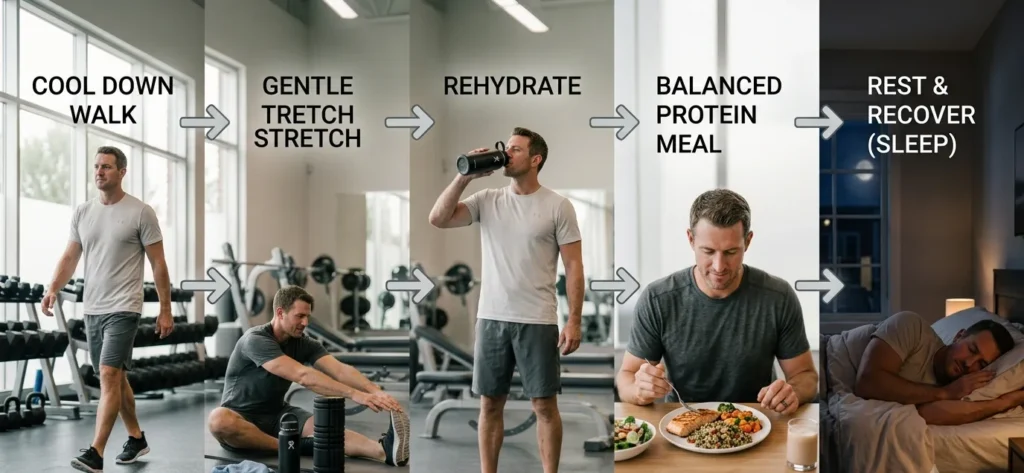
Follow these simple steps after most workouts.
Step 1: Cool Down
Walk slowly for 5 to 10 minutes.
This helps your heart rate return to normal.
Step 2: Perform Gentle Stretching
Stretch the muscles you trained.
Hold each stretch for about 20 to 30 seconds without bouncing.
Focus on comfort instead of pushing your limits.
Step 3: Rehydrate
Drink water soon after your workout.
Replace fluids lost through sweating.
Step 4: Eat a Balanced Meal
Include:
- Lean protein
- Healthy carbohydrates
- Fruits or vegetables
- Healthy fats
This combination supports recovery and prepares your body for future workouts.
Step 5: Sleep Well
Recovery continues long after your workout ends.
A good night’s sleep allows your muscles to repair naturally.
Recovery Tips for Different Types of Exercise
Different workouts place different demands on your muscles.
Adjust your recovery based on the activity you perform.
After Strength Training
Strength workouts often create the most noticeable DOMS.
Focus on:
- Light stretching
- Protein intake
- Hydration
- Rest between muscle groups
- Gentle walking
After Running
Running can leave your calves, hamstrings, and hips feeling tight.
Recovery may include:
- Easy walking
- Gentle calf stretches
- Hip mobility exercises
- Plenty of fluids
After HIIT
High-intensity interval training challenges both muscles and the cardiovascular system.
Recover with:
- Slow walking
- Controlled breathing
- Light stretching
- Balanced meals
- Extra sleep if needed
After Long Periods of Sitting
Muscle stiffness is common after sitting all day.
Gentle stretching and short walking breaks can help restore comfortable movement.
Should You Exercise When Your Muscles Are Sore?
It depends on how sore you feel.
Mild Soreness
If soreness is mild, light exercise is usually safe.
Choose lower-intensity activities or train different muscle groups.
Moderate Soreness
Reduce workout intensity.
Allow your muscles extra time to recover.
Severe Soreness
If normal movement is difficult or painful, give your body more recovery time.
Pushing through severe soreness may increase injury risk.
Listening to your body is more effective than following a strict workout schedule.
Signs Your Muscle Soreness May Need Medical Attention
Most muscle soreness improves within a few days.
However, seek medical advice if you experience:
- Severe swelling
- Sharp or sudden pain
- Significant bruising
- Loss of muscle strength
- Difficulty moving a joint
- Fever with muscle pain
- Dark-colored urine after intense exercise
- Soreness lasting longer than one week without improvement
These symptoms may indicate something more serious than normal exercise-related soreness.
Post-Workout Recovery Checklist
Conclusion
After years of following different recovery methods, one lesson stands out: there is no single solution for muscle soreness. Stretching has an important place in a healthy fitness routine because it improves flexibility, eases stiffness, and supports better movement. However, expecting it to eliminate muscle soreness can lead to disappointment. The best recovery comes from combining gentle stretching with quality sleep, good nutrition, proper hydration, and active recovery. By focusing on the whole recovery process instead of one technique, you can return to your workouts feeling stronger, move with greater confidence, and build lasting fitness habits that support your health for years to come.
