


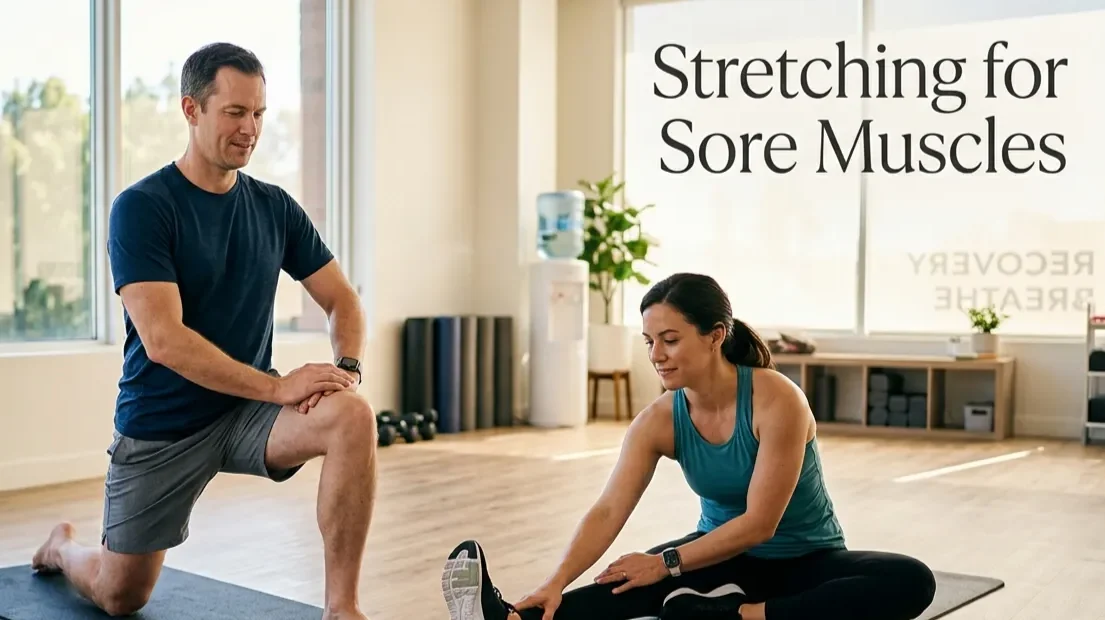
If you’ve ever finished a workout feeling proud, only to wake up the next day barely able to walk, you’re not alone. I remember my first serious leg workout. Climbing stairs felt like a challenge, and even sitting down was uncomfortable. At first, I wondered if I had injured myself. In reality, I was experiencing normal muscle soreness, something many beginners go through after trying a new exercise or increasing workout intensity.
The good news is that sore muscles do not always mean something is wrong. In many cases, they are part of your body’s natural recovery process. Gentle stretching, combined with proper rest, hydration, and good nutrition, can help you feel less stiff and move more comfortably. In this guide, you’ll learn why muscles become sore, whether stretching really helps, and how to stretch safely without making soreness worse. Everything is explained in simple language so you can recover with confidence and get back to enjoying your workouts.
What Causes Sore Muscles?
Muscle soreness often appears after your body does something new or more challenging than usual. This could happen after lifting heavier weights, trying a different exercise, increasing your running distance, or returning to fitness after a break.
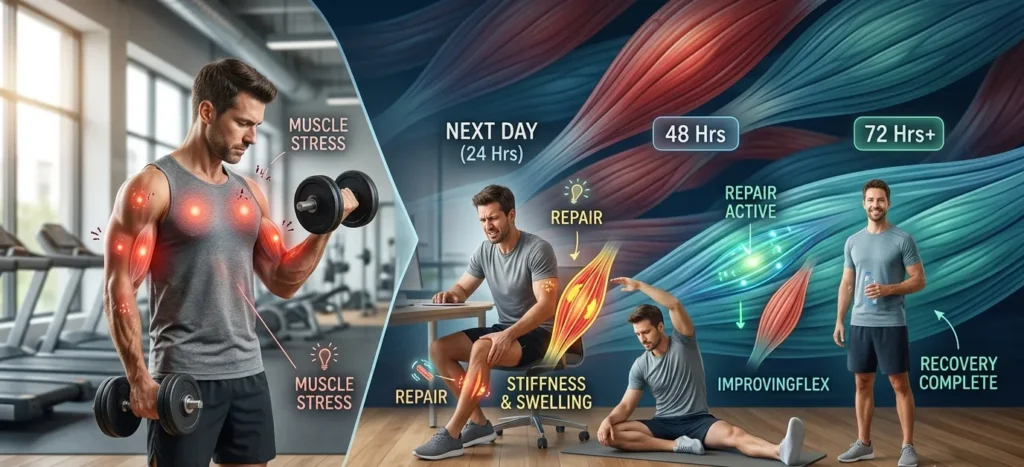
The most common type of soreness is called Delayed Onset Muscle Soreness (DOMS). It usually starts several hours after exercise and becomes strongest within one or two days.
During exercise, especially when your muscles work hard to slow down movement, tiny muscle fibers experience small amounts of stress. Your body responds by repairing these fibers. As they heal, they become stronger and better prepared for future workouts. This natural repair process can cause temporary stiffness, tenderness, and reduced movement.
Feeling sore after exercise is common, especially for beginners. However, soreness should gradually improve over the next few days. Sharp pain, severe swelling, or an inability to move normally may indicate an injury instead of normal muscle soreness.
What Is Delayed Onset Muscle Soreness (DOMS)?
DOMS is a temporary condition that develops after unfamiliar or intense physical activity. Unlike the burning feeling you may notice during exercise, DOMS develops later as your muscles recover.
You may experience:
- Muscle stiffness
- Tender muscles when touched
- Reduced flexibility
- Mild swelling
- Difficulty moving comfortably
- Temporary loss of strength
DOMS usually follows a predictable pattern.
| Time After Exercise | What You May Feel |
|---|---|
| 0–12 hours | Little or no soreness |
| 12–24 hours | Mild stiffness begins |
| 24–48 hours | Peak soreness and tightness |
| 48–72 hours | Soreness gradually improves |
| 3–7 days | Most muscles recover completely |
Understanding this timeline helps you avoid worrying when soreness appears the day after your workout. It is usually a sign that your muscles are adapting, not that you have failed or done something wrong.
DOMS Recovery Timeline
| Time After Workout | What You May Feel | Best Action |
|---|---|---|
| 0–24 hours | Mild stiffness | Walk, hydrate, stretch gently |
| 24–48 hours | Peak soreness | Use light stretching and active recovery |
| 48–72 hours | Soreness improves | Return slowly to normal movement |
Why Do Muscles Feel Tight After Exercise?
Many people think tight muscles mean they need to stretch immediately. While stretching can improve comfort, it helps to understand why muscles feel tight in the first place.
After a challenging workout, your muscles become more sensitive as they repair themselves. Small amounts of inflammation and temporary swelling can reduce your range of motion. Your nervous system may also make muscles feel tighter to protect them while they recover.
This protective response explains why movements that felt easy before your workout may feel uncomfortable the next day.
Other factors can make muscles feel even tighter, including:
- Not warming up properly
- Poor hydration
- Lack of sleep
- Sitting for long periods
- Repeating the same movements every day
- Returning to exercise after a long break
Understanding these causes helps you choose the right recovery strategy instead of assuming stretching alone will solve every problem.
Should You Stretch Sore Muscles?
This is one of the most common questions people ask after a workout.
The short answer is yes, but only if you stretch gently and your soreness is normal.
Gentle stretching may help reduce feelings of stiffness, improve flexibility, and make everyday movements feel easier. Many people notice that slow, controlled stretches help them feel more comfortable while their muscles recover.
However, stretching is not a magic cure for muscle soreness. Research shows that stretching alone does not consistently reduce DOMS. Recovery works best when stretching is combined with other healthy habits like staying active, drinking enough water, eating enough protein, and getting quality sleep.
If your muscles feel mildly sore but you can still move comfortably, gentle stretching is usually appropriate.
If you experience any of the following, avoid stretching until you know the cause:
- Sharp or stabbing pain
- Sudden swelling
- Significant bruising
- Joint instability
- Severe weakness
- Difficulty bearing weight
In those situations, it’s better to stop exercising and seek medical advice if symptoms continue or worsen.
Should You Stretch Sore Muscles Today?
Use this simple check before stretching:
- Mild stiffness: Gentle stretching is usually okay.
- Moderate soreness: Stretch lightly and avoid deep positions.
- Sharp pain: Do not stretch. Rest and check the cause.
- Swelling or bruising: Avoid stretching and seek medical advice if needed.
- Pain getting worse: Stop stretching and focus on recovery.
Quick tip: A good stretch should feel like gentle tension, not pain.
Benefits of Stretching for Sore Muscles
Stretching does much more than improve flexibility. When performed correctly, it supports your overall recovery and helps you stay active.
Helps Reduce Stiffness
Sore muscles often feel tight because your body is protecting healing tissues. Gentle stretching encourages comfortable movement and may reduce the feeling of stiffness.
Improves Range of Motion
Muscle soreness can limit how freely your joints move. Stretching helps restore normal movement, making daily activities and future workouts more comfortable.
Encourages Gentle Blood Flow
Light movement during stretching encourages circulation to working muscles. Healthy blood flow supports the delivery of oxygen and nutrients needed for recovery.
Supports Better Movement Patterns
When muscles become tight, your body may compensate by moving differently. Regular stretching helps maintain balanced movement and may reduce unnecessary strain on nearby muscles.
Helps You Feel More Relaxed
Stretching encourages slow breathing and controlled movement. Many people find that a short stretching session helps reduce tension after a physically demanding day.
Can Stretching Speed Up Muscle Recovery?
Many people hope stretching will make soreness disappear overnight. While that would be nice, recovery doesn’t work that way.
Stretching should be viewed as one piece of a complete recovery plan, not the only solution.
Recovery is influenced by several factors working together, including:
- Gentle stretching
- Light walking or active recovery
- Drinking enough fluids
- Eating protein-rich meals
- Getting enough sleep
- Managing training intensity
Think of stretching as helping your body move more comfortably while it naturally repairs itself.
Dynamic vs. Static Stretching: Which Is Better for Sore Muscles?
Understanding the difference between these two types of stretching helps you choose the right one at the right time.
Dynamic Stretching
Dynamic stretching involves controlled movements that take your joints through their natural range of motion.
Examples include:
- Leg swings
- Arm circles
- Walking lunges
- Hip circles
Dynamic stretching is best before exercise because it prepares your muscles for movement and increases body temperature.
Static Stretching
Static stretching means holding a muscle in a comfortable stretched position for a period of time.
Examples include:
- Hamstring stretch
- Calf stretch
- Quadriceps stretch
- Shoulder stretch
Static stretching is generally better after exercise or during recovery because your muscles are already warm.
Which One Should You Choose?
If your muscles are already sore from yesterday’s workout, gentle static stretching is usually the better option.
If you are preparing for today’s workout, begin with dynamic stretching to warm up your body.
Many people benefit from using both:
- Dynamic stretching before activity
- Static stretching after activity or during recovery
This combination helps support both performance and flexibility while reducing unnecessary stiffness.
Signs You’re Stretching Correctly
Many beginners stretch either too aggressively or not enough.
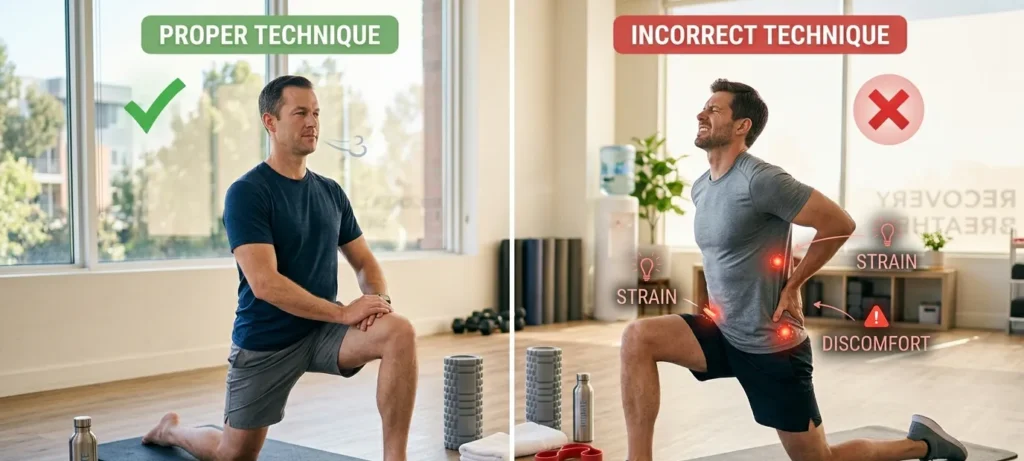
A good stretch should feel:
- Gentle tension
- Comfortable pulling
- Smooth breathing
- No sharp pain
- Easy to hold without shaking
Aim for a stretch that feels like moderate tension rather than pain. If you need to hold your breath or your muscles begin shaking uncontrollably, ease off slightly.
Remember, stretching should help your muscles relax not force them beyond their comfortable limits.
Best Stretches for Sore Muscles
Not every sore muscle needs the same stretch. The best approach is to target the muscles that worked the hardest during your workout. Move slowly, breathe normally, and never force a stretch. You should feel gentle tension, not pain.
For most recovery stretches, hold each position for 20–30 seconds and repeat 2–3 times on each side if needed.
Hamstring Stretch
Targets: Back of the thighs
Hamstrings often become sore after running, deadlifts, lunges, or lower-body strength training.
How to Do It
- Sit on the floor with one leg extended.
- Bend your other knee so the foot rests near your inner thigh.
- Keep your back straight.
- Slowly lean forward from your hips.
- Stop when you feel a gentle stretch behind your thigh.
Common Mistakes
- Rounding your back
- Locking your knee
- Pulling too hard
- Holding your breath
Best Time to Use It
- After leg workouts
- After running
- During recovery days
Quadriceps Stretch
Targets: Front of the thighs
Your quadriceps work hard during squats, cycling, climbing stairs, and jumping exercises.
How to Do It
- Stand near a wall for balance.
- Bend one knee behind you.
- Hold your ankle with the same-side hand.
- Keep your knees together.
- Gently pull your heel toward your glutes.
Common Mistakes
- Leaning forward
- Pulling too aggressively
- Letting the knee move outward
Best Time to Use It
- After leg day
- After cycling
- After hiking
Calf Stretch
Targets: Calf muscles
Calves often feel tight after walking, running, jumping, or sports involving quick direction changes.
How to Do It
- Stand facing a wall.
- Place both hands on the wall.
- Step one foot back.
- Keep the back heel flat on the floor.
- Lean forward until you feel the stretch.
Common Mistakes
- Lifting the back heel
- Bending the back knee too much
- Bouncing
Best Time to Use It
- After running
- After long walks
- After sports training
Glute Stretch
Targets: Glute muscles and hips
The glutes help stabilize your body during nearly every lower-body movement.
How to Do It
- Lie on your back.
- Cross one ankle over the opposite knee.
- Hold the back of your supporting thigh.
- Gently pull your leg toward your chest.
Common Mistakes
- Pulling too quickly
- Lifting your head
- Holding your breath
Best Time to Use It
- After squats
- After lunges
- After long periods of sitting
Hip Flexor Stretch
Targets: Front of the hips
Hip flexors often become tight after sitting for several hours or performing lower-body workouts.
How to Do It
- Kneel on one knee.
- Place your other foot in front.
- Keep your chest upright.
- Slowly shift your weight forward.
- Feel the stretch at the front of your hip.
Common Mistakes
- Arching the lower back
- Leaning too far forward
- Twisting the hips
Best Time to Use It
- After running
- After cycling
- After sitting all day
Lower Back Stretch
Targets: Lower back muscles
A gentle lower back stretch can help reduce stiffness after daily activities or moderate exercise.
How to Do It
- Lie on your back.
- Pull both knees toward your chest.
- Hold them gently with both hands.
- Relax your shoulders.
Common Mistakes
- Pulling too forcefully
- Lifting your neck
- Holding your breath
Best Time to Use It
- Recovery days
- After prolonged sitting
- Gentle evening stretching
Shoulder Stretch
Targets: Shoulders and upper back
Shoulder soreness is common after upper-body strength training and overhead movements.
How to Do It
- Bring one arm across your chest.
- Use your opposite arm to support it.
- Pull gently until you feel the stretch.
Common Mistakes
- Raising your shoulder
- Twisting your body
- Pulling too hard
Best Time to Use It
- After upper-body workouts
- After swimming
- After desk work
Chest Stretch
Targets: Chest muscles
Your chest may feel tight after push-ups, bench presses, or chest-focused workouts.
How to Do It
- Stand beside a wall.
- Place your forearm against it.
- Slowly rotate your body away.
- Stop when you feel a gentle stretch across your chest.
Common Mistakes
- Turning too quickly
- Overstretching
- Shrugging your shoulders
Best Time to Use It
- After push workouts
- After chest training
- After long hours at a computer
Neck Stretch
Targets: Neck muscles
Stress and poor posture often contribute to neck tightness.
How to Do It
- Sit or stand tall.
- Slowly tilt your head toward one shoulder.
- Keep your shoulders relaxed.
- Hold gently before switching sides.
Common Mistakes
- Pulling your head forcefully
- Rotating too quickly
- Lifting your shoulders
Best Time to Use It
- After computer work
- During recovery
- After upper-body training
Stretching Intensity Guide
Use this scale to stretch safely when your muscles are sore.
| Intensity | Feeling | Safe for Soreness? |
|---|---|---|
| 1–3/10 | Very light stretch | Yes |
| 4–6/10 | Gentle to moderate tension | Best range |
| 7–10/10 | Pain or strong discomfort | Avoid |
Stretching After Different Workouts
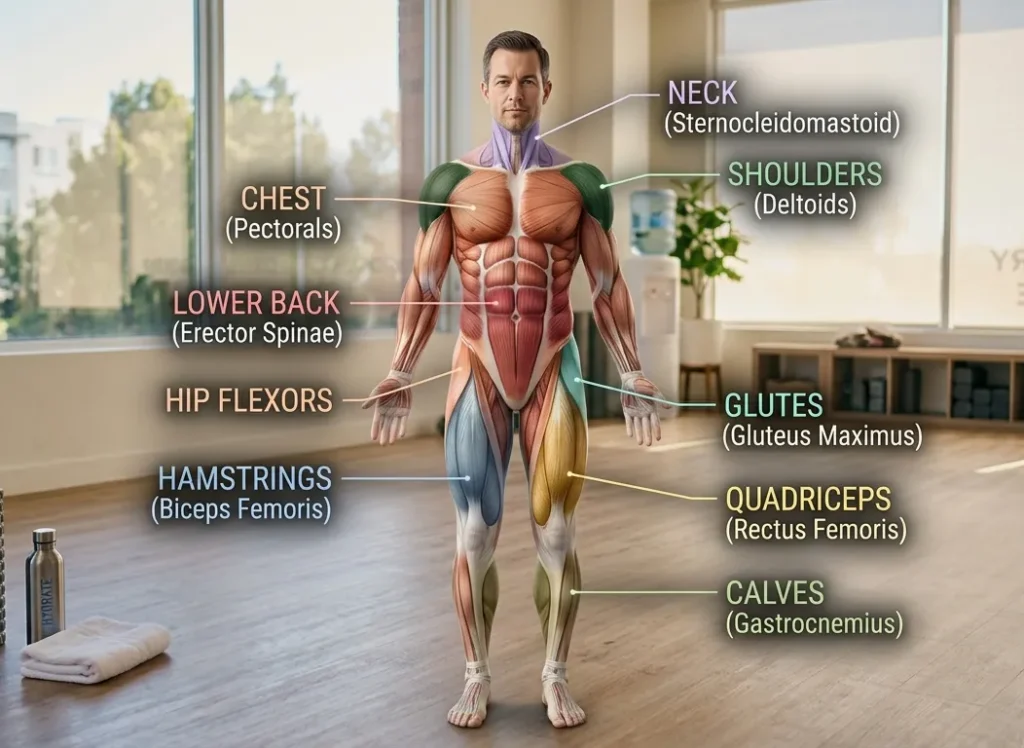
Different workouts stress different muscles. Matching your stretches to the activity helps improve comfort and recovery.
After Leg Day
Focus on:
- Quadriceps
- Hamstrings
- Glutes
- Hip flexors
- Calves
Spend about 8–10 minutes stretching these muscle groups.
After Upper-Body Strength Training
Focus on:
- Chest
- Shoulders
- Triceps
- Upper back
- Neck
Keep movements slow and controlled.
After Running
Runners often experience soreness in the lower body.
Prioritize:
- Calves
- Hamstrings
- Hip flexors
- Quadriceps
- Glutes
Walking for a few minutes before stretching can make these stretches feel more comfortable.
After HIIT Workouts
High-intensity interval training challenges the entire body.
Include:
- Chest stretch
- Shoulder stretch
- Hip flexor stretch
- Hamstring stretch
- Quadriceps stretch
- Calf stretch
Finish with slow breathing to help your body relax.
After Full-Body Strength Training
Choose one stretch for each major muscle group:
- Chest
- Shoulders
- Lower back
- Glutes
- Hamstrings
- Quadriceps
- Calves
This balanced approach supports overall recovery without spending too much time stretching.
Workout-to-Stretch Matching Chart
| Workout Type | Common Sore Areas | Best Stretches |
|---|---|---|
| Running | Calves, hamstrings, hips | Calf stretch, hamstring stretch, hip flexor stretch |
| Leg day | Quads, glutes, hamstrings | Quad stretch, glute stretch, hamstring stretch |
| Upper body | Chest, shoulders, upper back | Chest stretch, shoulder stretch, neck stretch |
| HIIT | Full body | Full-body recovery stretch routine |
How Long Should You Hold Each Stretch?
One of the biggest mistakes beginners make is rushing through stretches.
For recovery, aim for:
| Goal | Hold Time |
|---|---|
| Gentle recovery | 20–30 seconds |
| Tight muscles | 30–45 seconds |
| Very stiff muscles | Up to 60 seconds if comfortable |
| Dynamic warm-up | 5–10 controlled repetitions |
Move into each stretch slowly. There is no need to force extra range of motion.
How Often Should You Stretch Sore Muscles?
For most people, gentle stretching once or twice a day is enough during recovery.
A simple schedule looks like this:
Morning
- 5 minutes of gentle mobility
- Light stretching for stiff muscles
Evening
- 10 minutes of recovery stretching
- Relaxed breathing
- Gentle movements before bed
If stretching increases your discomfort instead of improving it, reduce the intensity or take a break.
How Hard Should You Stretch?
Many people believe stretching should hurt to be effective. That isn’t true.
Think about your stretch on a scale from 1 to 10.
| Stretch Feeling | What It Means |
|---|---|
| 1–2 | Too light to improve flexibility |
| 3–4 | Mild tension, good for beginners |
| 5–6 | Ideal recovery stretch |
| 7–8 | Too intense for sore muscles |
| 9–10 | Painful—stop immediately |
For sore muscles, stay around 4–6 out of 10. You should feel comfortable enough to breathe normally throughout the stretch.
A Simple 10-Minute Recovery Stretch Routine
If your whole body feels sore, you don’t need a long session. This beginner-friendly routine targets the major muscle groups commonly affected after exercise.
| Time | Stretch |
|---|---|
| 1 minute | Neck stretch |
| 1 minute | Shoulder stretch |
| 1 minute | Chest stretch |
| 2 minutes | Hip flexor stretch |
| 2 minutes | Hamstring stretch |
| 2 minutes | Quadriceps stretch |
| 1 minute | Calf stretch |
Finish by taking a short walk around your home for a few minutes if possible. Gentle movement often feels better than staying completely still.
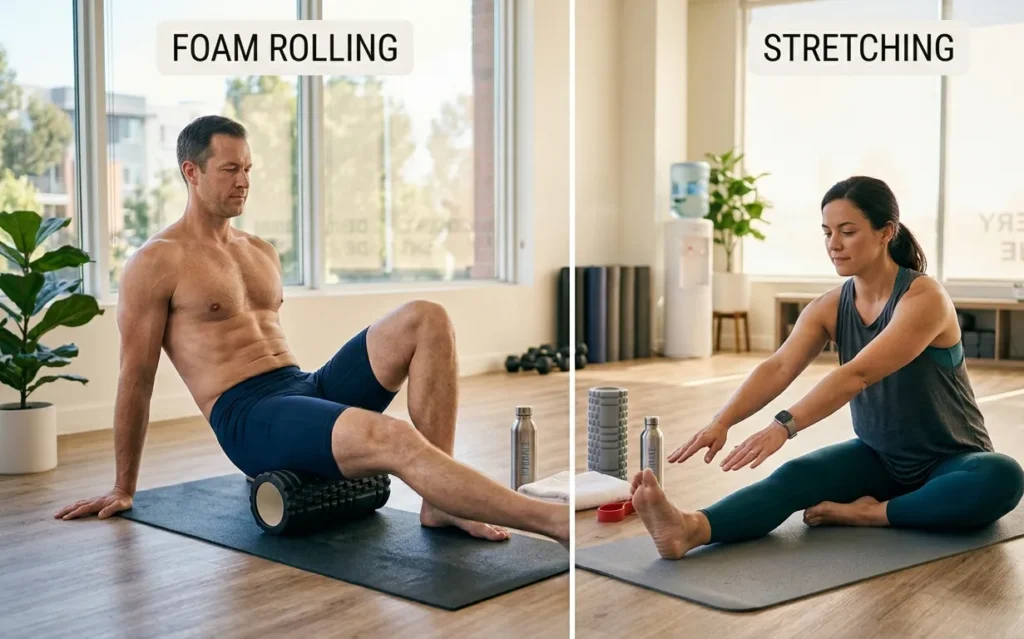
Stretching vs. Foam Rolling: Which Is Better for Sore Muscles?
Many people wonder whether they should stretch, use a foam roller, or do both. The answer depends on how your muscles feel and what you want to achieve.
Stretching focuses on improving flexibility and helping muscles move through a comfortable range of motion. Foam rolling applies gentle pressure to muscles and the tissue around them. Many people find it helps reduce feelings of tightness before or after exercise.
Neither method is a cure for muscle soreness. Instead, they can work well together as part of a balanced recovery plan.
| Stretching | Foam Rolling |
|---|---|
| Improves flexibility | Helps reduce muscle tightness |
| Increases range of motion | Targets soft tissues and fascia |
| Best after exercise or during recovery | Can be used before or after exercise |
| Requires little equipment | Requires a foam roller |
| Good for daily mobility | Good for preparing muscles to move |
Which Should You Choose?
Choose stretching if your muscles simply feel stiff and you want to improve flexibility.
Choose foam rolling if your muscles feel tight or you notice small areas that feel especially tender.
Many people benefit from using both. Foam roll first to relax the muscles, then perform gentle stretches to improve movement.
Stretching vs. Massage
Massage is another popular recovery method. While both stretching and massage can improve comfort, they work differently.
Stretching actively lengthens muscles through movement. Massage uses pressure from another person or a massage device to work on muscles and surrounding tissues.
| Stretching | Massage |
|---|---|
| Can be done anywhere | Usually requires a therapist or massage device |
| Free | Often costs money |
| Improves flexibility | Helps muscles relax |
| Easy to perform daily | Used occasionally for recovery |
| Encourages active movement | Passive recovery method |
If you have access to massage, it can be a helpful addition to your recovery routine. However, regular stretching remains one of the easiest and most practical habits for long-term flexibility and mobility.
Active Recovery vs. Complete Rest
When your muscles are sore, staying on the couch all day may seem like the best idea. However, complete rest is not always the fastest path to feeling better.
For normal muscle soreness, active recovery is often more helpful than doing nothing.
Active recovery means performing gentle movements that increase circulation without placing heavy stress on your muscles.
Examples include:
- Easy walking
- Light cycling
- Gentle swimming
- Yoga
- Mobility exercises
- Recovery stretching
These activities help keep your body moving while allowing your muscles time to recover.
Complete rest may be appropriate if you have:
- A suspected injury
- Severe pain
- Significant swelling
- Fever or illness
- Extreme fatigue
Listen to your body. Mild soreness usually improves with light movement, while sharp pain requires more caution.
Morning vs. Evening Stretching
Many readers ask when they should stretch for the best results.
The truth is that both times have benefits.
Morning Stretching
Morning stretching can help reduce stiffness that develops overnight.
It may help you:
- Move more comfortably
- Improve posture
- Prepare for daily activities
- Wake up tight muscles
Keep morning stretches gentle, especially if your muscles are still sore.
Evening Stretching
Evening stretching is often ideal after a full day of activity.
It can help:
- Relax tired muscles
- Improve flexibility
- Reduce tension
- Support a calming bedtime routine
Many people enjoy combining evening stretching with slow breathing to help their body unwind before sleep.
Stretching Myths You Should Stop Believing
Many recovery myths continue to circulate online. Understanding the facts helps you make better decisions.
Myth 1: Stretching Removes Lactic Acid
Lactic acid is cleared from your body relatively quickly after exercise. It is not the reason you feel sore the next day.
DOMS develops because of your body’s natural repair process, not because lactic acid remains in your muscles.
Myth 2: The More Pain, the Better the Stretch
Pain is not a sign of a better stretch.
A gentle stretch is usually more effective than forcing your body into uncomfortable positions.
Myth 3: Stretching Completely Prevents Muscle Soreness
Stretching supports flexibility and movement, but it does not guarantee you won’t experience DOMS after a challenging workout.
Myth 4: You Should Stretch Cold Muscles
Stretching muscles that have not moved for hours can feel uncomfortable.
A short walk or a few minutes of light movement before stretching often feels better than stretching immediately after sitting for a long time.
Common Stretching Mistakes
Many beginners unknowingly make small mistakes that reduce the benefits of stretching.
Stretching Too Aggressively
Trying to reach your maximum flexibility while muscles are sore can increase discomfort.
Move slowly and stop when you feel gentle tension.
Holding Your Breath
Breathing helps your muscles relax.
Take slow, controlled breaths throughout every stretch.
Bouncing During Stretches
Quick bouncing movements place unnecessary stress on muscles.
Instead, hold each stretch steadily without bouncing.
Ignoring Pain
Stretching should never create sharp or stabbing pain.
If a movement hurts, stop immediately and reassess.
Stretching Only One Side
Always stretch both sides of your body, even if only one side feels tighter.
Balanced flexibility supports better movement.
Skipping Recovery Days
Recovery is part of becoming stronger.
Light stretching on recovery days often helps maintain flexibility without adding unnecessary stress.
When Should You Avoid Stretching?
Stretching is helpful for normal muscle soreness, but there are situations where it is better to wait.
Avoid stretching if you have:
- Sharp pain
- Sudden muscle tears
- Significant swelling
- Severe bruising
- Joint instability
- Suspected fractures
- Loss of normal movement
- Severe muscle weakness
These symptoms may indicate an injury rather than ordinary post-workout soreness.
If your pain continues for several days without improvement or becomes worse, seek medical advice.
Normal Muscle Soreness vs. Injury
Knowing the difference helps you recover safely.
| Normal Muscle Soreness | Possible Injury |
|---|---|
| Begins several hours after exercise | Often starts suddenly during activity |
| Feels like stiffness or tenderness | Sharp or severe pain |
| Improves within a few days | May continue getting worse |
| Usually affects both sides after training | Often affects one specific area |
| Movement is uncomfortable but possible | Movement may be very difficult |
| Improves with gentle activity | Activity often increases pain |
If you are unsure whether you have normal soreness or an injury, avoid pushing through pain until you understand the cause.
Recovery Timeline: What to Do Each Day
Recovery changes over time. Your stretching routine should change too.
First 24 Hours
Focus on:
- Gentle walking
- Hydration
- Light stretching only if comfortable
- Good nutrition
Avoid intense workouts for the same muscle group.
24–48 Hours
This is when soreness is often strongest.
Prioritize:
- Gentle static stretching
- Light mobility exercises
- Foam rolling if comfortable
- Plenty of sleep
48–72 Hours
Most muscles begin feeling better.
Continue:
- Recovery stretching
- Easy movement
- Returning gradually to normal activity
If soreness is improving, your muscles are usually adapting as expected.
Beyond 72 Hours
Many people feel ready to return to regular training.
Start gradually rather than jumping immediately into another very intense workout.
Daily Habits That Support Recovery
Stretching works best when combined with healthy recovery habits.
Stay Hydrated
Water supports many normal body functions involved in recovery. Drink fluids consistently throughout the day, especially after exercise.
Eat Enough Protein
Protein provides the building blocks your muscles use during the repair process. Include quality protein with your meals after training.
Prioritize Sleep
Most muscle repair happens while you sleep. Aim for consistent, high-quality sleep each night to support recovery and future performance.
Keep Moving
Short walks, light cycling, or gentle mobility sessions can often help you feel less stiff than remaining inactive for long periods.
5-Minute Recovery Stretch Routine
If you only have a few minutes, this quick routine can help reduce stiffness and improve mobility. It works well after a busy day or a light workout.
| Time | Stretch |
|---|---|
| 30 seconds | Neck Stretch |
| 30 seconds | Shoulder Stretch |
| 45 seconds | Chest Stretch |
| 45 seconds | Hamstring Stretch |
| 45 seconds | Quadriceps Stretch |
| 45 seconds | Calf Stretch |
| 1 minute | Gentle Walking and Deep Breathing |
This routine is ideal for beginners who want to stay consistent without spending a lot of time stretching.
10-Minute Full-Body Recovery Routine
This routine targets the major muscle groups that commonly become sore after exercise.
| Time | Stretch |
|---|---|
| 1 minute | Neck Stretch |
| 1 minute | Shoulder Stretch |
| 1 minute | Chest Stretch |
| 2 minutes | Hip Flexor Stretch |
| 2 minutes | Glute Stretch |
| 1 minute | Hamstring Stretch |
| 1 minute | Quadriceps Stretch |
| 1 minute | Calf Stretch |
Move slowly between each stretch and breathe deeply throughout the routine.
15-Minute Recovery Routine After Intense Workouts
Use this routine after a demanding strength-training session, long run, or full-body workout.
Step 1: Gentle Movement (3 Minutes)
Start with light movement to prepare your muscles.
Choose one:
- Easy walking
- Slow cycling
- Marching in place
Step 2: Full-Body Stretching (10 Minutes)
Include:
- Chest Stretch
- Shoulder Stretch
- Hip Flexor Stretch
- Glute Stretch
- Hamstring Stretch
- Quadriceps Stretch
- Calf Stretch
Hold each stretch for about 30 seconds on both sides.
Step 3: Relaxation (2 Minutes)
Finish with slow breathing while standing or lying comfortably.
Allow your muscles to relax before returning to normal activities.
How to Prevent Muscle Soreness After Future Workouts
You may not be able to avoid muscle soreness completely, especially after trying new exercises. However, you can reduce its intensity by following a few simple habits.
Increase Workout Intensity Gradually
One of the biggest reasons people experience severe soreness is doing too much too soon.
Increase:
- Weight
- Repetitions
- Workout duration
- Training volume
little by little instead of making large jumps.
Always Warm Up
Prepare your muscles before exercise with 5–10 minutes of light activity.
Good warm-up options include:
- Brisk walking
- Cycling
- Arm circles
- Leg swings
- Bodyweight squats
A proper warm-up prepares your body for movement better than static stretching alone.
Cool Down After Every Workout
Instead of stopping immediately, spend a few minutes slowing your body down.
A simple cool-down can include:
- Easy walking
- Gentle stretching
- Deep breathing
This habit helps you transition into recovery more comfortably.
Stay Consistent
Working out once every few weeks often leads to repeated soreness.
Regular exercise allows your muscles to adapt over time, making future workouts feel more manageable.
Eat a Balanced Recovery Meal
Your muscles need nutrients after exercise.
A balanced meal may include:
- Lean protein
- Whole grains
- Fruits
- Vegetables
- Healthy fats
Eating within a reasonable time after training supports your overall recovery.
Drink Enough Water
Hydration supports normal muscle function before, during, and after exercise.
Keep a water bottle nearby and drink regularly throughout the day, especially if you sweat heavily during workouts.
Get Enough Sleep
Sleep is one of the most important parts of recovery.
Aim for consistent, high-quality sleep each night to give your body time to repair and prepare for your next workout.
What Research Says About Stretching and Muscle Soreness
Many people believe stretching is the best way to eliminate soreness. Current research tells a more balanced story.
Research suggests that stretching is excellent for improving flexibility and maintaining range of motion. Many people also report feeling less stiff after gentle stretching.
However, studies have not consistently shown that stretching alone significantly reduces delayed onset muscle soreness (DOMS).
This doesn’t mean stretching isn’t valuable. Instead, it means stretching works best as one part of a complete recovery strategy that also includes:
- Light activity
- Good nutrition
- Hydration
- Quality sleep
- Gradual training progression
This balanced approach is more realistic and reflects current evidence.
Conclusion
From my own experience, the biggest mistake beginners make is thinking soreness means they should either stop moving completely or push through pain. Neither approach works well. What has consistently made the biggest difference is following a balanced recovery routine gentle stretching, light movement, proper hydration, nutritious meals, and quality sleep. Muscle soreness is a normal part of adapting to exercise, and with the right recovery habits, it becomes easier to manage over time. Instead of trying to eliminate soreness overnight, focus on helping your body recover safely so you can return stronger, move more comfortably, and enjoy long-term progress.
