

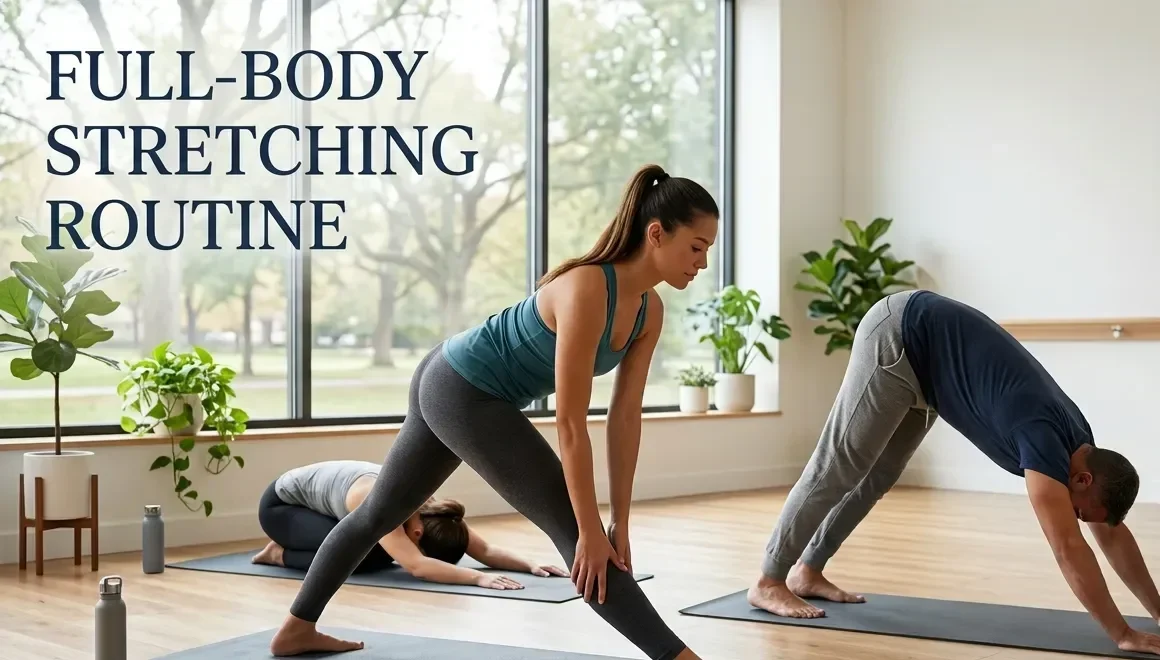
Have you ever stood up after sitting for hours and felt your back, hips, or shoulders tighten? Many people experience this every day. I have seen how even a few minutes of stretching can make everyday movements feel easier. A full-body stretching routine is not just for athletes or people who work out. It can help anyone who wants to move better, reduce stiffness, and feel more comfortable throughout the day.
The biggest mistake many beginners make is thinking they need a long or complicated routine. The truth is that a simple, well-planned stretching routine can improve flexibility, support mobility, and help your muscles recover from daily activities or exercise. This guide will show you exactly what to do, when to stretch, and how to perform each movement safely.
Do I Need to Do a Full-Body Stretch?
The short answer is yes. Your muscles and joints work together every time you move. If one area becomes tight, it can affect the rest of your body. A full-body stretching routine helps improve movement from head to toe instead of focusing on just one muscle group.
For example, tight hip flexors from sitting all day can contribute to lower back discomfort. Stiff shoulders can make lifting objects or reaching overhead more difficult. Stretching multiple muscle groups helps your body move more naturally and comfortably.
You may benefit from a full-body stretching routine if you:
- Sit at a desk for several hours each day.
- Feel stiff when you wake up.
- Exercise regularly.
- Lift weights.
- Walk or run often.
- Play sports.
- Want to improve flexibility.
- Want better posture.
- Are over 40 and want to stay mobile.
- Simply want to move with less discomfort.
The best part is that you do not need expensive equipment or a gym membership. Most stretches can be done at home with enough space to move comfortably.
Benefits of Stretching
Stretching offers more than just improved flexibility. When done consistently, it supports overall movement, comfort, and physical performance.
Improves Flexibility
Flexibility refers to how well your muscles can lengthen through a full range of motion. Regular stretching gradually helps your muscles become less tight, making everyday activities like bending, reaching, and squatting feel easier.
Supports Better Mobility
Many people confuse mobility with flexibility, but they are different.
- Flexibility is how much a muscle can stretch.
- Mobility is how well a joint moves through its full range of motion with control.
You need both to move efficiently. A full-body stretching routine supports healthy joints while improving muscle flexibility.
| Flexibility | Mobility |
|---|---|
| Focuses on muscles | Focuses on joints and muscles |
| Helps muscles lengthen | Improves controlled movement |
| Enhanced with stretching | Improved through stretching and movement exercises |
Quick Takeaway: Why a Full-Body Stretching Routine Helps
A full-body stretching routine helps improve flexibility, reduce daily stiffness, support better mobility, and make movement feel easier. It works best when you stretch gently, breathe slowly, and stay consistent.
- Best for: Beginners, office workers, gym-goers, and adults over 40
- Time needed: 5 to 20 minutes
- Best frequency: 3 to 5 days per week or daily if gentle
- Main rule: Stretch to mild tension, not pain
Reduces Daily Muscle Stiffness
Long periods of sitting can tighten your hips, chest, shoulders, and hamstrings. Stretching helps relieve this stiffness, making daily activities feel more comfortable.
This is especially helpful for office workers, remote employees, and students who spend many hours sitting.
Helps Your Body Recover After Exercise
After strength training or cardio, muscles often feel tight. Gentle stretching after your workout may help you relax and restore comfortable movement. While stretching is excellent for improving flexibility, it should not be viewed as a guaranteed way to eliminate all muscle soreness.
Improves Posture
Poor posture often develops because certain muscles become tight while others become weak. Stretching the chest, shoulders, hip flexors, and hamstrings can help you maintain a more natural standing and sitting position when combined with strengthening exercises.
May Improve Exercise Performance
Better flexibility and mobility allow your body to move more efficiently during exercises like squats, lunges, overhead presses, and running.
You may notice:
- Smoother movement
- Better exercise technique
- Increased range of motion
- Greater comfort during workouts
Promotes Relaxation
Stretching encourages slow, controlled breathing. Many people find that spending just 10 to 15 minutes stretching helps reduce tension after a busy day.
Full Body Daily Stretching Routine
This beginner-friendly routine follows a simple top-to-bottom order. It starts with your neck and gradually moves down through your shoulders, hips, legs, and ankles. This sequence is easy to follow and works well whether you stretch in the morning, after work, or following a workout.
Before you begin:
- Wear comfortable clothing.
- Move slowly.
- Never bounce during a stretch.
- Stretch until you feel gentle tension, not pain.
- Breathe normally throughout each movement.
- Stop if you feel sharp pain.
1. Neck Roll
Target Muscles
- Neck muscles
- Upper trapezius
How to Perform
- Stand or sit with your back straight.
- Lower your chin toward your chest.
- Slowly roll your head toward one shoulder.
- Continue the circle until you return to the starting position.
- Repeat in the opposite direction.
Hold or Repetitions
- 5 slow circles each direction.
Benefits
- Relieves neck stiffness.
- Improves neck mobility.
- Helps reduce tension caused by desk work.
Common Mistake
Do not rotate your head too quickly. Slow, controlled movement is safer and more effective.
2. Shoulder Roll
Target Muscles
- Shoulders
- Upper back
- Trapezius
How to Perform
- Stand tall with relaxed arms.
- Lift your shoulders toward your ears.
- Roll them backward in a large circle.
- Slowly lower them.
- Reverse the direction.
Repetitions
- 10 rolls forward.
- 10 rolls backward.
Benefits
- Loosens tight shoulders.
- Improves shoulder movement.
- Helps relieve tension from computer work.
Beginner Tip
Keep your neck relaxed throughout the exercise.
3. Behind-Head Triceps Stretch
Target Muscles
- Triceps
- Shoulders
- Upper back
How to Perform
- Raise one arm overhead.
- Bend your elbow so your hand reaches behind your neck.
- Use your opposite hand to gently press your elbow.
- Hold the stretch.
- Repeat on the other side.
Hold
20–30 seconds per side.
Benefits
- Improves shoulder flexibility.
- Increases overhead mobility.
- Helps reduce upper-body tightness.
Common Mistake
Avoid pulling your elbow too hard. The stretch should feel comfortable.
4. Standing Hip Rotation
Target Muscles
- Hip joint
- Hip flexors
- Glutes
How to Perform
- Stand while holding a wall or chair for balance.
- Lift one knee to hip height.
- Rotate your knee outward in a slow circle.
- Return to the starting position.
- Repeat before switching legs.
Repetitions
8–10 circles in each direction.
Benefits
- Improves hip mobility.
- Prepares the hips for walking, running, or strength training.
- Helps reduce stiffness from prolonged sitting.
Best Time
This movement works well before exercise because it gently warms up the hip joints.
5. Standing Hamstring Stretch
Target Muscles
- Hamstrings
- Calves
How to Perform
- Place one heel on a low step or stable surface.
- Keep your leg straight but not locked.
- Hinge forward from your hips.
- Keep your back flat.
- Hold the stretch before switching legs.
Hold
20–30 seconds per side.
Benefits
- Improves hamstring flexibility.
- Supports healthy movement during walking and lifting.
- Helps reduce lower-body tightness.
Common Mistake
Do not round your back. Keep your chest lifted as you lean forward.
6. Quadriceps Stretch
Target Muscles
- Quadriceps
- Hip flexors
How to Perform
- Stand next to a wall for balance.
- Bend one knee.
- Hold your ankle behind you.
- Pull your heel gently toward your glutes.
- Keep both knees close together.
- Repeat on the other side.
Hold
20–30 seconds per leg.
Benefits
- Improves front thigh flexibility.
- Helps reduce tightness after walking, running, or cycling.
- Supports healthy knee movement.
Beginner Tip
Stand tall instead of leaning forward.
7. Ankle Roll
Target Muscles and Joints
- Ankles
- Calves
- Feet
How to Perform
- Stand while holding a wall or chair for balance.
- Lift one foot slightly off the floor.
- Rotate your ankle in slow circles.
- Complete all repetitions before switching sides.
Repetitions
- 10 circles clockwise
- 10 circles counterclockwise
Benefits
- Improves ankle mobility.
- Prepares the feet for walking, running, or strength training.
- Helps improve balance.
Common Mistake
Do not rush the movement. Make slow, controlled circles through your full range of motion.
8. Child’s Pose
Target Muscles
- Lower back
- Lats
- Shoulders
- Hips
How to Perform
- Kneel on the floor.
- Sit back on your heels.
- Extend your arms forward.
- Lower your chest toward the floor.
- Rest your forehead comfortably.
Hold
30–60 seconds.
Benefits
- Relaxes the entire body.
- Stretches the back and shoulders.
- Helps release tension after a long day.
Best Time
This stretch is excellent after workouts or before bedtime because it promotes relaxation.
Stretching Exercises for Hip Flexibility
Healthy hips make everyday movements easier. Walking, climbing stairs, squatting, and even standing up from a chair all depend on good hip mobility. If you spend most of your day sitting, this section deserves extra attention.
1. Knee-to-Chest Stretch
Target Muscles
- Glutes
- Lower back
- Hip muscles
How to Perform
- Lie on your back.
- Bend one knee.
- Pull it gently toward your chest.
- Keep your other leg relaxed.
- Switch sides.
Hold
20–30 seconds per side.
Benefits
- Relieves lower back tightness.
- Improves hip flexibility.
- Helps reduce stiffness after sitting.
Beginner Tip
Keep your shoulders relaxed against the floor.
2. Hip Abduction
Target Muscles
- Gluteus medius
- Outer hips
How to Perform
- Stand tall.
- Hold a chair for balance.
- Lift one leg out to the side.
- Pause briefly.
- Lower slowly.
Repetitions
10–15 repetitions per side.
Benefits
- Improves hip stability.
- Supports better balance.
- Helps strengthen muscles that support healthy movement.
3. Standing Iliotibial (IT) Band Stretch
Target Muscles
- IT band
- Outer thigh
- Hip
How to Perform
- Cross one leg behind the other.
- Raise the arm on the same side.
- Lean gently away from the back leg.
- Feel the stretch along the outside of your hip and thigh.
Hold
20–30 seconds per side.
Benefits
- Improves side-body flexibility.
- Reduces tension around the hips.
- Supports smoother lower-body movement.
Common Mistake
Avoid twisting your body. Keep your hips facing forward.
Full-Body Stretching Routine: The Exercises Broken Down
The next stretches work together to improve flexibility from head to toe. Perform them in the order below for a balanced full-body routine.
Lying Hamstring Stretch
Target Muscles
- Hamstrings
- Calves
How to Perform
- Lie on your back.
- Raise one leg toward the ceiling.
- Hold behind your thigh or calf.
- Keep your opposite leg relaxed.
- Switch sides.
Hold
20–30 seconds per leg.
Benefits
- Improves hamstring flexibility.
- Helps reduce leg tightness.
- Supports healthy movement during walking and running.
Figure-4 Stretch
Target Muscles
- Glutes
- Piriformis
- Hips
How to Perform
- Lie on your back.
- Cross one ankle over the opposite knee.
- Pull the supporting leg toward your chest.
- Hold the stretch.
- Repeat on the opposite side.
Hold
20–30 seconds.
Benefits
- Relieves hip tightness.
- Improves glute flexibility.
- Helps people who sit for long periods.
Lying Torso Twist
Target Muscles
- Lower back
- Core
- Obliques
How to Perform
- Lie flat on your back.
- Extend your arms to the sides.
- Bend both knees.
- Slowly lower them to one side.
- Turn your head in the opposite direction.
- Repeat on the other side.
Hold
20–30 seconds.
Benefits
- Improves spinal mobility.
- Relieves back tension.
- Encourages gentle rotation.
Downward Dog
Target Muscles
- Hamstrings
- Calves
- Shoulders
- Back
How to Perform
- Begin on your hands and knees.
- Lift your hips upward.
- Straighten your arms.
- Press your heels toward the floor.
- Keep your spine long.
Hold
20–40 seconds.
Benefits
- Stretches the entire back of the body.
- Improves shoulder mobility.
- Increases flexibility.
Beginner Tip
Slightly bend your knees if your hamstrings feel tight.
Plank
Although the plank is mainly a strengthening exercise, it fits well into this routine because it improves body control and supports healthy posture.
Target Muscles
- Core
- Shoulders
- Glutes
How to Perform
- Place your forearms on the floor.
- Extend both legs.
- Keep your body in a straight line.
- Tighten your core.
- Breathe normally.
Hold
20–40 seconds.
Benefits
- Improves core stability.
- Supports better posture.
- Helps protect the lower back.
Cobra Stretch
Target Muscles
- Abdominals
- Chest
- Hip flexors
How to Perform
- Lie face down.
- Place your hands beneath your shoulders.
- Press your chest upward.
- Keep your hips on the floor.
- Relax your shoulders.
Hold
20–30 seconds.
Benefits
- Opens the chest.
- Improves spinal extension.
- Helps counteract prolonged sitting.
Common Mistake
Avoid shrugging your shoulders toward your ears.
Runner’s Lunge
Target Muscles
- Hip flexors
- Hamstrings
- Glutes
How to Perform
- Step one foot forward.
- Lower your back knee.
- Shift your hips forward.
- Keep your chest tall.
- Switch legs.
Hold
20–30 seconds.
Benefits
- Improves hip mobility.
- Stretches the front of the hips.
- Prepares the body for exercise.
Pigeon Stretch
Target Muscles
- Glutes
- Piriformis
- Hips
How to Perform
- Begin in a plank position.
- Bring one knee forward.
- Extend the opposite leg behind you.
- Lower your hips comfortably.
- Lean forward if it feels comfortable.
Hold
20–30 seconds.
Benefits
- Improves hip flexibility.
- Helps relieve glute tightness.
- Supports lower-body mobility.
Beginner Tip
Place a folded towel under your hip if you cannot comfortably reach the floor.
Shoulder Stretch
Target Muscles
- Rear shoulder
- Upper back
How to Perform
- Bring one arm across your chest.
- Hold it with your opposite hand.
- Keep your shoulders relaxed.
- Repeat on both sides.
Hold
20–30 seconds.
Benefits
- Improves shoulder flexibility.
- Reduces upper-body tightness.
- Supports healthy shoulder movement.
Triceps Stretch
Target Muscles
- Triceps
- Shoulders
How to Perform
- Raise one arm overhead.
- Bend your elbow.
- Use the opposite hand to gently support the stretch.
- Repeat on the other side.
Hold
20–30 seconds.
Benefits
- Improves overhead mobility.
- Reduces arm tightness.
- Complements upper-body workouts.
Forward Bend
Target Muscles
- Hamstrings
- Lower back
- Calves
How to Perform
- Stand with your feet hip-width apart.
- Hinge forward at your hips.
- Let your arms hang naturally.
- Relax your neck.
Hold
20–30 seconds.
Benefits
- Improves flexibility along the back of the body.
- Relieves muscle tension.
- Encourages relaxation.
Beginner Tip
Slightly bend your knees if you cannot comfortably reach toward the floor.
Stretching Tips for Beginners
If you are new to stretching, these simple habits will help you build a safe and effective routine.
- Stretch until you feel gentle tension, not pain.
- Move slowly and avoid bouncing.
- Breathe deeply during every stretch.
- Stay consistent instead of stretching aggressively once in a while.
- Focus on proper form before increasing stretch duration.
- Wear comfortable clothing that allows easy movement.
- Stay hydrated, especially after exercise.
- If you have an injury or a medical condition, talk to a healthcare professional before starting a new stretching routine.
One of the biggest mistakes beginners make is trying to become flexible in just a few days. Flexibility improves gradually. Even stretching for 10 to 15 minutes most days of the week can lead to noticeable progress over time.
The Best Full-Body Stretch Routine for Outdoor Athletes
Outdoor activities such as hiking, running, cycling, kayaking, and trail walking place different demands on your body than sitting indoors. Uneven ground, hills, and longer periods of movement require good flexibility, balance, and mobility. A full-body stretching routine helps prepare your muscles before activity and supports recovery afterward.
Even if you are not an athlete, these stretches can improve the way you move during everyday activities.
1. Leg Swings
Target Muscles
- Hip flexors
- Hamstrings
- Glutes
How to Perform
- Stand beside a wall or sturdy object.
- Hold it for balance.
- Swing one leg forward and backward in a controlled motion.
- Repeat before switching legs.
Repetitions
10–15 swings per leg.
Benefits
- Warms up the hips.
- Improves dynamic flexibility.
- Prepares your body for walking, running, or sports.
Best Time
Before exercise as part of a dynamic warm-up.
2. Butterfly Stretch
Target Muscles
- Inner thighs
- Hips
- Groin
How to Perform
- Sit on the floor.
- Bring the soles of your feet together.
- Hold your feet.
- Let your knees gently move toward the floor.
- Keep your back straight.
Hold
20–30 seconds.
Benefits
- Improves hip flexibility.
- Reduces inner thigh tightness.
- Supports better lower-body movement.
3. Glutes/Piriformis Stretch
Target Muscles
- Glutes
- Piriformis
- Hips
How to Perform
- Sit on the floor with both legs extended.
- Cross one leg over the other.
- Rotate your upper body toward the bent knee.
- Hold before changing sides.
Hold
20–30 seconds.
Benefits
- Relieves tight hips.
- Supports lower back comfort.
- Improves rotational mobility.
4. Standing Quad Stretch
Target Muscles
- Quadriceps
- Hip flexors
How to Perform
- Stand tall.
- Hold one ankle behind you.
- Pull your heel toward your glutes.
- Keep your knees close together.
- Repeat on the other leg.
Hold
20–30 seconds.
Benefits
- Improves thigh flexibility.
- Helps reduce tightness after walking, running, or cycling.
- Supports healthy knee movement.
5. Chest Stretch
Target Muscles
- Chest
- Front shoulders
How to Perform
- Stand beside a wall or doorway.
- Place your forearm against the surface.
- Slowly rotate your body away.
- Hold the stretch.
- Repeat on the opposite side.
Hold
20–30 seconds.
Benefits
- Opens the chest.
- Improves shoulder flexibility.
- Helps reverse the effects of sitting.
Dynamic vs. Static Stretching
Many people know they should stretch but are unsure which type to use. Choosing the right one at the right time helps you get the most benefit.
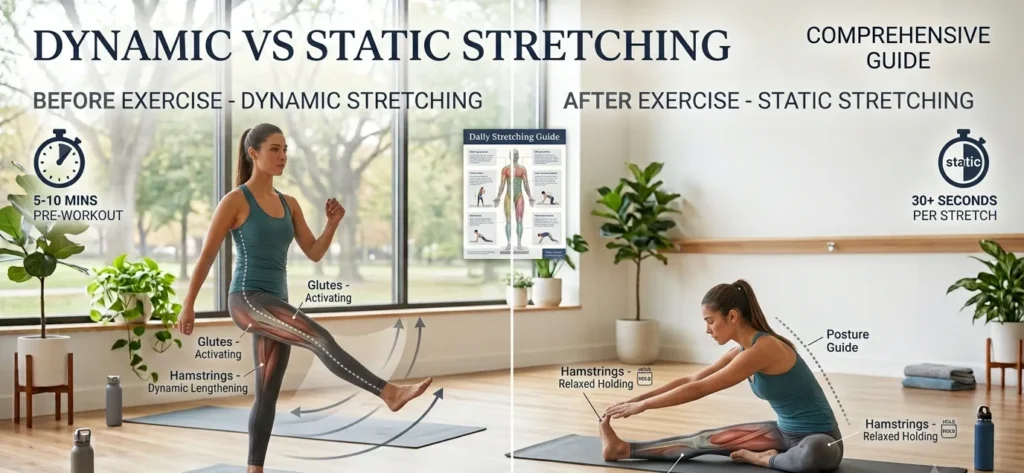
| Dynamic Stretching | Static Stretching |
|---|---|
| Uses controlled movement | Stretch is held in one position |
| Best before exercise | Best after exercise |
| Raises body temperature | Helps muscles relax |
| Prepares muscles for activity | Improves long-term flexibility |
| Examples: Leg swings, hip rotations | Examples: Hamstring stretch, butterfly stretch |
Dynamic vs. Static Stretching Guide
| Situation | Best Type | Example |
|---|---|---|
| Before exercise | Dynamic stretching | Leg swings, hip rotations |
| After exercise | Static stretching | Hamstring stretch, quad stretch |
| Morning routine | Gentle dynamic movement | Shoulder rolls, ankle rolls |
| Evening routine | Static stretching | Child’s pose, figure-4 stretch |
When Should You Use Dynamic Stretching?
Dynamic stretching is ideal before activities such as:
- Strength training
- Running
- Cycling
- Sports
- Hiking
It gradually prepares your muscles and joints for movement.
When Should You Use Static Stretching?
Static stretching works best after:
- Gym workouts
- Walking
- Running
- Sports
- Long workdays
It helps improve flexibility and allows your muscles to relax.
Morning vs. Evening Stretching
A full-body stretching routine can be helpful at any time of day. The best time depends on your schedule and goals.
Morning Stretching
Morning stretching helps your body wake up after hours of sleep.
Benefits
- Reduces morning stiffness.
- Improves circulation.
- Increases mobility.
- Helps you feel more energized.
A dynamic routine works best in the morning.
Evening Stretching
Evening stretching focuses on relaxation and recovery.
Benefits
- Releases muscle tension.
- Helps you unwind.
- Supports recovery after daily activities.
- Can become part of a calming bedtime routine.
Gentle static stretching is usually the better choice in the evening.
Stretching Routine Based on Your Available Time
One reason people skip stretching is because they think it takes too long. The truth is that even a few minutes can help if you stay consistent.
5-Minute Routine
Best for:
- Busy professionals
- Students
- Quick movement break
Include:
- Neck Roll
- Shoulder Roll
- Standing Hip Rotation
- Child’s Pose
10-Minute Routine
Best for:
- Daily flexibility
- Beginners
- Morning movement
Include:
- Neck Roll
- Shoulder Roll
- Standing Hamstring Stretch
- Quad Stretch
- Child’s Pose
- Butterfly Stretch
15-Minute Routine
Best for:
- Recovery days
- Office workers
- Home fitness
Include:
- Downward Dog
- Runner’s Lunge
- Figure-4 Stretch
- Cobra
- Forward Bend
- Chest Stretch
20-Minute Routine
Best for:
- Athletes
- Gym-goers
- Full recovery sessions
Complete every stretch discussed in this article while focusing on slow breathing and proper form.
Choose Your Stretching Routine
| Time | Best For | Stretches to Include |
|---|---|---|
| 5 minutes | Busy office workers | Neck roll, shoulder roll, hip rotation, child’s pose |
| 10 minutes | Beginners | Hamstring stretch, quad stretch, butterfly stretch, chest stretch |
| 15 minutes | Daily flexibility | Downward dog, runner’s lunge, cobra, figure-4 stretch |
| 20 minutes | Full-body recovery | Complete full-body routine |
Stretching Frequency
Consistency produces better results than stretching for long periods only once in a while.
| Goal | Recommended Frequency |
|---|---|
| General health | 3–5 days per week |
| Improve flexibility | Most days of the week |
| Office workers | Short sessions every day |
| Gym-goers | Before and after workouts |
| Athletes | Daily, adjusted to training demands |
Progress happens gradually. Try increasing the amount of time you hold each stretch as your flexibility improves while staying within a comfortable range.
Full-Body Stretching for Different Lifestyles
For Office Workers
Sitting for several hours often causes tight hips, rounded shoulders, and neck discomfort.
Focus on:
- Neck Roll
- Shoulder Roll
- Chest Stretch
- Standing Hip Rotation
- Figure-4 Stretch
- Child’s Pose
Stretch for 5 to 10 minutes after every few hours of sitting if possible.
For Gym-Goers
Strength training can leave muscles feeling tight after exercise.
Focus on:
- Hamstring Stretch
- Runner’s Lunge
- Cobra
- Downward Dog
- Quad Stretch
- Chest Stretch
These stretches complement resistance training by helping restore comfortable movement after workouts.
For Adults Over 40
As we age, maintaining mobility becomes increasingly important.
Focus on:
- Butterfly Stretch
- Standing Hamstring Stretch
- Child’s Pose
- Knee-to-Chest Stretch
- Shoulder Stretch
- Ankle Roll
Move slowly and avoid forcing any stretch.
For Beginners
If you are just starting, keep your routine simple.
Start with:
- Neck Roll
- Shoulder Roll
- Standing Hamstring Stretch
- Child’s Pose
- Butterfly Stretch
As your flexibility improves, gradually include the remaining stretches.
Common Stretching Mistakes to Avoid
Many people stretch every day but make mistakes that reduce the benefits or increase discomfort.
Stretching Cold Muscles
Cold muscles are less prepared for stretching.
Better approach: Walk for a few minutes or perform light dynamic movements before deeper stretches.
Bouncing During a Stretch
Bouncing places unnecessary stress on muscles.
Better approach: Move slowly and hold each stretch steadily.
Holding Your Breath
Many beginners accidentally stop breathing during challenging stretches.
Better approach: Take slow, steady breaths throughout the movement.
Stretching Into Pain
Stretching should create gentle tension, not sharp pain.
If a stretch hurts, ease off immediately.
Poor Posture
Rounded shoulders or a curved back reduce the effectiveness of many stretches.
Keep your posture as natural as possible during each movement.
Trying to Progress Too Quickly
Flexibility improves with patience.
Stretching aggressively rarely leads to better long-term results.
Aim for gradual improvement instead of immediate results.
Stretching Myths You Should Stop Believing
Myth 1: Stretching Should Hurt
Fact: A good stretch feels like mild tension, not pain.
Myth 2: More Stretching Is Always Better
Fact: Quality and consistency matter more than spending excessive time stretching.
Myth 3: Stretching Prevents Every Injury
Fact: Stretching supports flexibility and movement, but no routine can eliminate all injury risk. Proper training, adequate recovery, and good technique also play important roles.
Myth 4: Only Athletes Need Stretching
Fact: Anyone who sits, walks, lifts, or performs daily activities can benefit from regular stretching.
How to Build a Long-Term Stretching Habit
The best stretching routine is the one you can maintain consistently.
Here are a few simple strategies:
- Stretch at the same time each day.
- Pair stretching with another habit, such as after brushing your teeth or after a workout.
- Start with 5 to 10 minutes if you’re busy.
- Focus on quality rather than speed.
- Track your progress by noticing improvements in comfort and range of motion.
Small, consistent efforts often lead to better long-term flexibility than occasional long sessions.
Quick Reference: Full-Body Stretching Routine
Use this table whenever you need a quick reminder of each stretch, the muscles it targets, and when it works best.
| Stretch | Main Muscles | Hold/Reps | Best Time |
|---|---|---|---|
| Neck Roll | Neck | 5 circles each direction | Morning or work breaks |
| Shoulder Roll | Shoulders, Upper Back | 10 forward, 10 backward | Anytime |
| Behind-Head Triceps Stretch | Triceps, Shoulders | 20–30 sec | After workouts |
| Standing Hip Rotation | Hips | 8–10 circles | Before exercise |
| Standing Hamstring Stretch | Hamstrings | 20–30 sec | After exercise |
| Quadriceps Stretch | Front Thigh | 20–30 sec | After walking or running |
| Ankle Roll | Ankles | 10 circles each direction | Before activity |
| Child’s Pose | Back, Hips | 30–60 sec | Evening or recovery |
| Knee-to-Chest Stretch | Lower Back, Glutes | 20–30 sec | After sitting |
| Hip Abduction | Outer Hips | 10–15 reps | Mobility training |
| IT Band Stretch | Outer Thigh | 20–30 sec | Recovery |
| Figure-4 Stretch | Glutes | 20–30 sec | After workouts |
| Lying Torso Twist | Spine | 20–30 sec | Evening |
| Downward Dog | Full Posterior Chain | 20–40 sec | Morning or workouts |
| Cobra Stretch | Chest, Abs | 20–30 sec | Recovery |
| Runner’s Lunge | Hip Flexors | 20–30 sec | Warm-up or cool-down |
| Pigeon Stretch | Hips | 20–30 sec | Recovery |
| Butterfly Stretch | Inner Thighs | 20–30 sec | Daily |
| Standing Quad Stretch | Quadriceps | 20–30 sec | After cardio |
| Chest Stretch | Chest, Shoulders | 20–30 sec | After desk work |
Sample Weekly Full-Body Stretching Plan
Following the same routine every day works well, but adding small variations can keep your body feeling fresh and prevent boredom.
| Day | Main Focus | Suggested Time |
|---|---|---|
| Monday | Full-Body Flexibility | 15–20 minutes |
| Tuesday | Hip & Lower Body Mobility | 10–15 minutes |
| Wednesday | Upper Body & Posture | 10–15 minutes |
| Thursday | Full-Body Recovery | 15 minutes |
| Friday | Dynamic Stretching Before Exercise | 10 minutes |
| Saturday | Full-Body Stretch + Relaxation | 20 minutes |
| Sunday | Gentle Recovery Stretch | 10 minutes |
This schedule works well for beginners, office workers, and active adults. Adjust the duration based on your fitness level and daily routine.
Signs Your Flexibility Is Improving
Progress is not always measured by how far you can reach. Many people notice small improvements first.
You may find that:
- You bend over more comfortably.
- Your shoulders move more freely.
- Walking feels smoother.
- Squats become easier.
- Your hips feel less tight after sitting.
- You recover more comfortably after workouts.
- Daily tasks require less effort.
- Your posture feels more natural.
These small improvements often lead to better overall movement over time.
When Should You Avoid Stretching?
Stretching is generally safe for healthy adults, but there are situations where you should be cautious.
Avoid stretching or seek medical advice if you have:
- A recent muscle tear or ligament injury.
- Severe joint pain.
- A suspected fracture.
- Significant swelling or inflammation.
- Recently had surgery unless your healthcare provider approves stretching.
- Sharp pain during a stretch.
If you have a chronic medical condition or are recovering from an injury, speak with a qualifie
Stretching Safety Checklist
Use this checklist before every full-body stretching routine.
- Warm up with light movement first.
- Move slowly and avoid bouncing.
- Breathe during every stretch.
- Hold most stretches for 20 to 30 seconds.
- Feel gentle tension, not sharp pain.
- Keep your posture controlled.
- Stop if you feel pain, numbness, or dizziness.
Conclusion
A full-body stretching routine is one of the simplest ways to improve how your body feels and moves every day. From my experience, the biggest changes come from staying consistent rather than stretching for long periods once in a while. Whether you are a beginner, an office worker, a regular gym-goer, or simply want to stay active as you get older, taking a few minutes each day to stretch can reduce stiffness, improve flexibility, and help you move with greater confidence. Start with the routine that fits your schedule, focus on proper form, and build the habit one session at a time.
