

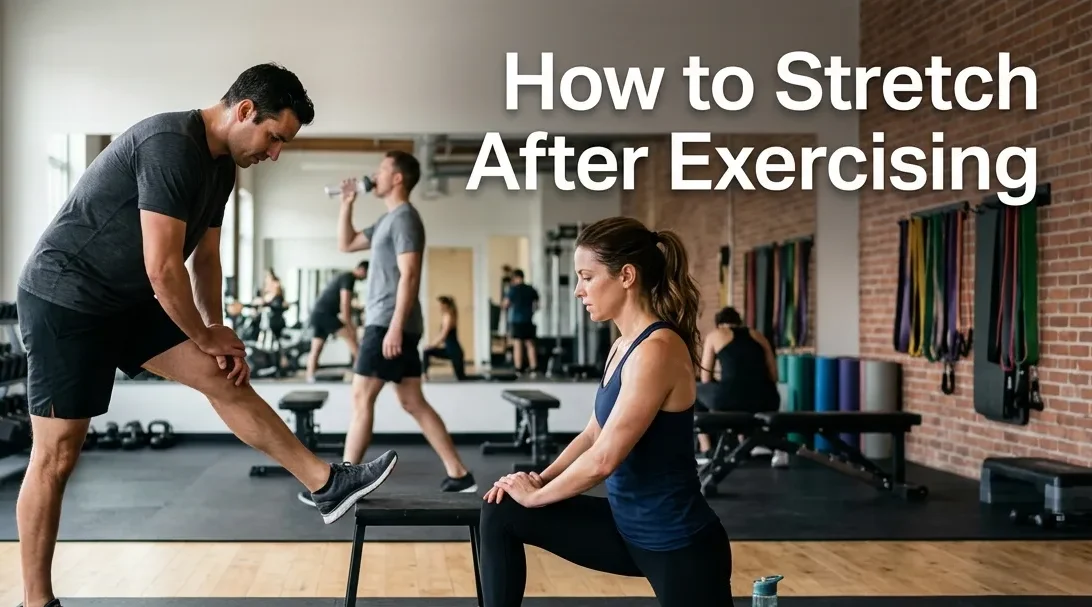
You finish your workout feeling proud. Your muscles worked hard, your heart rate is high, and you’re ready to head home. Many people stop at this point. They grab their water bottle, check their phone, and leave without giving their body a chance to cool down properly.
A few simple stretches after exercise can become one of the smartest parts of your fitness routine. They help your body transition from intense movement to recovery. Over time, regular post-workout stretching can improve flexibility, maintain joint mobility, reduce the feeling of tight muscles, and prepare you for your next workout. The best part is that you only need a few extra minutes to build this healthy habit.
Quick Answer: How to Stretch After Exercising
After exercising, walk slowly for 3–5 minutes first. Then do gentle static stretches for the muscles you trained. Hold each stretch for 20–30 seconds. Breathe normally and never stretch into sharp pain.
Why Do I Need to Stretch When I Exercise?
Exercise challenges your muscles, tendons, and joints. During strength training, running, cycling, or HIIT, your muscles repeatedly contract to produce force. When the workout ends, your body needs time to return to its normal resting state.
Stretching after exercising acts as the final step of your workout. It allows you to slow down, breathe deeply, and gently lengthen the muscles that have been working throughout your session.
Instead of thinking about stretching as another exercise, think of it as your body’s transition into recovery.
Regular post-workout stretching may help:
- Improve flexibility over time
- Maintain a healthy range of motion
- Reduce feelings of muscle tightness
- Encourage relaxation after exercise
- Support good movement patterns
- Promote body awareness
- Help you cool down gradually
Although stretching offers many benefits, it is important to have realistic expectations. Current research shows that post-workout stretching improves flexibility and mobility, but it does not consistently prevent delayed onset muscle soreness (DOMS) or completely eliminate the risk of injury. Recovery depends on many factors, including sleep, nutrition, hydration, workout intensity, and overall training load.
Benefits of Stretching After a Workout
Many people stretch simply because they were told it is a good habit. Understanding why it helps makes it easier to stay consistent.
Greater Flexibility and Range of Motion
Every workout asks your joints to move through different positions. Stretching regularly helps maintain the ability to move comfortably through those positions.
Better flexibility can make everyday activities easier, including:
- Squatting down
- Reaching overhead
- Walking upstairs
- Picking up objects
- Playing recreational sports
Improved flexibility develops gradually. Small daily improvements often lead to noticeable changes over several weeks or months.
Better Movement Quality
Tight muscles may limit how comfortably your body moves.
For example:
- Tight hip flexors may affect your squat depth.
- Tight calves can change ankle movement.
- Tight shoulders may reduce overhead mobility.
Post-workout stretching helps restore comfortable movement after training, making it easier to perform exercises with good technique during future workouts.
Less Muscle Tightness
Many people describe their muscles as feeling “tight” after exercise.
This sensation often comes from temporary fatigue, repeated muscle contractions, and the nervous system adapting to physical effort.
Gentle static stretching may reduce this feeling of tightness and leave your muscles feeling more relaxed.
Better Mental Recovery
Recovery is not only physical.
Stretching creates an opportunity to slow your breathing and shift your focus away from intense exercise. Even five minutes of calm stretching can help you finish your workout feeling refreshed instead of rushed.
Many people find that combining slow breathing with stretching improves relaxation after demanding workouts.
Supports Long-Term Consistency
One workout will not transform your flexibility.
Consistency matters far more than intensity.
Adding five to ten minutes of stretching after every workout creates a routine that supports healthy movement for months and years instead of only days.
Should I Stretch Before or After a Workout?
This is one of the most common fitness questions.
The answer depends on the type of stretching.
| Before Exercise | After Exercise |
|---|---|
| Dynamic stretching | Static stretching |
| Activates muscles | Relaxes muscles |
| Increases body temperature | Helps cool the body down |
| Prepares the body for movement | Supports flexibility and recovery |
| Uses controlled movement | Uses gentle holds |
Many beginners make the mistake of doing long static stretches before lifting weights or running.
Instead, use dynamic movements before exercise and save longer static stretches until your workout is complete.
Post-Workout Stretching Order
- Finish your last exercise.
- Walk slowly for 3–5 minutes.
- Take slow deep breaths.
- Drink small sips of water.
- Stretch the muscles you trained.
- Hold each stretch for 20–30 seconds.
- Finish with relaxed breathing.
What’s the Difference Between Static and Dynamic Stretching?
Knowing the difference helps you stretch at the right time.
Dynamic Stretches: Warm-Up Stretches / Pre-Workout Stretches
Dynamic stretches involve continuous movement.
Instead of holding one position, your body moves through a comfortable range of motion.
Examples include:
- Leg swings
- Arm circles
- Walking lunges
- Hip circles
- High knees
Dynamic stretching helps prepare your muscles for activity by increasing blood flow and gradually increasing movement.
These stretches work best before exercise.
Static Stretches: Cool-Down Stretches / Post-Workout Stretches
Static stretching means holding one position without moving.
Most stretches are held for 20–30 seconds while breathing normally.
Examples include:
- Standing calf stretch
- Hamstring stretch
- Quadriceps stretch
- Chest stretch
- Shoulder stretch
These stretches are ideal after your workout because your muscles are already warm.
Static stretching focuses on relaxation rather than performance.
A Smart Recovery Routine Before You Start Stretching
One area where many articles fall short is explaining what happens between the last exercise and the first stretch.
Instead of sitting down immediately, follow this simple recovery sequence:
Step 1: Slow Your Movement
Don’t stop suddenly after intense exercise.
Walk slowly for 3–5 minutes to allow your heart rate to decrease gradually.
Step 2: Regulate Your Breathing
Take slow, controlled breaths.
Try inhaling through your nose and exhaling through your mouth.
This helps your body shift from exercise mode toward recovery.
Step 3: Drink Water
Sweating causes fluid loss.
Rehydrating supports normal body function during recovery.
Take small sips instead of drinking large amounts all at once.
Step 4: Begin Static Stretching
Once your breathing becomes comfortable, begin your stretching routine.
Start with the muscles that worked the hardest during your workout.
For example:
- Leg day → quadriceps, hamstrings, calves, glutes
- Upper-body day → chest, shoulders, back, triceps
- Running → calves, hip flexors, hamstrings
- Full-body workout → entire body
This simple recovery sequence makes stretching more effective than jumping straight into random stretches.
A Complete Step-by-Step Post-Workout Stretching Routine
Stretching after exercise should not feel rushed. A good routine follows a logical order, helping your body move from active training into recovery. The goal is to stretch the muscles you used the most while keeping your movements slow and controlled.
Plan to spend 5–10 minutes on your cool-down. Hold each stretch for 20–30 seconds and repeat it on both sides when needed.
Step 1: Start with the Largest Muscle Groups
Large muscles usually work the hardest during exercise. Stretching them first can help your body relax before moving to smaller muscle groups.
Focus on:
- Quadriceps
- Hamstrings
- Glutes
- Chest
- Back
After these muscles feel relaxed, continue with your calves, shoulders, arms, and neck.
1. Lunging Hip Flexor Stretch
Best For
- Running
- Cycling
- Walking
- Lower-body strength workouts
Why It Helps
Hip flexors shorten during activities that involve repeated lifting of the knees or long periods of sitting. Stretching them after exercise can improve hip mobility and make walking feel more comfortable.
How to Perform
- Step one foot forward into a lunge.
- Lower your back knee toward the floor.
- Keep your chest tall.
- Gently shift your hips forward.
- Hold for 20–30 seconds.
- Switch sides.
Common Mistake
Do not lean your upper body forward. Let the stretch come from moving your hips, not your back.
2. Standing Hamstring Stretch
Best For
- Leg day
- Running
- HIIT
- Sports training
Why It Helps
Hamstrings work during almost every lower-body exercise. They also support hip movement and knee control.
How to Perform
- Place one heel slightly in front of you.
- Keep the knee slightly bent.
- Hinge forward from your hips.
- Keep your back straight.
- Stop when you feel gentle tension.
- Hold before changing sides.
Tip
Think about lengthening your spine instead of trying to touch your toes.
3. Standing Quadriceps Stretch
Best For
- Squats
- Lunges
- Cycling
- Stair climbing
Why It Helps
Your quadriceps generate force whenever you straighten your knees. Stretching them helps restore comfortable movement after demanding lower-body workouts.
How to Perform
- Stand next to a wall if you need balance.
- Hold one ankle behind your body.
- Keep your knees close together.
- Push your hips slightly forward.
- Hold the position.
- Repeat on the opposite leg.
Tip
Avoid pulling your foot too hard. A gentle stretch is enough.
4. Standing Calf Stretch
Best For
- Walking
- Running
- Jump rope
- Plyometric workouts
Why It Helps
Calves absorb force with every step, jump, and sprint. They often become tight after cardio sessions.
How to Perform
- Face a wall.
- Place both hands against it.
- Move one leg behind you.
- Keep the back heel on the floor.
- Bend the front knee.
- Hold before switching sides.
Tip
Keep both feet pointing straight ahead for the best stretch.
5. Doorway Chest Stretch
Best For
- Bench press
- Push-ups
- Chest workouts
- Shoulder training
Why It Helps
Pressing exercises tighten the front of the shoulders and chest. Stretching this area can improve posture and shoulder comfort after upper-body workouts.
How to Perform
- Stand inside a doorway.
- Place your forearms against each side.
- Step forward slowly.
- Open your chest naturally.
- Hold without forcing the movement.
Tip
Keep your shoulders relaxed instead of lifting them toward your ears.
6. Overhead Triceps and Shoulder Stretch
Best For
- Shoulder workouts
- Push exercises
- Swimming
- Racquet sports
Why It Helps
The shoulders work in almost every upper-body exercise. Gentle stretching may help maintain overhead mobility.
How to Perform
- Raise one arm overhead.
- Bend your elbow behind your head.
- Use the opposite hand for gentle support.
- Keep your head facing forward.
- Hold before changing arms.
Stretch Based on the Workout You Completed
One of the biggest mistakes people make is using the same stretching routine after every workout.
Instead, match your stretches to the muscles you trained.
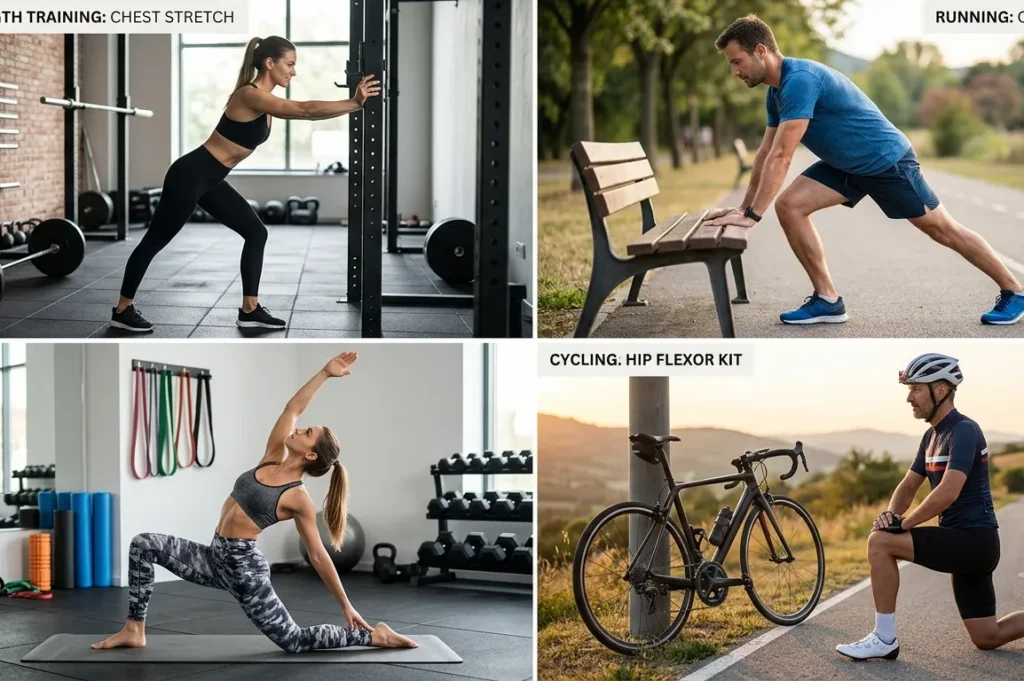
After Leg Day
Prioritize:
- Hip flexor stretch
- Quadriceps stretch
- Hamstring stretch
- Standing calf stretch
- Figure-4 glute stretch
Spend a little extra time on the muscles that feel the most fatigued.
After Upper-Body Strength Training
Focus on:
- Doorway chest stretch
- Shoulder stretch
- Triceps stretch
- Upper-back stretch
- Side-body stretch
These stretches help balance muscles that spent much of the workout pushing or pulling heavy loads.
After Running
Running places repeated stress on the lower body.
Give extra attention to:
- Calves
- Hamstrings
- Hip flexors
- Glutes
- Ankles
Move slowly and avoid bouncing into each stretch.
After HIIT Workouts
High-intensity sessions often involve the entire body.
A balanced cool-down should include:
- Hip flexors
- Hamstrings
- Quadriceps
- Chest
- Shoulders
- Back
- Calves
The goal is to gradually reduce tension throughout your body instead of focusing on only one area.
After a Full-Body Workout
Since multiple muscle groups worked together, perform one stretch for each major area:
| Muscle Group | Recommended Stretch |
|---|---|
| Chest | Doorway Chest Stretch |
| Back | Child’s Pose |
| Shoulders | Overhead Shoulder Stretch |
| Hip Flexors | Lunging Hip Flexor Stretch |
| Quadriceps | Standing Quad Stretch |
| Hamstrings | Standing Hamstring Stretch |
| Glutes | Figure-4 Stretch |
| Calves | Standing Calf Stretch |
This simple sequence helps create a balanced recovery routine.
| Workout Type | Main Muscles to Stretch | Best Focus |
|---|---|---|
| Leg Day | Quads, hamstrings, calves, glutes | Lower-body mobility |
| Upper Body | Chest, shoulders, triceps, back | Posture and shoulder comfort |
| Running | Calves, hips, hamstrings, glutes | Stride recovery |
| HIIT | Full body | Calming the body down |
How Long Should You Hold Each Stretch?
The amount of time matters more than trying to stretch as deeply as possible.
Use these general recommendations:
| Goal | Hold Time |
|---|---|
| General recovery | 20–30 seconds |
| Improving flexibility | 30–45 seconds |
| Areas that feel especially tight | Up to 60 seconds if comfortable |
| Repeat each stretch | 1–2 times per side |
Focus on smooth breathing throughout each stretch. If you need to hold your breath, you’ve probably stretched too far.
Build a Stretching Habit That Lasts
Many people stretch for one week and then stop.
A better approach is to make stretching the final step of every workout.
Think of your routine like this:
- Finish your last exercise.
- Walk for a few minutes.
- Drink some water.
- Stretch the muscles you trained.
- Leave the gym or workout area feeling recovered instead of rushing out.
Following the same routine every session makes stretching feel automatic. Over time, this consistency supports flexibility, movement quality, and a more complete recovery process.
Common Stretching Mistakes That Can Slow Your Recovery
Stretching after exercise should leave your body feeling relaxed and refreshed. However, small mistakes can make your recovery less effective or even increase discomfort.
Instead of stretching harder, focus on stretching smarter.
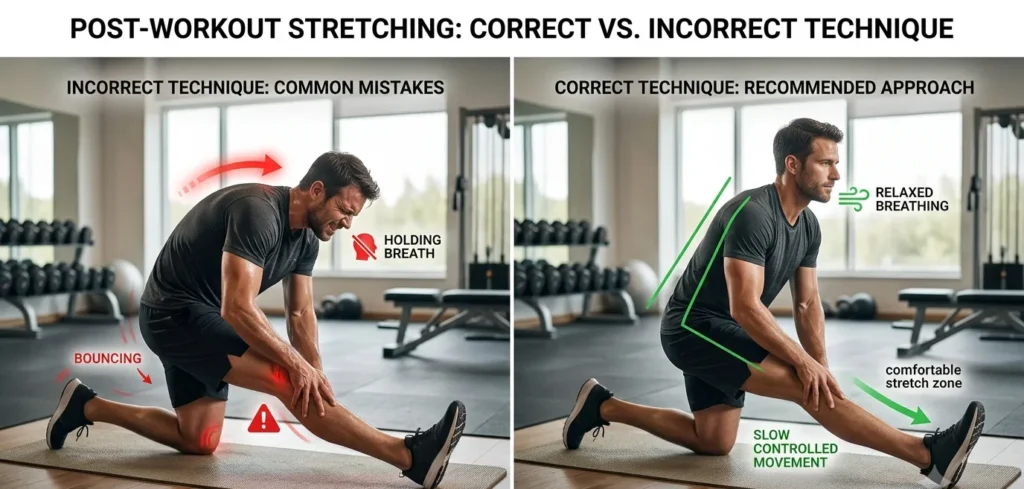
1. Treating Stretching Like Another Workout
Some people believe they should push every stretch to its limit. This often causes unnecessary discomfort instead of helping recovery.
A good stretch should create gentle tension, not pain.
Do this instead:
- Stretch slowly.
- Stop when you feel mild resistance.
- Let your muscles relax naturally.
2. Holding Your Breath
Many people unknowingly hold their breath while stretching, especially after an intense workout.
This increases muscle tension instead of encouraging relaxation.
Better approach
Match your breathing with each stretch.
- Breathe in slowly.
- Exhale as your muscles relax.
- Keep breathing naturally throughout the stretch.
Deep breathing also helps your heart rate return toward its resting level.
3. Rushing Through Every Stretch
Stretching for only a few seconds rarely allows muscles enough time to relax.
Instead of trying to finish quickly, stay present during each stretch.
Even a short recovery session becomes more effective when every position is held with control.
4. Ignoring One Side of the Body
Many people only stretch the side that feels tighter.
Over time, this can create movement imbalances.
Always stretch both sides, even if one side feels more flexible.
Balanced mobility supports better movement patterns during future workouts.
5. Forgetting Smaller Muscle Groups
Large muscles usually receive most of the attention.
However, smaller muscles also contribute to comfortable movement.
Don’t forget areas like:
- Ankles
- Forearms
- Wrists
- Neck
- Upper back
Giving these muscles a few extra moments can improve overall movement quality.
6. Stretching Without Paying Attention
Some people scroll through their phone while stretching.
This often leads to poor posture and rushed movements.
Instead, focus on:
- Your breathing
- Your posture
- The muscles being stretched
This simple awareness makes stretching feel more purposeful.
Safety Tips
Stretching should feel safe and controlled.
Use these simple guidelines every time you cool down.
Stretch Slowly
Never force your body into a position.
Move gradually until you feel comfortable tension.
Keep Good Alignment
Good posture matters during stretching.
Try to:
- Keep your spine neutral.
- Relax your shoulders.
- Avoid twisting unnecessarily.
- Maintain controlled body position.
Never Bounce
Quick bouncing movements may place unnecessary stress on muscles that have already worked hard.
Instead, ease into every stretch and remain still while holding it.
Respect Pain Signals
There is an important difference between stretching tension and pain.
Normal stretching feels like:
- Mild pulling
- Comfortable tightness
- Gradual release
Stop immediately if you experience:
- Sharp pain
- Burning sensations
- Numbness
- Sudden weakness
- Joint pain
Pain is a signal to reduce intensity or stop stretching altogether.
Signs You’re Stretching Correctly
Many beginners wonder if they are stretching enough.
Instead of measuring success by how far you can reach, pay attention to how your body responds.
You’re probably stretching correctly when:
✅ The stretch feels comfortable.
✅ Your breathing stays relaxed.
✅ You can hold the position without shaking.
✅ The tension gradually decreases.
✅ You feel more mobile after finishing.
These signs are much better indicators than trying to achieve extreme flexibility.
When Should You Avoid Stretching?
Stretching is helpful in many situations, but there are times when your body needs something different.
Avoid stretching if you have:
- A suspected muscle tear
- Severe swelling
- A recent fracture
- Sharp joint pain
- An acute ligament injury
- A medical condition that limits movement without professional guidance
If pain continues after exercise or becomes worse, consult a qualified healthcare professional before continuing your stretching routine.
Stretching vs. Foam Rolling
Many people wonder whether they should stretch, foam roll, or do both.
The truth is that each serves a different purpose.
| Stretching | Foam Rolling |
|---|---|
| Uses body position to lengthen muscles | Uses pressure on muscles and connective tissue |
| Helps improve flexibility over time | Helps reduce the feeling of muscle tightness for some people |
| Requires no equipment | Requires a foam roller |
| Easy to perform anywhere | Works well at home or in the gym |
| Suitable after most workouts | Can be added before or after stretching |
Rather than choosing one over the other, many active people include both in their recovery routine when time allows.
A Complete Post-Workout Recovery Timeline
Stretching is only one piece of recovery.
The choices you make during the next few hours also influence how prepared your body feels for future workouts.
First 5 Minutes
- Walk slowly.
- Allow your breathing to settle.
- Drink some water.
5–15 Minutes
Complete your stretching routine.
Pay attention to the muscles that worked the hardest.
Within 60 Minutes
Eat a balanced meal or snack that includes:
- Protein to support muscle repair
- Carbohydrates to replenish energy stores
- Fluids to replace sweat losses
Later That Day
Continue moving normally.
Light activities such as walking or household tasks help avoid sitting still for long periods.
Overnight
Quality sleep remains one of the most valuable recovery tools.
Aim for a consistent sleep schedule to support your body’s natural repair processes.
Recovery Habits That Work Together
Stretching works best when combined with other healthy habits.
Think of recovery as a complete system instead of one single activity.
| Recovery Habit | Why It Matters |
|---|---|
| Stretching | Supports flexibility and comfortable movement |
| Hydration | Replaces fluids lost through sweat |
| Balanced nutrition | Provides nutrients for recovery |
| Quality sleep | Supports muscle repair and overall health |
| Active recovery | Keeps the body moving without high intensity |
| Consistent training | Helps maintain long-term progress |
Each habit contributes to recovery in a different way.
Build a Recovery Routine You Can Follow Every Week
The best recovery plan is the one you can repeat consistently.
Instead of searching for complicated techniques, create a simple routine that fits every workout.
A practical example looks like this:
- Finish your workout.
- Walk for three to five minutes.
- Rehydrate.
- Stretch the muscles you trained.
- Eat a balanced meal.
- Stay lightly active throughout the day.
- Prioritize a full night’s sleep.
This sequence turns recovery into a regular habit rather than an occasional task.
By following the same process after each workout, you create a routine that supports flexibility, healthy movement, and readiness for your next training session.
A 5-Minute Beginner Post-Workout Stretching Routine
Not every workout needs a long recovery session. If you’re short on time, this simple routine helps you finish your workout with purpose. It targets the major muscle groups that work during most exercises and fits easily into a busy schedule.
| Time | Stretch | Focus Area |
|---|---|---|
| 30 seconds | Standing Quad Stretch | Front of thighs |
| 30 seconds | Standing Hamstring Stretch | Back of thighs |
| 30 seconds | Standing Calf Stretch | Lower legs |
| 30 seconds | Lunging Hip Flexor Stretch | Front of hips |
| 30 seconds | Doorway Chest Stretch | Chest and shoulders |
| 30 seconds | Overhead Triceps Stretch | Arms and shoulders |
| 30 seconds | Child’s Pose | Back and lats |
| 30 seconds | Figure-4 Glute Stretch | Glutes and hips |
| 1 minute | Slow Walking + Deep Breathing | Full-body recovery |
Total Time: Approximately 5 minutes
You do not have to perform every stretch perfectly. Focus on smooth movements, steady breathing, and consistency after every workout.
A 10-Minute Full-Body Recovery Routine
For longer or more demanding workouts, spend a few extra minutes helping your entire body recover.
Phase 1: Slow Down (2 Minutes)
Before stretching:
- Walk at a comfortable pace.
- Let your breathing become steady.
- Allow your heart rate to decrease naturally.
This prepares your body for the stretching phase instead of stopping suddenly.
Phase 2: Restore Movement (6 Minutes)
Move through one stretch for each major muscle group.
Suggested order:
- Hip flexors
- Quadriceps
- Hamstrings
- Calves
- Glutes
- Chest
- Shoulders
- Upper back
Holding each stretch for about 30–45 seconds provides enough time to relax without turning stretching into another workout.
Phase 3: Finish with Relaxation (2 Minutes)
End your routine by focusing on recovery instead of flexibility.
Try this sequence:
- Stand comfortably.
- Take five slow breaths.
- Relax your shoulders.
- Shake out your arms and legs gently.
- Walk for another minute before leaving the gym or workout area.
This creates a clear transition between training and recovery.
Adjust Your Stretching Routine as You Progress
Your recovery routine should change as your fitness improves.
If You’re a Beginner
Keep things simple.
- Stretch after every workout.
- Hold each stretch for about 20–30 seconds.
- Focus on good technique rather than deeper stretches.
Building consistency is more important than building flexibility quickly.
If You’re Training Regularly
As your body adapts, pay more attention to the muscles you use most often.
For example:
- Lifters may spend extra time on the chest, hips, and shoulders.
- Runners may focus on calves, hamstrings, and hip flexors.
- Cyclists may benefit from additional quadriceps and hip stretches.
Personalizing your recovery routine makes it more effective than using the same stretches every day.
If Your Goals Change
Your stretching routine can evolve with your training.
For example:
- Preparing for a race may require more lower-body mobility.
- Starting a strength program may increase focus on shoulder and hip movement.
- Returning after a training break may call for shorter, gentler stretching sessions.
Think of your recovery plan as something that grows with your fitness journey.
Quick Recovery Checklist
Before you leave the gym or finish your home workout, ask yourself these questions.
Final Recovery Check Before You Leave
- Did I cool down before stretching?
- Did I stretch the muscles I trained?
- Did I breathe normally during each stretch?
- Did I avoid sharp pain?
- Did I drink water?
- Did I plan food and sleep for recovery?
If you answer “yes” to most of these questions, you’ve already taken meaningful steps toward better recovery.
Conclusion
Learning how to stretch after exercising is about more than improving flexibility—it’s about creating a recovery habit that supports your long-term fitness goals. Over the years, one of the biggest lessons many exercisers discover is that recovery deserves the same attention as training. A workout doesn’t truly end with the final repetition or last mile; it ends when your body has the chance to recover well. By finishing each session with a thoughtful cool-down, targeted stretching, hydration, and good recovery habits, you build a routine that helps you move comfortably, train consistently, and stay ready for whatever workout comes next.
