


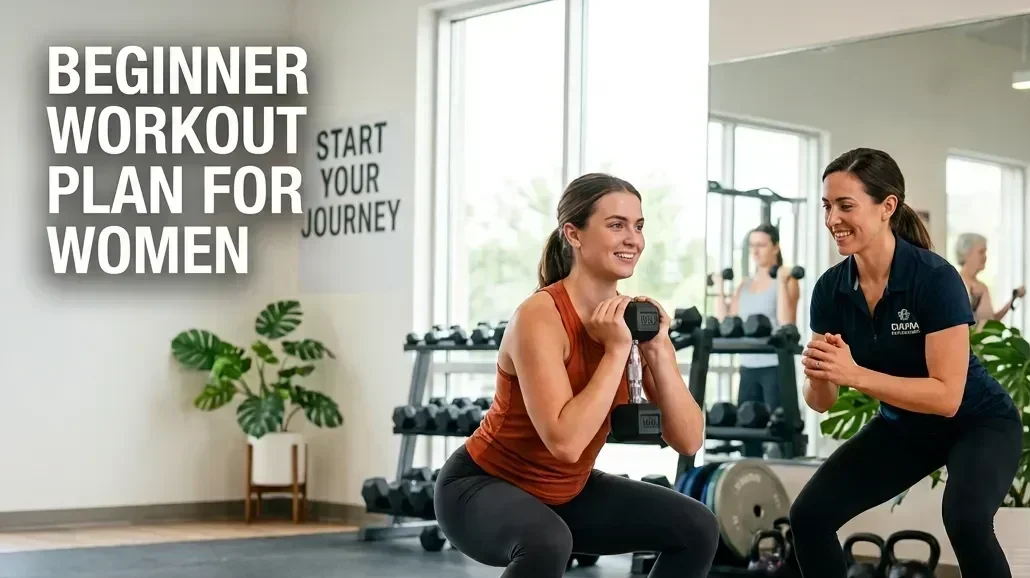
Starting a fitness journey can feel exciting, but it can also be confusing. If you have never followed a workout routine before, you may wonder where to begin. You might ask yourself which exercises are best, how many days you should train, or whether you should start with cardio or strength training. Many women also worry about doing exercises incorrectly or feeling uncomfortable in the gym. These concerns are completely normal, and almost every beginner experiences them.
The good news is that you do not need an advanced workout program or expensive equipment to make progress. What you need is a simple plan that matches your current fitness level and helps you build healthy habits one step at a time. This beginner workout plan for women is designed to help you gain confidence, improve strength, and create a routine you can follow for months—not just a few weeks.
Key Takeaways
- A beginner workout plan should focus on consistency instead of perfection.
- Strength training and cardio work best when combined in a balanced routine.
- Start with simple exercises before moving to more challenging variations.
- Proper form is more important than lifting heavy weights.
- Recovery, sleep, and nutrition are essential for long-term progress.
- Most beginners notice improvements in strength and energy before major physical changes.
- Tracking your progress helps you stay motivated and adjust your workouts safely.
Beginner Workout Plan for Women: Quick Summary
This plan is best for women who are new to exercise or returning after a long break. It combines strength training, cardio, recovery, and simple progression.
- Best frequency: 3–4 workouts per week
- Workout length: 20–45 minutes
- Main focus: Strength, confidence, and consistency
- Best intensity: Moderate effort, not exhaustion
- Expected progress: Better energy, strength, and confidence within the first few weeks
Types of Beginner Workout Plans for Women
There is no single workout that works for everyone. Your ideal routine depends on your goals, schedule, and fitness level. Understanding the different types of workouts will help you build a balanced plan.
Cardio Workouts
Cardio exercises increase your heart rate and improve your endurance. They also support heart health and help you burn calories.
Examples include:
- Brisk walking
- Cycling
- Swimming
- Rowing
- Elliptical training
- Dancing
- Jump rope (after building basic fitness)
If you are just starting, aim for low-impact cardio that feels comfortable. Even a 20-minute walk is a great beginning.
Try This
Walk at a comfortable pace for 20–30 minutes three times each week. As your fitness improves, increase either your walking speed or the duration.
Strength Training
Strength training is one of the most valuable forms of exercise for beginners. It helps you build lean muscle, improve posture, strengthen bones, and make everyday activities easier.
Contrary to a common myth, lifting weights does not automatically make women bulky. Instead, it helps create a stronger and more toned appearance while improving overall fitness.
Begin with simple movements that train multiple muscle groups at once.
Examples include:
- Bodyweight squats
- Dumbbell presses
- Glute bridges
- Dumbbell rows
- Step-ups
- Wall push-ups
Try This
Choose a weight that allows you to complete every repetition with good technique while still feeling challenged during the last few reps.
Active Recovery
Many beginners believe they should exercise every day. In reality, your body becomes stronger during recovery, not just during workouts.
Active recovery keeps your body moving without placing too much stress on your muscles.
Examples include:
- Easy walking
- Gentle stretching
- Mobility exercises
- Yoga
- Light cycling
These activities improve blood flow and help reduce stiffness after training.
Try This
Spend 20 minutes walking or stretching on your rest day instead of staying inactive all day.

Why Do Gym Workouts and Routines for Women Look Different Than for Men?
Men and women respond to exercise in many similar ways. However, some biological and lifestyle factors can influence training preferences and recovery. Understanding these differences helps you create a workout plan that feels realistic and sustainable.
The Menstrual Cycle
Hormonal changes during the menstrual cycle may affect energy levels, strength, and recovery. Some women feel stronger during certain weeks, while others may prefer lighter workouts during their period.
Instead of forcing yourself to follow the exact same intensity every day, adjust your workouts based on how you feel.
Some practical ideas include:
- Lower the workout intensity if your energy feels low.
- Continue exercising if light movement helps you feel better.
- Focus on good technique rather than chasing heavier weights.
Listening to your body is a sign of smart training, not weakness.
Recovery Challenges
Recovery is often overlooked by beginners. Muscles need time to repair after exercise. Without enough recovery, progress slows and injuries become more likely.
Good recovery includes:
- Sleeping 7–9 hours each night.
- Drinking enough water throughout the day.
- Eating balanced meals with enough protein.
- Taking planned rest days.
- Avoiding intense workouts every day.
Small recovery habits produce big results over time.
Age and Health
Your workout plan should fit your current health and lifestyle instead of your age alone.
A woman in her twenties who has never exercised may need the same beginner program as someone in her forties who is returning after several inactive years.
If you have any medical conditions, joint pain, or recent injuries, speak with your healthcare provider before starting a new exercise program.
Remember, fitness is personal. Progress happens when your routine matches your abilities—not someone else’s.
A Beginner Workout Plan for Women
Many beginners search for the perfect workout. The truth is that the best workout is the one you can follow consistently.
This program focuses on learning proper movement patterns before increasing weight or workout intensity. That approach builds a stronger foundation and reduces the risk of injury.
Before starting each workout, prepare your body with a short warm-up.
Warm-up
A warm-up increases blood flow, prepares your muscles, and improves joint mobility. It also helps you perform exercises with better control.
Spend about 5–10 minutes warming up before every workout.
A simple beginner warm-up includes:
- March in place — 1 minute
- Arm circles — 30 seconds each direction
- Hip circles — 10 repetitions
- Bodyweight squats — 10 repetitions
- Walking lunges — 10 repetitions
- Shoulder rolls — 10 repetitions
- Light jumping jacks or step jacks — 1 minute
You should feel slightly warm and ready to move, not tired.
Your First Week: What to Expect
Starting a new routine is about learning, not proving how strong you are.
During your first week, focus on:
- Learning correct exercise form.
- Completing every workout without rushing.
- Choosing manageable weights.
- Resting when needed.
- Building confidence with each session.
Do not compare yourself with experienced gym members or people you see online. Every expert started as a beginner.
Your goal during the first week is simply to finish each workout feeling successful and motivated to return for the next one.
How to Choose the Right Weight
One of the biggest questions beginners ask is, “How heavy should I lift?”
A simple rule is:
Choose a weight that lets you complete all your planned repetitions with proper technique while making the last two repetitions feel challenging.
If the weight feels too easy, increase it slightly during your next workout.
If your form breaks down or you cannot finish your repetitions safely, reduce the weight.
Remember, good technique always comes before heavier weights.
Workout 1: Upper Body
Your first workout focuses on your chest, shoulders, back, and arms. These muscles help you perform everyday activities like carrying groceries, lifting bags, and maintaining good posture.
As a beginner, you do not need heavy weights. Your goal is to learn each movement correctly.
Beginner Upper Body Routine
| Exercise | Sets | Reps | Rest |
|---|---|---|---|
| Dumbbell Chest Press | 2–3 | 10–12 | 60 sec |
| Seated Dumbbell Shoulder Press | 2–3 | 10–12 | 60 sec |
| One-Arm Dumbbell Row | 2–3 | 10 each side | 60 sec |
| Wall Push-Ups or Incline Push-Ups | 2 | 8–12 | 60 sec |
| Dumbbell Bicep Curl | 2 | 12 | 45 sec |
| Overhead Triceps Extension | 2 | 12 | 45 sec |
Workout Tips
- Move slowly during every repetition.
- Never rush between exercises.
- Breathe normally.
- Stop if you feel sharp pain.
- Keep your shoulders relaxed.
Exercise Technique Tips
Dumbbell Chest Press
Focus on controlled movement instead of speed.
Avoid:
- Locking your elbows.
- Bouncing the weights.
- Arching your lower back.
Shoulder Press
Press the dumbbells straight overhead.
Avoid leaning backward.
Keep your core tight.
Dumbbell Row
Pull your elbow toward your hip instead of lifting with your arm.
Imagine squeezing your shoulder blade.
Wall Push-Up
If regular push-ups feel difficult, start against a wall.
As your strength improves, move to:
Wall Push-Up
↓
Bench Push-Up
↓
Knee Push-Up
↓
Standard Push-Up
This gradual progression builds confidence while reducing injury risk.
Workout 2: Lower Body
Strong legs improve balance, mobility, posture, and overall strength.
Many beginners believe lower-body workouts are only for weight loss. In reality, these exercises help support nearly every daily movement.
Beginner Lower Body Routine
| Exercise | Sets | Reps | Rest |
|---|---|---|---|
| Goblet Squat | 3 | 10–12 | 60 sec |
| Romanian Deadlift | 3 | 10 | 60 sec |
| Reverse Lunges | 2 | 10 each leg | 60 sec |
| Glute Bridge | 3 | 12–15 | 45 sec |
| Standing Calf Raise | 2 | 15 | 30 sec |
Exercise Technique Tips
Goblet Squat
Keep your chest lifted.
Push your hips backward before bending your knees.
Keep your knees tracking over your toes.
Romanian Deadlift
This exercise trains your hamstrings and glutes.
Keep your back straight.
Lower the dumbbells by pushing your hips backward instead of bending your spine.
Reverse Lunges
Take a comfortable step backward.
Lower slowly.
Push through your front foot to return.
If balance is difficult, hold onto a sturdy chair.
Glute Bridge
Drive through your heels.
Squeeze your glutes at the top.
Do not overextend your lower back.

Workout 3: Upper Body
This session strengthens the upper body again while reinforcing good movement patterns.
Beginners improve faster through repetition.
Practicing similar movements twice each week builds confidence and technique.
Beginner Upper Body Routine B
| Exercise | Sets | Reps | Rest |
|---|---|---|---|
| Incline Dumbbell Press | 3 | 10 | 60 sec |
| Lat Pulldown | 3 | 10 | 60 sec |
| Dumbbell Lateral Raise | 2 | 12 | 45 sec |
| Seated Cable Row | 3 | 10 | 60 sec |
| Hammer Curl | 2 | 12 | 45 sec |
| Triceps Rope Pushdown | 2 | 12 | 45 sec |
Why Repeat Similar Exercises?
Many beginners worry they are repeating exercises too often.
This repetition helps you:
- Improve coordination.
- Learn proper technique.
- Build strength safely.
- Increase confidence.
- Reduce injury risk.
Consistency is more important than constantly changing workouts.
Workout 4: Lower Body
Your second lower-body session focuses on strength, stability, and balance.
These movements improve athletic ability while supporting healthy joints.
Beginner Lower Body Routine B
| Exercise | Sets | Reps | Rest |
|---|---|---|---|
| Leg Press | 3 | 10 | 60 sec |
| Dumbbell Step-Up | 2 | 10 each leg | 60 sec |
| Seated Leg Curl | 3 | 12 | 45 sec |
| Bodyweight Split Squat | 2 | 10 each leg | 60 sec |
| Standing Calf Raise | 2 | 15 | 30 sec |
Exercise Alternatives
Not every beginner has access to a gym.
Use these alternatives if needed.
| Gym Exercise | Home Alternative |
|---|---|
| Leg Press | Chair Squats |
| Cable Row | Resistance Band Row |
| Lat Pulldown | Resistance Band Pulldown |
| Dumbbell Press | Resistance Band Chest Press |
| Leg Curl Machine | Stability Ball Leg Curl |
| Step-Up Bench | Household Stair Step |
Remember, consistency matters more than expensive equipment.
Cool-down
Never skip your cool-down.
Cooling down helps your breathing return to normal and reduces muscle stiffness.
Spend 5–10 minutes after every workout.
Include:
- Hamstring stretch
- Quad stretch
- Chest stretch
- Shoulder stretch
- Hip flexor stretch
- Child’s Pose
- Deep breathing
Hold each stretch for about 20–30 seconds.
Avoid bouncing during stretches.
What’s the Best Workout Schedule for Beginners?
One of the biggest mistakes beginners make is exercising every day.
Your muscles need time to recover.
This weekly schedule balances training and recovery.
| Day | Workout |
|---|---|
| Monday | Upper Body |
| Tuesday | Lower Body |
| Wednesday | Active Recovery or Walking |
| Thursday | Upper Body |
| Friday | Lower Body |
| Saturday | Light Cardio or Mobility |
| Sunday | Rest |
If four workouts feel too challenging, begin with three sessions each week.
The best routine is one you can maintain consistently.
How Hard Should You Exercise?
Many beginners believe every workout should leave them exhausted.
That is not necessary.
Instead, use the Rate of Perceived Exertion (RPE) scale.
| RPE | Effort |
|---|---|
| 4–5 | Very Easy |
| 6 | Comfortable |
| 7 | Ideal for Beginners |
| 8 | Challenging but Safe |
| 9–10 | Maximum Effort (Not Recommended for Beginners) |
Aim for an effort level around 7 out of 10 during most workouts.
You should finish your session feeling challenged but still able to perform one or two more repetitions with good form.
How Long Should Your Workouts Last?
Long workouts are not required to make progress.
Start with manageable sessions.
Weeks 1–2
20–30 minutes
Weeks 3–4
30–40 minutes
Weeks 5–8
40–50 minutes
After Week 8
45–60 minutes, depending on your goals and recovery.
Quality always matters more than duration.
When Should You Increase the Weight?
Many beginners either increase weight too quickly or never increase it at all.
Use this simple rule:
Increase the weight only when:
- You complete every set with proper form.
- The last few repetitions no longer feel challenging.
- You finish two consecutive workouts comfortably.
Increase by the smallest available amount.
Small improvements add up over time.
Beginner Progression Checklist
Increase your weight only when your body is ready. Use this checklist before making the next step harder.
- ✅ You completed all sets and reps with good form.
- ✅ The last two reps felt challenging but controlled.
- ✅ You did not feel sharp pain during the exercise.
- ✅ You recovered well before your next workout.
- ✅ The same weight felt manageable for two workouts in a row.
Beginner rule: If your form gets worse, do not increase the weight yet.
Your First Four Weeks
Instead of trying to become stronger overnight, focus on steady progress.
Week 1
Learn every exercise.
Practice good technique.
Week 2
Feel more comfortable with the movements.
Improve confidence.
Week 3
Increase one or two exercise weights if appropriate.
Week 4
Move with better control and consistency.
Celebrate small improvements.
These early wins create long-term motivation.
Benefits of a Beginner Workout Plan for Women
Starting a workout routine is about much more than changing your appearance. Regular exercise improves your physical health, mental well-being, and confidence. Even small improvements add up when you stay consistent.
The most important benefit is building a healthy habit that supports your long-term lifestyle.
Improves Bone Density
Strength training places healthy stress on your bones. Your body responds by making them stronger over time.
This becomes increasingly important as women age because bone density naturally decreases after menopause.
Benefits include:
- Stronger bones
- Better joint support
- Lower risk of fractures
- Improved balance
- Better posture
You do not need heavy weights to receive these benefits. Proper technique and regular training are enough for beginners.
Aids in Weight Management
Many women begin exercising because they want to manage their weight.
While workouts help burn calories, they also build lean muscle. Muscle tissue uses energy even while your body is at rest.
Instead of focusing only on the number on the scale, pay attention to other positive changes such as:
- Better endurance
- Improved strength
- Clothes fitting differently
- Increased confidence
- Higher daily energy
Weight management works best when exercise is combined with healthy eating habits.
Reduces Cardiometabolic Disease Risk
Regular physical activity supports your overall health.
Exercise may help improve:
- Heart health
- Blood circulation
- Blood pressure
- Cholesterol levels
- Blood sugar control
Walking, strength training, and moderate cardio all contribute to a healthier lifestyle.
You do not need long or intense workouts to experience these improvements.
Other Things to Keep in Mind
A workout plan works best when it becomes part of your daily routine. The following habits will help you stay consistent and continue making progress.
Focus on Proper Form Before Increasing Weight
Many beginners believe heavier weights always produce faster results.
In reality, proper technique should always come first.
Good form helps you:
- Target the correct muscles.
- Reduce injury risk.
- Build strength safely.
- Improve exercise confidence.
If your form breaks down, reduce the weight and practice the movement again.
Learn to Listen to Your Body
Some muscle soreness after a new workout is normal.
However, sharp pain is not.
Take an extra recovery day if you feel:
- Extremely fatigued
- Dizzy
- Unwell
- Unusually sore for several days
Rest is part of the training process.
Build Consistency Instead of Chasing Perfection
Missing one workout does not mean you have failed.
Simply continue with your next scheduled session.
Many successful fitness journeys are built through small, consistent actions instead of perfect weeks.
Remember:
One missed workout will not stop your progress.
Giving up completely will.
Stay Hydrated
Water supports every workout.
Drink water:
- Before exercise
- During longer workouts
- After training
Hydration helps regulate body temperature and supports recovery.
Eat Enough Protein
Protein helps repair muscles after exercise.
Good protein sources include:
- Chicken
- Fish
- Eggs
- Greek yogurt
- Cottage cheese
- Tofu
- Beans
- Lentils
Try to include a source of protein with every meal.
Do Not Skip Rest Days
Rest days are just as important as workout days.
During recovery, your body repairs muscle tissue and prepares for your next session.
Active recovery options include:
- Walking
- Stretching
- Yoga
- Light cycling
Recovery helps you return stronger for your next workout.
Beginner Nutrition Basics
You do not need a complicated meal plan to support your workouts.
Focus on balanced meals that include:
- Lean protein
- Whole grains
- Fruits
- Vegetables
- Healthy fats
Eating consistently supports both energy and recovery.
Pre-Workout Meal
Eat about 1–2 hours before exercising if possible.
A simple meal might include:
- Oatmeal with fruit
- Greek yogurt and berries
- Whole-grain toast with peanut butter
- Banana with a handful of nuts
Choose foods that are easy to digest.
Post-Workout Meal
After training, aim to eat a meal containing protein and carbohydrates.
Examples include:
- Grilled chicken with rice and vegetables
- Egg sandwich on whole-grain bread
- Protein smoothie with fruit
- Cottage cheese with berries
This helps support muscle recovery and replenish energy.
Common Beginner Mistakes to Avoid
Avoiding these mistakes will help you progress more safely.
Skipping the Warm-Up
Cold muscles are more prone to injury.
Always spend a few minutes preparing your body before lifting weights.
Using Too Much Weight
Heavy weights are not impressive if your technique suffers.
Master each movement first.
Comparing Yourself to Others
Everyone begins at a different fitness level.
Measure your progress against your previous workouts—not someone else’s.
Changing Your Program Every Week
Beginners often switch workouts too quickly.
Your body needs time to adapt.
Follow the same plan for several weeks before making major changes.
Ignoring Recovery
More exercise does not always produce better results.
Recovery supports muscle growth and long-term consistency.
How to Stay Motivated
Motivation naturally comes and goes.
Instead of relying on motivation alone, build habits that make exercise easier to maintain.
Helpful strategies include:
- Schedule workouts like appointments.
- Prepare your workout clothes in advance.
- Keep a training journal.
- Celebrate small improvements.
- Train with a friend when possible.
Small habits create lasting success.
How to Track Your Progress
Many beginners only watch the scale.
While body weight can be useful, it should not be your only measurement of success.
Track progress by recording:
- Body measurements
- Strength improvements
- Workout consistency
- Energy levels
- Sleep quality
- Mood
- Endurance
- Exercise confidence
These changes often appear before major physical transformations.
Realistic Results Timeline
Every person progresses at a different pace.
The timeline below provides realistic expectations for most beginners.
After 2 Weeks
- Better energy
- Improved workout confidence
- Less muscle soreness
- Better coordination
After 4 Weeks
- Better exercise technique
- Increased strength
- Improved stamina
- More consistent workout habit
After 8 Weeks
- Clothes may fit differently.
- Daily tasks feel easier.
- Improved muscle tone may become noticeable.
After 12 Weeks
- Greater overall strength
- Better endurance
- Increased confidence
- Visible body composition improvements for many people, depending on nutrition, consistency, and individual factors
Remember that sustainable progress takes time.
Realistic Results Timeline for Beginner Women
| Timeframe | What You May Notice | What to Focus On |
|---|---|---|
| After 2 Weeks | Better energy, less fear, improved coordination | Showing up and learning proper form |
| After 4 Weeks | More strength, better routine, improved stamina | Consistency and controlled progress |
| After 8 Weeks | Clothes may fit better, workouts feel easier | Progressive overload and recovery |
| After 12 Weeks | Visible strength, better confidence, improved body composition | Building long-term fitness habits |

Building Fitness as a Lifestyle
Your first workout plan is only the beginning.
As you become stronger, you can:
- Increase your workout intensity gradually.
- Learn new exercises.
- Try different training styles.
- Set new fitness goals.
The most successful people are not those who train perfectly.
They are the ones who continue showing up, even when life becomes busy.
Fitness should support your life not take it over.
Tips on Starting Your Workout Plan
Starting your fitness journey is exciting, but success comes from following a simple plan consistently. Before beginning your first workout, keep these practical tips in mind.
Start Slowly
You do not need to complete every exercise perfectly during your first week.
Focus on learning proper movement.
Your strength and confidence will improve naturally.
Schedule Your Workouts
Treat your workouts like important appointments.
Choose days and times that fit your lifestyle.
Having a routine makes it easier to stay consistent.
Wear Comfortable Clothing
Choose shoes that provide good support.
Wear clothes that allow you to move freely.
Feeling comfortable helps you focus on your workout instead of distractions.
Keep a Workout Journal
Record:
- Exercises completed
- Weight used
- Repetitions
- Workout duration
- Energy level
Looking back at your progress can be incredibly motivating.
Do Not Fear Small Beginnings
Every experienced lifter started with their first workout.
Do not worry about lifting heavy weights or completing advanced exercises.
The goal is progress—not perfection.
Stay Patient
Healthy progress takes time.
Avoid comparing your results with influencers or friends.
Your fitness journey is unique.
Beginner Workout Checklist
Before Every Workout
✔ Drink water.
✔ Complete your warm-up.
✔ Use proper form.
✔ Choose manageable weights.
✔ Keep your phone distractions to a minimum.
✔ Focus on quality instead of speed.
After Every Workout
✔ Cool down.
✔ Stretch major muscle groups.
✔ Eat a balanced meal with protein.
✔ Record your workout.
✔ Get enough sleep.
Signs Your Beginner Workout Plan Is Working
Many women expect immediate physical changes.
However, your body often improves in other ways first.
Positive signs include:
- Everyday activities feel easier.
- You recover faster after workouts.
- Your posture improves.
- You feel more energetic.
- Your balance improves.
- Your confidence grows.
- Exercises begin to feel easier.
- You look forward to training instead of avoiding it.
These changes show that your body is adapting, even before major visual changes appear.
When Should You Change Your Workout Plan?
Beginners do not need a new routine every week.
Stay with the same program for approximately 8–12 weeks if you continue making progress.
Consider changing your workout when:
- Every exercise feels easy.
- Your progress has stopped for several weeks.
- Your goals have changed.
- You want to learn more advanced exercises.
- Your available equipment changes.
Small adjustments are often enough.
You do not need to replace your entire program.
Frequently Forgotten Success Habits
These habits may seem small, but they often separate people who stay consistent from those who quit.
Remember to:
- Walk more during the day.
- Stretch after workouts.
- Prepare healthy meals in advance.
- Sleep consistently.
- Celebrate small victories.
- Stay patient with yourself.
- Focus on long-term health instead of quick results.
Fitness is built through hundreds of small decisions.
Conclusion
Beginning a workout routine can feel challenging, but it does not have to be complicated. The most successful beginners are not the ones who train the hardest,they are the ones who stay consistent, learn proper technique, and make gradual improvements over time. From my experience coaching beginners, confidence grows with every completed workout, not with perfect performance. Start with the basics, follow your plan, recover well, and trust the process. Small efforts repeated week after week lead to lasting strength, better health, and a fitness routine you can enjoy for years to come.
