


Starting a fitness journey can feel confusing. You may wonder which exercises are safe, how hard you should work, or if you need expensive equipment. Many beginners also worry about sore muscles, joint pain, or feeling out of place in a gym. These concerns are common, and they stop many people from taking the first step.
The good news is that getting active does not have to be difficult. Low-impact exercises help you move without putting too much stress on your joints. They are easy to learn, suitable for different fitness levels, and can be done at home or outdoors. This guide will show you how to begin with confidence, choose the right exercises, and build a routine you can enjoy for the long term.
What Is Low-Impact Training?
Low-impact training is a style of exercise that keeps at least one foot on the ground during most movements. Unlike activities that involve repeated jumping or hard landings, these exercises place less force on your knees, hips, and ankles while still helping your body become stronger and healthier.
Many people think low-impact means an easy workout. That is not true. A low-impact workout can still raise your heart rate, strengthen your muscles, and improve your endurance. The main difference is that it reduces unnecessary stress on your joints.
For example, walking at a brisk pace, cycling, swimming, Pilates, yoga, and controlled bodyweight strength exercises are all considered low-impact activities. They allow beginners to focus on learning proper movement before increasing workout intensity.
Low-Impact vs. Low-Intensity
These two terms are often confused, but they describe different things.
| Low-Impact Exercise | Low-Intensity Exercise |
|---|---|
| Reduces stress on joints | Describes how hard you work |
| May still be challenging | Usually keeps heart rate lower |
| Suitable for strength and cardio | Mainly focuses on lighter effort |
| Includes cycling, swimming, walking, strength training | Includes slow walking, gentle stretching, light mobility |
For example, a fast cycling session can be low-impact but high intensity. A slow walk may be both low-impact and low intensity.
Understanding this difference helps you choose workouts that match your fitness level without assuming that joint-friendly exercises are less effective.
Who Is Low Impact Exercise Good For?
Low-impact exercise is one of the most flexible ways to become more active. It works for many people because it can be adjusted to match different fitness levels and personal goals.
Complete Beginners
If you have never followed a workout program before, low-impact exercise is an excellent place to start. The movements are easier to control, giving you time to learn proper form while building confidence.
Starting slowly also allows your muscles, heart, and joints to adapt to regular physical activity without feeling overwhelmed.
Adults Returning to Exercise
Many people stop exercising because of work, family responsibilities, or other life changes. Returning after months or years away from fitness can feel intimidating.
Low-impact workouts help rebuild endurance gradually. Instead of trying to perform advanced exercises immediately, you can focus on creating a consistent habit that supports long-term progress.
People Looking to Lose Weight
Many beginners believe they must perform exhausting workouts to lose weight. In reality, regular movement that you can maintain over time often produces better results than short periods of extremely hard exercise.
Low-impact activities can increase daily calorie expenditure, improve cardiovascular fitness, and support an active lifestyle. When combined with healthy eating habits, they become an effective part of a weight management plan.
People with Mild Joint Sensitivity
Some individuals avoid exercise because they worry about discomfort in their knees, hips, or ankles. Low-impact activities reduce repetitive impact forces while still allowing muscles to become stronger and joints to stay mobile.
If you have an injury, persistent pain, or a medical condition, speak with a healthcare professional before beginning a new exercise program.
Busy Professionals
Long hours at a desk often lead to tight muscles, poor posture, and lower energy levels. Low-impact workouts are easier to fit into a busy schedule because many require little space and minimal equipment.
Even a short session before work or during a lunch break can help reduce stiffness and improve focus throughout the day.
Older Adults Starting Fitness
As we age, maintaining strength, balance, and mobility becomes increasingly important. Low-impact exercises provide a safer way to stay active while supporting everyday movements like walking, climbing stairs, and carrying groceries.
These exercises can also help older adults build confidence as they begin or return to regular physical activity.
Home Workout Beginners
Not everyone wants to join a gym. Many people prefer exercising in the comfort of their own home.
Walking outdoors, chair-assisted exercises, bodyweight movements, yoga, and resistance band workouts all make it possible to improve fitness without investing in expensive equipment.
The Benefits of Low-Impact Workouts
Low-impact exercise offers much more than joint comfort. It supports nearly every part of your health while helping you build a sustainable fitness routine.
Easy to Incorporate Into a Regular Workout Routine
One of the biggest reasons beginners stop exercising is because they choose workouts that feel too difficult.
Low-impact exercise removes much of that pressure. Since the movements are easier to perform, you are more likely to stay consistent.
Instead of spending hours in the gym, you can begin with short sessions and gradually increase your activity as your confidence grows.
Consistency matters far more than perfection. Completing several manageable workouts every week usually leads to better long-term results than following an unrealistic plan for only a few days.
Ideal for All Fitness Levels
Low-impact workouts are highly adaptable. Beginners can start with basic movements and gradually increase the challenge as they become stronger.
For example:
- Walk longer distances.
- Add light resistance bands.
- Increase workout duration.
- Perform more repetitions.
- Reduce rest between exercises.
This gradual progression helps your body improve without sudden increases in workload.
Weight Control
Regular physical activity helps your body use energy more efficiently. While exercise alone is not the only factor in weight management, moving more throughout the week supports a healthy lifestyle.
Walking, cycling, swimming, and bodyweight strength exercises all contribute to daily calorie expenditure. They also help maintain muscle mass, which plays an important role in overall metabolism.
Rather than focusing on rapid results, think of low-impact exercise as a habit that supports long-term health and sustainable weight management.
Easier on Joints
Every step you take creates force that travels through your body. Activities involving repeated jumping or hard landings place greater stress on the knees, ankles, and hips.
Low-impact exercises reduce these forces while still allowing muscles to work effectively. This makes them a practical choice for beginners and anyone who wants a gentler way to stay active.
Reducing unnecessary joint stress may also make it easier to exercise consistently because your body has more time to recover between sessions.
Boosts Mood and Helps Manage Stress
Exercise supports both physical and mental well-being.
During physical activity, your body releases natural chemicals that can improve mood and help reduce feelings of stress. Many people also notice increased confidence as they become stronger and more active.
Simple activities like walking outdoors or practicing yoga can provide a welcome break from daily responsibilities while helping you feel refreshed.
Lower Risk of Exercise-Related Injuries
Every new fitness journey involves learning proper movement patterns. Starting with exercises that match your current ability reduces the chance of overloading muscles and joints too quickly.
Low-impact workouts encourage controlled movements rather than explosive actions. This gives beginners more time to develop good technique before progressing to more demanding exercises.
Learning proper movement now creates a stronger foundation for future fitness goals.
General Tips for Beginners
Starting a new workout routine is exciting, but it is also easy to make mistakes that slow your progress. These simple tips will help you build a routine that feels manageable and keeps you motivated.
Start Small
One of the biggest mistakes beginners make is trying to do too much in the first week. Long workouts and difficult exercises may leave you feeling exhausted instead of motivated.
A better approach is to begin with short sessions that fit comfortably into your schedule.
For example:
- Walk for 15–20 minutes.
- Perform a few basic bodyweight exercises.
- Stretch after each workout.
- Take rest days when needed.
As your fitness improves, you can slowly increase your workout time, repetitions, or resistance.
Beginner Tip
Ask yourself after each workout:
“Could I do this again tomorrow?”
If the answer is yes, you are likely training at a good starting level.
Stretch Before and After Exercise
Stretching prepares your body for movement and helps you relax after your workout.
Before exercising, spend a few minutes performing gentle dynamic movements such as:
- Arm circles
- Leg swings
- Shoulder rolls
- Marching in place
- Hip circles
After your workout, switch to slower stretches to improve flexibility and reduce muscle tightness.
Focus on:
- Calves
- Hamstrings
- Quadriceps
- Chest
- Back
- Shoulders
You do not need a long stretching session. Even five to ten minutes can make a difference.
Listen to Your Body
It is normal to feel your heart rate increase and your muscles work during exercise. Mild soreness the next day is also common when starting a new routine.
However, exercise should not cause sharp pain.
Stop exercising and seek medical advice if you experience:
- Sudden joint pain
- Chest pain
- Severe dizziness
- Difficulty breathing beyond normal exercise effort
- Swelling around a joint
Learning the difference between normal muscle fatigue and pain helps you exercise safely.
Should You Continue, Adjust, or Stop?
Use this simple traffic-light guide to judge how your body feels during a beginner workout.
Green: Continue
- Your breathing is faster but controlled.
- Your muscles feel warm and active.
- You can still maintain good form.
- The effort feels manageable.
Yellow: Slow Down
- Your form begins to break down.
- You feel unusually tired or light-headed.
- A movement causes mild discomfort.
- You cannot control your breathing.
Reduce the pace, use an easier version, or take a longer rest.
Red: Stop
- Sharp or sudden pain
- Chest pain or pressure
- Severe dizziness or faintness
- Unusual breathing difficulty
- New joint swelling or instability
Safety note: Stop exercising if you develop concerning symptoms. Seek appropriate medical care when symptoms are severe, sudden, or do not improve.
Try to Have Fun
The best workout is the one you enjoy enough to repeat.
Some people enjoy walking outside.
Others prefer:
- Cycling
- Swimming
- Yoga
- Dancing
- Beginner Pilates
- Home workouts
There is no perfect exercise for everyone.
Choose activities you look forward to doing instead of forcing yourself into workouts you dislike.
Enjoyment often leads to better consistency, and consistency is what creates long-term results.
Low-Impact Training Equipment
One reason low-impact exercise is popular is that it requires very little equipment. Many effective workouts can be completed using only your body weight.
If you decide to add equipment later, start with simple and affordable options.
Walking Shoes
A comfortable pair of supportive shoes is one of the best investments for beginners.
Good footwear helps improve comfort during walking and other standing exercises.
Look for shoes that provide:
- Good cushioning
- Stable support
- Comfortable fit
- Enough room for your toes
Yoga Mat
A yoga mat provides a comfortable surface for floor exercises.
It is useful for:
- Stretching
- Yoga
- Pilates
- Core exercises
- Mobility drills
A non-slip mat also improves stability during workouts.
Resistance Bands
Resistance bands are beginner-friendly because they add light resistance without placing heavy loads on your joints.
They are useful for strengthening:
- Legs
- Glutes
- Chest
- Back
- Shoulders
- Arms
Bands also take up very little storage space, making them ideal for home workouts.
Light Dumbbells
As you become stronger, light dumbbells can help increase the challenge.
Beginners often start with lighter weights while focusing on proper technique before increasing resistance.
Remember that heavier is not always better. Controlled movement is more important than lifting the largest weight possible.
Chair or Stable Bench
A sturdy chair can make many exercises easier.
Examples include:
- Chair squats
- Seated leg raises
- Incline push-ups
- Step-ups
- Balance exercises
Using support while learning new movements can improve confidence and stability.
Water Bottle
Hydration is often overlooked by beginners.
Drink water before, during, and after your workout, especially in warm weather or during longer sessions.
Keeping a water bottle nearby also serves as a reminder to stay hydrated throughout your exercise routine.
The Best Low-Impact Exercises
These beginner-friendly exercises improve fitness while placing less stress on your joints. Learn each movement slowly and focus on good form before increasing speed or repetitions.
Walking
Walking is one of the easiest ways to become more active.
It requires little equipment and can be done almost anywhere.
Why Walking Is Good for Beginners
Walking helps improve heart health, endurance, and overall fitness without placing excessive impact on your joints.
It also fits easily into daily life.
You can walk:
- Around your neighborhood
- At a local park
- On a treadmill
- During work breaks
Muscles Worked
Primary muscles:
- Calves
- Quadriceps
- Hamstrings
- Glutes
Secondary muscles:
- Core
- Hip muscles
Beginner Recommendation
Start with 15–20 minutes at a comfortable pace.
Increase either your walking time or speed gradually each week.
Common Mistakes
- Walking too fast too soon
- Looking down constantly
- Wearing unsupportive shoes
- Taking very short steps
Easier Modification
If continuous walking feels difficult, alternate between:
- 5 minutes walking
- 2 minutes slower recovery pace
Repeat until your planned workout is complete.
Cycling
Cycling provides an excellent cardiovascular workout while reducing stress on your knees and ankles.
You can ride outdoors or use a stationary bike.
Why Cycling Is Good for Beginners
The bicycle supports much of your body weight, allowing your joints to move through a smooth range of motion.
This makes cycling a comfortable option for many beginners.
Muscles Worked
Primary muscles
- Quadriceps
- Hamstrings
- Glutes
Secondary muscles
- Calves
- Core
Beginner Recommendation
Begin with 15–30 minutes at a comfortable pace.
Focus on maintaining a steady rhythm instead of cycling as fast as possible.
Common Mistakes
- Setting the seat too low
- Pedaling too quickly
- Poor posture
- Holding the handlebars too tightly
Easier Modification
Use lower resistance and maintain a slower cadence until your endurance improves.
Swimming
Swimming combines cardio and muscle strengthening while your body is supported by water.
This reduces pressure on your joints and allows many people to exercise comfortably.
Why Swimming Is Good for Beginners
Water naturally supports your body weight, making movement feel smoother.
Swimming also improves cardiovascular fitness while working multiple muscle groups.
Muscles Worked
Primary muscles
- Back
- Shoulders
- Chest
Secondary muscles
- Arms
- Legs
- Core
Beginner Recommendation
Start with shorter swimming sessions.
Take breaks between laps if needed.
Building endurance gradually is more important than swimming continuously.
Common Mistakes
- Holding your breath
- Swimming too quickly
- Poor breathing rhythm
- Skipping warm-up movements
Easier Modification
Water walking or gentle water aerobics are excellent alternatives if full swimming feels challenging.
Yoga
Yoga combines gentle movement, flexibility, breathing, and balance into one activity.
It is especially helpful for beginners who spend long hours sitting.
Why Yoga Is Good for Beginners
Yoga improves mobility while teaching body awareness and controlled movement.
It also helps many people relax after stressful days.
Muscles Worked
Primary muscles
- Core
- Legs
- Back
Secondary muscles
- Shoulders
- Hips
- Glutes
Beginner Recommendation
Choose beginner-friendly classes or follow simple routines that focus on basic poses.
Move slowly and breathe naturally throughout each exercise.
Common Mistakes
- Forcing flexibility
- Holding your breath
- Comparing yourself with experienced participants
- Ignoring proper alignment
Easier Modification
Use yoga blocks, cushions, or a chair for additional support during difficult poses.
Pilates
Pilates focuses on controlled movement, posture, and core strength.
Many beginners enjoy Pilates because it emphasizes quality of movement instead of speed.
Why Pilates Is Good for Beginners
Pilates teaches proper body control while strengthening the muscles that support your spine.
Improved posture can also make everyday activities feel easier.
Muscles Worked
Primary muscles
- Core
- Lower back
Secondary muscles
- Glutes
- Hips
- Legs
- Shoulders
Beginner Recommendation
Begin with short sessions and master the basic movements before progressing to more advanced exercises.
Controlled breathing is an important part of every Pilates workout.
Common Mistakes
- Moving too quickly
- Poor breathing technique
- Losing core engagement
- Trying advanced movements too early
Easier Modification
Perform beginner mat-based Pilates exercises before trying equipment-based classes.
Which Low-Impact Exercise Should You Choose?
Use this quick guide to find a beginner-friendly activity that matches your main goal and preferred workout setting.
Beginner reminder: The best choice is not always the hardest exercise. Choose an activity that feels manageable and that you can perform regularly.
Low Impact HIIT Exercises
Many people are surprised to learn that High-Intensity Interval Training (HIIT) can also be low impact.
Instead of jumping movements, low-impact HIIT uses controlled exercises performed at a faster pace.
Examples include:
- Fast marching
- Step touches
- Bodyweight squats
- Standing knee lifts
- Shadow boxing
- Modified mountain climbers
Why It Is Good for Beginners
Low-impact HIIT allows you to increase your heart rate without repeated jumping.
It can improve cardiovascular fitness while remaining joint-friendly.
Muscles Worked
Because routines vary, low-impact HIIT often trains:
- Legs
- Glutes
- Core
- Chest
- Shoulders
- Arms
Beginner Recommendation
Work for 20–30 seconds.
Rest for 30–60 seconds.
Repeat each exercise for several rounds while maintaining good form.
Common Mistakes
- Moving too quickly
- Sacrificing technique for speed
- Skipping recovery periods
- Choosing exercises beyond your current ability
Easier Modification
Reduce the work time and increase the recovery time until you feel comfortable maintaining proper movement.
Low Impact Exercises at Home
You do not need a gym membership to become more active. Many low-impact exercises can be done in your living room, bedroom, or backyard. A small open space and comfortable clothing are often enough to get started.
Home workouts are convenient because they save travel time and allow you to exercise whenever it fits your schedule. They also help beginners build confidence before joining a gym or fitness class.
If you have a yoga mat, resistance band, or light dumbbells, you can add more variety. However, your body weight alone is enough to begin.
Benefits of Exercising at Home
Home workouts offer several advantages for beginners.
- Exercise at your own pace.
- Save money on gym memberships.
- Avoid crowded workout spaces.
- Build confidence in a familiar environment.
- Make fitness easier to fit into busy days.
Many people find they stay more consistent when exercise is simple and easy to access.
Sample Home Exercises
Below are beginner-friendly movements that require little or no equipment.
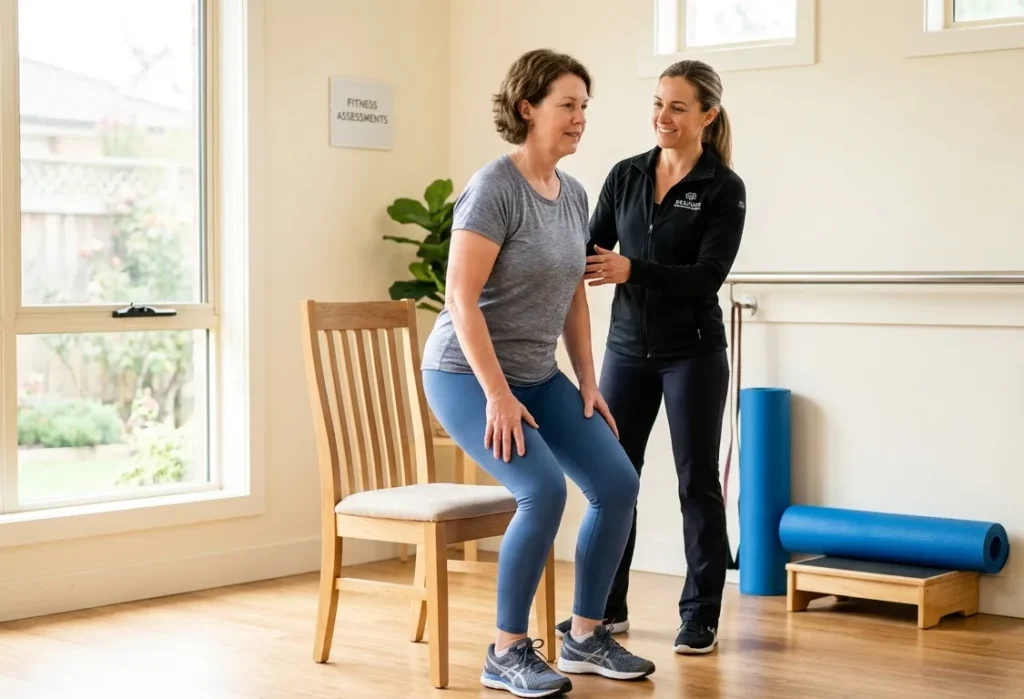
Chair Squats
Chair squats teach proper squatting technique while reducing the fear of losing balance.
How to do it
- Stand in front of a sturdy chair.
- Push your hips back slowly.
- Sit lightly on the chair.
- Stand back up using your legs.
Muscles worked
- Quadriceps
- Glutes
- Hamstrings
Beginner goal
2 sets of 8–12 repetitions
Wall Push-Ups
Wall push-ups are easier than traditional push-ups and help build upper-body strength.
How to do it
- Stand facing a wall.
- Place your hands slightly wider than shoulder width.
- Bend your elbows slowly.
- Push back to the starting position.
Muscles worked
- Chest
- Shoulders
- Triceps
Beginner goal
2 sets of 8–12 repetitions
Standing Knee Raises
This exercise improves balance while strengthening your core.
How to do it
- Stand tall.
- Lift one knee toward your chest.
- Lower it slowly.
- Repeat with the other leg.
Muscles worked
- Core
- Hip flexors
- Legs
Beginner goal
10–15 repetitions per leg
Glute Bridge
The glute bridge strengthens the muscles that support your hips and lower back.
How to do it
- Lie on your back.
- Bend your knees.
- Place your feet flat on the floor.
- Lift your hips slowly.
- Lower with control.
Muscles worked
- Glutes
- Hamstrings
- Core
Beginner goal
2 sets of 10–15 repetitions
Bird Dog
Bird Dog improves balance, posture, and core stability.
How to do it
- Begin on your hands and knees.
- Extend one arm and the opposite leg.
- Hold briefly.
- Return slowly.
- Switch sides.
Muscles worked
- Core
- Lower back
- Glutes
- Shoulders
Beginner goal
8–10 repetitions per side
Example 20-Minute Beginner Home Workout
If you are unsure how to combine exercises, this simple routine is a good place to start.
| Exercise | Time |
|---|---|
| Warm-up March | 3 minutes |
| Chair Squats | 10 repetitions |
| Wall Push-Ups | 10 repetitions |
| Standing Knee Raises | 10 each side |
| Glute Bridge | 12 repetitions |
| Bird Dog | 8 each side |
| Gentle Walking | 3 minutes |
| Stretching | 3 minutes |
Move at a comfortable pace and rest whenever necessary.
Low Impact Exercise for Weight Loss
Many beginners believe that only intense workouts burn fat. This idea often causes people to skip exercise because they think they cannot keep up with demanding routines.
The truth is that weight management depends on consistent movement, healthy eating habits, adequate sleep, and overall lifestyle. Low-impact exercise supports this process by helping you stay active without placing unnecessary stress on your joints.
Instead of asking,
“Which exercise burns the most calories?”
Ask,
“Which exercise can I continue doing every week?”
Long-term consistency usually has a greater impact than short bursts of extreme effort.
How Low-Impact Exercise Supports Weight Management
Low-impact workouts help by:
- Increasing daily movement.
- Improving cardiovascular fitness.
- Supporting muscle maintenance.
- Encouraging an active lifestyle.
- Making regular exercise easier to maintain.
As your fitness improves, you may naturally exercise for longer periods or increase the challenge, which can contribute to higher overall energy expenditure.
Walking for Weight Loss
Walking remains one of the most practical exercises for beginners.
To increase the challenge gradually:
- Walk slightly faster.
- Choose routes with gentle hills.
- Add a few extra minutes each week.
- Walk more frequently throughout the week.
Even several shorter walks during the day can contribute to your overall activity level.
Cycling for Weight Loss
Cycling allows you to exercise for longer periods with less joint impact.
Try maintaining a steady pace before increasing resistance or speed.
Consistency is more important than intensity during the early stages of your fitness journey.
Low-Impact HIIT for Weight Loss
Low-impact HIIT combines periods of moderate effort with planned recovery.
A beginner session may include:
- 30 seconds marching in place
- 30 seconds rest
- 30 seconds bodyweight squats
- 30 seconds rest
- 30 seconds shadow boxing
- 30 seconds rest
Repeat the circuit several times based on your fitness level.
Remember that proper movement is always more important than moving quickly.
Build Healthy Habits Beyond Exercise
Exercise works best when it becomes part of a healthy lifestyle.
Support your workouts by:
- Eating balanced meals.
- Drinking enough water.
- Sleeping 7–9 hours each night.
- Managing daily stress.
- Staying active throughout the day.
These habits work together to support overall health and long-term weight management.
The Best Low-Impact Workouts
Individual exercises are helpful, but combining them into complete workouts makes it easier to build a consistent routine.
The following beginner-friendly workouts can be adjusted based on your fitness level.
Beginner Full-Body Routine
Complete the following exercises in order.
| Exercise | Repetitions |
|---|---|
| Chair Squats | 10 |
| Wall Push-Ups | 10 |
| Standing Knee Raises | 10 each side |
| Glute Bridge | 12 |
| Bird Dog | 8 each side |
| Walking | 10–15 minutes |
Rest for 30–60 seconds between exercises if needed.
Perform the circuit once or twice depending on your current fitness level.
Cardio-Focused Routine
Choose one activity:
- Brisk Walking
- Cycling
- Swimming
Exercise for:
20–30 minutes
Finish with:
- Gentle stretching
- Deep breathing
This workout supports cardiovascular health while remaining beginner-friendly.
Mobility and Recovery Routine
This lighter session helps improve flexibility and reduce stiffness.
Include:
- Shoulder rolls
- Hip circles
- Cat-Cow stretch
- Child’s Pose
- Standing hamstring stretch
- Chest stretch
- Deep breathing
Spend about 20 minutes moving slowly and comfortably.
This routine works well on recovery days.
Beginner Strength Routine
Strength training is an important part of a balanced fitness plan.
Perform:
- Chair Squats
- Wall Push-Ups
- Glute Bridge
- Resistance Band Row (if available)
- Standing Calf Raises
Complete:
2 sets of 8–12 repetitions
Focus on slow, controlled movement.
Walking Plus Strength Workout
This combination works well for beginners who want both cardiovascular exercise and muscle strengthening.
Example:
- 15-minute walk
- Chair Squats
- Wall Push-Ups
- Standing Knee Raises
- Stretching
The walking portion increases your heart rate, while the strength exercises help improve muscle function and everyday movement.
Here Are a Few More Low-Impact Workouts to Consider
As your confidence grows, you can explore different styles of exercise to keep your routine interesting.
Some beginner-friendly options include:
- Water aerobics
- Beginner yoga classes
- Beginner Pilates sessions
- Dance fitness with low-impact modifications
- Elliptical training
- Indoor cycling
- Resistance band circuits
- Walking groups
- Nature hikes on easy trails
- Chair exercise classes
Trying different activities helps prevent boredom and allows you to discover what you enjoy most.
How to Choose the Right Workout
Not every workout suits every beginner. Your goals should guide your choice.
| Your Goal | Recommended Workout |
|---|---|
| Build a daily habit | Walking Routine |
| Improve overall fitness | Beginner Full-Body Routine |
| Increase strength | Beginner Strength Routine |
| Improve flexibility | Mobility and Recovery Routine |
| Exercise at home | Walking Plus Strength Workout |
| Manage weight | Cardio-Focused Routine combined with strength sessions |
The best routine is the one you can perform consistently while maintaining good technique and enjoying the process.
How Can I Get Started?
Beginning a fitness routine does not require perfect timing or advanced equipment. The most important step is simply getting started. Focus on building one healthy habit at a time instead of trying to change everything at once.
A realistic plan gives you a better chance of staying consistent. Even short workouts completed regularly are more valuable than long workouts you cannot maintain.
Step 1: Choose One Activity You Enjoy
Start with an activity that feels comfortable.
For example:
- Walking
- Cycling
- Swimming
- Yoga
- Pilates
- Beginner bodyweight exercises
When you enjoy the activity, it becomes easier to stay motivated.
Step 2: Set a Realistic Weekly Goal
Many beginners expect fast results and lose motivation when progress feels slow.
Instead of exercising every day, begin with a schedule you can maintain.
Example Weekly Plan
| Day | Activity |
|---|---|
| Monday | 20-minute walk + stretching |
| Tuesday | Beginner strength workout |
| Wednesday | Recovery walk or yoga |
| Thursday | Low-impact cardio workout |
| Friday | Beginner strength workout |
| Saturday | Walking or cycling |
| Sunday | Mobility and stretching |
This schedule provides a balance of movement, recovery, and strength training.
Step 3: Focus on Proper Form
Learning correct movement patterns is more important than completing many repetitions.
Move slowly.
Control every exercise.
Stop if you cannot maintain good posture.
Good technique helps you:
- Reduce injury risk
- Improve muscle activation
- Build confidence
- Progress safely
Step 4: Progress Gradually
Your body needs time to adapt.
Instead of making large changes every week, increase only one training variable.
For example:
Week 1
- Walk 15 minutes
Week 2
- Walk 20 minutes
Week 3
- Add one strength exercise
Week 4
- Increase repetitions slightly
Small improvements become significant over time.
Step 5: Track More Than Your Weight
The scale tells only one part of your progress.
Pay attention to other improvements, such as:
- Walking farther without stopping
- Better balance
- Improved posture
- Increased strength
- Better sleep
- Higher energy
- Reduced stiffness
- Greater confidence
These positive changes often appear before major weight changes.
Step 6: Stay Consistent
Missing one workout does not mean you have failed.
Fitness is built through repeated effort over weeks and months.
If you miss a session, simply continue with your next scheduled workout.
Progress comes from consistency, not perfection.
Impacting Your Health, Not Your Joints!
Beginning a fitness journey can feel challenging, but it does not have to be overwhelming. Low-impact exercises give beginners a safe and practical way to improve strength, cardiovascular fitness, mobility, and confidence without placing unnecessary stress on their joints. The most important goal is not to perform the hardest workout—it is to create a routine you can continue for months and years. Start with movements that match your current ability, progress gradually, and celebrate every improvement along the way. Over time, these small, consistent efforts can lead to meaningful improvements in your overall health and quality of life.
Conclusion
Low-impact exercises are an excellent way for beginners to build strength, improve fitness, and stay active without placing unnecessary stress on their joints. Whether you choose walking, cycling, swimming, yoga, or simple bodyweight exercises, the key is to start at a comfortable pace and stay consistent. Focus on gradual progress instead of perfection, and make movement a regular part of your routine. Over time, these small, steady efforts can improve your health, boost your confidence, and help you create lasting fitness habits.
