Starting a fitness journey sounds exciting at first, but for many beginners, it quickly becomes confusing and overwhelming. One of the biggest questions people ask is: how many days a week should a beginner workout? Some people worry they are not exercising enough, while others push themselves too hard because they want fast results. Social media often makes this even more stressful. Beginners constantly see advanced workout routines, daily gym sessions, and unrealistic fitness transformations that create pressure to work out every day.
From practical fitness experience and beginner workout patterns, many people fail not because they are lazy, but because they try to do too much too soon. It is common for beginners to start with intense workout plans, feel extremely sore after a few days, and eventually lose motivation completely. In reality, beginners do not need exhausting daily workouts to become healthier and stronger. The people who achieve the best long-term fitness results are usually the ones who start with a simple and sustainable workout routine they can consistently follow without burnout.
Quick Beginner Workout Takeaways
| Goal | Recommended Workout Days |
|---|---|
| General fitness | 3 days weekly |
| Weight loss | 3–5 days weekly |
| Muscle gain | 3–4 days weekly |
| Busy schedule | 2–3 days weekly |
| Recovery | At least 1–2 rest days |
Key reminder: Beginners do not need daily intense workouts to see progress. Consistency and recovery matter more than perfection.
Quick Answer
Most beginners should work out 3 to 4 days per week. This gives the body enough time for muscle recovery while helping improve strength, fitness, and consistency. Beginners can still see results with 2 to 3 workouts weekly if they stay consistent and focus on proper recovery.
What Is the Ideal Workout Frequency for Beginners?
For most people, working out 3 to 4 days a week is the best starting point.
This gives your body enough time to:
- recover properly
- build strength
- improve fitness
- avoid overtraining
- develop exercise consistency
A beginner workout plan should focus on consistency instead of intensity. You do not need to spend hours in the gym every day.
According to general fitness guidelines, adults should aim for at least 150 minutes of moderate physical activity weekly along with regular strength training sessions.
If you are just starting, even 2 to 3 workout days per week can help you see noticeable progress.
Why 3 Days a Week Works Best for Most Beginners
A 3-day workout schedule is often the sweet spot for beginners.
It allows your muscles enough time for muscle recovery between sessions. Recovery is important because your body gets stronger during rest, not only during workouts.
Working out three days a week can help beginners:
- build muscle
- improve endurance
- lose weight
- create healthy habits
- stay motivated
It is also easier to maintain long term.
Many beginners see better long-term results from 3 consistent workouts weekly than from intense 6-day workout routines they cannot maintain.
Starting with fewer workout days often helps beginners stay consistent longer.
Why Most Beginners Quit Working Out
Many beginners quit fitness routines because they start too aggressively. They follow advanced workout plans, train every day, and expect fast results. After a few weeks, soreness, fatigue, and frustration begin to build.
Social media often creates unrealistic expectations about fitness progress. Beginners may feel pressure to work out every day or follow complicated workout splits that are designed for advanced athletes.
A simple beginner workout plan is usually more effective long term. Starting with realistic workout frequency helps build confidence, consistency, and sustainable habits.
Can Beginners Work Out Every Day?
Yes, beginners can work out every day, but it depends on the type of exercise.
Doing intense resistance training daily is not recommended for most beginners. Your muscles need recovery time to repair and grow.
However, light daily movement is a great idea. This is called active recovery.
Examples of active recovery include:
- walking
- stretching
- yoga
- mobility exercises
- light cardio
The goal is to stay active without overloading your body.
If you want to train every day, try mixing harder workout days with easier recovery days.

The Best Workout Frequency Based on Your Goal
Different fitness goals require different workout schedules.
| Goal | Recommended Workout Days |
|---|---|
| General fitness | 3 days per week |
| Weight loss | 3 to 5 days per week |
| Muscle gain | 3 to 4 days per week |
| Home workouts | 2 to 4 days per week |
| Busy schedule | 2 to 3 days per week |
| Active lifestyle | 4 to 5 days per week |
The best workout routine is the one you can follow consistently.
What If You Only Have Time to Workout 2 Days a Week?
Even two workouts per week can improve strength, energy, and overall health for beginners.
While progress may be slightly slower compared to 3 or 4 weekly workouts, consistency still matters more than perfection.
Busy adults and parents often believe short workout schedules are not effective. In reality, a realistic routine that fits your lifestyle is much easier to maintain long term.
Small progress is still progress.
What Should a Beginner Workout Week Look Like?
A balanced weekly workout routine should include:
- strength training
- cardio exercise
- mobility work
- recovery days
This schedule gives beginners enough exercise without causing burnout.
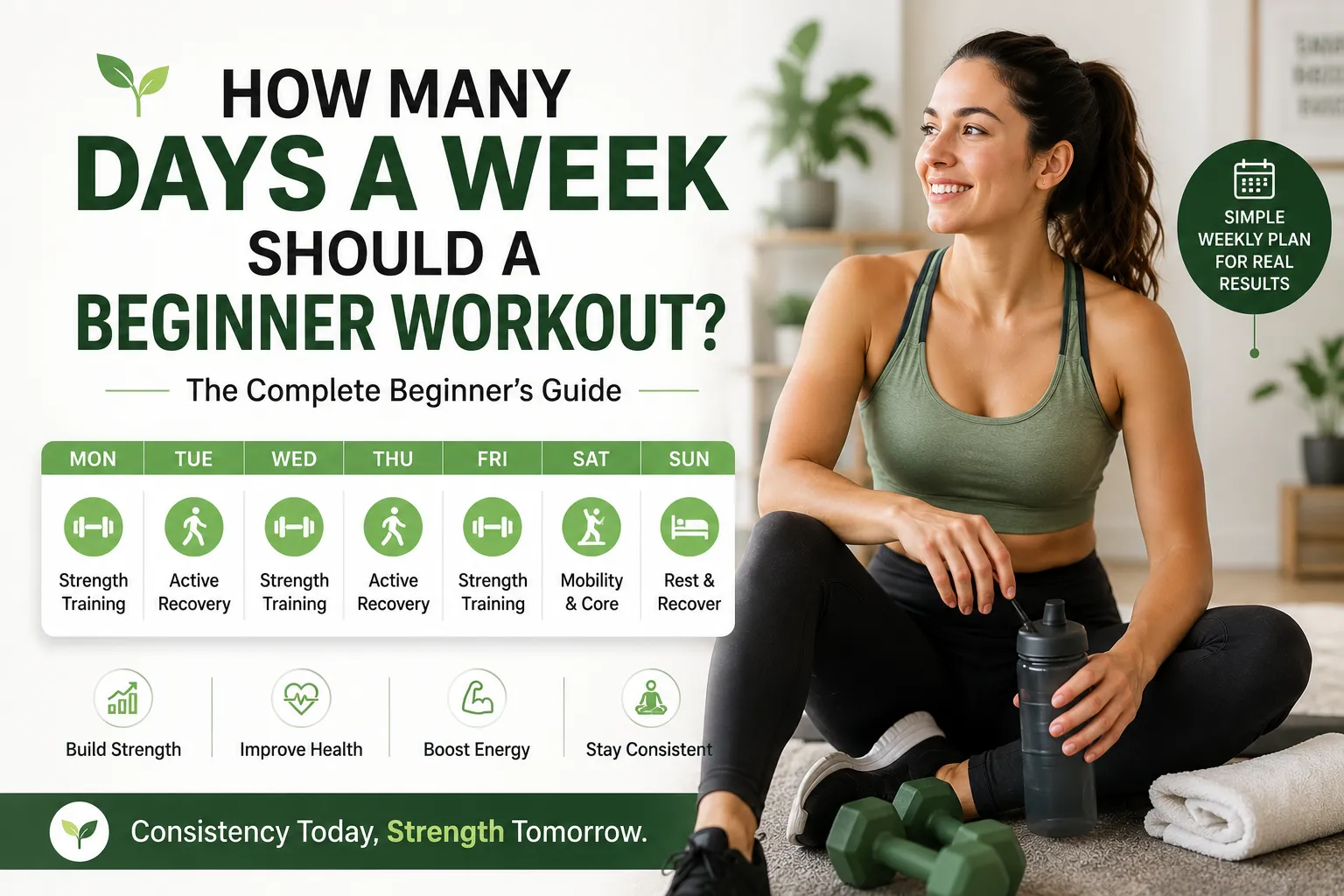
Beginner Weekly Workout Schedule
| Day | Workout Focus |
|---|---|
| Monday | Full-body strength training |
| Tuesday | Walking or light cardio |
| Wednesday | Full-body workout |
| Thursday | Rest or stretching |
| Friday | Strength training |
| Saturday | Light cardio or mobility |
| Sunday | Rest day |
Resistance Training for Beginners
Strength training is one of the best forms of exercise for beginners.
It helps:
- build muscle
- increase metabolism
- improve posture
- support fat loss
- strengthen bones
Beginners should focus on simple exercises like:
- squats
- push-ups
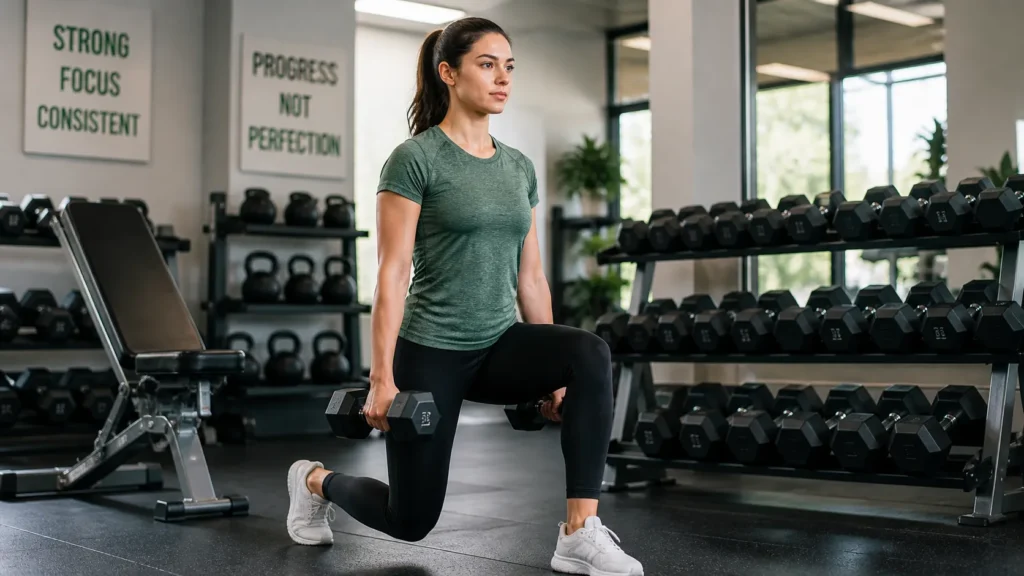
- lunges
- dumbbell rows
- shoulder presses
Full-body workouts are usually better than advanced workout splits for beginners.
Cardiovascular Conditioning
Cardio exercises improve heart health and endurance.
Good beginner cardio options include:
- walking
- cycling
- jogging
- swimming
- jump rope
You do not need hours of cardio every day.
Even 20 to 30 minutes of moderate cardio a few times a week can improve your fitness level.
What Happens During Recovery?
Recovery is an important part of every beginner workout routine.
During exercise, your muscles develop small microscopic tears. Your body repairs these tears during recovery periods. This process helps muscles become stronger over time.
Recovery also helps:
- reduce fatigue
- improve workout performance
- support muscle growth
- lower injury risk
- restore energy levels
Your nervous system also needs time to recover after intense workouts. Without proper recovery, beginners may feel tired, weak, or unmotivated.
Sleep plays a major role in fitness adaptation and muscle recovery. Poor sleep can slow progress and reduce exercise performance.
Recovery days are not wasted days. They are part of the muscle-building and fitness adaptation process.
Why Rest Days Matter for Beginners
Many beginners ignore recovery. This is a mistake.
Rest days help your muscles recover after workouts. They also reduce fatigue and lower injury risk.
Without proper recovery, your body may feel:
- sore
- tired
- weak
- unmotivated
Rest days are part of a successful fitness routine.
Mild Soreness vs Injury Pain
Mild soreness after workouts is normal for beginners. This is often called delayed onset muscle soreness (DOMS).
You may feel:
- muscle tightness
- slight soreness
- temporary stiffness
These symptoms usually improve within a few days.
However, sharp pain or joint pain is not normal. Beginners should stop exercising and rest if they experience:
- sudden pain
- swelling
- severe discomfort
- joint instability
Learning the difference between soreness and injury can help beginners train safely.
Normal Fatigue vs Overtraining Symptoms
| Normal Beginner Soreness | Signs of Overtraining |
|---|---|
| Mild muscle soreness | Constant exhaustion |
| Slight stiffness | Poor sleep |
| Temporary fatigue | Joint pain |
| Improves after recovery | Declining performance |
| Lasts 1–3 days | Constant soreness |
How Many Days Should Overweight Beginners Exercise?
Overweight beginners should usually start with 2 to 3 workout days per week.
The main goal should be building consistency without overwhelming the body. Low-impact exercises are often the best starting point.
Good beginner-friendly options include:
- walking
- cycling
- swimming
- bodyweight exercises
- light strength training
Beginners trying to lose weight do not need exhausting daily workouts. Simple movement done consistently can still produce meaningful progress over time.
As fitness improves, workout frequency can slowly increase.
How Often Should Skinny Beginners Workout?
Skinny beginners who want to build muscle should aim for 3 to 4 strength training sessions weekly.
Resistance training combined with proper nutrition can help support muscle growth.
Skinny beginners should focus on:
- full-body workouts
- progressive overload
- protein intake
- recovery
- exercise consistency
Training every day is usually unnecessary for muscle gain.
Workout Frequency for Beginners Over 40
Beginners over 40 can still build strength and improve fitness successfully.
However, recovery often becomes more important with age.
For most adults over 40:
- 3 workout days per week is a good starting point
- strength training should be prioritized
- mobility and flexibility work should be included
- rest days should not be ignored
A balanced routine can improve:
- muscle strength
- joint health
- energy levels
- overall health
It is never too late to begin exercising. Many adults improve strength, balance, and energy levels even when starting fitness later in life.
What Weights Should Beginners Use?
Beginners should start with lighter weights.
Choose a weight that feels challenging but still allows proper form.
A good rule is:
- the last few reps should feel difficult
- you should still control the movement safely
Using heavy weights too early can increase injury risk.
How Fast Should Beginners Increase Weight?
Beginners should increase weight slowly.
This is called progressive overload.
You can:
- add small amounts of weight
- increase repetitions
- improve workout intensity gradually
Small improvements each week lead to long-term results.
There is no need to rush.
Signs of Overtraining Symptoms
Training too much without enough recovery can lead to overtraining symptoms.
Common signs include:
- constant fatigue
- poor sleep
- mood changes
- declining workout performance
- loss of motivation
- constant muscle soreness
- joint discomfort
Many beginners believe more workouts always lead to faster results. In reality, consistent training with proper recovery often produces better long-term progress.
Active recovery days can help reduce fatigue while keeping the body moving. Simple activities like walking, stretching, or yoga are good options for recovery days.

Common Beginner Workout Mistakes
Many beginners make the same fitness mistakes.
Here are the most common ones:
Training Too Much
More workouts do not always mean better results.
Trying to do too much too early is one of the main reasons beginners quit fitness routines.
Skipping Recovery
Rest days are important for muscle growth and recovery.
Following Advanced Workout Plans
Complicated workout splits are not necessary for beginners.
Ignoring Proper Form
Bad form can lead to injuries.
Expecting Fast Results
Fitness progress takes time and consistency.
Beginner Fitness Priorities
- Consistency
- Proper recovery
- Full-body workouts
- Progressive overload
- Sustainable habits
- Extreme workout plans
- Daily intense workouts
- Unrealistic expectations
Why Exercise Consistency Matters More Than Perfection
Many beginners focus too much on perfect workout schedules. The real key to fitness success is exercise consistency.
A simple workout routine followed for months is more effective than an extreme routine followed for only two weeks.
Missing one workout does not ruin progress. Long-term fitness results come from consistent habits over time, not perfect schedules.
Fitness progress takes time. Building sustainable habits is more important than trying to do everything perfectly from the start.
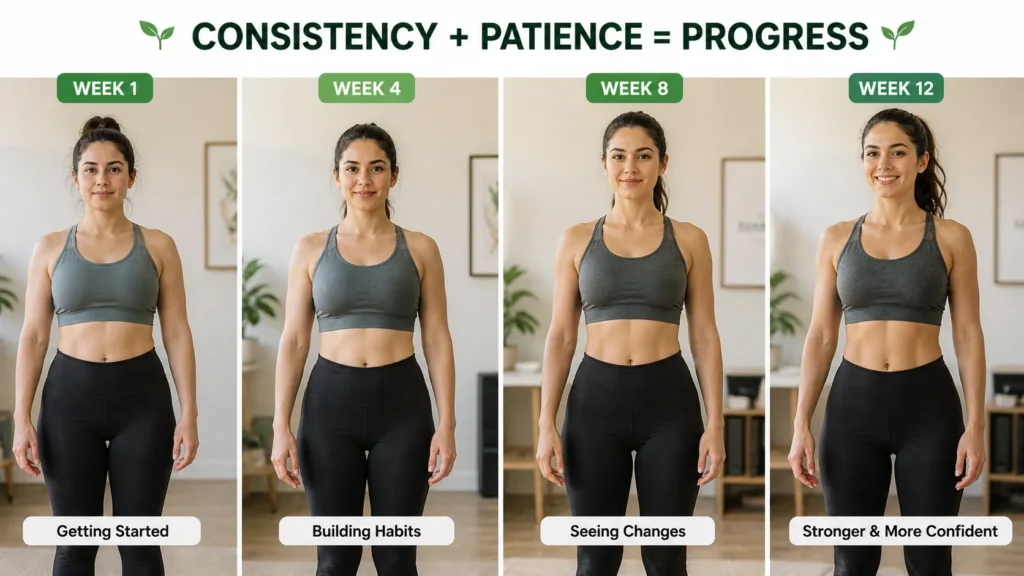
Beginner Fitness Progress Timeline
| Time Period | What Beginners Usually Notice |
|---|---|
| 1–2 weeks | Improved energy levels |
| 3–4 weeks | Better consistency |
| 4–6 weeks | Improved strength and stamina |
| 8–12 weeks | Visible fitness progress |
Reminder: Fitness progress takes time. Consistency matters more than quick results.
How to Stay Consistent With Your Workout Routine
Consistency matters more than perfection.
Here are simple ways to stay motivated:
- start with realistic goals
- schedule workouts in advance
- track your progress
- keep workouts simple
- focus on habits instead of perfection
Fitness is a long-term journey.
Small progress still counts.
Conclusion
So, how many days a week should a beginner workout? For most people, 3 to 4 workout days per week is the ideal starting point. This gives the body enough time to recover while helping improve strength, fitness, and overall health. Beginners can still make great progress with fewer workout days as long as they stay consistent and focus on proper recovery.
One of the biggest mistakes beginners make is believing they need perfect workout schedules or intense daily training to see results. In reality, sustainable fitness is built through consistency, patience, and gradual progress. Many beginners who start with realistic workout routines often stay motivated longer and achieve better long-term results than people who follow extreme workout plans they cannot maintain.
Fitness should improve your life, not leave you feeling exhausted or discouraged. A beginner workout routine should feel realistic, manageable, and sustainable. Start small, focus on building healthy habits, and give your body enough time to recover. That balanced approach is what helps beginners stay consistent and continue making progress over time.