

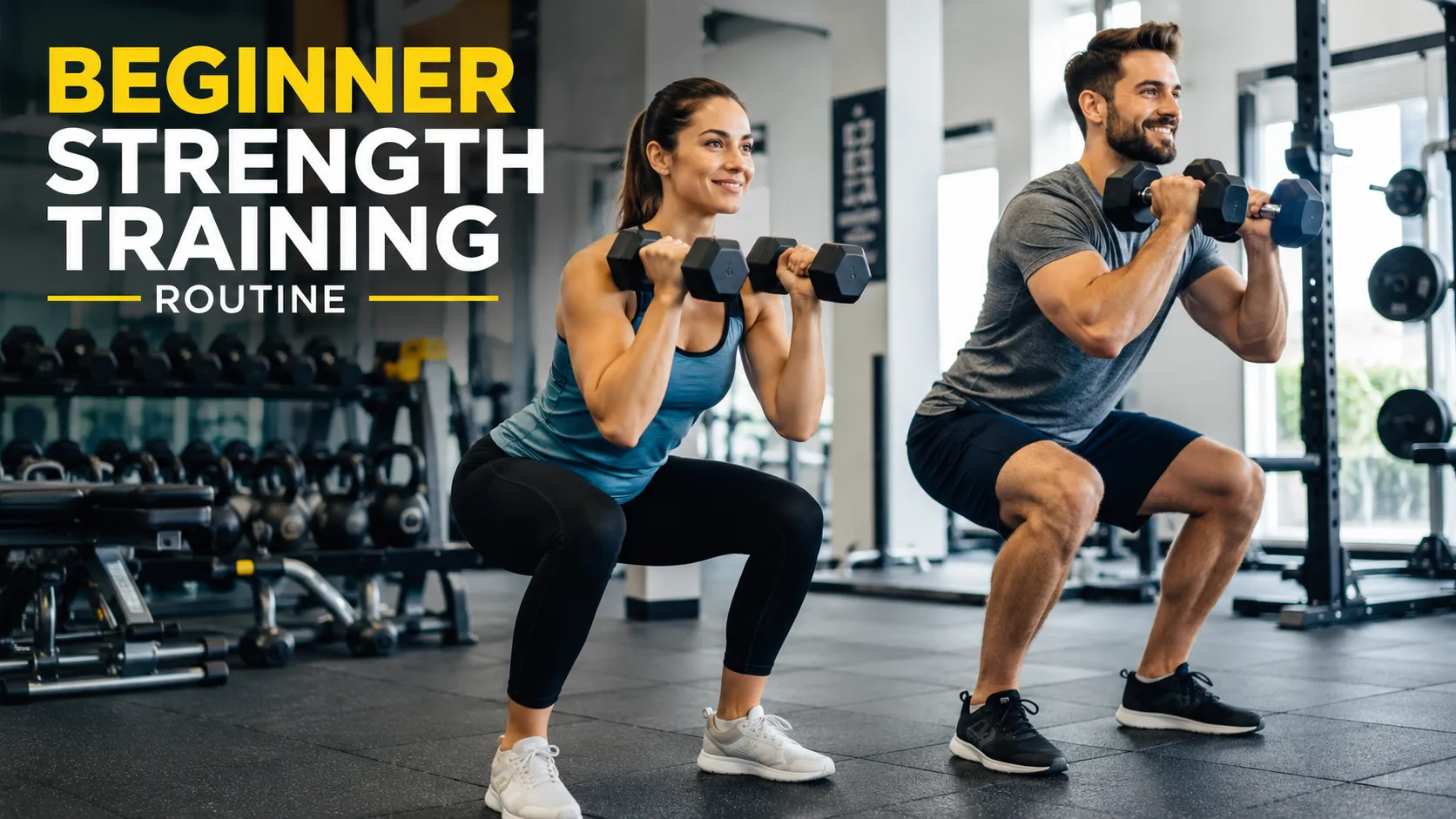
Starting a beginner strength training routine can feel overwhelming when you do not know where to begin. Many beginners feel nervous about lifting weights, using gym equipment incorrectly, or getting injured during workouts. Some people also feel embarrassed because they think they are too weak, overweight, or inexperienced to start strength training. On top of that, social media often makes fitness look complicated and extreme, which can make beginners feel even more confused and discouraged.
I remember feeling the same way when learning the basics of strength training. The biggest mistake many beginners make is thinking they need perfect workouts or heavy weights from day one. In reality, most people build strength slowly by learning simple exercises, improving form, and staying consistent over time. A beginner strength training routine should feel realistic, manageable, and safe. Once you stop chasing perfection and focus on small progress, strength training becomes much easier to enjoy and maintain.
Key Takeaways
- A beginner strength training routine should be simple, safe, and easy to follow.
- Most beginners should train 2 to 3 days per week.
- Start with light resistance and focus on proper form first.
- Full-body workouts are usually best for beginners.
- Rest days help your muscles recover and become stronger.
What Is Strength Training?
Strength training is a type of exercise that helps make your muscles stronger. It uses resistance to challenge your muscles and improve strength over time.
Resistance can come from:
- Dumbbells
- Resistance bands
- Weight machines
- Bodyweight exercises
Strength training is not only for bodybuilders or athletes. It is useful for anyone who wants to improve health, fitness, confidence, posture, and daily movement.
Benefits of Strength Training
A beginner strength training routine may help:
- Build muscle strength
- Improve posture
- Support joint health
- Improve balance
- Support bone health
- Increase confidence
- Improve mental health
- Reduce injury risk
Many beginners also notice better energy levels and improved sleep after starting strength exercises regularly.
Can Beginners Do Strength Training?
Yes. Strength training is safe for most beginners when done correctly.
You do not need heavy weights or advanced workouts in the beginning. Start with simple exercises and focus on learning proper form first.
If you have not exercised in a long time, that is completely okay. Many beginners start with basic bodyweight movements or resistance bands before moving to heavier resistance.
If you have injuries or medical conditions, it is best to speak with a healthcare professional before starting a new exercise routine.
Everyone Starts as a Beginner
Many beginners feel embarrassed because they cannot lift heavy weights or perform exercises perfectly. However, every experienced lifter once started with light weights and basic exercises too.
You do not need to compare yourself to people online or in the gym. Most beginners improve by focusing on:
- proper movement
- consistency
- patience
- gradual progress
Small improvements every week can lead to major long-term results.
Beginner Strength Training Tips
Before starting your beginner strength training routine, remember these important tips.
Start With Light Weights
Choose a weight that feels challenging but still allows proper form. The last few reps should feel difficult but not painful.
Focus on Slow and Controlled Movements
Do not rush exercises. Slow and controlled reps help your muscles work properly and may reduce injury risk.
Rest Between Exercises
Take short breaks between sets and exercises. Most beginners need about 30 to 90 seconds of rest.
Do Not Hold Your Breath
Breathe during every exercise.
- Exhale while lifting
- Inhale while lowering
Learn Proper Form First
Good form is more important than lifting heavy weights. Proper movement helps protect your joints and muscles.
How Heavy Should Beginners Lift?
One of the most common beginner questions is how much weight to use during workouts. Many people either start too heavy or too light.
A simple beginner rule is:
The last few reps should feel challenging, but your form should still stay controlled.
Many beginners think heavier weights automatically produce faster results. However, using manageable resistance with proper form is usually safer and more effective during the early stages of training.
If your form starts breaking, the weight is too heavy. If the exercise feels too easy, you can slowly increase resistance over time.
Feeling Nervous at the Gym Is Normal
Many beginners feel nervous when starting strength training at the gym. This is completely normal.
Some common beginner fears include:
- looking inexperienced
- using equipment incorrectly
- lifting small weights
- being judged by others
However, most people in the gym are focused on their own workouts. Everyone starts somewhere.
If the gym environment feels uncomfortable, you can start with home workouts first. Many beginners build confidence at home before moving into a gym setting.
Beginner Strength Training Warm-Up
A warm-up helps prepare your body for exercise and may reduce injury risk.
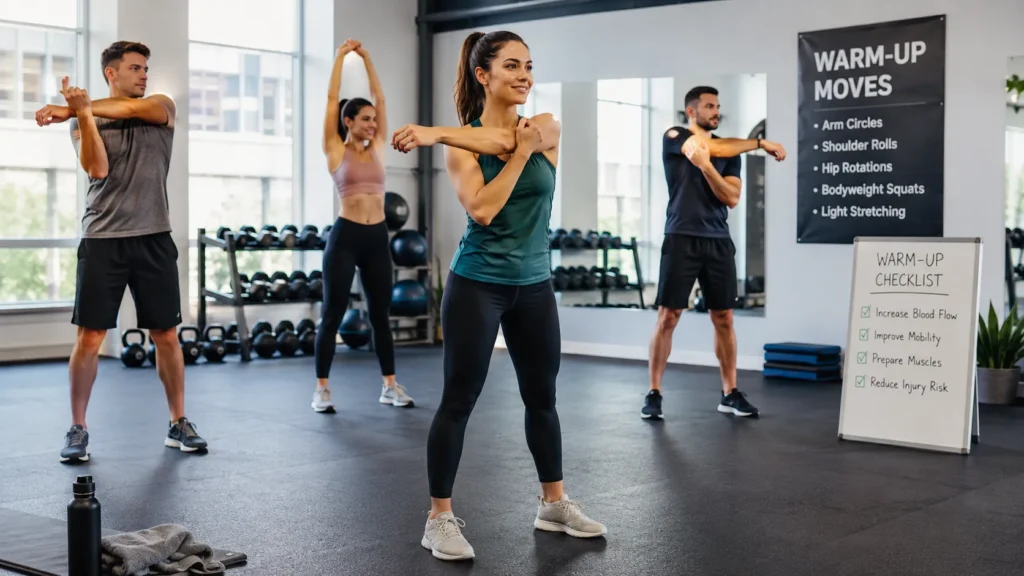
Try this simple 5-minute warm-up before workouts:
- March in place for 1 minute
- Arm circles for 30 seconds
- Shoulder rolls for 30 seconds
- Bodyweight squats for 10 reps
- Hip rotations for 30 seconds
- Light stretching for 1 minute
Beginner Strength Training Routine
This full-body beginner strength training routine is simple and beginner-friendly. You can do it at home or in the gym.
Weekly Schedule
This schedule gives your body enough recovery time between workouts.
Beginner Weekly Strength Training Schedule
| Day | Plan |
|---|---|
| Monday | Full-body strength workout |
| Tuesday | Rest or light walking |
| Wednesday | Full-body strength workout |
| Thursday | Rest or mobility work |
| Friday | Full-body strength workout |
| Saturday | Light activity |
| Sunday | Rest |
Beginner Workout Duration
Many beginners think workouts must be long to be effective. However, most beginner strength training sessions only need about 30 to 45 minutes.
Short and consistent workouts are usually easier to maintain than long and exhausting routines.
Full-Body Beginner Strength Workout
Do this routine 2 to 3 times per week.
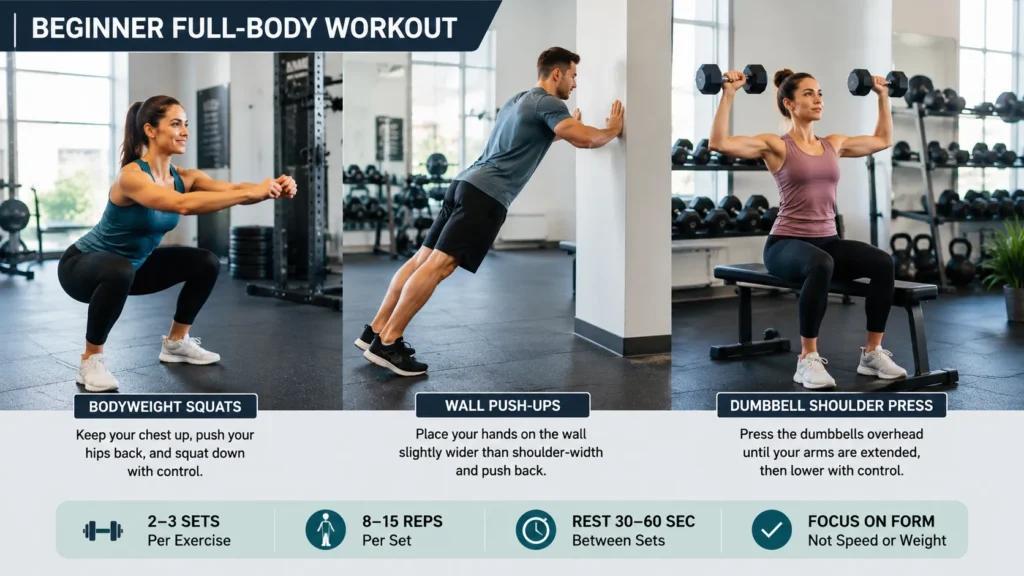
| Exercise | Sets | Reps |
|---|---|---|
| Bodyweight Squats | 2–3 | 10–12 |
| Wall Push-Ups | 2–3 | 8–12 |
| Glute Bridges | 2–3 | 10–15 |
| Resistance Band Rows | 2–3 | 10–12 |
| Dumbbell Shoulder Press | 2 | 8–10 |
| Step-Ups | 2 | 10 each leg |
| Dead Bug | 2 | 10 each side |
Focus on controlled movement and proper form instead of speed.
Strength and Flexibility
Strength training may also improve flexibility and movement quality.
As your muscles become stronger, daily activities like climbing stairs, carrying groceries, and standing for longer periods may start feeling easier.
Stretching after workouts may also help improve flexibility over time.
Improve Balance
Strength training may improve balance and stability. This can help support coordination and body control.
Exercises like:
- step-ups
- glute bridges
- squats
- dead bugs
can improve movement and stability over time.
Reduce Joint Pain
Strong muscles help support your joints better. This may reduce stress on areas like the knees, hips, and shoulders.
Low-impact strength exercises are often easier on the joints compared to high-impact workouts.
If you feel sharp pain during exercise, stop immediately and check your form.
Mental Health Benefits
Strength training does not only help physical health. It may also improve mental well-being.
Many beginners notice:
- better mood
- lower stress
- improved focus
- increased confidence
Exercise may also help improve sleep quality and reduce feelings of anxiety.
Bone Health
Strength training may help support bone health over time.
Resistance exercises place healthy stress on bones, which may help support bone density as you become more active.
Simple exercises like squats, step-ups, and resistance band workouts may help improve overall strength and movement.
Why Many Beginners Stop Strength Training Too Early
Many beginners quit strength training because they expect fast results. Others stop because soreness, low motivation, or slow progress makes them feel discouraged.
Common reasons beginners stop include:
- expecting instant muscle growth
- comparing themselves to advanced lifters
- trying workouts that feel too difficult
- skipping recovery days
- trying to be perfect
Strength training works best when treated as a long-term habit. Small progress every week matters more than extreme workouts.
How Often Should Beginners Strength Train?
Most beginners should strength train:
- 2 to 3 days per week
This gives your body enough time to recover between sessions.
Training every day is not necessary for beginners. Recovery is an important part of building strength.
Why Rest Days Matter
Rest days are an important part of any beginner strength training routine.
During recovery, muscles repair and become stronger. Training too often without enough recovery may increase fatigue and injury risk.
Rest days can include:
- walking
- stretching
- mobility exercises
Recovery helps prepare your body for future workouts.
Progressive Overload for Beginners
Progressive overload means slowly increasing workout difficulty over time.
This helps muscles continue becoming stronger.
You can progress by:
- adding more reps
- adding more weight
- improving form
- increasing movement control
Simple Example
| Week | Goal |
|---|---|
| Week 1 | Learn exercises |
| Week 2 | Improve form |
| Week 3 | Add reps |
| Week 4 | Add light weight |
Small progress is still meaningful progress.
Simple Beginner Progression Chart
| Week | Main Goal |
|---|---|
| Week 1 | Learn each exercise slowly |
| Week 2 | Improve form and control |
| Week 3 | Add 1 to 2 reps if form stays good |
| Week 4 | Add light resistance if ready |
Can Beginners Use Resistance Bands?
Yes. Resistance bands are excellent for beginners.
Resistance bands are:
- affordable
- beginner-friendly
- easy to use at home
- lighter on the joints
- useful for learning proper form
Many beginners start with resistance bands before moving to heavier weights.
What Beginners Should Expect
Many beginners expect fast results, but real progress takes time.
Week 1–2
- mild soreness
- learning exercises
- improved energy
Week 3–4
- better coordination
- increased confidence
- improved strength
Month 2–3
- noticeable strength improvements
- better endurance
- improved body composition
Many beginners also notice daily activities becoming easier during the first few weeks.
Consistency matters more than perfection.
What Beginners Should NOT Expect
It is important to have realistic expectations when starting strength training.
Beginners should not expect:
- instant muscle growth
- perfect workouts every day
- rapid body transformations
- nonstop motivation
Progress takes patience and consistency.
Some workouts will feel easier than others. Missing a workout occasionally is normal. Long-term consistency matters far more than short-term perfection.
Home vs Gym Strength Training
Both home and gym workouts can work well for beginners.

| Home Workouts | Gym Workouts |
|---|---|
| Comfortable environment | More equipment |
| Lower cost | Easier weight progression |
| Beginner-friendly | More exercise variety |
| Flexible schedule | Professional environment |
Home workouts may also feel less intimidating for beginners who feel nervous in crowded gym environments.
Home vs Gym Strength Training
| Home Workouts | Gym Workouts |
|---|---|
| More private and comfortable | More equipment options |
| Good for nervous beginners | Easier to increase weight |
| Lower cost | More exercise variety |
| Flexible schedule | Better for long-term progression |
Common Beginner Strength Training Mistakes
Avoid these common beginner mistakes:
- lifting too heavy too soon
- skipping warm-ups
- poor exercise form
- training every day
- ignoring recovery
- expecting results too quickly
- comparing progress with others
- skipping sleep and recovery
Start simple and focus on long-term consistency.
Recovery Tips for Beginners
Recovery is an important part of strength training.
Sleep
Aim for 7 to 9 hours of sleep each night.
Nutrition
Eat enough protein, fruits, vegetables, and healthy carbohydrates.
Hydration
Drink enough water throughout the day because dehydration may affect workout performance and recovery.
Rest Days
Rest days help muscles recover and prepare for future workouts.
Beginner Cool-Down Routine
A cool-down helps your body relax after exercise and may reduce muscle tightness.
Try this simple cool-down:
- slow walking for 1 minute
- deep breathing
- shoulder stretches
- hamstring stretches
- gentle quad stretches
- drink water after training
Cool-downs only take a few minutes but may support recovery.
Conclusion
When I first started learning about strength training, one of the biggest lessons I discovered was that progress rarely happens quickly in the beginning. Many beginners become frustrated because they expect dramatic results after only a few workouts. However, real strength is usually built through small improvements repeated consistently over time. Learning proper form, staying patient, and building confidence slowly often matters more than lifting heavy weights early on.
A beginner strength training routine should feel manageable, safe, and sustainable. You do not need perfect workouts, expensive gym memberships, or advanced exercises to start getting stronger. In my experience, beginners who focus on consistency, recovery, and realistic expectations usually stay motivated much longer than those chasing fast results. Even simple workouts done regularly can improve strength, confidence, balance, posture, and overall health over time.
The most important thing is to start where you are and continue learning gradually. Some weeks will feel easier than others, and progress may sometimes feel slow. That is completely normal. Strength training is a long-term habit, and small improvements every week can eventually create major long-term results.
Beginner Strength Training Safety Checklist
- ✅ Warm up before every workout.
- ✅ Start with light resistance.
- ✅ Keep your movements slow and controlled.
- ✅ Stop if you feel sharp pain.
- ✅ Rest between workout days.
- ✅ Focus on form before adding weight.
- ✅ Stay hydrated before and after training.
