

Many beginners feel confused when they hear the word “cardio.” Some people think cardio only means running for hours or doing exhausting gym workouts. Others feel discouraged because they get tired quickly, struggle with stamina, or believe they are too unfit to start exercising. This confusion often makes beginners avoid fitness completely because they think cardio has to feel painful or extreme to work properly.
From personal experience, one of the biggest mistakes beginners make is believing they need intense workouts from day one. In reality, most people improve their fitness by starting with simple movements like walking, cycling, or light cardio sessions. Cardio does not need to feel overwhelming to be effective. When done consistently, even beginner-friendly cardio exercise can improve heart health, energy levels, stamina, mental health, and overall fitness. This guide will help you understand what cardio is, what it is good for, and how beginners can start safely without fitness confusion.
Key Takeaways
- Cardio is any exercise that raises your heart rate and breathing.
- Walking, cycling, swimming, dancing, and jogging can all count as cardio.
- Cardio is good for heart health, stamina, energy, mood, and weight management.
- Beginners do not need intense workouts to start cardio.
- Starting slowly and staying consistent is more important than exercising hard.
What Is Cardio?
Cardio is short for cardiovascular exercise. It is also called aerobic exercise. Cardio includes any activity that increases your heart rate and breathing for a longer period of time.
When you do cardio, your heart pumps more blood around the body. Your lungs work harder to deliver oxygen to your muscles. This helps improve cardiovascular endurance and overall fitness.
Some common cardio exercises include:
- Walking
- Jogging
- Running
- Cycling
- Swimming
- Jump rope
- Dancing
- Hiking
- Rowing
- Using a treadmill
Cardio can be done at home, outdoors, or in the gym. Beginners do not need expensive equipment to start.
Many beginners think cardio must feel intense to work properly. That is not true. Simple activities like brisk walking or cycling can still improve cardiovascular fitness when done consistently. Starting small is completely normal.

What Is Cardio Exercise?
Cardio exercise is movement that keeps your body active and your heart rate elevated. The goal is to improve how well your heart, lungs, and muscles work together.
During cardio exercise, your body uses oxygen to create energy. This process helps strengthen the cardiovascular system over time.
Many beginners think cardio must feel exhausting to work. That is not true. Even moderate-intensity cardio like brisk walking can provide major health benefits when done regularly.
Why Is Cardio Important?
Cardio is important because it supports many parts of your health. It is not only about burning calories or losing weight.
Regular cardio exercise can help:
- Improve heart health
- Increase stamina
- Strengthen lungs
- Support weight management
- Improve blood circulation
- Boost energy levels
- Reduce stress
- Improve sleep quality
- Support mental health
Cardio also lowers the risk of several health problems such as heart disease, high blood pressure, obesity, and type 2 diabetes.
For beginners, cardio is often one of the easiest ways to become more active without needing advanced fitness knowledge.
What Counts as Cardio?
Any activity that raises your heart rate and keeps you moving can count as cardio.
Good cardio exercises usually involve repeated body movement for several minutes or longer.
Examples include:
- Fast walking
- Stair climbing
- Cycling
- Swimming
- Hiking
- Dancing
- Rowing
- Elliptical training
- Jump rope
- Playing sports
Even daily activities like walking the dog or cleaning the house can increase movement levels, but structured cardio exercise usually provides better fitness results.
How Cardio Works Inside the Body
When you start cardio exercise, your body begins working harder to create energy. Your heart beats faster to pump oxygen-rich blood to your muscles. Your breathing also becomes faster because your body needs more oxygen.
Over time, regular cardio helps your cardiovascular system become stronger and more efficient.
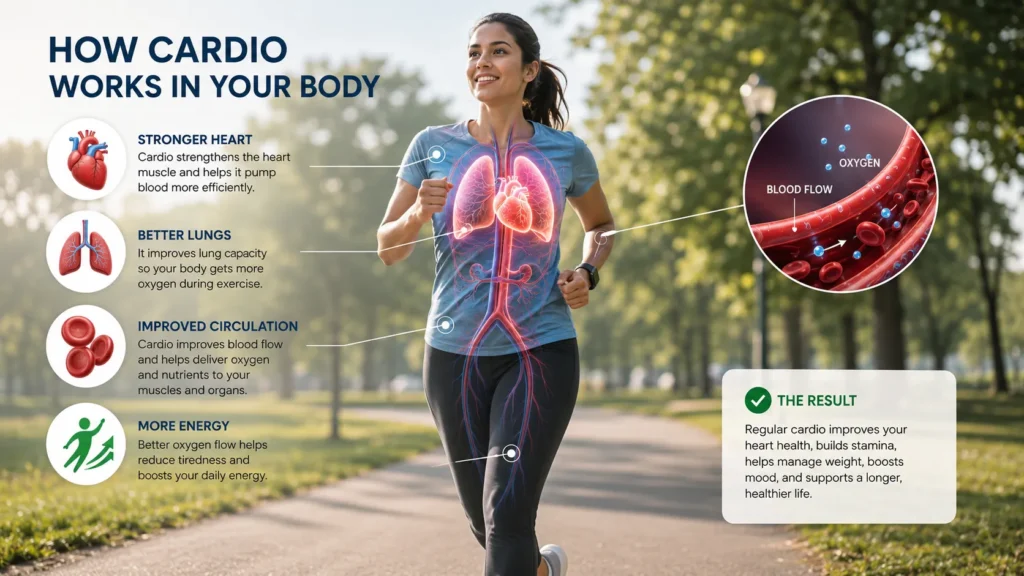
Cardio can help:
- improve blood circulation,
- increase lung capacity,
- improve oxygen delivery,
- strengthen the heart muscle,
- and improve endurance.
Your muscles also learn how to use oxygen better during aerobic exercise. This can improve stamina and reduce fatigue during daily activities.
At first, your body may struggle because your cardiovascular system is not used to regular exercise yet. This is why beginners often feel tired quickly during cardio workouts. As you continue exercising consistently, your body slowly adapts and movement starts feeling easier.
As your cardio fitness improves, your body may:
- recover faster after exercise,
- feel less tired during movement,
- and perform physical activities more easily.
Benefits of Cardio
Cardio offers many physical and mental health benefits. Consistent cardio training can improve how your body feels and functions.
What Are the Benefits of Cardio?
The biggest benefits of cardio include:
- Better heart health
- Increased endurance
- Improved lung function
- Better mood
- Increased calorie burn
- Improved sleep
- Reduced stress
- Better energy levels
- Improved blood circulation
These benefits become stronger when cardio is done consistently over time.
Cardio Benefits at a Glance
| Benefit | How It Helps |
|---|---|
| Heart Health | Helps the heart pump blood more efficiently. |
| Stamina | Makes daily movement feel easier over time. |
| Weight Management | Burns calories and supports fat loss with healthy eating. |
| Mental Health | May reduce stress and improve mood. |
| Energy | Improves oxygen flow and helps reduce fatigue. |
Improves Heart Health
One of the biggest benefits of cardio is improved heart health.
Your heart is a muscle. Like other muscles, it becomes stronger with regular exercise. Cardio helps the heart pump blood more efficiently throughout the body.
This can help lower:
- blood pressure,
- resting heart rate,
- and risk of heart disease.
A stronger cardiovascular system also improves oxygen delivery to your muscles and organs.
Helps With Weight Loss
Cardio can help support weight loss because it burns calories. Activities like walking, cycling, and running increase energy use in the body.
However, beginners should understand that cardio alone is not magic. Healthy eating habits and strength training also play important roles in body composition and fat loss.
Many overweight beginners feel nervous about starting cardio because they think they need difficult workouts. In reality, low-impact cardio like walking or cycling can still provide excellent results while placing less stress on the joints.
Improves Mental Health
Cardio exercise can help improve mental health and emotional well-being.
During exercise, the body releases chemicals called endorphins. These chemicals can improve mood and reduce stress.
Many people notice that regular cardio helps:
- reduce anxiety,
- lower stress levels,
- improve focus,
- improve confidence,
- and support better sleep.
Even a short walk can help clear the mind and improve mood.
Increases Energy Levels
Many beginners feel tired often because they have low cardiovascular endurance.
Regular cardio helps improve stamina and oxygen flow in the body. Over time, this can increase daily energy levels and reduce fatigue.
At first, cardio may feel difficult. But as endurance improves, everyday activities often feel easier.
Different Types of Cardio
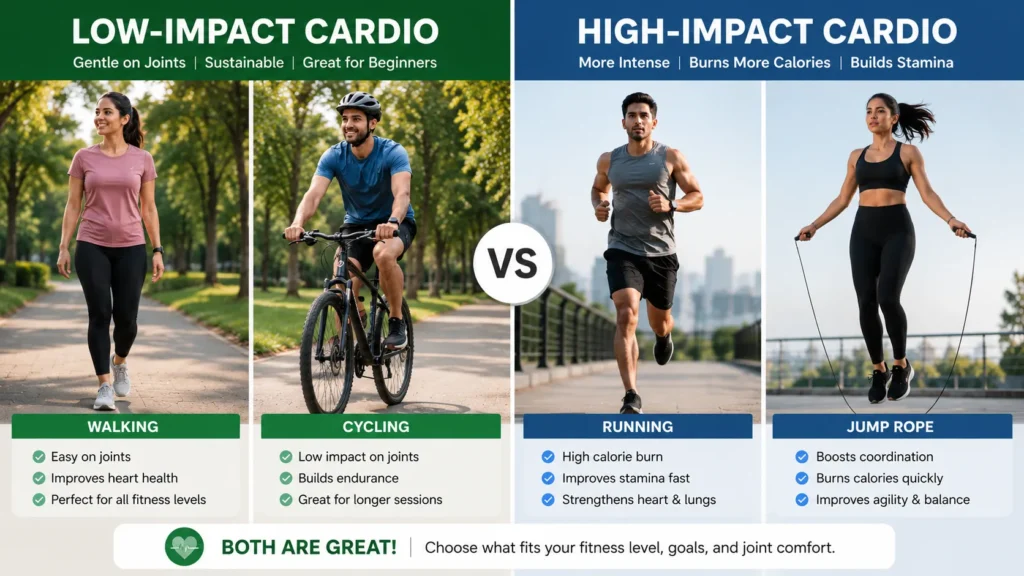
There are several types of cardio exercises. Some are easier on the body, while others are more intense.
Beginners should choose cardio based on their fitness level, goals, and comfort.
Moderate-Intensity Cardio
Moderate-intensity cardio raises your heart rate while still allowing you to speak in short sentences.
Examples include:
- brisk walking,
- light cycling,
- swimming,
- slow jogging,
- and dancing.
This type of cardio is often best for beginners because it is easier to recover from.
Vigorous-Intensity Cardio
Vigorous-intensity cardio pushes the body harder and increases breathing speed more quickly.
Examples include:
- running,
- sprinting,
- fast cycling,
- HIIT workouts,
- and jump rope.
This type of cardio burns more calories quickly but may be too intense for complete beginners.
Low-Impact Cardio Exercises
Low-impact cardio is gentle on the joints. It is a good option for beginners, older adults, or overweight individuals.
Examples include:
- walking,
- swimming,
- cycling,
- elliptical workouts,
- and rowing.
Low-impact cardio can still improve stamina and cardiovascular fitness effectively.
High-Impact Cardio Exercises
High-impact cardio places more stress on the joints because both feet may leave the ground during movement.
Examples include:
- running,
- jumping exercises,
- burpees,
- plyometrics,
- and jump rope.
These exercises can improve fitness quickly but should be introduced slowly.
Examples of Cardio Exercises
Beginners do not need complicated workouts to start cardio training.
| Beginner Cardio Exercise | Difficulty Level | Equipment Needed |
|---|---|---|
| Walking | Easy | No |
| Cycling | Easy to Moderate | Bike |
| Swimming | Moderate | Pool |
| Dancing | Easy | No |
| Jump Rope | Moderate | Jump Rope |
| Treadmill Walking | Easy | Treadmill |
| Hiking | Moderate | No |
The best cardio exercise is the one you can do consistently.
Is Walking Considered Cardio?
Yes. Walking is one of the best forms of beginner cardio exercise.
Brisk walking raises your heart rate, improves blood circulation, and helps strengthen the cardiovascular system. It is also low-impact, making it easier on the knees and joints.
Walking can help:
- improve stamina,
- support fat loss,
- improve heart health,
- and increase daily activity levels.
Many beginners start their fitness journey with simple daily walks before moving to harder cardio workouts.
Cardio vs Strength Training
Many beginners wonder whether cardio or strength training is better.
The truth is that both forms of exercise provide important benefits.
Cardio mainly helps:
- improve heart health,
- increase stamina,
- burn calories,
- and improve endurance.
Strength training mainly helps:
- build muscle,
- improve strength,
- support bone health,
- and improve body composition.
Beginners usually benefit most from combining both cardio exercise and strength training into their routine.
How Much Cardio Exercise Should You Get?
Most health organizations recommend at least:
- 150 minutes of moderate-intensity cardio weekly
or - 75 minutes of vigorous-intensity cardio weekly.
Beginners do not need to start with large amounts.
A simple starting point can be:
- 20 to 30 minutes,
- 3 to 4 days per week.
You can slowly increase time and intensity as your fitness improves.
How Much Cardio Should You Do?
The right amount of cardio depends on:
- fitness level,
- recovery,
- age,
- goals,
- and overall health.
Doing too much cardio too quickly can lead to:
- soreness,
- burnout,
- fatigue,
- or injury.
Beginners should focus more on consistency than intensity.
How To Start Cardio Exercise
Starting cardio does not need to feel overwhelming.
Here are simple beginner tips.
Start Slowly
Do not begin with hard workouts. Walking is enough for many beginners.
Choose Activities You Enjoy
You are more likely to stay consistent when cardio feels enjoyable.
Focus on Consistency
Small workouts done regularly are better than extreme workouts done once.
Warm Up First
Light movement before exercise helps prepare the body.
Rest When Needed
Recovery is important for fitness progress.
Do Not Worry About Being Perfect
Many beginners quit early because they believe they must exercise perfectly from the start. That is not necessary. The goal is simply to move more consistently and improve little by little over time.
Why Cardio Feels Hard at First
Many beginners feel discouraged when cardio feels difficult in the beginning. This is completely normal.
Your body may not yet be used to:
- increased breathing,
- faster heart rate,
- longer movement,
- or physical effort.
At first, you may feel:
- tired quickly,
- short of breath,
- sweaty,
- or sore after workouts.
This does not mean you are failing.
As your cardiovascular fitness improves, your body becomes better at using oxygen and creating energy. Over time, cardio starts feeling easier and more comfortable.
Consistency is more important than perfection.
Tips for Getting Started
These beginner tips can make cardio easier:
- Wear comfortable shoes
- Stay hydrated
- Do not compare yourself to others
- Increase intensity slowly
- Listen to your body
- Set realistic goals
- Track progress weekly
Fitness improvement takes time. Beginners should focus on building healthy habits instead of chasing fast results.
Cardio for Beginners
Many beginners believe they are “too unfit” to start cardio. That is not true.
Everyone starts somewhere.
Walking is often the best beginner cardio exercise because it is simple, safe, and effective. Even short sessions can improve cardiovascular fitness over time.
Many people believe they need expensive gym memberships or advanced workout plans before starting cardio. That is not true. Some of the best beginner cardio exercises can be done at home or outdoors with little or no equipment.
Beginners should aim to:
- move consistently,
- improve gradually,
- and avoid extreme workouts early on.
The goal is to create a routine that feels sustainable long term.
Simple Beginner Cardio Plan
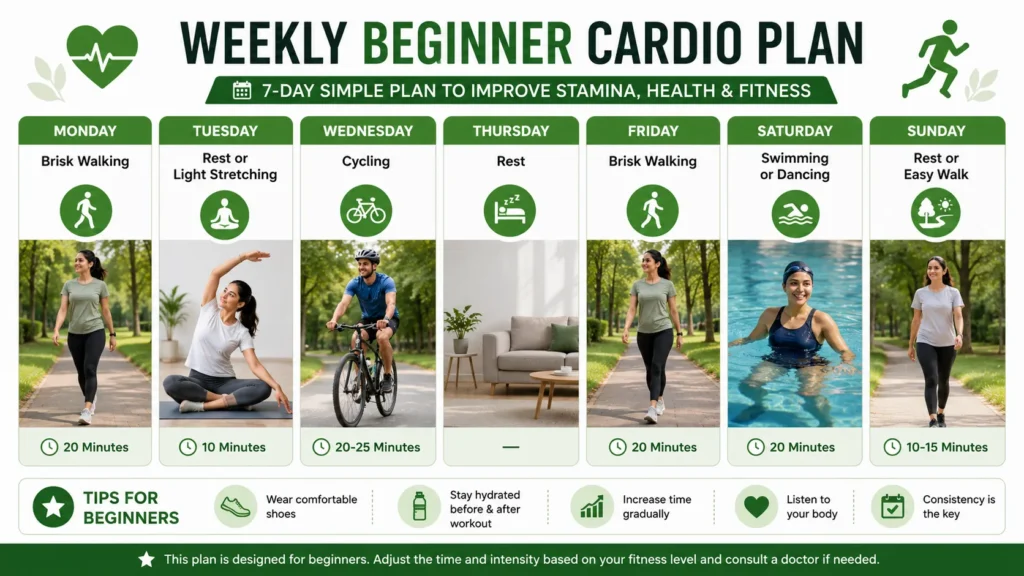
Use this easy weekly plan if you are new to cardio. Adjust the time based on your fitness level.
| Day | Activity | Time |
|---|---|---|
| Monday | Brisk walking | 20 minutes |
| Tuesday | Rest or light stretching | 10 minutes |
| Wednesday | Cycling or treadmill walk | 20–25 minutes |
| Thursday | Rest | – |
| Friday | Brisk walking | 20 minutes |
| Saturday | Dancing, swimming, or easy cycling | 20 minutes |
| Sunday | Rest or easy walk | 10–15 minutes |
Beginner Weekly Cardio Plan
Here is a simple beginner cardio schedule example.
| Day | Beginner Cardio Activity |
|---|---|
| Monday | 20-minute brisk walk |
| Tuesday | Rest or light stretching |
| Wednesday | 25-minute cycling |
| Thursday | Rest |
| Friday | 20-minute brisk walk |
| Saturday | Swimming or dancing |
| Sunday | Rest |
Busy beginners can shorten these sessions if needed. Even 10 to 15 minutes of daily movement is better than doing nothing. Building consistency matters more than doing long workouts.
Signs Your Cardio Fitness Is Improving
Cardio progress is not only about weight loss. There are many signs your cardiovascular fitness is improving.
You may notice:
- less breathlessness during movement,
- more daily energy,
- faster workout recovery,
- improved stamina,
- better sleep quality,
- and improved mood.
Even simple activities like climbing stairs may start feeling easier over time.
Common Beginner Cardio Mistakes
Many beginners make simple mistakes when starting cardio exercise.
Common mistakes include:
- starting too hard,
- skipping warm-ups,
- doing cardio every day without recovery,
- ignoring hydration,
- comparing progress to others,
- and focusing only on weight loss.
Beginners usually see better long-term results by progressing slowly and staying consistent.
Can You Do Too Much Cardio?
Yes. Too much cardio can sometimes cause problems.
Excessive cardio without proper recovery may lead to:
- fatigue,
- muscle soreness,
- poor recovery,
- low energy,
- or burnout.
Signs you may be overdoing cardio include:
- constant tiredness,
- poor sleep,
- joint pain,
- reduced performance,
- and lack of motivation.
Balance is important. Recovery days help the body repair and grow stronger.
Conclusion
From personal experience, one of the biggest reasons beginners struggle with cardio is not because cardio is too difficult. Most people struggle because they try to do too much too quickly. Many beginners believe they need intense workouts, long running sessions, or advanced gym routines to improve fitness. In reality, simple and consistent movement is usually what creates the best long-term results.
Over the years, many beginners have successfully improved their stamina, energy levels, and overall health by starting with basic cardio exercises like walking, cycling, or short beginner workouts. The body slowly adapts over time when exercise becomes consistent. This gradual progress is what helps improve cardiovascular fitness safely and sustainably.
Cardio is one of the most beginner-friendly forms of exercise because it can be adjusted for almost any fitness level. Whether your goal is improving heart health, increasing energy, supporting weight loss, or simply becoming more active, cardio can help when approached with patience and consistency.
The most important thing is to focus on progress instead of perfection. Start at your current fitness level, stay consistent, and allow your body time to improve. Small daily efforts often create bigger long-term changes than extreme workouts that are difficult to maintain.
