

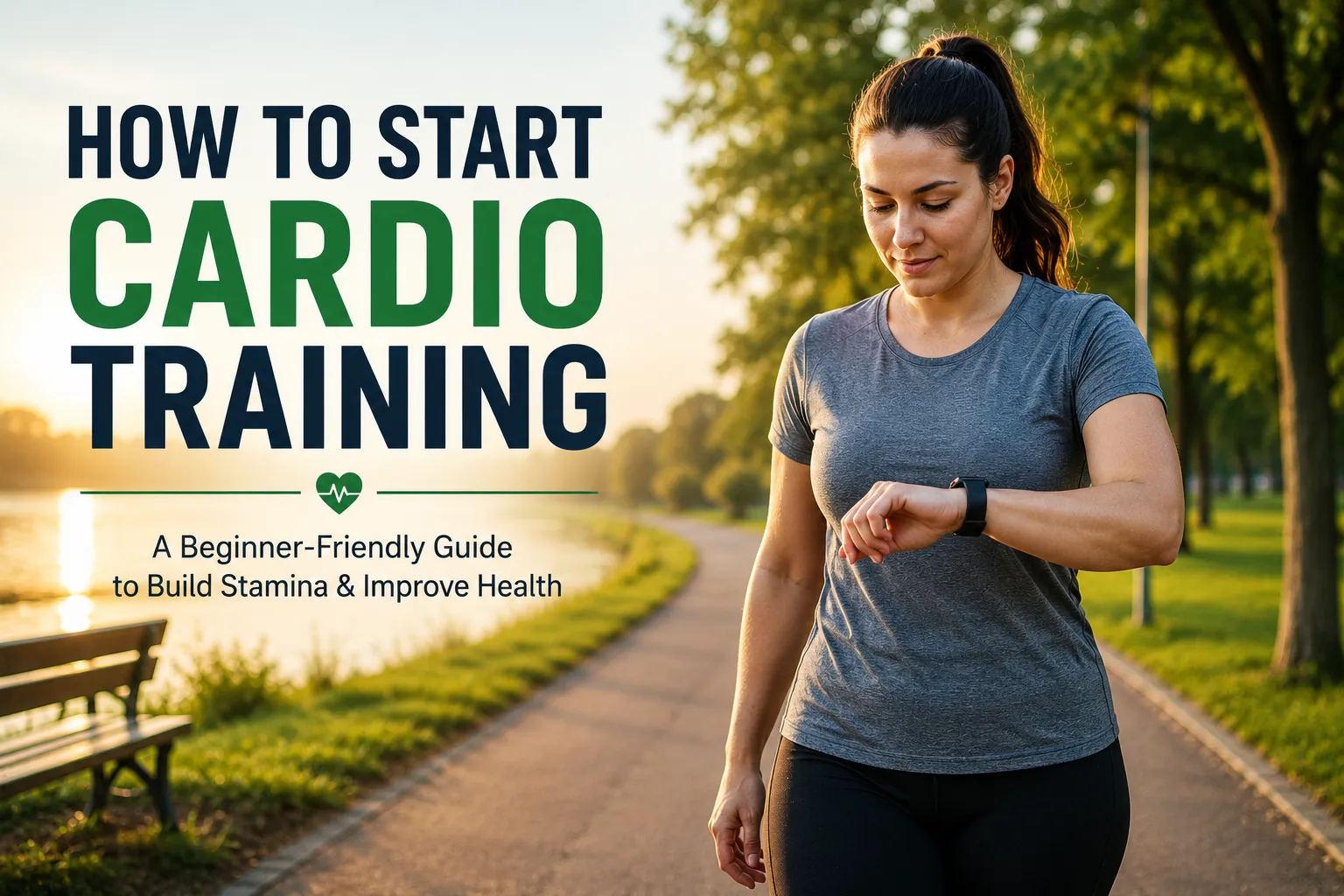
Starting cardio training can feel frustrating when you get tired after only a few minutes of exercise. Many beginners feel confused because they do not know which cardio workout to start with, how long they should exercise, or how hard cardio is supposed to feel. Some people also feel embarrassed about their fitness level or worry they are too out of shape to begin. Because of this, many beginners either avoid cardio completely or start with workouts that are too intense and quickly burn out.
I remember feeling the same way when I first started cardio training. Even short workouts felt exhausting, and I thought I was failing because I could not keep up for very long. Over time, I learned that beginner cardio does not need to be extreme to be effective. Most people improve their stamina slowly through simple and consistent workouts. Once I stopped trying to do too much too soon, cardio became easier, more enjoyable, and much more sustainable. This beginner-friendly guide will help you start cardio training safely, build endurance gradually, and avoid the common mistakes that cause many beginners to quit early.
Key Takeaway
The best way to start cardio training is to begin slowly, choose low-impact exercises, and stay consistent. Beginners do not need intense workouts. Short sessions like walking, cycling, or swimming can improve stamina, heart health, and confidence over time.
What Is Cardio Training?
Key Takeaway
The best way to start cardio training is to begin slowly, choose low-impact exercises, and stay consistent. Beginners do not need intense workouts. Short sessions like walking, cycling, or swimming can improve stamina, heart health, and confidence over time.Cardio training is a type of exercise that increases your heart rate and breathing. It is also called cardiovascular exercise or aerobic exercise.
Cardio workouts help improve:
- heart health
- lung function
- stamina
- cardiovascular endurance
- aerobic fitness
Common cardio exercises include:
- walking
- jogging
- cycling
- swimming
- dancing
- jump rope
- elliptical training
Cardio training can be done at home, outdoors, or inside a gym.
Benefits of Cardio Training
Cardio training offers many physical and mental health benefits.
Improves Heart Health
Cardio strengthens the heart and improves blood circulation throughout the body.
Increases Stamina
Regular cardio exercise improves endurance and helps daily activities feel easier over time.
Supports Weight Loss
Cardio can support weight loss when combined with healthy nutrition and consistent exercise habits.
Boosts Energy Levels
Many beginners notice better energy and less fatigue after starting a cardio routine.
Reduces Stress
Cardio exercise can improve mood and help reduce stress and anxiety.
Improves Sleep Quality
Regular physical activity may help improve sleep patterns and recovery.
Best Cardio Exercises for Beginners
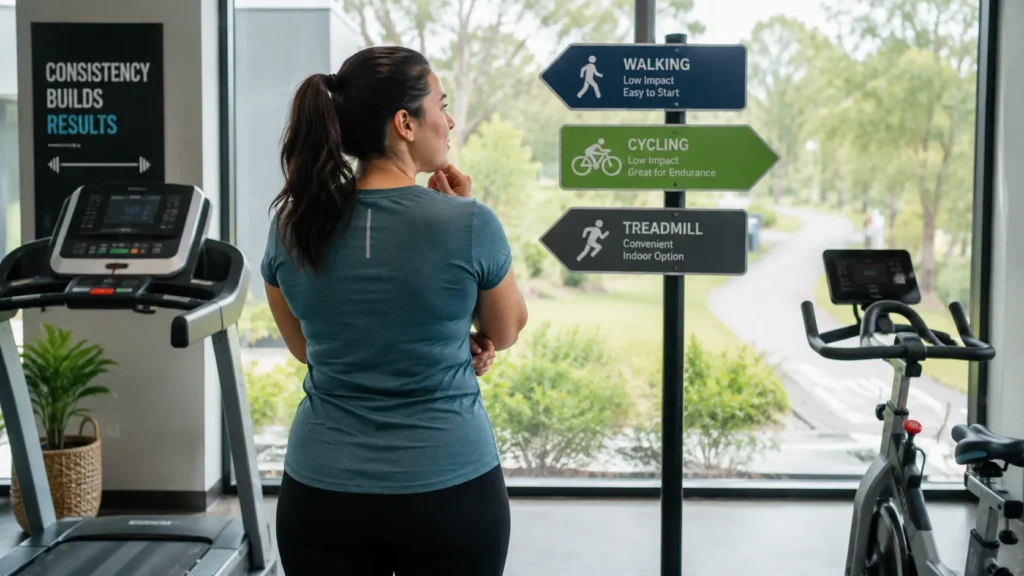
Some cardio exercises are easier for beginners than others. The best cardio workout is one you can do consistently.
| Cardio Exercise | Best For | Beginner Level |
|---|---|---|
| Walking | Complete beginners | Very easy |
| Cycling | Low-impact training | Easy |
| Swimming | Joint-friendly cardio | Easy to moderate |
| HIIT | Advanced conditioning | Hard |
Walking
Walking is one of the safest and easiest cardio exercises for beginners.
Benefits:
- low impact
- beginner friendly
- gentle on joints
- easy to maintain
Start with 10 to 15 minute walks.
Walking is often the best starting point for beginners who feel overwhelmed by intense workouts.
Cycling
Cycling is a low-impact cardio exercise that places less stress on the knees compared to running.
Indoor cycling is also useful for beginners.
Swimming
Swimming provides a full-body cardio workout while remaining gentle on the joints.
Elliptical Training
Elliptical workouts help improve cardiovascular fitness with less joint impact than running.
Best Cardio Exercises for Overweight Beginners
Overweight beginners often need lower-impact cardio exercises to reduce stress on the knees and joints.
The safest beginner-friendly options include:
- walking
- swimming
- cycling
- water aerobics
- elliptical training
These exercises are easier to recover from and can help build confidence slowly.
Low-impact cardio is often the best starting point for people with low stamina or joint discomfort.
Low-Impact vs High-Impact Cardio
Understanding the difference between low-impact and high-impact cardio can help beginners choose safer workouts.
Low-Impact Cardio
Examples:
- walking
- cycling
- swimming
- elliptical workouts
Benefits:
- less joint stress
- easier recovery
- beginner friendly
Many beginners feel more comfortable starting with low-impact cardio because it feels safer and easier to maintain consistently.
High-Impact Cardio
Examples:
- running
- jump rope
- sprinting
Benefits:
- higher calorie burn
- improved athletic conditioning
However, high-impact workouts can feel difficult for beginners and may increase soreness if done too early.
How to Start Cardio Training Safely
Many beginners try to do too much in the beginning because they want fast results. However, pushing too hard often leads to soreness, frustration, and burnout.
Follow these steps instead.
Start Slowly
Begin with:
- 10 to 20 minute sessions
- low-impact cardio
- 3 workout days weekly
Your body needs time to adapt.
Focus on Consistency
Consistency matters more than intensity in the beginning.
Short workouts done regularly are more effective than one extreme workout.
Increase Gradually
Slowly increase:
- workout duration
- pace
- frequency
This gradual progression helps improve aerobic capacity safely.
Wear Proper Shoes
Supportive shoes can reduce stress on your knees and feet during cardio exercise.
Stay Hydrated
Drink water before and after workouts to support recovery and performance.
Cardio Intensity Levels for Beginners
Many beginners wonder how hard cardio should feel.
Cardio should feel challenging but manageable.
You should feel:
- slightly out of breath
- warmer body temperature
- light sweating
However, you should still be able to speak in short sentences.
Feeling slightly out of breath during cardio is normal. However, beginners should not feel completely exhausted after every workout.
Signs Your Cardio Intensity Is Right
Your cardio intensity is usually appropriate if:
- your breathing is faster but controlled
- you feel tired but not exhausted
- you can still talk briefly
- your body recovers within a reasonable time
If you feel dizzy, extremely breathless, or unable to recover, the workout may be too intense.
Beginner Cardio Heart Rate Guide
A simple way to estimate maximum heart rate is:
220−age
This formula gives an estimated maximum heart rate based on age.
For beginners, moderate cardio intensity is usually enough for improving cardiovascular fitness.
You do not need maximum effort during every workout.
Moderate vs Vigorous Cardio Exercise
Moderate Cardio
Examples:
- brisk walking
- light cycling
- slow jogging
This level is ideal for most beginners.
Vigorous Cardio
Examples:
- sprinting
- intense HIIT workouts
- fast running
Vigorous exercise can be effective, but many beginners may find it too intense in the beginning.
Steady-State Cardio vs HIIT
Steady-State Cardio
Steady-state cardio means exercising at a consistent pace.
Examples:
- walking
- jogging
- cycling
This is usually the best option for beginners.
HIIT
HIIT stands for High-Intensity Interval Training.
HIIT alternates between:
- short intense exercise periods
- short recovery periods
HIIT can improve cardio endurance, but beginners should first build a cardio foundation with steady-state exercise.
How Often Should Beginners Do Cardio?
Most beginners do well with cardio training 3 days weekly, depending on fitness level, recovery ability, and overall health.
As stamina improves, you can gradually increase to:
- 4 to 5 workout days weekly
Recovery days remain important.
How Long Should Cardio Workouts Be?
Beginners do not need long workouts initially.
A good starting point is:
- 10 to 20 minutes
Over time, you can gradually increase to:
- 30 to 45 minutes
Consistency is more important than workout length.
Beginner Cardio Workout Routine
Beginner Walking Workout
Warm-Up
- 3 minutes slow walking
Main Workout
- 10 minutes brisk walking
Cool-Down
- 3 minutes slow walking
Repeat this workout 3 times weekly.
Cardio Training Schedule for Beginners
Week 1
- 10 to 15 minute walks
- 3 days weekly
Week 2
- 15 to 20 minute brisk walks
- 3 to 4 days weekly
Week 3
- add light jogging intervals
- 20 minute sessions
Week 4
- 25 to 30 minute cardio sessions
- 4 workout days weekly
This gradual progression improves endurance and cardiovascular fitness safely.
What Results Should Beginners Expect in the First Month?
Many beginners become discouraged during the first week because cardio feels difficult. This is completely normal. Your body needs time to adapt to physical activity.
Week 1
You may experience:
- soreness
- faster breathing
- low stamina
Week 2
Your recovery may begin improving. Simple workouts may feel slightly easier.
Week 3
Many beginners notice:
- improved energy
- better breathing control
- less fatigue during workouts
Week 4
You may feel:
- stronger endurance
- increased confidence
- improved cardio fitness
- easier recovery
Progress takes time. Small improvements matter.
Warm-Up and Cool-Down
A warm-up prepares the body for exercise.
Simple warm-up exercises:
- arm circles
- slow walking
- leg swings
A cool-down helps your heart rate return to normal gradually.
Skipping warm-up or cool-down may increase soreness and discomfort.
Recovery and Rest Days
Recovery is an important part of any fitness routine.
Your body needs time to:
- repair muscles
- restore energy
- improve endurance
Signs you may need more recovery include:
- extreme soreness
- fatigue
- poor sleep
- low motivation
Rest days are not a sign of weakness. Recovery helps your body become stronger and supports long-term fitness progress.
Building Endurance With Cardio
Endurance improves slowly over time.
At first, cardio may feel difficult. Many beginners become discouraged too early. However, consistent cardio training gradually improves aerobic endurance and stamina.
Most beginners notice:
- easier breathing
- longer workout ability
- better recovery
- increased confidence
Many beginners think they are not improving fast enough. However, endurance develops slowly through consistent exercise habits.
Stay patient and focus on steady progress.
Tracking Fitness Progress
Tracking progress can help maintain motivation.
You can track:
- workout time
- walking distance
- recovery speed
- energy levels
- cardio endurance
Even small improvements are meaningful during a beginner fitness journey.
Common Beginner Cardio Mistakes
Doing Too Much Too Soon
Many beginners start with intense workouts and burn out quickly.
Start slowly instead.
Skipping Recovery Days
Recovery supports muscle repair and long-term fitness improvement.
Starting With HIIT Too Early
HIIT workouts may overwhelm beginners with low endurance.
Comparing Yourself to Others
Everyone starts from a different fitness level. Focus on personal progress instead.
Expecting Fast Results
Many beginners quit because they expect major fitness changes within a few days. Cardio progress usually happens gradually over several weeks.
Ignoring Warm-Ups
Warm-ups prepare the body for movement and may help reduce discomfort during exercise.
Exercise Safety Tips
Follow these safety tips during cardio workouts:
- wear supportive shoes
- stay hydrated
- exercise in safe areas
- increase intensity gradually
- stop if you feel chest pain or dizziness
Listen to your body during workouts.
When to Stop Exercising
Stop exercising immediately if you experience:
- chest pain
- dizziness
- severe shortness of breath
- sharp pain
Speak with a healthcare professional if symptoms continue.
Beginner Safety Reminder
Stop exercising if you feel chest pain, dizziness, sharp pain, or severe shortness of breath. Cardio should feel challenging, but it should not feel dangerous. Start with low intensity and increase gradually.
How to Stay Consistent With Cardio Training
Consistency is one of the most important parts of cardio training.
Many beginners quit because they expect fast results or try to follow unrealistic workout plans. However, long-term fitness comes from sustainable exercise habits.
To stay consistent:
- set realistic goals
- start with short workouts
- celebrate small progress
- avoid perfection mindset
- choose cardio exercises you enjoy
Busy schedules, low motivation, and missed workouts are common beginner challenges. Missing one workout does not ruin your progress. Long-term consistency matters more than perfect routines.
Conclusion
Learning how to start cardio training is not about becoming perfect overnight. Most beginners struggle in the beginning because their stamina is low, workouts feel uncomfortable, and progress seems slow. I experienced the same challenges when I first started. Even short cardio sessions felt exhausting, and I often thought I was not fit enough to continue. Over time, I realized that beginner fitness is not about pushing your body to extremes. It is about building sustainable habits that slowly improve your endurance, confidence, and overall health.
One of the biggest lessons I learned from cardio training is that consistency matters far more than intensity. Simple workouts like walking, cycling, or low-impact cardio can create major improvements when done regularly. Many beginners believe they need intense workouts to see results, but gradual progress is usually safer and more effective for long-term success.
From both personal experience and fitness best practices, the best approach for beginners is to start slowly, focus on recovery, and avoid comparing yourself to others. Your body needs time to adapt, and small improvements are still real progress. Everyone starts at a different fitness level, and feeling tired in the beginning is completely normal.
The most important thing is to keep going even when progress feels slow. Short workouts done consistently can improve cardiovascular endurance, energy levels, heart health, and confidence over time. Focus on progress instead of perfection, and allow your fitness journey to develop one step at a time.
