


Growing older does not mean giving up an active lifestyle. Many seniors notice that everyday tasks become harder over time. Standing up from a chair, climbing stairs, carrying groceries, or walking long distances may take more effort than they once did. These changes can make you feel less confident and more worried about losing your independence.
The good news is that regular exercise can help you stay strong, mobile, and active at any age. A well-planned workout routine improves muscle strength, balance, flexibility, and heart health. It also lowers the risk of falls and helps you enjoy daily life with greater confidence. Whether you are new to exercise or returning after a long break, this guide will help you build healthy habits with a safe and easy-to-follow workout plan.
Quick Takeaway
A good workout plan for seniors should include strength, balance, walking, mobility, and recovery. The goal is not hard exercise. The goal is safer movement, better balance, and more independence in daily life.
Why Every Senior Needs a Workout Plan
Your body naturally changes as you age. Muscle mass decreases, joints become stiffer, and balance may not be as steady as before. These changes are normal, but they do not mean you have to stop being active. A structured workout plan helps slow these changes and supports a healthier, more independent lifestyle.
Following a regular workout plan gives your body a clear routine. Instead of exercising only when you feel motivated, you build consistency. This steady approach is more effective than doing long or intense workouts once in a while.
A workout plan also helps you avoid doing too much too soon. Gradually increasing activity allows your muscles and joints to adapt safely while reducing the risk of injury.
Benefits of a Workout Plan for Seniors
Exercise offers many physical and mental health benefits. Even a few weeks of consistent movement can make daily activities feel easier.
Builds Muscle Strength
Muscle loss begins naturally with age, but strength training can slow this process. Stronger muscles make it easier to stand up, lift household items, carry shopping bags, and move around without help.
Improves Balance and Stability
Balance exercises train your body to stay steady while walking or changing direction. Better balance lowers the chance of falling, which is one of the biggest health concerns for older adults.
Supports Healthy Joints
Gentle movement keeps joints flexible and improves their range of motion. Regular exercise may also reduce stiffness, making it easier to bend, reach, and move comfortably.
Keeps Your Heart Healthy
Walking and other low-impact cardio activities strengthen your heart and improve blood circulation. This supports healthy blood pressure and increases endurance for everyday activities.
Increases Bone Strength
Weight-bearing exercises encourage your bones to stay stronger. This becomes especially important as bone density naturally decreases with age.
Boosts Mental Well-Being
Exercise is good for your mind as well as your body. Staying active may improve mood, reduce stress, support memory, and increase confidence.
Helps Maintain Independence
One of the greatest benefits of regular exercise is the ability to continue doing daily tasks without depending on others. Building strength and mobility today helps you stay independent for years to come.
Who Should Follow This Workout Plan?
This workout plan is designed for adults aged 60 and older who want a safe, beginner-friendly fitness routine.
It is suitable for:
- Beginners starting exercise for the first time.
- Seniors returning after months or years of inactivity.
- Adults who want to improve strength and balance.
- People looking to stay active and independent.
- Seniors who want a structured weekly routine.
If you have recently had surgery, experienced a serious injury, or have a medical condition that affects exercise, talk with your healthcare provider before starting a new fitness program.
What Makes This Workout Plan Different?
Many workout guides simply list exercises without explaining why they matter. This article focuses on functional fitness. Every exercise is chosen because it supports movements you perform every day.
For example, leg-strengthening exercises do more than build muscle. They help you stand up from a chair, climb stairs with greater ease, and carry groceries more comfortably. Balance exercises improve confidence while walking outdoors or moving around your home. Core exercises support better posture and make it easier to get in and out of bed.
Instead of training for appearance, this workout plan helps you train for everyday life.
Before You Begin: Safety First
Safety should always come before intensity. Starting slowly allows your body to adapt while reducing the chance of soreness or injury.
Choose comfortable clothing that allows free movement. Wear supportive athletic shoes with good grip to reduce the risk of slipping. Exercise in a well-lit area with enough space to move safely. Keep a sturdy chair or countertop nearby if you need extra support during balance exercises.
Drink water before, during, and after your workout. Staying hydrated helps your muscles and joints work more efficiently.
Never ignore pain. Mild muscle fatigue is normal, but sharp pain, dizziness, chest discomfort, or severe shortness of breath are signs to stop exercising and seek medical advice.
Senior Workout Safety Checklist
- Wear supportive shoes with good grip.
- Keep a sturdy chair nearby for support.
- Exercise in a clear and well-lit space.
- Start slowly and avoid rushing movements.
- Stop if you feel chest pain, dizziness, or sharp joint pain.
- Talk to your doctor first if you have a serious health condition.
Your Daily Workout Readiness Checklist
Before each workout, take a few moments to check how you feel.
Ask yourself these questions:
- Did I sleep well last night?
- Am I well hydrated?
- Do I feel steady on my feet today?
- Am I wearing supportive shoes?
- Do I have enough space to exercise safely?
- Do I have unusual pain or swelling?
- Am I feeling dizzy or unwell?
If you answer “no” to several of these questions, consider doing a shorter session or choosing gentle stretching and walking instead.
Understanding Exercise Intensity
You do not need very intense workouts to become healthier. Most seniors benefit from moderate activity that feels challenging but still allows normal conversation.
A simple way to judge intensity is the Talk Test.
During light activity, you can easily hold a conversation without becoming breathless.
During moderate activity, you can still talk, but singing would be difficult.
During vigorous activity, speaking more than a few words becomes difficult.
For most beginners, moderate intensity is the safest and most effective place to start.
The Four Pillars of a Healthy Senior Fitness Routine
A complete workout plan includes more than strength exercises. Your weekly routine should combine four important types of movement.
Strength Training
Strength exercises help preserve muscle mass and improve your ability to perform daily activities.
Balance Training
Balance exercises reduce fall risk and improve confidence while walking, turning, and climbing stairs.
Cardiovascular Exercise
Activities such as walking improve heart health, endurance, and overall energy levels.
Flexibility and Mobility
Stretching and mobility exercises keep your joints moving comfortably while improving posture and reducing stiffness.
When these four areas work together, they create a balanced fitness routine that supports healthy aging.
Small Steps Lead to Big Results
Many people believe they need long or difficult workouts to see progress. That is not true. Small, consistent improvements often produce the best long-term results.
A 20 to 30-minute workout performed several times each week can improve strength, mobility, and confidence over time. The goal is not perfection. The goal is building a routine that you can continue for months and years.
You may notice small victories along the way. Standing up feels easier. Walking becomes smoother. You recover more quickly after household chores. These everyday improvements are signs that your body is getting stronger.
7-Day Workout Plan for Seniors
This weekly workout plan is designed to help you become stronger, move more comfortably, and stay independent. Every workout focuses on movements that support daily activities instead of difficult gym exercises.
Start each workout with a warm-up and finish with a cool-down. Move at your own pace and rest whenever needed. If an exercise feels too difficult, use the chair-assisted version until you become stronger.
Senior Workout Plan at a Glance
| Day | Focus | Best For |
|---|---|---|
| Monday | Lower-body strength | Standing, walking, stairs |
| Tuesday | Upper-body strength | Lifting, carrying, posture |
| Wednesday | Walking and balance | Heart health and fall prevention |
| Thursday | Mobility and flexibility | Less stiffness |
| Friday | Full-body strength | Daily movement |
| Saturday | Active recovery | Light movement |
| Sunday | Rest | Muscle recovery |
5-Minute Warm-Up Before Every Workout
A proper warm-up prepares your muscles and joints for exercise. It also increases blood flow and lowers the risk of injury.
Perform each movement slowly for 30 to 60 seconds.
March in Place
Stand tall and gently lift one knee at a time while swinging your arms naturally.
How it helps: Raises your heart rate and prepares your body for movement.
Shoulder Rolls
Roll your shoulders forward ten times and backward ten times.
How it helps: Loosens stiff shoulders and improves upper-body mobility.
Arm Circles
Stretch your arms out to the sides and make small circles before gradually making them larger.
How it helps: Improves shoulder flexibility and prepares the arms for strength exercises.
Ankle Circles
Lift one foot slightly off the floor and rotate your ankle in both directions. Repeat with the other foot.
How it helps: Improves ankle mobility and supports better balance.
Gentle Side Steps
Step slowly from side to side while keeping your knees slightly bent.
How it helps: Activates the hips and improves coordination.
Monday: Build Lower-Body Strength
Strong legs help you stand up, walk confidently, climb stairs, and reduce your risk of falling.
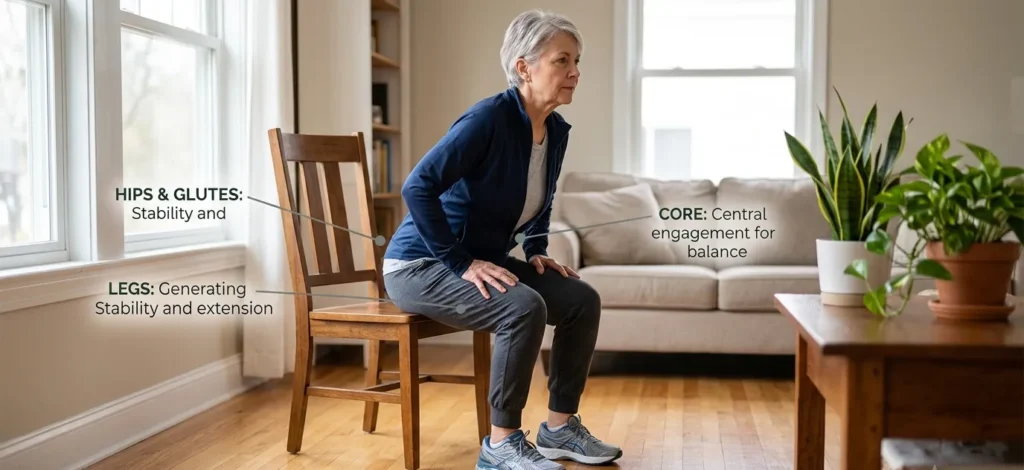
Sit-to-Stand
Sit on a sturdy chair with your feet flat on the floor. Lean slightly forward and stand up without using your hands if possible. Slowly sit back down.
Repetitions: 2 sets of 8–12
Daily Life Benefit: Makes getting up from chairs, sofas, and toilets much easier.
Chair Alternative: Push lightly on the armrests if extra support is needed.
Mini Squats
Stand behind a chair and hold the backrest lightly. Bend your knees a little as if sitting down, then return to standing.
Repetitions: 2 sets of 10
Daily Life Benefit: Improves strength for climbing stairs and walking uphill.
Calf Raises
Stand behind a chair. Slowly lift your heels off the floor, then lower them with control.
Repetitions: 2 sets of 12
Daily Life Benefit: Improves walking stability and stair climbing.
Glute Bridges
Lie on your back with knees bent and feet flat on the floor. Lift your hips until your body forms a straight line from shoulders to knees.
Repetitions: 2 sets of 10
Daily Life Benefit: Strengthens the muscles used for standing, walking, and protecting the lower back.
Standing Heel-to-Toe Walk
Walk in a straight line by placing one foot directly in front of the other.
Duration: 2–3 minutes
Daily Life Benefit: Improves balance and coordination while walking.
Tuesday: Improve Upper-Body Strength
Strong arms and shoulders make everyday tasks much easier.
Wall Push-Ups
Stand facing a wall. Place your hands on the wall at shoulder height. Bend your elbows to move toward the wall, then push back.
Repetitions: 2 sets of 10
Daily Life Benefit: Makes pushing doors, getting out of bed, and lifting objects easier.
Resistance Band Row
Sit or stand while holding a resistance band. Pull both elbows backward while squeezing your shoulder blades together.
Repetitions: 2 sets of 12
Daily Life Benefit: Improves posture and makes carrying shopping bags easier.
Biceps Curl
Hold light dumbbells or water bottles. Curl the weights toward your shoulders before lowering slowly.
Repetitions: 2 sets of 12
Daily Life Benefit: Helps lift grocery bags, laundry baskets, and other household items.
Shoulder Press
Hold light weights at shoulder level. Press upward until your arms are almost straight before lowering.
Repetitions: 2 sets of 10
Daily Life Benefit: Makes reaching shelves and cupboards easier.
Wrist Strength Exercise
Hold a light water bottle and slowly bend your wrist upward and downward.
Repetitions: 2 sets of 12
Daily Life Benefit: Improves grip strength for opening jars and carrying objects.
Wednesday: Walking and Balance Training
Walking supports heart health, while balance exercises help prevent falls.
Brisk Walking
Walk at a comfortable pace where you can still hold a conversation.
Duration: 20–30 minutes
Daily Life Benefit: Improves endurance for shopping, traveling, and social activities.
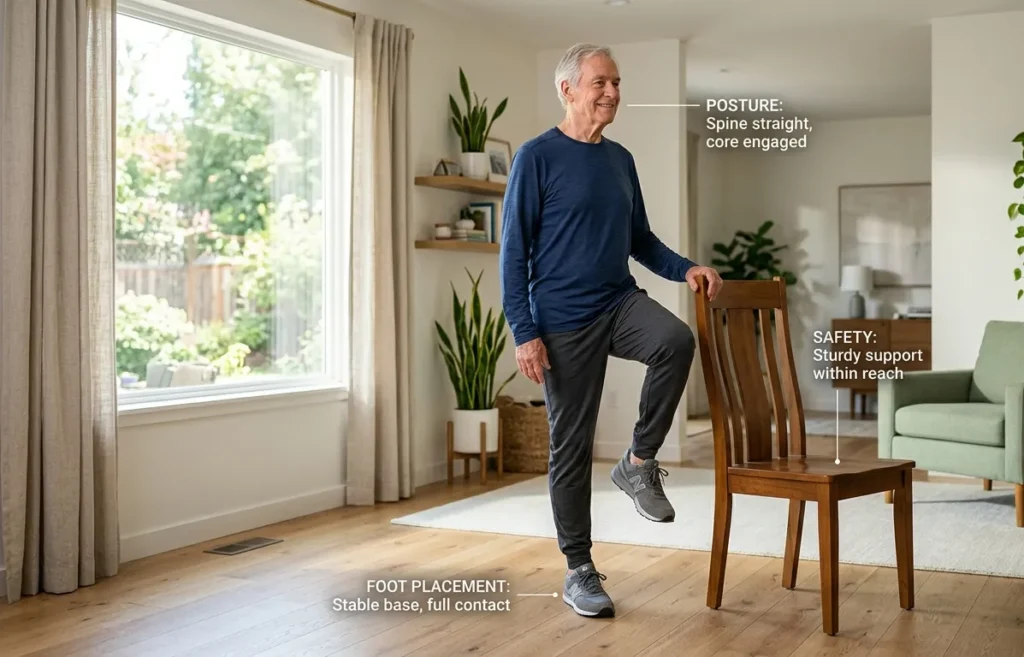
One-Leg Stand
Stand beside a chair. Lift one foot slightly off the floor while holding the chair if needed.
Hold: 10–20 seconds
Repeat on both sides.
Daily Life Benefit: Improves stability during everyday movements.
Sideways Walking
Walk sideways for several steps in one direction before returning.
Duration: 2 minutes
Daily Life Benefit: Strengthens the hips and improves side-to-side balance.
Step-Ups
Step onto a low platform or stair, then step back down slowly.
Repetitions: 10 per leg
Daily Life Benefit: Builds confidence when using stairs.
Gentle Stretching
Finish with light stretches for the calves, thighs, shoulders, and back.
Duration: 5 minutes
Thursday: Mobility and Flexibility Day
Recovery is just as important as exercise. A mobility session helps your body stay flexible and reduces stiffness.
Neck Stretch
Slowly tilt your head toward each shoulder without forcing the movement.
Hold each side for 20 seconds.
Chest Stretch
Place both hands behind your back or against a wall and gently open your chest.
Hold for 20 seconds.
Cat-Cow Stretch
Move slowly between arching and rounding your back while on your hands and knees or seated if needed.
Repeat 10 times.
Hip Opener
Lift one knee toward your chest while standing beside a chair or lying on your back.
Hold for 20 seconds.
Hamstring Stretch
Place one heel on a low step or chair. Lean forward gently while keeping your back straight.
Hold for 20 seconds.
Ankle Mobility Exercise
Move your knees slowly over your toes while keeping your heels on the floor.
Repeat 10 times.
Daily Life Benefit: Improves flexibility needed for dressing, walking, bending, and getting in and out of vehicles.
Friday: Full-Body Functional Strength
Today’s workout combines upper-body and lower-body movements to improve overall fitness.
Chair Squat to Shoulder Press
Stand up from a chair while holding light dumbbells. Press the weights overhead as you stand.
Repetitions: 2 sets of 10
Daily Life Benefit: Combines movements used when lifting and carrying household items.
Farmer’s Carry
Hold a light weight in each hand and walk slowly across the room.
Duration: 30–60 seconds
Repeat three times.
Daily Life Benefit: Improves grip, posture, and carrying strength.
Standing Knee Raises
Lift one knee toward your chest while standing tall.
Repetitions: 15 per side
Daily Life Benefit: Improves balance and makes climbing stairs easier.
Resistance Band Chest Press
Secure a resistance band behind you and press forward until your arms are extended.
Repetitions: 2 sets of 12
Daily Life Benefit: Improves pushing strength for daily activities.
Standing Core Rotation
Hold your hands together and slowly rotate your upper body from side to side.
Repetitions: 15 each direction
Daily Life Benefit: Makes reaching, turning, and getting into a car easier.
Saturday: Active Recovery
Your body still benefits from movement even on lighter days.
Choose one or more of the following activities.
- Leisurely walk for 20–30 minutes.
- Gardening.
- Light household chores.
- Gentle yoga.
- Chair stretching.
- Easy cycling.
- Water aerobics if available.
The goal is simply to stay active without making yourself tired.
Sunday: Rest and Recovery
Your muscles become stronger while you recover.
Use today to relax and prepare for the coming week.
You can still perform gentle stretching or take a short walk if your body feels comfortable.
Drink enough water, eat balanced meals with protein, and get plenty of sleep to support muscle recovery.
5-Minute Cool-Down After Every Workout
Cooling down helps your heart rate return to normal and reduces muscle tightness.
Spend about 20 to 30 seconds on each stretch.
Calf Stretch
Stretch one leg behind you while pressing the heel into the floor.
Front Thigh Stretch
Hold a chair and gently pull one foot toward your hips.
Chest Stretch
Open your arms and gently stretch the front of your shoulders.
Shoulder Stretch
Bring one arm across your chest and hold it with the opposite hand.
Deep Breathing
Take five slow breaths while standing or sitting comfortably. Focus on relaxing your muscles before finishing your workout.
Weekly Workout Schedule at a Glance
| Day | Focus | Estimated Time |
|---|---|---|
| Monday | Lower-body strength | 30–35 minutes |
| Tuesday | Upper-body strength | 30–35 minutes |
| Wednesday | Walking and balance | 30–40 minutes |
| Thursday | Mobility and flexibility | 25–30 minutes |
| Friday | Full-body functional strength | 30–35 minutes |
| Saturday | Active recovery | 20–30 minutes |
| Sunday | Rest and gentle movement | As needed |
Tips for Staying Consistent
The best workout plan is one you can follow every week. Progress may feel slow at first, but small improvements add up over time.
Keep these habits in mind:
- Exercise at the same time each day.
- Record each completed workout.
- Celebrate small milestones.
- Focus on consistency instead of perfection.
- Increase your activity only when your current routine feels comfortable.
- Listen to your body and take extra rest if needed.
Progress Safely: Your 8-Week Workout Progression Plan
One of the biggest mistakes seniors make is trying to do too much too quickly. Your muscles, joints, and heart need time to adjust to regular exercise. A gradual progression helps you become stronger while lowering the risk of injury.
The goal is not to finish harder workouts every week. The goal is to make steady progress that you can maintain for years.
Weeks 1–2: Build the Habit
During the first two weeks, focus on learning proper form and creating a routine. Move slowly and stop before you feel exhausted.
Aim for:
- 1–2 sets of each exercise
- 8–10 repetitions
- 20–25 minute workouts
- Comfortable walking pace
- Rest when needed
Success during these weeks means completing your workouts safely, not exercising harder.
Weeks 3–4: Improve Endurance
Once your body feels comfortable, you can gradually increase your activity.
Try to:
- Add 2–3 repetitions to each exercise.
- Walk five minutes longer.
- Improve your posture during each movement.
- Reduce long rest breaks if you feel comfortable.
Small improvements are enough to keep making progress.
Weeks 5–6: Increase Strength
By now, many exercises will begin to feel easier.
If your form stays good, you can:
- Use slightly heavier dumbbells.
- Choose a stronger resistance band.
- Add one extra set to major exercises.
- Hold balance exercises for a few more seconds.
Always increase only one thing at a time.
Weeks 7–8: Build Confidence
These weeks focus on improving movement quality rather than speed.
You can:
- Walk a little farther.
- Perform movements with better control.
- Complete more repetitions comfortably.
- Spend longer on balance exercises.
Remember that progress looks different for everyone. Some people improve quickly, while others need more time.
Signs That You Are Progressing
You may not notice changes overnight, but your body often improves in small ways.
You might notice that:
- Standing from a chair feels easier.
- You walk without becoming tired as quickly.
- Carrying groceries requires less effort.
- Climbing stairs feels smoother.
- Your posture improves.
- Your balance becomes steadier.
- You recover faster after exercise.
These improvements show that your fitness is moving in the right direction.
How to Exercise with Common Health Conditions
Many seniors live with chronic health conditions. In most cases, regular exercise is still beneficial, but some movements may need to be adjusted.
Always follow your healthcare provider’s advice if you have concerns about your condition.
Arthritis
Joint stiffness can make movement uncomfortable, especially in the morning.
Helpful tips:
- Begin with a longer warm-up.
- Move through a comfortable range of motion.
- Choose low-impact activities like walking or cycling.
- Avoid sudden or jerky movements.
If a joint becomes swollen or very painful, allow it to rest before exercising again.
Osteoporosis
Strong bones are important for maintaining independence.
Focus on:
- Walking
- Strength training
- Balance exercises
- Good posture
Avoid twisting your spine forcefully or bending forward with heavy weight.
High Blood Pressure
Exercise supports heart health, but it should remain controlled.
Remember to:
- Breathe normally during every exercise.
- Avoid holding your breath.
- Increase intensity gradually.
- Cool down slowly after each workout.
Type 2 Diabetes
Exercise helps your body use insulin more effectively.
Helpful habits include:
- Checking blood sugar if recommended by your healthcare provider.
- Staying hydrated.
- Carrying a healthy snack if needed.
- Wearing comfortable footwear.
Knee Discomfort
Many people stop exercising because of knee pain, but the right exercises often help strengthen the muscles around the joint.
Choose:
- Chair squats
- Glute bridges
- Straight-leg raises
- Walking on level ground
Reduce the depth of squats if discomfort increases.
Mild Back Discomfort
A stronger core supports your spine.
Focus on:
- Gentle core exercises
- Glute strengthening
- Walking
- Mobility exercises
Avoid movements that cause sharp pain.
Fall Prevention Starts with Stronger Movement
Falls are one of the biggest reasons older adults lose confidence in daily life. Fortunately, improving balance and leg strength can reduce this risk.
Simple habits make a big difference.
Keep your home free of loose rugs and clutter. Wear supportive shoes indoors and outdoors. Turn on lights when walking at night. Use handrails whenever they are available.
Continue practicing balance exercises several times each week, even after you become stronger.
Chair Workout Alternatives
Some days your energy may be lower, or standing exercises may feel difficult. That does not mean you should skip movement completely.
These seated exercises provide a safe alternative.
Seated Marching
Lift one knee at a time while sitting tall.
Perform for one minute.
Seated Leg Extension
Straighten one leg until it is almost level with the floor before lowering.
Repeat 10–12 times on each leg.
Seated Biceps Curl
Use light dumbbells or water bottles.
Perform 10–12 repetitions.
Seated Shoulder Press
Press light weights overhead while sitting upright.
Perform 8–10 repetitions.
Seated Heel Raises
Lift your heels while keeping your toes on the floor.
Repeat 15 times.
These exercises help maintain strength on days when standing workouts feel too challenging.
Recovery Is Part of the Workout
Many people think progress only happens while exercising.
In reality, your muscles become stronger while you recover.
Recovery helps reduce soreness, restore energy, and prepare your body for the next workout.
After Your Workout
Within the first hour:
- Drink water.
- Eat a meal containing protein.
- Walk slowly for a few minutes.
- Stretch gently.
Within 24 Hours
You may notice mild muscle soreness.
This is normal if it improves after gentle movement.
Within 48 Hours
Most soreness should begin to decrease.
Continue normal daily movement even if you feel slightly stiff.
Within 72 Hours
Your muscles should feel ready for another strength workout.
If severe pain continues, reduce your workout intensity and seek medical advice if needed.
Foods That Support Recovery
Good nutrition helps your body repair muscles after exercise.
Choose foods that provide:
Protein
Examples:
- Eggs
- Fish
- Chicken
- Greek yogurt
- Beans
- Lentils
Healthy Carbohydrates
Examples:
- Oatmeal
- Brown rice
- Sweet potatoes
- Whole-grain bread
Healthy Fats
Examples:
- Nuts
- Seeds
- Olive oil
- Avocados
Hydration
Drink water throughout the day, not only during workouts.
Common Workout Mistakes Seniors Should Avoid
Many injuries happen because of simple mistakes.
Avoid these habits.
Skipping the Warm-Up
Cold muscles are more likely to become strained.
Always prepare your body before exercising.
Exercising Too Hard
More exercise is not always better.
Increase your activity gradually.
Holding Your Breath
Remember to breathe during every movement.
Proper breathing helps control blood pressure and reduces fatigue.
Ignoring Pain
Feeling tired is normal.
Sharp pain is not.
Stop immediately if an exercise causes severe discomfort.
Comparing Yourself with Others
Everyone begins at a different fitness level.
Focus on your own progress.
Warning Signs to Stop Exercising
Exercise should make you feel stronger, not unsafe.
Stop exercising immediately if you experience:
- Chest pain.
- Severe dizziness.
- Sudden shortness of breath.
- Fainting.
- Loss of balance.
- Sharp joint pain.
- Swelling that becomes worse during exercise.
- Irregular heartbeat that does not settle with rest.
If symptoms continue, seek medical attention promptly.
Stay Motivated for the Long Term
Motivation naturally changes from week to week.
Instead of relying on motivation, build habits.
Choose activities you enjoy. Exercise with a friend if possible. Mark completed workouts on a calendar. Celebrate improvements such as walking farther, standing more easily, or feeling more energetic.
Healthy aging is not about becoming perfect. It is about becoming a little stronger every week.
Caregiver Tips: How to Support a Senior’s Fitness Journey
Many older adults stay more consistent with exercise when they have encouragement from family or friends. A caregiver does not need to act as a personal trainer. Simply providing support and creating a safe environment can make a big difference.
Encourage seniors to exercise at their own pace. Avoid comparing them with others or pushing them to do more than they can comfortably handle. Celebrate small achievements, such as completing a workout or walking a little farther than before.
If you exercise together, choose activities that both of you enjoy. Walking, stretching, or simple strength exercises can become quality time while also supporting better health.
Always make sure the workout area is free from loose rugs, electrical cords, or other objects that could cause a fall. Keep a sturdy chair nearby during balance exercises and remind them to drink water before and after each workout.
Most importantly, be patient. Progress may come slowly, but consistency is what leads to lasting improvements.
Simple Ways to Stay Active Outside Your Workouts
Exercise sessions are important, but daily movement matters just as much.
Look for opportunities to move throughout the day.
Take a short walk after meals.
Choose the stairs when they feel safe.
Stand up and stretch every hour if you have been sitting for a long time.
Work in the garden.
Play with your grandchildren.
Do light housework.
Walk while talking on the phone.
These small activities increase your daily movement and help maintain the strength you build during workouts.
How to Track Your Progress
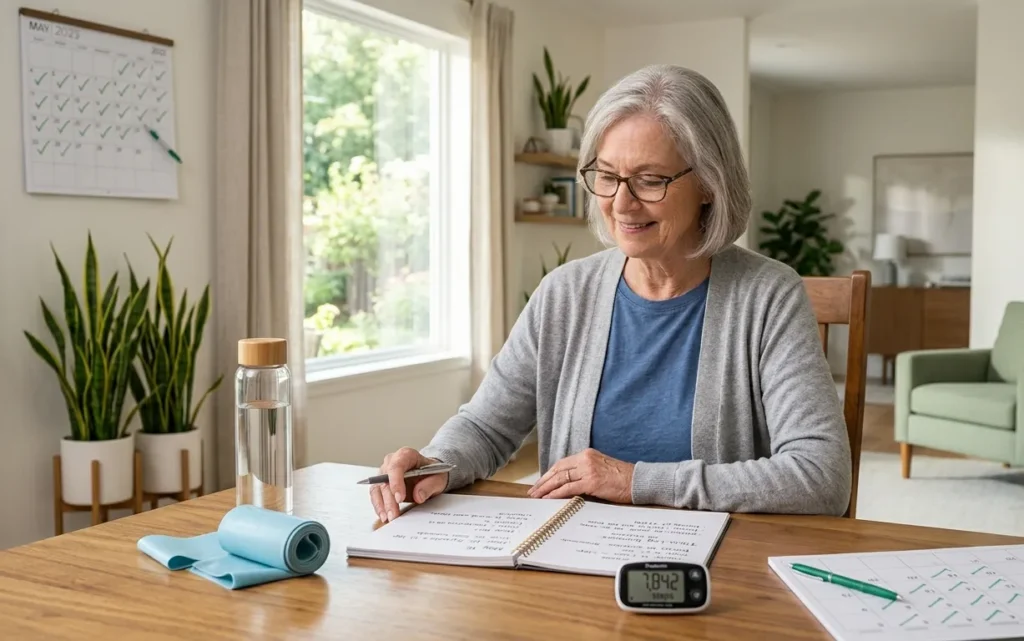
Tracking your progress helps you stay motivated and notice improvements that may otherwise go unnoticed.
You do not need expensive fitness equipment. A simple notebook or printable tracker works well.
Record:
- Number of workouts completed each week.
- Daily walking time.
- Balance exercise practice.
- Strength training sessions.
- Energy level after workouts.
- Difficulty level of each session.
- Any pain or discomfort.
- Personal achievements.
Looking back after a few months can remind you how much progress you have made.
When Should You Make Your Workout More Challenging?
Your body becomes stronger through gradual progression.
Consider increasing your workout only when:
- Your current exercises feel easy.
- You finish workouts without unusual fatigue.
- Your balance has improved.
- Your muscles recover well before the next session.
- Your exercise form remains correct.
When progressing, change only one thing at a time.
You might add:
- Two more repetitions.
- One extra set.
- A slightly longer walk.
- A stronger resistance band.
- A light increase in dumbbell weight.
Small improvements are safer than large jumps.
Should Seniors Exercise Every Day?
Daily movement is healthy, but your body also needs time to recover.
Most seniors benefit from a combination of:
- Two to three strength workouts each week.
- Balance exercises several days per week.
- Walking or other light cardio on most days.
- Flexibility exercises throughout the week.
- At least one recovery day.
A balanced schedule gives your muscles time to recover while keeping you active.
Weekly Progress Tracker
Use this simple tracker to measure progress without focusing only on weight or appearance.
- Walking minutes completed this week: ____
- Strength workouts completed: ____
- Balance practice days: ____
- Stretching or mobility days: ____
- Energy level from 1 to 10: ____
- One daily task that felt easier: ____
Conclusion
Growing older does not mean becoming weaker or giving up the activities you enjoy. With the right workout plan, you can improve your strength, protect your balance, move with greater confidence, and continue living independently. The most important step is simply getting started. Begin with simple movements, stay consistent, and allow your body to improve at its own pace. Over time, those small daily efforts can make standing, walking, climbing stairs, carrying groceries, and enjoying time with family feel easier. Healthy aging is not about doing everything perfectly. It is about choosing to keep moving, one workout at a time.
