


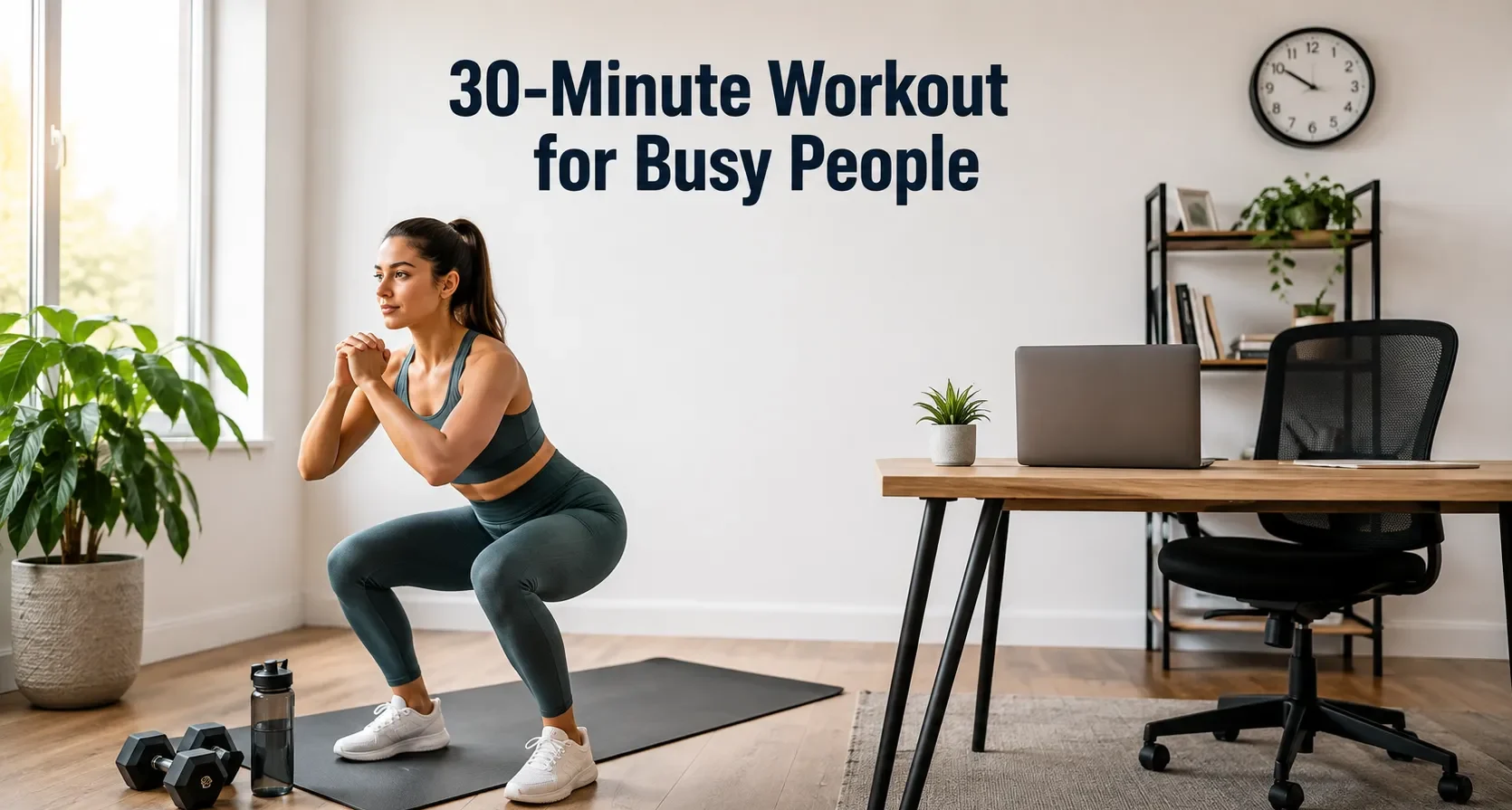
Have you ever finished a long workday and realized there was no time left to exercise? Maybe your calendar was full of meetings, your children needed your attention, or you spent hours studying or traveling. I have seen this happen to many beginners, and I have experienced it myself during busy periods. It is easy to believe that staying fit requires an hour at the gym every day. Because of this belief, many people skip workouts completely and slowly lose the habit of exercising.
The good news is that you do not need a perfect schedule to improve your health. In my experience, one of the biggest changes people can make is replacing the idea of “finding more time” with “using time better.” A well-planned 30-minute workout for busy people can help you build strength, improve your fitness, boost your energy, and reduce stress without taking over your day. Whether you are a busy professional, parent, student, remote worker, beginner, or frequent traveler, this guide will show you how to make every minute count and build a fitness routine you can actually maintain.
Why a 30-Minute Workout Is Enough
Many beginners think longer workouts always produce better results. However, workout quality is often more important than workout length. If you choose the right exercises and stay consistent, 30 minutes can be enough to improve your overall fitness.
A full-body workout uses several muscle groups at the same time. This helps you get more done in less time. Compound exercises such as squats, push-ups, rows, and lunges train multiple muscles with each movement. As a result, you burn more calories while building strength and endurance.
Shorter workouts are also easier to fit into a busy schedule. This makes it more likely that you will stay consistent. Over time, regular exercise leads to better results than doing one long workout once in a while.
For beginners, a 30-minute session is easier to recover from. It allows your body to adapt gradually while reducing the risk of overtraining.
30-Minute Workout at a Glance
A balanced 30-minute workout for busy people includes a short warm-up, a full-body exercise circuit, and a cool-down. This structure helps you train safely and use your limited time well.
- 5 minutes: Dynamic warm-up
- 20 minutes: Full-body strength circuit
- 5 minutes: Cool-down and stretching
- Recommended frequency: Three to five times per week
- Fitness level: Beginner to intermediate
- Equipment: Bodyweight, dumbbells, or resistance bands
Benefits of a 30-Minute Workout for Busy People
A short workout offers more than just convenience. It can improve your physical health, support your mental well-being, and make your daily routine more productive.
Saves Time Without Sacrificing Results
Many people skip exercise because they think they do not have enough free time. A 30-minute workout removes this barrier. You can exercise before work, during your lunch break, or after dinner without changing your entire schedule.
Builds Full-Body Strength
A balanced workout trains your legs, chest, back, shoulders, arms, and core in one session. This helps improve your overall strength and supports everyday activities like lifting, climbing stairs, and carrying groceries.
Burns Calories Efficiently
Full-body exercises keep your body moving throughout the workout. This increases your heart rate and helps burn calories while improving cardiovascular fitness.
Increases Daily Energy
Regular exercise improves blood flow and oxygen delivery throughout your body. Many people notice higher energy levels after adding short workouts to their weekly routine.
Supports Weight Management
When combined with balanced nutrition, regular 30-minute workouts can help create the calorie deficit needed for healthy weight loss while preserving lean muscle.
Improves Mood and Reduces Stress
Exercise encourages your body to release natural chemicals that help improve mood and reduce everyday stress. Even a short workout can leave you feeling refreshed and more focused.
Helps You Stay Consistent
The best workout is the one you can continue doing. Since a 30-minute workout is realistic for most schedules, it becomes easier to turn exercise into a lasting habit.
Who Should Follow This 30-Minute Workout?
This workout is designed for people who want better fitness without spending hours exercising. It works well for beginners and anyone with a busy lifestyle.
Busy Professionals
Long meetings, commuting, and deadlines can make exercise difficult. This workout fits easily before work, after work, or during a lunch break, making it easier to stay active throughout the week.
Remote Workers
Working from home often means sitting for many hours. A 30-minute workout helps improve posture, reduce stiffness, and add movement to your day.
Parents
Parents often put their family’s needs first. A shorter workout can fit into nap time, early mornings, or evenings after the children are asleep.
College Students
Students balance classes, assignments, and part-time jobs. A quick workout helps improve energy, reduce stress, and support better concentration without requiring expensive equipment.
Beginners Restarting Their Fitness Journey
If you have not exercised for months or even years, this workout gives you a simple place to begin. The exercises are easy to learn and can be adjusted to match your current fitness level.
Frequent Travelers
Business trips and vacations can interrupt your routine. Many exercises in this guide can be performed with little or no equipment, making it easier to stay active wherever you are.
Is This Workout Right for Beginners?
Yes. This workout is designed with beginners in mind.
Each exercise focuses on proper movement instead of heavy weights or advanced techniques. You can start with bodyweight exercises and add resistance later as your strength improves.
Move at a comfortable pace and focus on good form. Taking short breaks between exercises is completely normal. As your fitness improves, you can increase your repetitions, reduce your rest time, or use light dumbbells or resistance bands.
Remember that progress happens gradually. Every workout helps your body become stronger and healthier.
Beginner Readiness Check
Before starting your first workout, spend a few minutes checking whether your body is ready for basic strength training.
Ask yourself these simple questions.
- Can you sit down and stand up without pain?
- Can you lift both arms comfortably above your head?
- Can you hold a plank for about 20 seconds?
- Can you balance on one leg for at least 15 seconds?
- Can you perform a bodyweight squat without knee pain?
If you answered yes to most of these questions, you are ready to begin this 30-minute workout.
If one movement feels difficult, do not worry. Start slowly, practice regularly, and improve one step at a time. Small improvements lead to long-term success.
How This 30-Minute Workout Is Structured
A simple structure makes every minute count. Instead of guessing what to do next, you will follow a clear plan from start to finish.
| Workout Phase | Time |
|---|---|
| Warm-Up | 5 minutes |
| Full-Body Workout | 20 minutes |
| Cool-Down and Stretching | 5 minutes |
This balanced approach prepares your body for exercise, trains all major muscle groups, and finishes with stretching to support recovery.
| Workout Phase | Time | Activities | Purpose |
|---|---|---|---|
| Warm-Up | 5 minutes | Marching, arm circles, hip circles, squats, and step jacks | Prepare the muscles and gradually raise the heart rate |
| Main Circuit | 20 minutes | Squats, push-ups, lunges, rows, glute bridges, and planks | Build strength, improve endurance, and train the full body |
| Cool-Down | 5 minutes | Slow walking, deep breathing, and gentle stretching | Lower the heart rate and reduce muscle tightness |
Warm-Up (5 Minutes)
A proper warm-up prepares your muscles and joints for exercise. It also increases your heart rate gradually and helps reduce the risk of injury.
Perform each movement for about one minute.
- March in place
- Arm circles
- Bodyweight squats
- Hip circles
- Walking lunges or alternating reverse lunges
- Light jumping jacks or step jacks if you prefer a lower-impact option
Keep your movements controlled and comfortable. You should feel warm and ready to exercise without becoming tired.
At the end of your warm-up, take a sip of water and prepare for the main 20-minute full-body workout, where you will train your entire body using simple and effective beginner-friendly exercises.
Main 20-Minute Full-Body Workout
The main workout is designed to train your entire body in just 20 minutes. Every exercise works several muscle groups at once, helping you build strength while improving your heart health.
Perform each exercise for 40 seconds, then rest for 20 seconds before moving to the next one. Complete the circuit twice.
If you are a beginner, move slowly and focus on proper form. You can rest longer if needed.
| Exercise | Primary Muscles Worked |
|---|---|
| Bodyweight Squats | Legs, glutes, core |
| Push-Ups or Incline Push-Ups | Chest, shoulders, triceps |
| Reverse Lunges | Legs, glutes, balance |
| Bent-Over Dumbbell Rows or Resistance Band Rows | Back, biceps |
| Glute Bridges | Glutes, hamstrings, core |
| Plank | Core, shoulders, lower back |
Take one to two minutes to catch your breath after completing the first round before starting the second.
By the end of this workout, you will have trained every major muscle group without spending hours in the gym.
Exercise Instructions
1. Bodyweight Squats
Stand with your feet about shoulder-width apart.
Lower your hips as if you are sitting in a chair. Keep your chest up and your knees pointing in the same direction as your toes. Push through your heels to return to the starting position.
Beginner Tip: Use a chair behind you for support if needed.
2. Push-Ups or Incline Push-Ups
Place your hands slightly wider than your shoulders.
Lower your body until your chest comes close to the floor. Push yourself back up with control.
If a standard push-up feels too difficult, place your hands on a sturdy bench, table, or wall.
3. Reverse Lunges
Stand tall with your feet together.
Step one foot backward and lower both knees. Push through your front heel to return to standing before switching legs.
Keep your upper body straight throughout the movement.
4. Bent-Over Rows
Hold two light dumbbells or a resistance band.
Bend slightly at your hips while keeping your back flat. Pull your elbows toward your body and slowly lower the weight.
If you do not have equipment, perform a backpack row using a backpack filled with books.
5. Glute Bridges
Lie on your back with your knees bent.
Press your feet into the floor and lift your hips until your body forms a straight line from your shoulders to your knees.
Pause briefly before lowering with control.
6. Plank
Place your forearms on the floor.
Keep your body in a straight line from your head to your heels.
Tighten your stomach muscles and avoid letting your hips sag.
If needed, perform the plank on your knees until your strength improves.
Beginner Workout Modifications
Everyone starts at a different fitness level. Adjust the workout to match your ability instead of trying to keep up with others.
If you are new to exercise:
- Reduce the exercise time to 30 seconds.
- Increase your rest period to 30 seconds.
- Complete only one round during your first week.
- Use bodyweight before adding resistance.
- Stop immediately if you feel sharp pain.
Remember that consistency matters much more than speed.
| Exercise | Standard Version | Easier Option | Form Tip |
|---|---|---|---|
| Squat | Bodyweight squat | Chair-assisted squat | Keep your chest raised and knees in line with your toes |
| Push-Up | Floor push-up | Wall or incline push-up | Keep your body straight and lower yourself with control |
| Reverse Lunge | Alternating reverse lunge | Supported split squat | Hold a wall or chair if you need help with balance |
| Row | Dumbbell row | Light resistance-band row | Keep your back flat and pull your elbows toward your body |
| Plank | Forearm plank | Knee plank or elevated plank | Tighten your core and avoid letting your hips drop |
Safety note: Stop exercising if you feel sharp pain, dizziness, chest discomfort, or unusual shortness of breath.

Home Workout vs Gym Workout
One of the biggest advantages of this 30-minute workout is its flexibility. You can complete it almost anywhere.
| Home Workout | Gym Workout |
|---|---|
| Requires little or no equipment | Access to more equipment |
| Saves travel time | Greater exercise variety |
| Easy to fit into busy mornings | Easier to increase resistance |
| Comfortable for beginners | Professional training environment |
| Ideal for parents and remote workers | Suitable for progressive strength training |
Both options produce excellent results when you stay consistent.
Choose the environment where you are most likely to exercise regularly.
Morning vs Evening Workout
Many people wonder when they should exercise.
The answer depends on your schedule.
Morning Workout
A morning workout helps you start the day with more energy. Many busy professionals find it easier to exercise before work because fewer distractions get in the way.
Morning workouts may also help you build a consistent habit since your schedule is often more predictable early in the day.
Morning workouts are a good choice if you:
- Like structured routines
- Have busy evenings
- Want more energy throughout the day
Evening Workout
An evening workout helps many people reduce stress after work. Your muscles are usually warmer later in the day, and you may feel stronger during resistance exercises.
Evening workouts are a good option if you:
- Prefer exercising after work
- Feel stronger later in the day
- Use exercise to relieve stress
The best workout time is the one you can follow every week.
Workout Variations for Different Lifestyles
No two people have the same daily routine. Choose the workout style that matches your lifestyle.
30-Minute Home Workout
Perfect for:
- Parents
- Remote workers
- Beginners
Equipment:
- Yoga mat
- Optional resistance band
- Optional dumbbells
30-Minute Gym Workout
Perfect for:
- People with gym access
- Beginners learning equipment
- Anyone wanting more resistance
Equipment:
- Dumbbells
- Cable machine
- Bench
- Resistance machines
30-Minute Bodyweight Workout
Perfect for:
- Beginners
- Travelers
- Small apartments
Equipment:
- None
30-Minute Dumbbell Workout
Perfect for:
- Building strength
- Increasing muscle tone
- Progressive overload
Equipment:
- Pair of light dumbbells
30-Minute Resistance Band Workout
Perfect for:
- Home workouts
- Joint-friendly resistance
- Beginners
Equipment:
- Resistance bands
30-Minute Low-Impact Workout
Perfect for:
- Older adults
- People recovering from inactivity
- Anyone with joint discomfort
Replace jumping exercises with slower, controlled movements while keeping your heart rate elevated.
Estimated Calories Burned During a 30-Minute Workout
The number of calories you burn depends on your body weight, workout intensity, and fitness level.
The table below provides general estimates.
| Body Weight | Moderate Workout | Vigorous Workout |
|---|---|---|
| 120 lb (54 kg) | 140–180 calories | 220–270 calories |
| 150 lb (68 kg) | 180–230 calories | 260–320 calories |
| 180 lb (82 kg) | 220–280 calories | 320–390 calories |
| 220 lb (100 kg) | 260–340 calories | 390–480 calories |
Do not focus only on calories burned. Building strength, improving endurance, and staying active are equally important for long-term health.
What Equipment Do You Need?
You can complete this workout with little or no equipment.
Here are your options.
| Equipment | Best For | Recommended for Beginners |
|---|---|---|
| Bodyweight | Learning proper form | ✓ |
| Resistance Bands | Full-body strength | ✓ |
| Light Dumbbells | Progressive strength training | ✓ |
| Adjustable Bench | Advanced home workouts | Optional |
| Pull-Up Bar | Upper-body strength | Later in your fitness journey |
Start with what you already have. Expensive equipment is not necessary to become healthier.
8-Week Progression Plan
One mistake many beginners make is repeating the same workout every week. Your body adapts over time, so you need to increase the challenge gradually.
Follow this simple progression plan.
| Week | Goal |
|---|---|
| Week 1 | Learn proper exercise form and complete one or two rounds comfortably. |
| Week 2 | Increase repetitions while maintaining good technique. |
| Week 3 | Reduce your rest time slightly between exercises. |
| Week 4 | Add light dumbbells or resistance bands if available. |
| Week 5 | Increase workout intensity with controlled movements. |
| Week 6 | Complete the full workout with fewer breaks. |
| Week 7 | Improve speed without sacrificing proper form. |
| Week 8 | Compare your strength and endurance with Week 1 and celebrate your progress. |
Small improvements each week lead to lasting results. Avoid rushing the process.
Nutrition Tips for Busy People
Exercise is only one part of a healthy lifestyle. Good nutrition gives your body the energy it needs to perform and recover.
You do not need a complicated meal plan. Focus on balanced meals that include lean protein, whole grains, healthy fats, fruits, and vegetables.
Pre-Workout Snack Ideas
If you are hungry before exercising, choose a light snack about 30 to 60 minutes before your workout.
Good options include:
- A banana with peanut butter
- Greek yogurt with berries
- Whole-grain toast with peanut butter
- An apple with a handful of nuts
- Oatmeal with sliced fruit
Keep your snack light so you feel comfortable during exercise.
Post-Workout Meal Ideas
Eating after your workout helps your muscles recover.
Choose meals that include both protein and healthy carbohydrates.
Examples include:
- Grilled chicken with brown rice and vegetables
- Eggs with whole-grain toast
- Tuna sandwich on whole-grain bread
- Cottage cheese with fruit
- Protein smoothie with milk, banana, and oats
Stay Hydrated
Drink water throughout the day instead of waiting until you feel thirsty.
Hydration helps regulate body temperature, supports muscle function, and improves workout performance.
Carry a reusable water bottle if you spend long hours at work or travel frequently.
Recovery Is Part of the Workout
Many beginners think progress only happens during exercise. In reality, your muscles recover and grow stronger after your workout.
Recovery deserves the same attention as training.
Get Enough Sleep
Aim for seven to nine hours of sleep each night whenever possible.
Quality sleep helps your muscles repair and prepares your body for the next workout.
Take Rest Days
Rest days do not mean doing nothing.
Gentle walking, stretching, or yoga can improve blood flow while giving your muscles time to recover.
Stretch After Every Workout
Spend five minutes stretching the muscles you worked.
This can improve flexibility and reduce muscle tightness.
Eat Enough Protein
Protein supports muscle recovery and helps maintain lean muscle while you become stronger.
Include a source of protein with each meal whenever possible.
Common Mistakes to Avoid
Avoiding these common mistakes will help you stay safe and see better results.
Skipping the Warm-Up
Jumping straight into exercise increases the risk of injury.
Always prepare your muscles with a few minutes of movement.
Using Poor Exercise Form
Good technique is more important than speed.
Move slowly and with control until you learn each exercise correctly.
Doing Too Much Too Soon
Trying advanced workouts before your body is ready can lead to soreness or injury.
Increase the difficulty gradually.
Ignoring Recovery
Recovery is part of every successful fitness plan.
Give your muscles time to rest and rebuild.
Comparing Yourself to Others
Everyone begins at a different fitness level.
Focus on your own progress instead of comparing yourself with others.
Skipping Workouts After Missing One Day
Missing one workout is normal.
The important thing is returning to your routine as soon as possible.
How to Stay Consistent Even With a Busy Schedule
Consistency produces better results than perfection.
These simple habits can help you stay active throughout the year.
Schedule Your Workout Like an Important Meeting
Treat your workout as a non-negotiable appointment.
Block 30 minutes on your calendar before someone else fills that time.
Prepare the Night Before
Lay out your workout clothes, shoes, and water bottle before going to bed.
Removing small obstacles makes it easier to start.
Keep Your Workout Simple
You do not need dozens of exercises.
A few well-chosen movements performed consistently produce excellent results.
Focus on Progress, Not Perfection
Some days you will feel strong.
Other days you may only complete part of your workout.
Both days count because you showed up.
Find an Accountability Partner
Working out with a friend, family member, or coworker can increase motivation.
Even checking in once a week helps many people stay consistent.
Track Your Progress
Write down your workouts in a notebook or use a fitness app.
Tracking your progress helps you see improvements that may otherwise go unnoticed.
Record things like:
- Workout days completed
- Number of repetitions
- Exercise difficulty
- Body measurements if desired
- Energy levels
- Personal achievements
Small improvements add up over time.

Staying Active During Busy Days
Some days will not go as planned.
Instead of skipping movement completely, look for small opportunities to stay active.
You can:
- Take the stairs instead of the elevator.
- Walk during phone calls.
- Stretch between meetings.
- Park farther from the entrance.
- Take short walking breaks every hour.
- Perform a few bodyweight squats while waiting for your coffee.
These small habits support your overall health and make it easier to maintain an active lifestyle.
Signs Your Fitness Is Improving
The scale is only one way to measure progress.
Watch for other positive changes such as:
- You complete workouts with less effort.
- You recover faster after exercise.
- Your posture improves.
- Everyday tasks feel easier.
- You have more energy throughout the day.
- You sleep better.
- Your balance and coordination improve.
- You feel more confident.
These improvements show that your body is becoming stronger, even if your weight changes slowly.
Staying Motivated for the Long Term
Motivation naturally comes and goes.
Healthy habits keep you moving even when motivation is low.
Remember why you started.
Celebrate small victories.
Stay patient with yourself.
A consistent 30-minute workout performed several times each week can improve your strength, endurance, confidence, and overall health for years to come.
Conclusion
A 30-minute workout for busy people proves that you do not need hours in the gym to become healthier and stronger. From my experience, the people who see the best long-term results are not those with the most free time but those who stay consistent, even on their busiest days. Start with simple exercises, focus on proper form, eat balanced meals, stay hydrated, and allow your body to recover between workouts. Remember, every 30-minute session is an investment in your health, energy, and confidence. Stay patient, keep showing up, and you will build a fitness routine that fits your lifestyle and delivers lasting results.
Key Takeaway
You do not need hours in the gym to improve your fitness. A well-planned 30-minute workout can build strength, improve endurance, reduce stress, and help you stay active during a busy week.
Start with this simple plan:
- Choose three workout days this week.
- Block 30 minutes on your calendar.
- Complete the 5-minute warm-up.
- Perform the 20-minute full-body circuit.
- Finish with a 5-minute cool-down.
- Track your progress and increase the challenge slowly.
Remember: A shorter workout completed consistently is more useful than a longer workout you rarely perform.
