


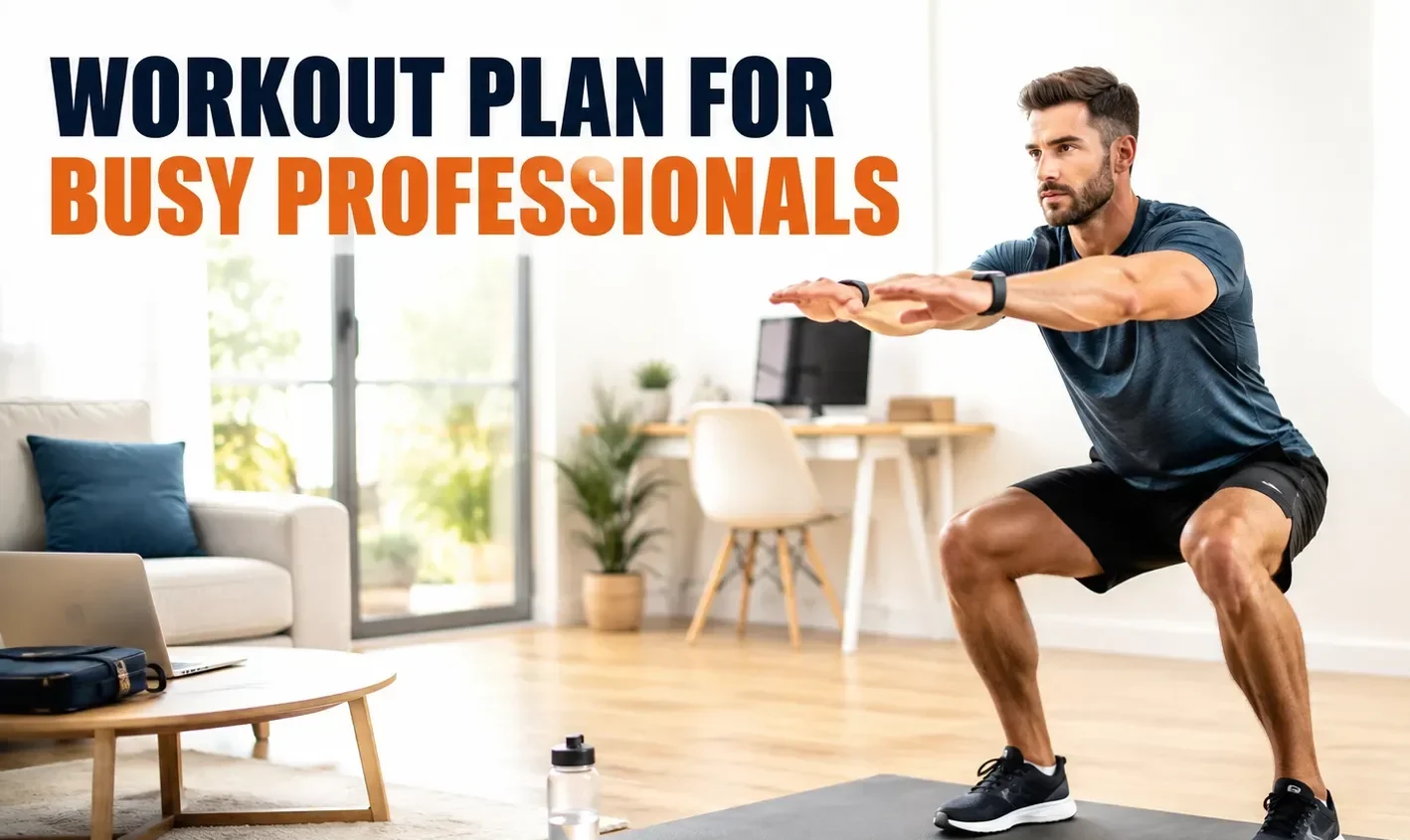
A busy work schedule can make fitness feel like another task on an already full to-do list. You may start the day with good intentions, but meetings run late, deadlines appear, your commute takes longer than expected, or you simply feel too tired after work. I have seen this happen repeatedly with people who genuinely want to stay active but struggle to follow workout plans designed for people with unlimited time. The problem is often not a lack of motivation. It is that many workout routines are too long, too rigid, and difficult to fit into real life.
The most effective approach is not to force yourself to spend hours at the gym. From practical fitness experience and the challenges busy people commonly face, a better plan is one that adapts to your schedule. Some days, you may have 30 minutes for a full workout. On other days, 10 minutes of focused movement may be all you can manage. This workout plan for busy professionals is built around that reality, with flexible options based on your available time, energy level, schedule, and workout location.
Quick Takeaway
The best workout plan for busy professionals is one that fits into a realistic schedule. You do not need to spend hours at the gym.
- Train 2 to 4 days per week based on your schedule.
- Keep most workouts between 20 and 45 minutes.
- Use full-body and compound exercises to save time.
- Keep a 10-minute backup workout for busy days.
- Adjust your workout based on your energy and available time.
The main goal is consistency, not perfection. A workout plan that fits your real life is easier to follow over time.
What Is the Best Workout Plan for Busy Professionals?
The best workout plan for busy professionals is one that fits your schedule and helps you stay consistent.
For many people, this means:
- Working out 2 to 4 days per week
- Using full-body workouts
- Focusing on compound movements
- Keeping workouts between 20 and 45 minutes
- Having shorter backup workouts for busy days
- Adding walking and other forms of daily movement
Adults are generally advised to aim for at least 150 minutes of moderate-intensity activity each week, along with muscle-strengthening activities on at least two days. However, physical activity can be spread across the week, and some activity is better than none.
The goal is not to create a perfect schedule.
The goal is to create a workout routine that you can continue even during busy weeks.
Why Traditional Workout Plans Can Be Difficult for Busy Professionals
Many workout plans are built around an ideal lifestyle.
They may ask you to:
- Exercise five or six days per week
- Spend more than one hour at the gym
- Follow a strict schedule
- Perform many different exercises
- Never miss a workout
This approach may not work for someone with a demanding job.
Busy professionals often have changing schedules. A late meeting, business trip, deadline, or family responsibility can affect a workout plan.
A better approach is flexibility.
Your workout routine should adapt to your life instead of making your life revolve around your workout.
Why Strength Training Can Support a Busy Lifestyle
Strength training can be a useful part of a busy professional workout plan because it can work several major muscle groups in one session.
Exercises such as squats, presses, rows, and lunges can make your workouts more time-efficient.
You do not need to perform a long list of exercises every day.
A few well-chosen movements can create a simple full-body workout.
Strength training can also be combined with walking, cycling, running, or other forms of cardio.
The key is to choose activities that match your fitness level, goals, and available time.
How Much Should Busy Professionals Exercise?
The amount of exercise you can do depends on your schedule and fitness level.
You do not need to copy someone else’s routine.
Choose a plan that you can realistically maintain.
Option 1: Two Days Per Week
A two-day plan can work well for people with very limited time.
Use full-body workouts on both days.
For example:
- Tuesday: Full-body workout
- Saturday: Full-body workout
You can also add short walks during the week.
Option 2: Three Days Per Week
A three-day workout plan is a practical choice for many busy professionals.
For example:
- Monday: Full body
- Wednesday: Full body
- Friday: Full body
This schedule gives you rest days between most workouts.
Option 3: Four Days Per Week
A four-day plan may work if you have more time.
For example:
- Monday: Upper body
- Tuesday: Lower body
- Thursday: Upper body
- Friday: Lower body
Choose this option only if it fits your lifestyle.
More workout days are not always better if they make consistency harder.
Choose Your Workout Based on the Time You Have
One of the biggest challenges for busy professionals is that available time can change every day.
Instead of following one rigid workout, use a flexible system.
| Time Available | Workout Option |
|---|---|
| 10 minutes | Quick movement circuit |
| 15 minutes | Express full-body workout |
| 20 minutes | Full-body strength workout |
| 30 minutes | Strength and cardio workout |
| 45 minutes | Complete workout with strength and mobility |
This approach gives you options.
You can still move your body even when you do not have time for your normal workout.
The 10-Minute Workout for Busy Professionals
A 10-minute workout is useful on your busiest days.
You can perform this routine at home or in a hotel room.
Quick 10-Minute Circuit
Complete the following exercises:
- Bodyweight squats: 10 repetitions
- Push-ups: 8 to 10 repetitions
- Reverse lunges: 8 repetitions per leg
- Glute bridges: 12 repetitions
- Plank: 20 to 30 seconds
Repeat the circuit for as many quality rounds as your time allows.
Move with control.
If you are new to exercise, reduce the repetitions or take longer rest periods.
The goal is not to have the hardest workout possible.
The goal is to keep the habit alive.
The 15-Minute Express Full-Body Workout
If you have 15 minutes, try this simple circuit.
Warm Up
Spend two minutes moving gently.
You can:
- Walk in place
- Roll your shoulders
- Move your arms
- Perform easy bodyweight squats
Main Workout
Complete three rounds:
- Squats: 10 repetitions
- Incline or regular push-ups: 8 to 10 repetitions
- Dumbbell rows: 10 repetitions per side
- Glute bridges: 12 repetitions
- Plank: 20 seconds
Rest when needed.
Focus on good form.
The 20-Minute Full-Body Workout
A 20-minute workout can be a strong option when you want a short but focused training session.
Full-Body Routine
Complete three rounds:
- Goblet squat or bodyweight squat: 10 to 12 repetitions
- Push-ups or dumbbell chest press: 8 to 12 repetitions
- Dumbbell row: 10 repetitions per side
- Romanian deadlift: 10 repetitions
- Plank: 30 seconds
Rest for about 30 to 60 seconds when needed.
If you are a beginner, use lighter weights and focus on learning the movement.
The 30-Minute Workout Plan for Busy Professionals
A 30-minute workout gives you more time for strength training and cardio.
Warm-Up: 5 Minutes
Start with:
- Brisk walking
- Arm circles
- Hip movements
- Bodyweight squats
Strength Workout: 20 Minutes
Perform:
- Squat or leg press: 3 sets
- Push-up or chest press: 3 sets
- Row or lat pulldown: 3 sets
- Romanian deadlift: 3 sets
Choose a weight that allows you to use good form.
Cardio Finish: 5 Minutes
Choose one activity:
- Fast walking
- Cycling
- Rowing
- Light jogging
You can also skip the cardio if you are short on time and focus on strength training.
The 45-Minute Workout for Busy Professionals
If you have more time, you can complete a fuller session.
Warm-Up: 5 to 10 Minutes
Prepare your body with light movement.
Strength Training: 25 Minutes
Perform:
- Squat variation
- Press variation
- Row variation
- Hip hinge movement
- Core exercise
Cardio: 10 Minutes
Choose a moderate activity such as:
- Brisk walking
- Cycling
- Jogging
- Rowing
This workout can be completed at the gym or at home with suitable equipment.
The Best 3-Day Workout Plan for Busy Professionals
A three-day routine can provide structure without taking over your week.
Day 1: Full-Body Strength
- Squats: 3 sets of 8 to 12
- Push-ups: 3 sets of 8 to 12
- Dumbbell rows: 3 sets of 8 to 12
- Glute bridges: 3 sets of 10 to 15
- Plank: 3 rounds
Day 2: Full-Body Strength and Movement
- Lunges: 3 sets
- Shoulder press: 3 sets
- Rows: 3 sets
- Romanian deadlift: 3 sets
- Short walk or cardio: 10 minutes
Day 3: Full-Body Workout
- Goblet squats: 3 sets
- Chest press: 3 sets
- Lat pulldown or rows: 3 sets
- Hip hinge exercise: 3 sets
- Core exercise: 3 rounds
You can adjust exercises based on your equipment and experience.
The 2-Day Workout Plan for Extremely Busy Professionals
If you only have two days each week, do not assume exercise is impossible.
Focus on full-body workouts.
Day 1
- Squat
- Push
- Pull
- Hip hinge
- Core
Day 2
- Lunge
- Press
- Pull
- Glute exercise
- Core
Try to work your major muscle groups during both sessions.
You can add walking on other days when possible.
The 4-Day Workout Plan for Busy Professionals
A four-day routine can work well if your schedule is more predictable.
Day 1: Upper Body
- Chest press
- Row
- Shoulder press
- Lat pulldown
- Core
Day 2: Lower Body
- Squat
- Romanian deadlift
- Lunges
- Glute bridge
- Calf raises
Day 3: Upper Body
Use different variations of pushing and pulling exercises.
Day 4: Lower Body
Use different lower-body movements.
Keep the workouts focused.
You do not need to spend hours training.
Choose Your Workout Based on Your Energy Level
Busy professionals do not have the same energy every day.
This is why a flexible workout system can help.
High-Energy Days
Choose a harder workout.
You can:
- Lift weights
- Perform a full-body workout
- Add short cardio
- Use a challenging but safe level of effort
Medium-Energy Days
Complete a moderate workout.
You can:
- Reduce the weight
- Perform fewer sets
- Walk for cardio
- Use a shorter full-body routine
Low-Energy Days
Choose gentle movement.
You can:
- Take a walk
- Perform mobility exercises
- Stretch lightly
- Use an easy home workout
Do not think of every low-energy day as failure.
Your body may need a lighter session.
The Busy Professional Workout System
Before choosing your workout, answer these four simple questions:
1. How Much Time Do You Have?
Choose between 10, 20, 30, or 45 minutes.
2. How Many Days Can You Train?
Choose a realistic 2, 3, or 4-day workout schedule.
3. How Is Your Energy Today?
Choose a high, moderate, or low-intensity workout.
4. Where Are You Working Out?
Choose a home, gym, office, or hotel workout.
Use these four factors to choose a workout that fits your day instead of forcing yourself to follow a rigid routine.
How to Structure Your Workout for a Busy Schedule
A simple structure can save time and reduce decision fatigue.
Prioritize Compound Movements
Compound movements use several muscles at the same time.
Examples include:
- Squats
- Lunges
- Push-ups
- Rows
- Deadlifts
- Presses
These exercises can make your workout more efficient.
However, beginners should learn proper form before increasing weight or intensity.
Keep Your Exercise List Short
You do not need 12 different exercises in one workout.
Try choosing:
- One lower-body movement
- One pushing movement
- One pulling movement
- One hip movement
- One core exercise
This simple structure can create a complete full-body session.
Use Short Rest Periods When Appropriate
Rest periods depend on your exercise, fitness level, and goal.
You do not need to rush through every workout.
However, planning your rest periods can help you manage your time.
Prepare Your Workout Before You Start
Decide your exercises before you enter the gym.
This reduces wasted time.
Write down:
- Exercises
- Sets
- Repetitions
- Approximate workout time
A clear plan makes it easier to start.
Home Workout Plan for Busy Professionals
You do not always need a gym.
A home workout can save travel time.
No-Equipment Home Workout
Complete three rounds:
- Squats: 12 repetitions
- Push-ups: 8 to 12 repetitions
- Reverse lunges: 10 repetitions per leg
- Glute bridges: 15 repetitions
- Plank: 20 to 30 seconds
Dumbbell Home Workout
If you have dumbbells, try:
- Goblet squats
- Dumbbell chest press
- Dumbbell rows
- Romanian deadlifts
- Shoulder press
A small amount of equipment can provide many exercise options.

Gym Workout Plan for Busy Professionals
A gym can give you access to more equipment.
However, you still need an efficient plan.
Try a simple routine with:
- Squat or leg press
- Chest press
- Row
- Lat pulldown
- Romanian deadlift
- Core exercise
You do not need to use every machine in the gym.
Focus on your planned workout.
Workout Plan for Busy Professionals Who Travel
Business travel can disrupt your normal routine.
You may not have access to your gym or equipment.
Instead of skipping every workout, use a travel-friendly routine.
20-Minute Hotel Workout
Complete three rounds:
- Bodyweight squats: 15 repetitions
- Push-ups: 10 repetitions
- Reverse lunges: 10 repetitions per leg
- Mountain climbers: 20 repetitions
- Plank: 30 seconds
Adjust the exercises based on your fitness level and available space.
A short workout can help you maintain your routine while traveling.

The Minimum Effective Workout System
Busy professionals need a realistic plan.
You can use three different levels.
Level 1: Survival Week
Your schedule is extremely busy.
Goal:
- Complete two short workouts
- Add walking when possible
- Focus on movement instead of perfection
Level 2: Standard Week
Your schedule is manageable.
Goal:
- Complete three workouts
- Add regular walking or cardio
Level 3: Strong Week
You have more time and energy.
Goal:
- Complete three or four workouts
- Add cardio and mobility
This system can help you avoid an all-or-nothing mindset.
A busy week does not mean your fitness routine has failed.
It simply means you adjust the plan.
The Busy Day Backup Plan
A backup workout is important for busy professionals.
Your normal workout may not always happen.
Instead of skipping exercise completely, use Plan B or Plan C.
Plan A: 30-Minute Workout
Complete your normal full-body workout.
Plan B: 20-Minute Workout
Use a shorter full-body routine.
Plan C: 10-Minute Workout
Complete a quick movement circuit.
This gives you options when your day becomes unpredictable.
Your Plan A, Plan B, and Plan C Workout System
Do not let one busy day destroy your workout routine. Choose a backup plan based on the time you have.
Plan A: Full Workout
Time: 30 to 45 minutes
Complete your planned strength workout with optional cardio or mobility work.
Plan B: Short Workout
Time: 20 minutes
Complete a focused full-body workout using a few compound exercises.
Plan C: Emergency Workout
Time: 10 minutes
Complete a quick bodyweight circuit, take a brisk walk, or perform simple mobility exercises.
Remember: A shorter workout is not a failed workout. It is your backup plan for staying consistent.
What Should You Do When You Miss a Workout?
Missing one workout does not ruin your progress.
Do not:
- Double your next workout
- Punish yourself with extra exercise
- Restart your entire plan
Instead, continue with your next scheduled workout.
Consistency is built over months, not one day.
A flexible routine makes it easier to return after a missed session.
How to Stay Consistent When Life Gets Busy
Consistency is one of the biggest challenges for busy professionals.
Here are simple ways to make exercise easier.
Schedule Your Workout Like an Important Meeting
Choose a realistic time.
For example:
- Before work
- During a lunch break
- After work
- On weekends
You do not need to exercise at the same time every day.
However, having a general plan can help.
Choose the Best Time for Your Energy
Some people feel better in the morning.
Others prefer the evening.
There is no single best workout time for everyone.
Choose a time that fits your lifestyle and energy.
Prepare Your Workout Clothes
Prepare:
- Gym clothes
- Shoes
- Water bottle
- Workout equipment
Small preparation steps can reduce excuses.
Track Your Workouts
You can use:
- A notebook
- A fitness app
- A calendar
- A simple checklist
Tracking helps you see your progress.
How to Exercise When You Feel Too Tired After Work
Many professionals plan to exercise after work but feel exhausted.
Try using an energy-based decision.
If You Feel Good
Complete your planned workout.
If You Feel Somewhat Tired
Choose a shorter workout.
For example:
- 20-minute workout
- Light strength training
- Brisk walking
If You Feel Very Tired
Consider gentle movement or recovery.
You can:
- Walk
- Stretch lightly
- Perform mobility exercises
Listen to your body.
A lighter day can still be part of a healthy routine.
A Simple 5-Minute Mobility Routine for Office Workers
Long periods of sitting can make you feel stiff.
Try this short movement break.
Neck Movement
Gently move your neck through a comfortable range.
Shoulder Circles
Roll your shoulders slowly.
Chest Opener
Open your arms and gently stretch your chest.
Hip Movement
Stand and gently move your hips.
Short Walk
Walk around your office or home.
This routine is not a replacement for regular exercise.
However, short movement breaks can help you spend less time sitting still.
How to Make Time for Exercise With a Busy Job
You may not need to find a large block of free time.
Look for smaller opportunities.
Use Your Lunch Break
Take a walk.
Perform a short workout if you have access to a suitable space.
Reduce Travel Time
Home workouts can save time.
Combine Movement With Daily Life
Try:
- Walking during phone calls
- Taking the stairs
- Parking farther away
- Taking short walking breaks
Stop Waiting for the Perfect Time
There may never be a perfect day.
Start with the time you have.
Even a short session can help build a routine.
Workout Plan Based on Your Fitness Goal
Your workout plan should also match your main goal.
For General Fitness
Focus on:
- Strength training
- Cardio
- Walking
- Mobility
For Building Muscle
Focus on:
- Regular strength training
- Progressive training over time
- Good exercise form
- Adequate recovery
For Weight Management
Focus on:
- Regular physical activity
- Strength training
- Walking and other daily movement
- Sustainable eating habits
For Stress Relief and Energy
Focus on activities you enjoy.
This may include:
- Walking
- Strength training
- Cycling
- Yoga
- Light cardio
Choose an activity you can continue.
Can Short Workouts Really Be Effective?
Short workouts can be useful when they help you stay active and consistent.
You do not need to complete all physical activity in one long session.
Adults can spread activity across the week, and the right amount of activity depends on the type and intensity of exercise.
A 20-minute workout may be better than doing nothing because you believe you do not have enough time for a one-hour session.
The key is to build a routine that you can repeat.
Important Safety Tips Before Starting
Start slowly if you are new to exercise.
Focus on proper form before increasing weight or intensity.
You may need medical advice before starting a vigorous exercise program if you have been inactive or have certain health conditions.
Stop exercising and seek medical help if you experience serious or unusual symptoms.
Conclusion
A busy schedule does not mean that fitness has to disappear from your life. One of the biggest lessons I have learned from studying practical workout routines and observing the challenges busy people face is that consistency rarely comes from following the perfect plan. It comes from following a realistic plan. A routine that looks good on paper but requires hours of free time is difficult to maintain when work, family, travel, and unexpected responsibilities take over.
You do not need to complete every workout perfectly or train for long hours to build a healthier routine. Start with the time you actually have. If you have 30 minutes, use them. If your day becomes busy and you only have 10 minutes, choose a shorter workout instead of giving up completely. Over time, these small decisions can help you build a stronger and more consistent exercise habit.
The key is to make your workout plan work for your real life. Choose the number of workout days you can manage, adjust your training based on your energy, and keep a backup workout ready for difficult days. From an evidence-based fitness perspective, regular movement, strength training, and sustainable habits are more valuable than following an extreme routine for a short period.
The best workout plan for busy professionals is not the most difficult one. It is the one you can continue. Start small, stay flexible, and focus on building a routine that supports your health without adding more stress to your busy life.
