


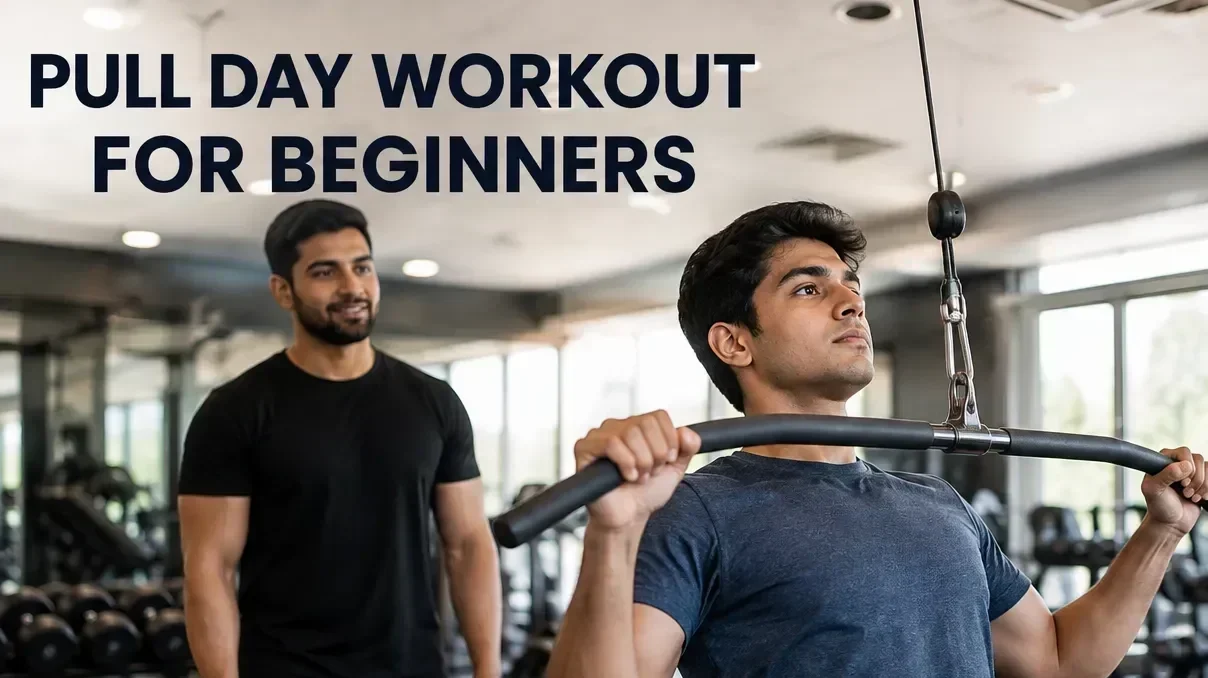
Walking into a gym for the first time can feel overwhelming. You see rows of machines, people lifting heavy weights, and exercises you have never tried before. Many beginners want to build a stronger back and arms, but they are unsure where to start. You may wonder which exercises to do, how much weight to lift, or whether you are using the correct form. It is also normal to worry about getting injured or feeling embarrassed if you cannot perform a pull-up.
I have seen many beginners make the same mistakes during their first few weeks of strength training. Most of them were not caused by a lack of effort but by a lack of clear guidance. The good news is that you do not need advanced workouts or heavy weights to make progress. A simple, well-structured pull day routine can help you build strength, improve posture, and gain confidence one workout at a time. This guide will show you exactly how to perform your first pull day safely and effectively, even if you have never trained before.
Pull Day Workout for Beginners: Quick Answer
A beginner pull day workout trains the back, biceps, rear shoulders, and forearms. Most beginners should perform four to six exercises using light or moderate weight.
- Workout length: 45 to 60 minutes
- Exercises: 4 to 6 movements
- Sets: 2 to 3 sets per exercise
- Repetitions: 8 to 15 reps
- Rest: 60 to 90 seconds between sets
- Frequency: 1 to 2 pull workouts per week
Beginners should focus on controlled movement and correct form before increasing the weight.
What Is a Pull Day?
A pull day is a strength training workout that includes exercises where you pull a weight toward your body. These movements mainly train the muscles on the back of your upper body and the front of your upper arms.
A pull day is usually part of a Push Pull Legs (PPL) workout split.
During a pull day, you focus on exercises such as:
- Lat pulldowns
- Seated cable rows
- Dumbbell rows
- Face pulls
- Biceps curls
Unlike a push day, which trains your chest, shoulders, and triceps, a pull day develops your back, biceps, and rear shoulder muscles.
For beginners, this workout is an excellent way to improve upper-body strength while learning proper lifting technique.
What Muscles Does a Pull Day Workout Train?
Understanding the muscles you train helps you perform each exercise with better control and focus.
A beginner pull day workout mainly targets the following muscles.
Latissimus Dorsi (Lats)
The latissimus dorsi, often called the lats, are the large muscles on each side of your back. They help pull your arms downward and toward your body.
Strong lats create a wider back and improve many everyday pulling movements.
Trapezius (Traps)
The trapezius muscles extend across your upper back and neck. They support good posture and help move your shoulder blades during pulling exercises.
Rhomboids
The rhomboids sit between your shoulder blades. These muscles pull your shoulders backward and help improve posture.
Training the rhomboids can reduce the rounded shoulders that many people develop from sitting for long hours.
Rear Deltoids
The rear deltoids are located on the back of your shoulders. They help move your arms backward and improve shoulder stability.
Many beginners overlook these muscles, but they play an important role in balanced upper-body development.
Biceps
The biceps are the muscles on the front of your upper arms. They bend your elbows during pulling exercises.
Almost every pull day movement works the biceps along with the back muscles.
Forearms
Your forearms help you grip dumbbells, barbells, cables, and pull-up bars.
A stronger grip makes many pulling exercises easier over time.

Equipment Needed
You do not need every piece of gym equipment to start a pull day workout. Beginners can build strength using basic equipment.
Common equipment includes:
- Lat pulldown machine
- Seated cable row machine
- Adjustable dumbbells
- Resistance bands
- Assisted pull-up machine
- Exercise bench
If you work out at home, a pair of dumbbells and resistance bands are enough to complete many beginner pull exercises.
Beginner Readiness Check
Before starting your first pull day workout, make sure your body is ready for basic strength training.
Ask yourself these questions.
- Can you lift both arms overhead without pain?
- Can you hold a light dumbbell comfortably?
- Can you pull a resistance band toward your chest with control?
- Can you hang from a pull-up bar for a few seconds if one is available?
- Can you move your shoulders through a full range of motion without discomfort?
If you answered yes to most of these questions, you are ready to begin.
If one movement feels difficult, do not worry. Start with lighter resistance and improve gradually. Building strength takes time, and every beginner starts somewhere.
Why Beginners Should Include Pull Days
Many beginners spend too much time training their chest and arms while ignoring their back.
This creates muscle imbalances that can affect posture and increase the risk of injury.
Adding a pull day to your weekly routine offers several benefits.
It helps you:
- Build a stronger back
- Improve posture
- Increase grip strength
- Strengthen your biceps and forearms
- Support healthier shoulders
- Balance your upper-body training
- Prepare for pull-ups and other advanced exercises
Training your pulling muscles also makes daily activities easier, such as lifting boxes, carrying groceries, or opening heavy doors.
Warm-Up Before Your Pull Day Workout
A proper warm-up prepares your muscles and joints for exercise. It also reduces stiffness and helps you move with better control.
Spend about five minutes warming up before lifting weights.
Perform the following exercises.
Arm Circles
Complete 10 forward circles and 10 backward circles.
Shoulder Rolls
Roll your shoulders forward and backward 10 times.
Resistance Band Pull-Aparts
Perform 12 to 15 slow repetitions.
Cat-Cow Stretch
Complete 8 to 10 controlled repetitions.
Dead Hang (Optional)
If a pull-up bar is available, hang comfortably for 10 to 20 seconds.
Scapular Pull-Ups (Optional)
Perform 8 to 10 slow repetitions without bending your elbows.
After this warm-up, your shoulders, upper back, and arms will be ready for your workout.
Beginner Pull Day Workout
The following routine is simple, effective, and suitable for most beginners.
Focus on learning proper technique instead of lifting heavy weights.
| Exercise | Sets | Reps |
|---|---|---|
| Lat Pulldown | 3 | 10–12 |
| Seated Cable Row | 3 | 10–12 |
| Dumbbell Row | 3 | 10 each side |
| Face Pull | 2–3 | 12–15 |
| Dumbbell Biceps Curl | 2–3 | 10–12 |
Rest for about 60 to 90 seconds between each set.
Choose a weight that allows you to complete every repetition while maintaining good form.
During your first few weeks, your goal is not to lift the heaviest weight in the gym. Your goal is to learn the correct movement patterns and build a strong foundation.

Lat Pulldown
The lat pulldown is one of the best exercises for beginners because it strengthens your back while helping you prepare for pull-ups.
How to Perform a Lat Pulldown
- Sit on the machine and adjust the thigh pad so your legs stay secure.
- Hold the bar with a grip slightly wider than your shoulders.
- Keep your chest up and your back straight.
- Pull the bar toward your upper chest.
- Squeeze your shoulder blades together at the bottom.
- Slowly return the bar to the starting position.
Beginner Tip: Start with a light weight and focus on controlled movement instead of speed.
Common Mistakes
- Pulling the bar behind your neck
- Leaning too far backward
- Using momentum
- Letting the weight slam upward
Seated Cable Row
The seated cable row builds strength in your middle back and improves posture.
How to Perform a Seated Cable Row
- Sit with your feet firmly on the platform.
- Hold the handle with both hands.
- Keep your chest up and shoulders relaxed.
- Pull the handle toward your lower ribs.
- Pause for one second while squeezing your shoulder blades.
- Slowly extend your arms to return to the starting position.
Beginner Tip: Keep your body still. Only your arms and shoulder blades should move.
Common Mistakes
- Rounding the lower back
- Leaning backward too much
- Shrugging the shoulders
- Pulling with the arms instead of the back
Dumbbell Row
The dumbbell row trains one side of the body at a time. This helps improve muscle balance and coordination.
How to Perform a Dumbbell Row
- Place one knee and one hand on a flat bench.
- Hold a dumbbell in your opposite hand.
- Keep your back flat and your neck neutral.
- Pull the dumbbell toward your waist.
- Lower it slowly with control.
- Complete all repetitions before switching sides.
Beginner Tip: Imagine pulling with your elbow instead of your hand. This helps activate your back muscles.
Common Mistakes
- Twisting the body
- Lifting the shoulder toward the ear
- Swinging the dumbbell
- Rushing through the movement
Face Pull
The face pull strengthens the rear shoulders and upper back. It also improves shoulder health and posture.
How to Perform a Face Pull
- Attach a rope to a cable machine at face height.
- Hold the rope with both hands.
- Step back until the cable feels tight.
- Pull the rope toward your face.
- Keep your elbows high.
- Slowly return to the starting position.
Beginner Tip: Use light resistance and move slowly to maintain proper form.
Common Mistakes
- Using too much weight
- Dropping the elbows
- Pulling the rope to the chest instead of the face
- Leaning backward
Dumbbell Biceps Curl
The dumbbell biceps curl is a simple exercise that builds arm strength.
How to Perform a Dumbbell Biceps Curl
- Stand with a dumbbell in each hand.
- Keep your elbows close to your sides.
- Curl the weights toward your shoulders.
- Pause briefly at the top.
- Lower the dumbbells slowly.
Beginner Tip: Keep your upper arms still throughout the exercise.
Common Mistakes
- Swinging the body
- Moving the elbows forward
- Using weights that are too heavy
- Lowering the dumbbells too quickly
Recommended Sets, Reps, and Rest
Beginners do not need long workouts or heavy weights to make progress.
Use these guidelines during your first few months.
| Exercise Type | Sets | Reps | Rest |
|---|---|---|---|
| Compound Exercises | 3 | 8–12 | 90 seconds |
| Isolation Exercises | 2–3 | 10–15 | 60 seconds |
Choose a weight that feels challenging during the last few repetitions while still allowing you to maintain good form.
If your technique begins to break down, reduce the weight.
What If You Cannot Do a Pull-Up?
Many beginners cannot perform a full pull-up. This is completely normal.
Instead of avoiding back training, use beginner-friendly alternatives that help you build strength.
Good alternatives include:
- Lat Pulldown
- Assisted Pull-Up Machine
- Resistance Band Assisted Pull-Up
- Resistance Band Pulldown
- Inverted Row
- Straight-Arm Cable Pulldown
These exercises train similar muscles and prepare your body for your first pull-up.
Stay patient and practice consistently. Many beginners achieve their first pull-up after several weeks or months of regular training.
Cannot Do a Pull-Up Yet?
That is normal for a beginner. Use one of these easier pulling exercises while you build back, arm, grip, and shoulder strength.
| Alternative | Why It Helps | Beginner Target |
|---|---|---|
| Lat Pulldown | Copies the downward pulling motion with adjustable weight. | 3 sets of 10–12 |
| Assisted Pull-Up | Reduces the amount of body weight you must lift. | 3 sets of 6–10 |
| Resistance Band Pulldown | Offers a simple home option for training the lats. | 3 sets of 12–15 |
| Inverted Row | Builds pulling strength while your feet stay supported. | 3 sets of 8–12 |
Progress slowly. Move to a harder variation only when you can complete your target repetitions with controlled form.
Home Pull Day Workout
You do not need a gym membership to strengthen your back and arms.
If you exercise at home, try this beginner-friendly routine.
| Exercise | Sets | Reps |
|---|---|---|
| Resistance Band Row | 3 | 12–15 |
| One-Arm Dumbbell Row | 3 | 10 each side |
| Resistance Band Face Pull | 3 | 12–15 |
| Resistance Band Curl | 3 | 12–15 |
| Superman Hold | 3 | 20–30 seconds |
This workout requires only resistance bands or a pair of dumbbells.
Machine vs Dumbbells vs Resistance Bands
Each type of equipment has its own advantages.
| Equipment | Best For | Difficulty |
|---|---|---|
| Machines | Learning proper movement | Easy |
| Dumbbells | Building coordination and balance | Moderate |
| Resistance Bands | Home workouts and beginners | Easy |
If you are new to strength training, machines often provide the most stability while you learn proper technique.
Once your confidence improves, gradually include more dumbbell exercises.
Common Beginner Pull Day Mistakes
Every beginner makes mistakes during the first few weeks of training. The good news is that most of them are easy to fix.
Learning proper technique now will help you build strength safely and avoid injuries later.
Using Too Much Weight
Many beginners believe lifting heavier weights leads to faster results.
In reality, using a weight that is too heavy often causes poor form and increases the risk of injury.
Choose a weight that allows you to complete every repetition with good technique.
Pulling With Your Arms Instead of Your Back
Your back muscles should do most of the work during pulling exercises.
Think about pulling your elbows backward instead of pulling with your hands. This simple cue helps activate your back more effectively.
Rushing Every Repetition
Moving too quickly reduces muscle engagement.
Lift the weight with control and lower it slowly. A controlled movement is usually more effective than using momentum.
Shrugging Your Shoulders
Many beginners raise their shoulders toward their ears during rows and pulldowns.
Instead, keep your shoulders relaxed and focus on squeezing your shoulder blades together.
Skipping the Warm-Up
Cold muscles are more likely to feel stiff during exercise.
A short warm-up prepares your shoulders, back, and arms for your workout and helps you move more comfortably.
Ignoring Recovery
Muscles grow while you recover, not while you train.
Give your body enough time to rest before your next pull day.
Beginner Form and Safety Checklist
Check these points before and during each pull day exercise.
- ✓ Start with a light weight that you can control.
- ✓ Keep your chest lifted and your spine in a neutral position.
- ✓ Pull through your elbows instead of only using your hands.
- ✓ Keep your shoulders away from your ears.
- ✓ Avoid swinging, bouncing, or using sudden movements.
- ✓ Stop the set when your form starts to break down.
- ✓ Stop exercising if you feel sharp, sudden, or worsening pain.
Mild muscle effort or temporary soreness can happen after training. Sharp pain, swelling, numbness, or loss of movement should not be ignored. Speak with a qualified healthcare professional when needed.
How to Progress Your Pull Day Workout
Once your workouts begin to feel easier, it is time to make small improvements.
This process is called progressive overload.
Progressive overload means gradually increasing the challenge so your muscles continue to grow stronger.
You can progress by:
- Increasing the weight slightly
- Performing one or two extra repetitions
- Adding one additional set
- Improving your exercise technique
- Reducing rest time slightly while maintaining good form
Do not change everything at once.
Small improvements each week produce better long-term results.
Here is an example of gradual progression.
| Week | Weight | Reps |
|---|---|---|
| Week 1 | 20 lb | 10 |
| Week 2 | 20 lb | 12 |
| Week 3 | 25 lb | 10 |
| Week 4 | 25 lb | 12 |
This steady approach helps you build strength without sacrificing proper form.
Beginner Weekly Pull Schedule
A pull day works best when it is part of a balanced weekly routine.
Here is an example for beginners.
| Day | Workout |
|---|---|
| Monday | Push Day |
| Tuesday | Pull Day |
| Wednesday | Rest or Light Walking |
| Thursday | Leg Day |
| Friday | Rest |
| Saturday | Full-Body Workout or Light Cardio |
| Sunday | Complete Rest |
This schedule gives your muscles enough time to recover while keeping you active throughout the week.
Recovery Tips After a Pull Day
Recovery is an important part of every strength training program.
Healthy recovery habits help your muscles repair and prepare for your next workout.
Follow these simple tips.
Eat Enough Protein
Protein supports muscle repair after exercise.
Include foods such as:
- Chicken
- Fish
- Eggs
- Greek yogurt
- Cottage cheese
- Beans
- Lentils
- Tofu
Try to include a source of protein with each meal.
Stay Hydrated
Drink water before, during, and after your workout.
Good hydration supports muscle function and overall performance.
Get Enough Sleep
Aim for seven to nine hours of sleep each night.
Your body performs much of its recovery while you sleep.
Stretch After Training
Spend five minutes stretching your back, shoulders, and arms.
Gentle stretching may help reduce stiffness after your workout.
Listen to Your Body
Mild muscle soreness is common when you begin strength training.
However, sharp or sudden pain is not normal.
Stop exercising and seek advice from a qualified healthcare professional if you experience severe pain or swelling.

Conclusion
Every experienced lifter was once a beginner. Building strength does not happen overnight, and there is no need to compare yourself with others in the gym. What matters most is learning the correct technique, staying consistent, and making small improvements every week. Those simple habits create lasting results.
From my experience, beginners who focus on proper form instead of lifting the heaviest weight usually progress faster and avoid many common injuries. A pull day workout is not about proving how strong you are on your first day. It is about building a solid foundation that supports your long-term fitness goals. Stay patient, trust the process, and celebrate each improvement along the way. If you continue showing up and practicing good technique, your back, arms, and confidence will become stronger with every workout.
