


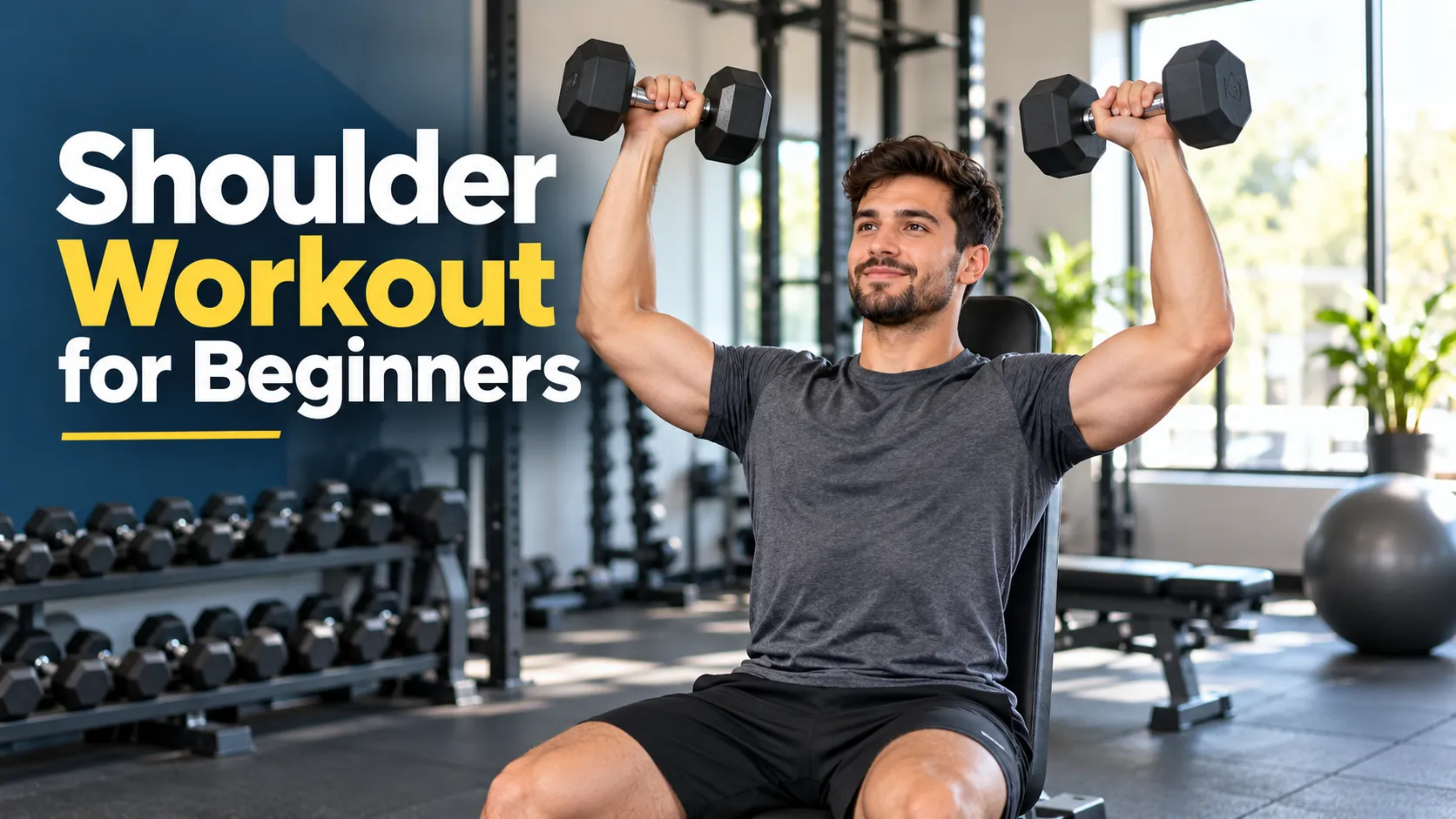
You may walk into the gym and see people using heavy dumbbells, cables, and machines without knowing where to begin. You may also worry about choosing the wrong exercise, lifting too much weight, or feeling shoulder pain because your form is not correct. These are common concerns for beginners, and they can make a simple workout feel much more complicated than it needs to be.
The good news is that beginners do not need an advanced training plan to start building stronger shoulders. The most effective starting point is usually simple: learn a few basic movements, use a weight you can control, and progress gradually. This guide is designed to help you do exactly that. You will learn how to choose beginner-friendly exercises, perform them with better control, decide on sets and reps, and build confidence whether you train at home or in the gym.
Quick Takeaway
If you are new to shoulder training, keep your workout simple. Start with a shoulder press, lateral raise, and rear delt exercise. Use light weights, focus on proper form, and train your shoulders 1–2 times per week. As you become stronger, gradually increase your repetitions or resistance.
What Is the Best Shoulder Workout for Beginners?
A simple shoulder workout for beginners can include:
| Exercise | Sets | Reps |
|---|---|---|
| Dumbbell Shoulder Press | 2–3 | 8–12 |
| Dumbbell Lateral Raise | 2–3 | 10–15 |
| Rear Delt Fly | 2–3 | 10–15 |
| Band Face Pull | 2–3 | 12–15 |
Rest for about 60 to 90 seconds between sets.
Start with light weights and focus on good form.
As a beginner, your first goal should be learning how to control each movement.
You do not need to train until you are exhausted.
This workout trains the major areas of your shoulders and gives you a simple starting point.
Start Here: What Should a Complete Beginner Focus On?
If you have never trained your shoulders before, keep things simple.
Focus on these four things:
- Learn the correct movement.
- Start with light resistance.
- Use controlled repetitions.
- Progress slowly over time.
You do not need many exercises.
You also do not need heavy weights.
A simple workout performed consistently is often better than a complicated workout that feels difficult to follow.
Your goal is to build confidence first.
Strength and progress can come gradually.
What Muscles Does a Shoulder Workout Target?
Your shoulders involve several muscles.
The main muscles trained during a shoulder workout are the deltoids.
The deltoids have three main parts.

Front Deltoids
The front deltoids are located at the front of your shoulders.
They help you:
- Lift your arms forward
- Press weights overhead
- Perform many pushing movements
Exercises like the dumbbell shoulder press involve the front deltoids.
Side Deltoids
The side deltoids are located on the outside of your shoulders.
They help lift your arms away from your body.
Lateral raises mainly target this area.
Rear Deltoids
The rear deltoids are located at the back of your shoulders.
They are involved in movements where the upper arm moves backward or outward.
Rear delt flies and similar pulling movements can help train this area.
A balanced shoulder workout should not focus only on the front of your shoulders.
Try to include movements that train the front, side, and rear areas.
Why Should Beginners Train Their Shoulders?
Strong shoulders support many everyday movements and upper-body exercises.
Your shoulders are involved when you:
- Lift objects
- Reach overhead
- Carry items
- Perform push-ups
- Do pressing exercises
- Train your chest and upper body
A beginner shoulder workout can help you improve strength and movement control.
However, good technique is important.
The shoulder is a complex joint with a large range of motion.
Therefore, beginners should avoid rushing into heavy weights or difficult exercises.
Start slowly and learn each movement correctly.
5-Minute Shoulder Warm-Up for Beginners
A short warm-up can prepare your shoulders for exercise.
You do not need a long routine.
Try the following movements for about five minutes.
Arm Circles
Stand with your arms extended to the sides.
Make small circles forward for about 20 seconds.
Then make circles backward.
Gradually increase the size of the circles if the movement feels comfortable.
Shoulder Rolls
Lift your shoulders gently toward your ears.
Roll them backward.
Then relax them.
Repeat the movement slowly.
Wall Slides
Stand with your back against a wall.
Place your arms against or close to the wall.
Slowly move your arms upward and downward.
Stay within a comfortable range of motion.
Do not force your arms into a painful position.
Band Pull-Aparts
Hold a light resistance band in front of you.
Keep your arms mostly straight.
Pull the band apart in a controlled movement.
Return slowly.
Light External Rotations
Use a light resistance band.
Keep your elbow close to your body.
Rotate your forearm outward in a slow and controlled movement.
Use very light resistance.
The goal of a warm-up is not to tire your shoulders.
It is simply to prepare your body for the workout.
The Best Shoulder Workout for Beginners
This beginner shoulder workout is simple and easy to follow.
You can perform it with dumbbells and a resistance band.
If you do not have a resistance band, you can choose one of the alternatives later in this guide.
You do not need to add extra exercises when you are just starting.
Focus on doing these movements correctly.
Workout Overview
| Exercise | Sets | Reps |
|---|---|---|
| Dumbbell Shoulder Press | 3 | 8–12 |
| Dumbbell Lateral Raise | 3 | 10–15 |
| Dumbbell Rear Delt Fly | 2–3 | 10–15 |
| Band Face Pull | 2–3 | 12–15 |
Perform this workout one or two times per week, depending on your complete training routine and recovery.
What Order Should You Do Shoulder Exercises?
Beginners should usually start with the most demanding exercise.
That is why the shoulder press comes first.
After that, move to lighter exercises that target specific areas of the shoulders.
A simple order is:
- Shoulder press
- Lateral raise
- Rear delt fly
- Face pull
This allows you to perform the more demanding movement while you are still fresh.
Following the same order can also make your workout easier to remember.
1. Dumbbell Shoulder Press
The dumbbell shoulder press is a common beginner exercise for building shoulder strength.
It mainly involves the front and side deltoids.
Dumbbells allow each arm to move independently.
How to Do a Dumbbell Shoulder Press
- Sit on a stable bench or chair with support if available.
- Hold a dumbbell in each hand near shoulder level.
- Keep your feet firmly on the floor.
- Brace your core and keep your back in a comfortable position.
- Press the dumbbells upward in a controlled movement.
- Keep your wrists in a comfortable and stable position.
- Lower the dumbbells slowly.
Beginner Tip
Start with a weight that you can control.
Do not rush the movement.
If you need to swing your body or arch your lower back excessively, the weight may be too heavy.
2. Dumbbell Lateral Raise
The dumbbell lateral raise mainly targets the side deltoids.
It is a simple exercise, but good control is important.
How to Do a Dumbbell Lateral Raise
- Stand with a dumbbell in each hand.
- Keep your arms by your sides.
- Maintain a slight bend in your elbows.
- Slowly raise your arms out to the sides.
- Lift only as high as you can comfortably control.
- Lower the dumbbells slowly.

Beginner Tip
Do not use heavy weights.
Lateral raises usually work well with lighter weights and controlled movement.
Avoid swinging your body.
3. Dumbbell Rear Delt Fly
The rear delt fly targets the back of your shoulders.
Many beginners focus heavily on pressing exercises.
However, rear shoulder training can help create a more balanced shoulder routine.

How to Do a Dumbbell Rear Delt Fly
- Hold a dumbbell in each hand.
- Bend forward at your hips.
- Keep your back in a comfortable and controlled position.
- Allow your arms to hang toward the floor.
- Raise your arms outward in a controlled movement.
- Keep a slight bend in your elbows.
- Lower the dumbbells slowly.
Beginner Tip
Use a light weight.
Focus on control instead of lifting the dumbbells as high as possible.
If you feel discomfort, reduce the range of motion or choose an easier alternative.
4. Band Face Pull
The band face pull can train the upper back and rear shoulder area.
It can also be a useful option for beginners because resistance bands allow you to use lighter resistance.
How to Do a Band Face Pull
- Secure the resistance band to a stable anchor.
- Hold the band with both hands.
- Step back until there is light tension.
- Pull the band toward your upper face or forehead area in a controlled movement.
- Keep your chest upright and avoid excessive leaning.
- Slowly return to the starting position.
Beginner Tip
Use light resistance.
Do not pull with momentum.
Make sure your anchor point is stable and safe before starting.
How Long Should You Rest Between Shoulder Sets?
Most beginners can start with about 60 to 90 seconds of rest between sets.
You may need more rest after a difficult pressing exercise.
You may also need more time if your breathing or form has not recovered.
The goal is to start the next set with enough energy to perform the exercise with good technique.
Do not rush simply because the rest timer has ended.
Good form is more important than finishing your workout quickly.
Should Beginners Train to Failure?
Beginners do not need to take every set to complete muscle failure.
Stopping a set while you still feel capable of doing a few more good repetitions can help you focus on technique.
For example, if you believe you could perform two or three more repetitions with good form, you can stop the set there.
As you gain experience, you can learn how to manage training intensity more effectively.
For now, good form should be your main priority.
Beginner Shoulder Workout at Home With Dumbbells
You do not need a full gym to train your shoulders.
A pair of dumbbells can be enough for a simple home shoulder workout.
This option is useful if you prefer working out at home or have limited equipment.
Home Workout
| Exercise | Sets | Reps |
|---|---|---|
| Seated Dumbbell Shoulder Press | 3 | 8–12 |
| Dumbbell Lateral Raise | 3 | 10–15 |
| Dumbbell Front Raise | 2 | 10–12 |
| Dumbbell Rear Delt Fly | 2–3 | 10–15 |
Rest for 60 to 90 seconds between sets.
Start with light dumbbells.
As you become stronger and your form improves, you can gradually increase the resistance.
Seated Dumbbell Shoulder Press
Sit on a stable chair or bench.
Keep your feet on the floor.
Press the dumbbells upward using a controlled movement.
A seated position can help some beginners reduce unnecessary body movement.
Dumbbell Front Raise
Hold dumbbells in front of your thighs.
Slowly raise one or both arms in front of your body.
Lift only as high as you can comfortably control.
Then lower the weights slowly.
Use light weights.
Your front shoulders are already involved in pressing exercises.
Therefore, front raises are optional for many beginners.
If your workout already includes plenty of pressing, you may not need to add this exercise.
Beginner Shoulder Workout With Resistance Bands
Resistance bands can be useful for beginners because they are easy to use at home.
They also provide a simple way to practice shoulder movements with lighter resistance.
This is a good option if you do not have dumbbells.
Resistance Band Workout
| Exercise | Sets | Reps |
|---|---|---|
| Band Shoulder Press | 3 | 10–15 |
| Band Lateral Raise | 3 | 12–15 |
| Band Pull-Apart | 3 | 12–15 |
| Band Face Pull | 2–3 | 12–15 |
Move slowly.
Do not stretch the band beyond your control.
Always inspect your resistance band for damage before using it.
Band Shoulder Press
Stand on the middle of a resistance band if the band is designed for this movement.
Hold the handles near your shoulders.
Press upward in a controlled movement.
Lower slowly.
Make sure the band is secure before starting.
Band Lateral Raise
Stand on the resistance band.
Hold the handles at your sides.
Raise your arms outward.
Move slowly and stay in control.
Band Pull-Apart
Hold the band in front of your body.
Keep your arms mostly straight.
Pull the band apart in a controlled movement.
Bring your hands back together slowly.
No-Equipment Shoulder Workout for Beginners
You can still perform movements that involve your shoulders without dumbbells or machines.
However, bodyweight exercises may not train the shoulder muscles as directly as exercises with external resistance.
This routine can be useful when you have limited equipment.
It can also be a good starting point for complete beginners.
No-Equipment Workout
| Exercise | Sets | Reps |
|---|---|---|
| Wall Push-Up | 2–3 | 10–15 |
| Incline Push-Up | 2–3 | 8–12 |
| Plank to Downward Dog | 2–3 | 8–10 |
| Prone Y Raise | 2 | 8–12 |
Wall Push-Up
Stand facing a wall.
Place your hands on the wall.
Bend your elbows and bring your chest closer to the wall.
Push yourself back to the starting position.
This is a simple movement for complete beginners.
Incline Push-Up
Place your hands on a stable elevated surface.
Keep your body in a straight line.
Lower your chest toward the surface.
Push yourself back up.
Your shoulders, chest, and arms all help during this movement.
Plank to Downward Dog
Start in a high plank position.
Push your hips upward and backward.
Then return slowly to the plank position.
Move within a comfortable range.
Prone Y Raise
Lie face down on a comfortable surface.
Extend your arms in a Y shape.
Slowly lift your arms a short distance from the floor.
Lower them with control.
Do not force the movement.
How Much Weight Should Beginners Use for Shoulder Exercises?
Choosing the right weight is important.
Beginners should not start with the heaviest weight they can lift.
Instead, choose a weight that allows you to complete your target repetitions with good form.
For example, if your target is 10 repetitions:
- The first few repetitions should feel manageable.
- The final few repetitions should feel challenging.
- You should still be able to control the weight.
If your form breaks down, the weight is probably too heavy.
If the exercise feels extremely easy, you may need slightly more resistance.
Start slowly.
You can always increase the weight later.
How Many Shoulder Exercises Should Beginners Do?
Most beginners do not need a long shoulder workout.
Three or four exercises are usually enough for a focused session.
A simple workout can include:
- One pressing movement
- One side shoulder exercise
- One rear shoulder exercise
- One optional support or stability exercise
This structure can help you train different areas of the shoulders without making the workout too complicated.
More exercises do not always mean better results.
Quality and consistency matter more than doing a large number of exercises.
How Many Sets and Reps Should Beginners Do?
For many beginner shoulder exercises, you can start with:
- 2 to 3 sets
- 8 to 15 repetitions
Some exercises may work well with slightly higher repetitions.
For example:
- Shoulder presses: 8–12 reps
- Lateral raises: 10–15 reps
- Rear delt exercises: 10–15 reps
- Light band exercises: 12–20 reps
Use a controlled pace.
Do not rush through your repetitions.
How Often Should Beginners Train Shoulders?
Many beginners can train their shoulders directly one or two times per week.
However, you should also consider your other workouts.
Your shoulders are involved in many exercises, including:
- Push-ups
- Bench presses
- Chest workouts
- Overhead pressing exercises
Therefore, you do not need to train your shoulders heavily every day.
Your muscles need time to recover.
If you are new to exercise, start with one focused shoulder workout per week.
You can add another session later if your recovery and overall training routine allow it.
How to Add Shoulder Training to Your Weekly Workout Plan
You do not always need a separate shoulder day.
You can include shoulder exercises in different types of workout routines.
Full-Body Routine
Add two or three shoulder exercises after your main exercises.
For example:
- Dumbbell shoulder press
- Lateral raise
- Rear delt fly
Upper-Body Routine
You can include shoulder exercises with chest, back, and arm training.
Keep your total workout volume manageable.
Push Day
You can train shoulders with:
- Chest
- Triceps
- Other pushing exercises
However, remember that pressing exercises already place work on the front deltoids.
You may want to give more attention to your side and rear delts instead of adding too many front shoulder exercises.
How to Progress Your Shoulder Workout
Progress is important for building strength.
However, beginners should not rush.
Start by learning the movement.
Then gradually make the workout more challenging.
Use the Double Progression Method
For example, imagine you are doing the dumbbell shoulder press for 8 to 12 repetitions.
You start with:
- 8 reps
- 9 reps
- 8 reps
Over time, try to improve your repetitions while maintaining good form.
Eventually, you may reach:
- 12 reps
- 12 reps
- 12 reps
Once you can complete all sets with good form, you can slightly increase the weight.
Then return to the lower end of your repetition range.
This is a simple way to progress without rushing.
6-Week Beginner Shoulder Workout Plan
A structured plan can help beginners build confidence.
The goal is not to lift heavy weights quickly.
The goal is to improve your form and build strength over time.
Weeks 1 and 2: Learn the Basics
Focus on:
- Learning correct form
- Using light weights
- Moving slowly
- Understanding each exercise
Perform:
- 2 sets per exercise
- 8–12 repetitions
Avoid pushing every set to failure.
Leave a few good repetitions in reserve.
Weeks 3 and 4: Build Consistency
If you feel comfortable with the exercises, increase your training slightly.
Perform:
- 2–3 sets per exercise
- 8–15 repetitions
Try to improve your repetitions while maintaining good form.
Do not increase weight unless you can control it.
Weeks 5 and 6: Gradually Progress
During these weeks, you can begin to progress.
You may:
- Add a small amount of weight
- Add one set
- Increase repetitions
- Improve your exercise control
Change only one thing at a time.
Slow progress is still progress.
Common Shoulder Workout Mistakes Beginners Should Avoid
Beginners often make simple mistakes when training shoulders.
Avoiding these mistakes can help you build better habits.
1. Using Too Much Weight
Heavy weights can make it difficult to control the exercise.
Start light.
Learn the movement first.
2. Using Momentum
Swinging your body can reduce control during an exercise.
This is common during lateral raises.
Move slowly and stay in control.
3. Training Only the Front Shoulders
Pressing movements already involve the front deltoids.
Do not forget your side and rear delts.
A balanced routine should include different shoulder movements.
4. Ignoring Rear Delts
Rear shoulder exercises can help create a more balanced routine.
You can include movements such as:
- Rear delt flies
- Face pulls
- Band pull-aparts
5. Skipping Preparation
You do not need a long warm-up.
However, taking a few minutes to prepare your shoulders and perform lighter practice sets may help you feel ready for your workout.
6. Training Shoulders Every Day
Your muscles need recovery.
Training more often is not always better.
Start with one or two focused sessions per week.
7. Ignoring Your Form
Good form is more important than lifting heavy weights.
If your form becomes poor, reduce the weight or stop the set.
8. Ignoring Sharp or Unusual Pain
Muscle fatigue is different from sharp or unusual joint pain.
Do not force a painful movement.
Stop the exercise if you experience sharp, unusual, or worsening pain.
If pain continues, consider speaking with a qualified healthcare professional.
Shoulder Exercise Alternatives for Beginners
Not every exercise works for every beginner.
You can use alternatives based on your equipment and comfort level.
| Exercise | Beginner Alternative |
|---|---|
| Dumbbell Shoulder Press | Machine Shoulder Press |
| Standing Shoulder Press | Seated Dumbbell Press |
| Dumbbell Lateral Raise | Band Lateral Raise |
| Rear Delt Fly | Band Pull-Apart |
| Cable Face Pull | Band Face Pull |
| Pike Push-Up | Incline Pike Push-Up |
Choose exercises that you can perform safely and comfortably.
You do not need to copy every exercise exactly.
Can Beginners Build Shoulders at Home?
Yes.
Beginners can train their shoulders at home.
Dumbbells and resistance bands can provide useful resistance for a beginner workout.
You can also use bodyweight exercises when equipment is limited.
A simple home setup may include:
- Adjustable dumbbells
- Resistance bands
- A stable chair or bench
- An exercise mat
You do not need expensive equipment to begin.
The most important factors are consistency, good form, and gradual progression.
Should Beginners Train Shoulders Separately?
It depends on your workout routine.
If you follow a full-body workout plan, your shoulders may already receive work from pressing exercises.
However, a separate shoulder workout can be useful if you want to give your shoulders more direct training.
For beginners, you can add a few shoulder exercises after:
- A full-body workout
- An upper-body workout
- A push workout
You do not always need a full day dedicated only to shoulders.
Keep your routine simple.
What Should You Do if Shoulder Exercises Hurt?
Some muscle fatigue during exercise can be normal.
However, sharp, sudden, or unusual pain should not be ignored.
Stop the movement if it causes pain.
You can also check:
- Your exercise form
- The weight you are using
- Your range of motion
- Whether you need more preparation before training
Do not force your shoulder into a painful position.
If shoulder pain continues or gets worse, consider speaking with a qualified healthcare professional before continuing your workout.
Before You Finish: Remember These Beginner Rules
- Start with light weights.
- Focus on proper form before adding resistance.
- Do not train your shoulders heavily every day.
- Include exercises for your front, side, and rear shoulders.
- Increase weight gradually.
- Stop an exercise if you feel sharp or unusual pain.
Conclusion
Building stronger shoulders does not require complicated exercises or heavy weights when you are just starting. Focus on learning a few basic movements, using a weight you can control, and improving gradually over time. A simple routine that includes pressing, side shoulder, and rear shoulder exercises can help you build a balanced foundation. Pay attention to your form, allow enough time for recovery, and avoid rushing your progress. The most important thing is consistency. Start with the beginner workout in this guide, track small improvements, and increase your repetitions or resistance only when you can perform each exercise with good control. With patience and regular training, you can build stronger shoulders and gain more confidence in your workouts.
