


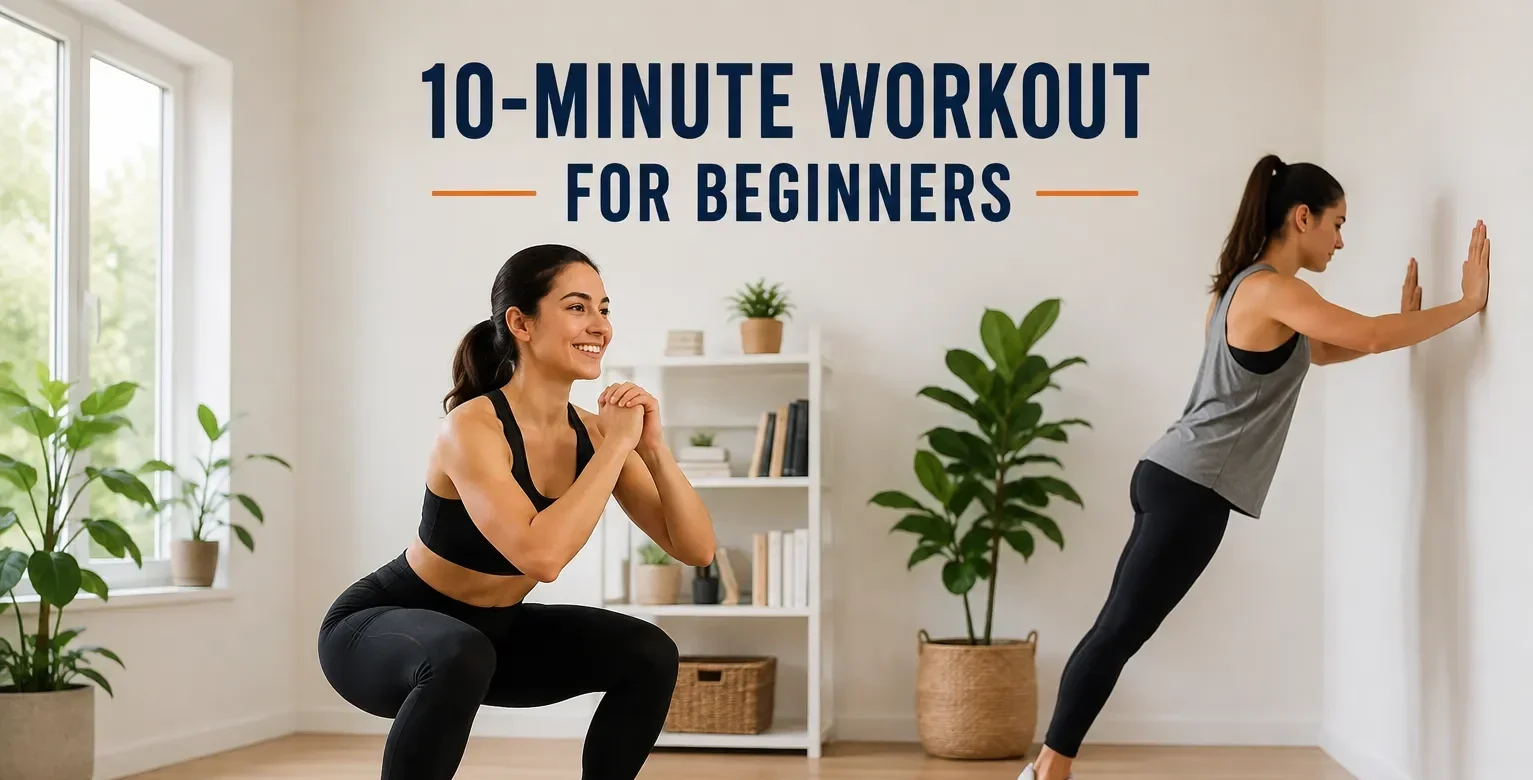
If you are searching for a 10-minute workout for beginners, you may be feeling the same way many people do. You want to get healthier, but finding the time feels impossible. After a long day at work, school, or caring for your family, even a short workout can seem like too much. You may also worry that you are out of shape, unsure which exercises are safe, or afraid of giving up after just a few days. These feelings are common, and every beginner starts with the same questions.
I have seen one simple truth again and again: people who begin with small, realistic workouts are more likely to stay consistent than those who try to do too much too soon. You do not need expensive equipment or an hour at the gym to make progress. A well-planned 10-minute workout can help you build strength, improve your fitness, and develop confidence one session at a time. This guide will show you exactly how to get started safely, avoid common beginner mistakes, and build a routine that you can stick with for the long term.
10-Minute Workout for Beginners: Quick Takeaway
A 10-minute workout can help beginners become more active, build basic strength, and create a regular exercise habit. Complete each exercise at a comfortable pace and focus on good form.
- Workout level: Complete beginner
- Time needed: 10 minutes
- Equipment: No equipment required
- Recommended frequency: 3 to 5 days per week
- Effort level: Moderate and controlled
- Main goal: Build strength, mobility, and consistency
Can a 10-Minute Workout Really Make a Difference?
Yes. A 10-minute workout can improve your fitness when you stay consistent. While longer workouts may burn more calories, short workouts still provide many health benefits, especially for beginners.
Ten minutes of movement can help:
- Increase your daily activity level
- Improve heart health
- Build basic muscle strength
- Boost energy and focus
- Reduce stress
- Improve flexibility and balance
- Create a healthy daily routine
The biggest advantage is consistency. A workout that you can complete every day is often more effective than a longer workout that you rarely finish.
Think of these 10 minutes as an investment in your future health. Small actions repeated over time can lead to meaningful results.
Who Is This 10-Minute Workout For?
This workout is designed for people who are just starting their fitness journey. You do not need previous exercise experience.
It is suitable for:
- Complete beginners
- Busy professionals with limited time
- Parents managing a full schedule
- Students looking for a quick workout
- People returning to exercise after a long break
- Anyone who prefers working out at home
- Adults who want a simple daily fitness routine
If your schedule changes from day to day, a flexible workout plan for busy professionals can help you adapt your training to the time and energy you have available.
If you have a medical condition, recent surgery, or ongoing pain, speak with your healthcare provider before beginning a new exercise program.
Benefits of a 10-Minute Workout for Beginners
Many people underestimate what they can achieve in just 10 minutes. While you may not transform your fitness overnight, these short sessions can improve your health in many ways.
Helps You Build a Consistent Habit
The hardest part of exercise is getting started. A short workout feels manageable, making it easier to stay committed.
As the habit grows, increasing your workout time becomes much easier.
Improves Heart Health
Simple bodyweight exercises increase your heart rate and improve blood circulation. Over time, this supports a healthier cardiovascular system.
Builds Basic Strength
Exercises like squats, modified push-ups, and glute bridges strengthen your muscles using your own body weight.
This creates a solid foundation before trying more advanced workouts.
Supports Healthy Weight Management
A 10-minute workout burns calories and encourages a more active lifestyle.
When combined with balanced eating habits, it can support gradual and sustainable weight management.
Increases Energy
Regular movement helps improve blood flow and oxygen delivery throughout your body.
Many beginners notice they feel more energetic after a short workout than before they started.
Boosts Confidence
Every completed workout is a small success.
As you become stronger and more comfortable with exercise, your confidence grows. That confidence often leads to healthier choices in other areas of life.
Are You Ready to Start?
Before beginning your first workout, check whether your body feels comfortable performing simple everyday movements.
Ask yourself these questions:
- Can you stand up from a chair without pain?
- Can you raise both arms above your head comfortably?
- Can you march in place for one minute?
- Can you balance on one foot for about 10 seconds?
- Can you perform a bodyweight squat without sharp knee pain?
If you answered yes to most of these questions, you are likely ready to begin a beginner workout.
If one movement feels difficult, do not worry. Start slowly and focus on improving a little each week. Progress is more important than perfection.
How Hard Should a Beginner Workout Feel?
Many beginners believe every workout should leave them completely exhausted. That is not necessary.
Your workout should feel challenging but still allow you to maintain good form.
A simple way to judge your effort is to use a scale from 1 to 10.
- 1 to 3: Very easy. You can continue without effort.
- 4 to 6: Moderate effort. You are breathing faster but can still talk. This is the ideal range for most beginners.
- 7 to 8: Hard effort. You can only speak a few words at a time.
- 9 to 10: Very hard. This level is not recommended for beginners.
If you cannot maintain proper form or feel dizzy, stop and rest before continuing.
How Hard Should This Workout Feel?
| Effort Level | How It Feels | What to Do |
|---|---|---|
| 1 to 3 out of 10 | Very easy. You can speak normally. | Increase your pace slightly if it feels safe. |
| 4 to 6 out of 10 | You are breathing faster but can still talk. | This is a suitable effort for most beginners. |
| 7 to 8 out of 10 | Talking becomes difficult and your form may suffer. | Slow down or choose an easier exercise option. |
| 9 to 10 out of 10 | The exercise feels extremely hard. | Stop and rest. This level is not needed for beginners. |
Safety reminder: Stop exercising if you feel sharp pain, chest pain, severe dizziness, or unusual shortness of breath. Speak with a qualified healthcare professional when needed.
Simple Safety Tips Before You Exercise
Following a few basic safety rules can help you enjoy your workouts and reduce the chance of injury.
- Wear comfortable clothing that allows easy movement.
- Choose supportive athletic shoes if you are exercising on a hard surface.
- Keep a bottle of water nearby.
- Exercise in an open area without obstacles.
- Move slowly and focus on good technique.
- Breathe naturally during every exercise.
- Stop immediately if you experience sharp pain, chest pain, severe dizziness, or unusual shortness of breath.
Fitness is not about pushing through pain. It is about moving safely and improving over time.
What You Need for This Workout
One of the best things about this beginner workout is its simplicity.
You only need:
- Comfortable workout clothes
- Supportive shoes or a non-slip surface
- A water bottle
- A small open space
- A chair if you need extra support for certain exercises
No gym membership is required.
No expensive equipment is needed.
Your own body weight is enough to begin building strength and confidence.
If you want to build on this short routine, follow a complete workout plan without equipment for a structured approach to training at home over four weeks.
2-Minute Warm-Up Before Your Workout
Never skip your warm-up, even if you only have 10 minutes to exercise.
A warm-up prepares your muscles, joints, and heart for movement. It also helps improve flexibility and lowers the risk of injury.
Move slowly during each exercise. Focus on smooth and controlled movements instead of speed.
Complete each warm-up exercise for about 20 seconds.
Shoulder Rolls
Stand tall with your feet shoulder-width apart.
Roll your shoulders forward for 10 seconds. Then roll them backward for another 10 seconds.
Keep your neck relaxed and breathe normally.
Arm Circles
Stretch your arms out to your sides.
Make small circles for 10 seconds. Then make larger circles for another 10 seconds.
This movement helps loosen your shoulders and upper body.
March in Place
Lift your knees one at a time while swinging your arms naturally.
Keep a comfortable pace and stand tall.
This exercise gently raises your heart rate.
Bodyweight Squats
Stand with your feet about shoulder-width apart.
Slowly bend your knees and lower your hips.
Go only as low as feels comfortable.
Stand back up and repeat with controlled movement.
Side Bends
Place your hands on your hips or above your head.
Slowly bend toward one side.
Return to the center and repeat on the other side.
This stretches the muscles along your waist and improves mobility.
After two minutes, your body should feel warmer and ready for exercise.

Your 10-Minute Beginner Workout
This full-body workout uses simple bodyweight exercises that target your major muscle groups.
You do not need any equipment.
Workout Format
Perform each exercise for 40 seconds.
Rest for 20 seconds before moving to the next exercise.
Complete all ten exercises once.
If you are completely new to exercise, work for 30 seconds and rest for 30 seconds.
Move at a pace that allows you to maintain good form.
1. Bodyweight Squats
Bodyweight squats strengthen your legs and glutes while improving balance and mobility.
How to Do It
Stand with your feet shoulder-width apart.
Push your hips back as if sitting in a chair.
Lower until your thighs are comfortable.
Press through your heels to stand.
Beginner Tip
Do not worry about going very low.
A comfortable range of motion is enough when starting.
Easier Option
Use a chair behind you for support.
Sit lightly on the chair before standing again.
2. Wall Push-Ups
Wall push-ups build strength in your chest, shoulders, and arms without putting too much pressure on your joints.
How to Do It
Stand facing a wall.
Place both hands on the wall slightly wider than your shoulders.
Slowly bend your elbows.
Bring your chest toward the wall.
Push yourself back to the starting position.
Beginner Tip
Keep your body in a straight line from head to heels.
Avoid bending at your waist.
Progression
When wall push-ups become easier, move to incline push-ups using a sturdy bench or countertop.
3. March in Place
This simple cardio exercise improves circulation and raises your heart rate.
How to Do It
Lift one knee at a time.
Swing your arms naturally.
Stay light on your feet.
Beginner Tip
Keep your core engaged and maintain good posture.
Increase your pace only if you feel comfortable.
4. Glute Bridge
The glute bridge strengthens your hips, glutes, and lower back.
How to Do It
Lie on your back.
Bend your knees.
Place your feet flat on the floor.
Press through your heels and lift your hips.
Pause briefly at the top.
Lower slowly.
Beginner Tip
Avoid arching your lower back.
Lift your hips only until your body forms a straight line.
5. Standing Knee Raises
This exercise improves balance while strengthening your core and hip muscles.
How to Do It
Stand tall.
Lift one knee toward your chest.
Lower it slowly.
Repeat with the other leg.
Beginner Tip
Use a chair or wall for balance if needed.
6. Bird Dog
Bird Dog improves core stability and posture.
How to Do It
Start on your hands and knees.
Extend your right arm and left leg.
Hold for a moment.
Return to the starting position.
Repeat with the opposite side.
Beginner Tip
Keep your hips level.
Move slowly to maintain balance.
7. Standing Calf Raises
Strong calf muscles improve walking, balance, and daily movement.
How to Do It
Stand with your feet hip-width apart.
Rise onto your toes.
Pause briefly.
Lower your heels slowly.
Beginner Tip
Hold a chair for support if necessary.
8. Step Jacks
Step jacks provide low-impact cardio without jumping.
How to Do It
Step one foot to the side while raising both arms overhead.
Return to the center.
Repeat on the opposite side.
Beginner Tip
Move at a steady pace.
Focus on smooth movements instead of speed.
9. Standing Side Leg Raises
This exercise strengthens your hips and improves balance.
How to Do It
Stand tall.
Lift one leg to the side.
Lower it slowly.
Repeat on the other side.
Beginner Tip
Avoid leaning your upper body.
Use a chair if you need extra stability.
10. Forearm Plank
The forearm plank strengthens your core, shoulders, and back.
How to Do It
Place your forearms on the floor.
Extend your legs behind you.
Keep your body in a straight line.
Hold the position while breathing normally.
Beginner Tip
If a full plank feels difficult, place your knees on the floor.
Focus on maintaining good posture rather than holding the position for a long time.
Exercise Modifications for Every Beginner
Not everyone starts at the same fitness level. Some exercises may feel easy, while others may feel challenging.
That is completely normal.
The goal is to keep moving with good form. If an exercise feels too difficult, choose an easier option. As you become stronger, you can progress to a more challenging variation.
Squats
If regular squats feel difficult, use a chair.
Sit down slowly and stand back up without using your hands if possible.
Once this becomes easier, perform regular bodyweight squats.
Wall Push-Ups
Start with wall push-ups if you have limited upper-body strength.
As your strength improves, try incline push-ups using a sturdy bench or countertop.
When you feel confident, move to knee push-ups before attempting standard push-ups.
Forearm Plank
If holding a full plank is difficult, keep your knees on the floor.
As your core becomes stronger, extend your legs and perform a full plank.
March in Place
If lifting your knees high feels uncomfortable, march at a slower pace.
As your fitness improves, increase your speed or raise your knees slightly higher.
Balance Exercises
Use a chair or wall for support whenever needed.
Better balance develops with regular practice.
Remember, choosing an easier version is not a sign of weakness. It is a smart way to exercise safely while building confidence.
Common Beginner Mistakes to Avoid
Many beginners make simple mistakes that slow their progress or increase the chance of injury.
Knowing what to avoid can help you enjoy your workouts and stay consistent.
Skipping the Warm-Up
Cold muscles are less prepared for exercise.
Spend a few minutes warming up before every workout.
Moving Too Fast
Fast movements often reduce exercise quality.
Perform each exercise with slow and controlled movements.
Holding Your Breath
Many beginners forget to breathe during exercise.
Breathe in during the easier part of the movement.
Breathe out as you push, lift, or stand.
Poor Posture
Good posture helps your muscles work correctly.
Keep your back straight, your shoulders relaxed, and your core gently engaged throughout each exercise.
Doing Too Much Too Soon
You do not need long or intense workouts to see progress.
Start with a pace that feels comfortable and increase your activity gradually.
Comparing Yourself to Others
Everyone begins at a different point.
Focus on your own improvement instead of comparing your progress with someone else’s.
A Simple 4-Week Progression Plan
One of the best ways to stay motivated is to increase your activity little by little.
Small improvements are easier to maintain than sudden changes.
Week 1
Complete the 10-minute workout three days during the week.
Focus on learning proper form.
Week 2
Exercise three to four days during the week.
Increase your effort slightly while maintaining good technique.
Week 3
Complete the workout four days during the week.
If you feel comfortable, increase your exercise time by two to five minutes.
Week 4
Exercise four to five days during the week.
You can continue adding new exercises or perform an extra round of your favorite movements.
Once ten minutes feels manageable and you can maintain good form, you can progress to a beginner-friendly 30-minute full-body workout when your schedule allows.
Remember, progress is not measured by speed.
Progress means moving better, feeling stronger, and becoming more consistent.
Four-Week Beginner Progression Plan
| Week | Workout Days | Main Goal | How to Progress |
|---|---|---|---|
| Week 1 | 3 days | Learn each movement | Use 30 seconds of work and 30 seconds of rest if needed. |
| Week 2 | 3 to 4 days | Improve control | Try 40 seconds of work and 20 seconds of rest. |
| Week 3 | 4 days | Build endurance | Add two to five minutes or increase your pace slightly. |
| Week 4 | 4 to 5 days | Build a lasting habit | Use harder exercise options or repeat selected movements. |
How Often Should Beginners Do This Workout?
Most beginners benefit from exercising three to five days each week.
This schedule gives your muscles enough time to recover while helping you build a regular habit.
Here is a simple weekly plan.
Monday
Complete the 10-minute beginner workout.
Tuesday
Take a brisk walk or perform gentle stretching.
Wednesday
Complete the workout again.
Thursday
Focus on light movement or mobility exercises. If you spend much of your day sitting, quick mobility exercises for desk workers can provide a useful movement break between longer periods of work.
Friday
Complete the workout.
Saturday
Enjoy an easy walk, cycling, or another activity you enjoy.
Sunday
Take a full rest day and allow your body to recover.
If your muscles feel sore, give yourself an extra day of recovery before your next workout.
Rest and Recovery Matter
Exercise helps your body become stronger, but recovery is when your muscles repair and adapt.
Giving your body enough rest helps reduce fatigue and lowers the risk of injury.
Stay Hydrated
Drink water before and after your workout.
Proper hydration supports muscle function and recovery.
Get Enough Sleep
Aim for seven to nine hours of sleep each night.
Good sleep helps your body recover and prepares you for your next workout.
Eat Balanced Meals
Include lean protein, whole grains, fruits, vegetables, and healthy fats in your daily meals.
Nutritious foods provide the energy your body needs to recover and improve.
Listen to Your Body
Feeling mild muscle soreness is common when starting a new workout.
However, sharp pain, swelling, or dizziness is not normal.
Stop exercising and seek medical advice if you experience these symptoms.
On lighter training days, a beginner-friendly mobility routine can help you practise comfortable movement without repeating the same strength circuit. If fatigue continues despite rest or your performance starts declining, learn about signs that you may need more recovery before increasing your training load.
Staying Consistent Is More Important Than Being Perfect
Many people stop exercising because they miss one workout.
Missing a single day does not erase your progress.
Simply begin again the next day.
Here are a few ways to stay consistent.
- Exercise at the same time each day.
- Wear comfortable workout clothes before your scheduled session.
- Keep your workout space ready.
- Mark completed workouts on a calendar.
- Celebrate small improvements, such as better balance or completing more repetitions.
- Focus on building a healthy habit instead of chasing quick results.
Consistency is what leads to long-term success.
Even ten minutes of movement can make a meaningful difference when repeated week after week.

Can You Lose Weight with a 10-Minute Workout?
Yes, you can lose weight with a 10-minute workout, but the best results come from combining regular exercise with healthy eating habits.
A short workout helps you become more active, burn calories, and improve your fitness. It also makes it easier to build a routine that you can follow every week.
Weight loss depends on creating a calorie deficit over time. Regular movement, balanced meals, quality sleep, and consistency all play an important role.
Instead of looking for quick results, focus on building healthy habits that you can maintain for months and years.
How Many Calories Does a 10-Minute Workout Burn?
The number of calories you burn depends on several factors, including your body weight, workout intensity, age, and fitness level.
On average, a beginner can burn approximately:
- 60 to 80 calories during a low-intensity workout.
- 80 to 100 calories during a moderate-intensity workout.
- 100 to 120 calories during a higher-intensity beginner workout.
Remember that these numbers are only estimates.
The biggest benefit of a 10-minute workout is creating a daily exercise habit that supports long-term health.
Conclusion
When I first started helping beginners exercise, I noticed that the biggest challenge was rarely the workout itself. Most people struggled with self-doubt, lack of time, or the belief that they needed to do everything perfectly from the beginning. Over time, I learned that lasting fitness comes from consistency, not perfection. The people who made the best progress were the ones who kept showing up, even if they only had ten minutes to spare.
That is why I encourage every beginner to focus on building a habit instead of chasing quick results. Start with the workout in this guide, move at your own pace, and celebrate every small improvement along the way. As your strength and confidence grow, you can gradually challenge yourself with longer workouts or new exercises. Your fitness journey does not begin when you become stronger. It begins the moment you decide to take that first step. Stay patient, trust the process, and remember that every workout brings you one step closer to a healthier and more active life.
